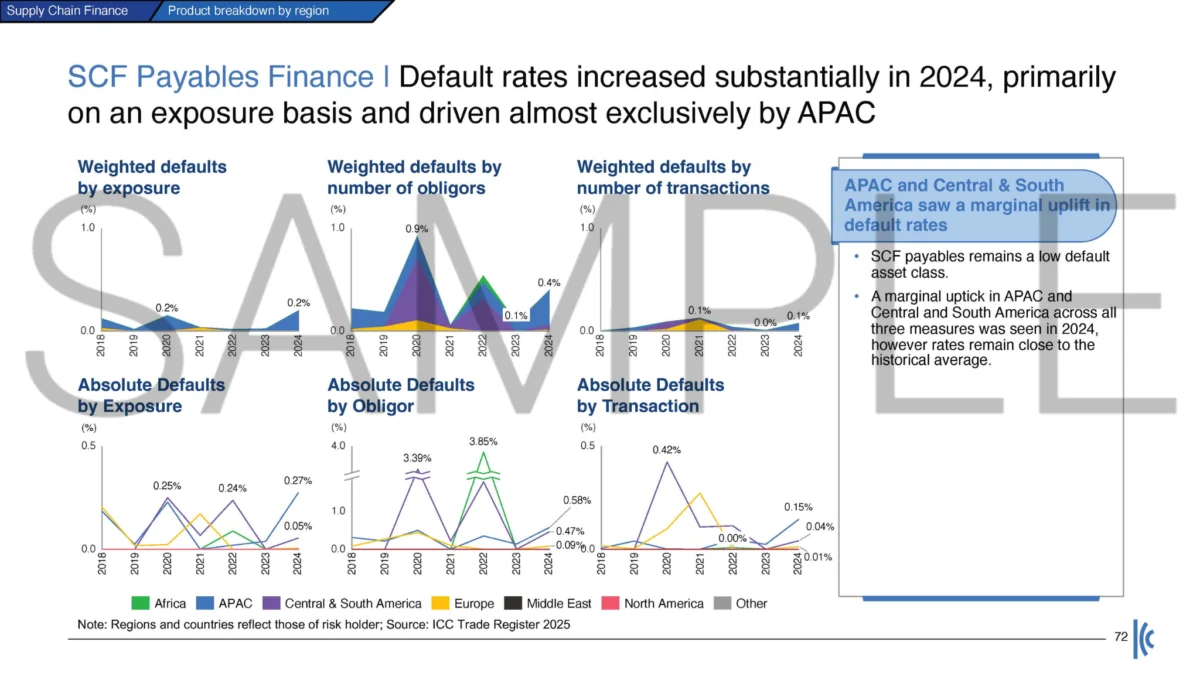
The International Chamber of Commerce (ICC) has officially signaled the upcoming release of its 2026 Global Trade Intelligence Report, a comprehensive data-driven initiative designed to provide the global banking and corporate sectors with unprecedented insights into trade finance risk. Building on more than a decade of empirical research, the forthcoming report is positioned as the definitive benchmark for evaluating default rates, loss given default (LGD), and overall risk performance across the international trade landscape. By leveraging an expansive dataset comprising over $25.7 trillion in transactions, the ICC aims to equip financial institutions with the intelligence necessary to optimize capital allocation and expand credit access in an increasingly volatile global economy.
The 2026 edition represents a significant evolution of what was formerly known as the ICC Trade Register. This transition into the "Global Trade Intelligence Report" reflects a broader scope that moves beyond mere data collection toward actionable strategic intelligence. Backed by the collective contributions of 22 of the world’s leading global banks, the report provides a granular view of the trade finance ecosystem, offering a statistical foundation that challenges often-inflated perceptions of risk associated with cross-border commerce.
The Strategic Importance of Trade Finance Data
Trade finance serves as the lifeblood of the global economy, facilitating approximately 80% to 90% of world trade. However, the industry has long struggled with a "trade finance gap"—the difference between the demand for trade credit and its availability. According to recent estimates by the Asian Development Bank (ADB), this gap has swelled to approximately $2.5 trillion. One of the primary drivers of this shortfall is the stringent regulatory environment and the high capital requirements imposed on banks, which are often based on generalized risk models rather than the specific, historically low-risk profile of trade finance instruments.
The ICC Global Trade Intelligence Report addresses this discrepancy by providing empirical evidence of the safety and resilience of trade finance. By documenting that trade finance products, such as Letters of Credit (L/Cs) and Guarantees, exhibit significantly lower default rates than traditional corporate loans, the ICC provides a crucial tool for banks to engage with regulators. This data is essential for discussions surrounding the Basel III and Basel IV frameworks, where accurate risk-weighting can mean the difference between a bank supporting a small-to-medium enterprise (SME) in an emerging market or withdrawing from the region entirely.
A Decade of Empirical Rigor: The Chronology of the Trade Register
The journey toward the 2026 report began over ten years ago when the ICC identified a critical lack of transparency in trade finance performance data. Historically, banks operated in silos, with no centralized mechanism to compare default rates across the industry. This lack of data made it difficult to prove to the Basel Committee on Banking Supervision that trade finance was inherently low-risk due to its short-term nature and its connection to the movement of physical goods.
In the years following the 2008 financial crisis, the ICC Trade Register was established to fill this void. Between 2011 and 2024, the project grew from a small pilot into a massive undertaking involving the world’s largest financial institutions, including Tier-1 global banks and regional leaders. The partnership with the Boston Consulting Group (BCG) and Global Credit Data (GCD) ensured that the methodology remained robust, objective, and compliant with strict competition laws.
The transition to the "Global Trade Intelligence" branding for the 2026 release marks a new era. While the previous iterations focused heavily on regulatory advocacy, the new format is designed to be a "strategic asset." It shifts the focus toward market opportunity and regional analysis, allowing banks not just to defend their capital positions, but to proactively identify growth sectors in trade and supply chain finance.
Methodology and Strategic Partnerships
The integrity of the ICC Global Trade Intelligence Report is underpinned by its unique collaborative model. The data is not self-reported in a vacuum; it is processed through a rigorous pipeline involving three key entities:
- The International Chamber of Commerce (ICC): As the institutional lead, the ICC provides the global platform and the mandate to represent the interests of the international business community.
- Boston Consulting Group (BCG): BCG provides strategic analysis and market insight, helping to translate raw data into trends that executive-level decision-makers can use to shape their institutional strategies.
- Global Credit Data (GCD): A non-profit organization owned by banks, GCD manages the technical aspects of the data collection, ensuring that the loss and default data is anonymized, secure, and statistically valid.
The participation of 22 member banks is central to the report’s success. These institutions contribute proprietary data on millions of transactions, covering various products including Import Letters of Credit, Export Letters of Credit, Loans for Import/Export, and Performance Bonds. This high level of cooperation allows the report to cover a vast majority of the global trade finance market, providing a sample size that is statistically significant and globally representative.
Key Features of the 2026 Report
The 2026 release is structured to provide a multi-layered analysis of the industry. The ICC has confirmed that the "complete package" will include several distinct components tailored to different business needs:
- The Global Overview Report: A high-level synthesis of global trends, default rates, and the macroeconomic factors influencing trade finance.
- Regional Data Analysis: Specific deep dives into geographical performance, which is particularly vital for banks operating in emerging markets where perceived risk often outstrips actual default data.
- Product-Specific Reports: Detailed breakdowns of how different instruments—such as supply chain finance (SCF) vs. traditional documentary credits—perform under different economic conditions.
- Actionable Benchmarks: Tools for financial institutions to compare their own portfolio performance against global and peer-group averages.
Addressing the Risk Perception Gap in Emerging Markets
One of the most critical functions of the ICC report is its impact on emerging markets. Historically, banks have been hesitant to provide trade credit in regions like Sub-Saharan Africa, Southeast Asia, and parts of Latin America due to "country risk" concerns. However, the ICC’s data consistently demonstrates that even in volatile regions, trade finance obligations are prioritized by borrowers and sovereign entities alike because they are essential for the import of food, fuel, and medicine.
By providing hard data on low loss-given-default rates in these regions, the ICC enables local and international banks to maintain credit lines that might otherwise be cut. This has a direct impact on global development goals, as trade is a primary engine for poverty reduction and economic growth. The 2026 report is expected to further refine this data, offering more granular insights into how digital transformation in trade finance—such as the adoption of electronic Bills of Lading (eBLs)—is further mitigating operational risk.
Implications for Non-Bank Corporations and Sponsorship
While the report is a foundational tool for banks, its influence extends to the corporate sector. Large multinational corporations and non-bank financial institutions are increasingly looking to trade finance as an investable asset class. The ICC has opened opportunities for non-bank corporations to engage with the report through sponsorship, providing a platform for these entities to raise their visibility within the global banking community.
For corporate treasurers, the insights provided by the report are invaluable for supply chain resilience planning. Understanding the stability of the trade finance market allows corporations to better manage their liquidity and support their suppliers. As supply chains become more complex and decentralized, the need for reliable data on the financial health of trade routes has never been higher.
Expert Perspectives and Industry Impact
Industry experts suggest that the 2026 report will be particularly relevant in the context of "just-in-case" supply chain models that have replaced the "just-in-time" strategies of the pre-pandemic era. Financial analysts note that as companies hold more inventory and seek to diversify their supplier bases, the demand for supply chain finance is surging. The ICC report provides the risk framework necessary for banks to scale these programs safely.
"The ICC Global Trade Intelligence Report is the only source of truth that allows the industry to speak with one voice when talking to regulators," says a senior trade finance executive from a contributing member bank. "Without this data, we would be fighting a losing battle against capital requirements that don’t reflect the reality of our business. The 2026 edition’s focus on ‘intelligence’ rather than just ‘registration’ is a welcome shift that aligns with our need for strategic growth."
Looking Ahead: The Future of Trade Intelligence
As the ICC prepares for the full rollout of the 2026 report, the focus remains on enhancing the "Global Trade Intelligence" ecosystem. This includes integrating Environmental, Social, and Governance (ESG) metrics into trade data—a growing requirement for both regulators and investors. Future iterations may explore how "green trade finance" performs compared to traditional transactions, providing the data needed to incentivize sustainable commerce.
The 2026 Global Trade Intelligence Report is more than just a publication; it is a vital infrastructure project for global trade. By converting $25.7 trillion in transaction data into actionable insights, the ICC is ensuring that the global financial system remains robust, transparent, and capable of supporting the flow of goods across borders. Stakeholders across the spectrum—from central banks to SME exporters—await the full release as a cornerstone for informed decision-making in the years to come.
About the Author