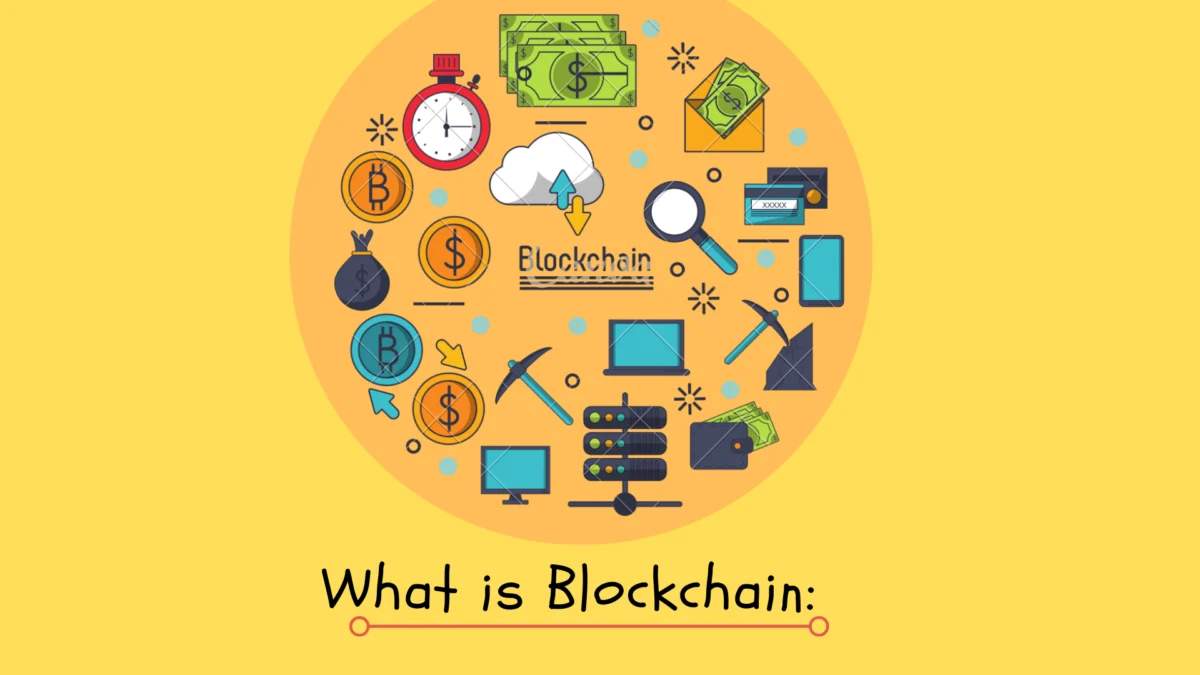
Blockchain technology represents a fundamental shift in how data is stored, shared, and verified across the digital landscape, moving away from centralized authorities toward a distributed ledger system. While many consumers initially associated the technology exclusively with Bitcoin and other cryptocurrencies, the underlying framework of blockchain is now being recognized as a transformative tool for various industries, ranging from global supply chain management to healthcare and legal services. At its core, a blockchain is a distributed database shared among the nodes of a computer network. As a database, it stores information electronically in digital format. The primary innovation of a blockchain is that it guarantees the fidelity and security of a record of data and generates trust without the need for a trusted third party, such as a bank or a government agency.
The Historical Evolution of Distributed Ledgers
The conceptual framework for blockchain technology predates the emergence of Bitcoin by nearly two decades. In 1991, research scientists Stuart Haber and W. Scott Stornetta introduced a computationally practical solution for time-stamping digital documents so that they could not be backdated or tampered with. Their work utilized a cryptographically secured chain of blocks to store the time-stamped data. In 1992, they incorporated Merkle trees into the design, which improved efficiency by allowing several documents to be collected into one block.
The next significant milestone occurred in 1998 when computer scientist Nick Szabo proposed "Bit Gold," a decentralized digital currency. Although Bit Gold was never implemented, it introduced key concepts such as proof-of-work and the use of cryptographic strings to link transactions. It was not until 2008 that the technology reached a tipping point. An individual or group operating under the pseudonym Satoshi Nakamoto released a whitepaper titled "Bitcoin: A Peer-to-Peer Electronic Cash System." This document detailed a method for using a peer-to-peer network to generate what was described as "a system for electronic transactions without relying on trust." In January 2009, Nakamoto mined the first block of the Bitcoin network, known as the "genesis block," effectively launching the first real-world application of blockchain technology.
Technical Architecture and Functional Mechanics
To understand the mechanics of a blockchain, one must view it as a series of data "blocks" linked together via cryptographic hashes. Each block contains a list of transactions, a timestamp, and a "hash"—a unique digital fingerprint—of the previous block in the chain. This chronological linking creates an immutable record; if a single character in an earlier block is altered, its hash changes, which in turn invalidates every subsequent block in the chain.
The process of adding data to the blockchain follows a strict protocol:
- A transaction is requested and broadcast to a peer-to-peer network consisting of computers, known as nodes.
- The network of nodes validates the transaction and the user’s status using established algorithms.
- Once verified, the transaction is combined with other transactions to create a new block of data for the ledger.
- The new block is then added to the existing blockchain in a way that is permanent and unalterable.
The security of this system is maintained through decentralization. In a traditional database, data is stored on a central server. If that server is compromised, the data can be lost or manipulated. In a blockchain, the ledger is distributed across thousands of computers globally. For a hacker to successfully alter the blockchain, they would need to gain control of more than 51% of all the computers in the network simultaneously—a feat that becomes exponentially more difficult and expensive as the network grows.
Comparative Analysis: Blockchain vs. Traditional Databases
The distinction between a blockchain and a standard database lies primarily in how data is structured and governed. A traditional database typically uses a client-server network architecture where a central authority (the "administrator") controls access and can modify or delete entries. This structure is efficient for high-speed data processing but creates a single point of failure and requires users to trust the administrator.
In contrast, a blockchain is decentralized. There is no single administrator; instead, every node in the network has a full or partial copy of the ledger. While a database can be modified easily, a blockchain is designed to be "append-only." This means data can be added, but previous entries cannot be changed or removed without consensus from the network. This makes blockchain ideal for recording "state" and "history," providing a transparent audit trail that is accessible to all authorized participants.
Industrial Applications and Institutional Adoption
While cryptocurrency remains the most prominent use case, the enterprise sector has begun integrating blockchain to solve complex logistical and transparency issues. A notable example is the IBM Food Trust, which utilizes blockchain to enhance food safety. Major retailers like Walmart and Unilever use this system to track the journey of products from the farm to the store shelf.
In traditional supply chains, tracing the source of a contaminated product—such as lettuce infected with E. coli—can take weeks. By using a blockchain-based ledger, companies can trace the origin of a specific batch of produce in mere seconds. This rapid response capability not only protects public health but also reduces the economic impact of broad, non-specific product recalls.
Other sectors are also exploring the technology:
- Healthcare: Securely storing patient records to ensure privacy while allowing seamless sharing between authorized providers.
- Real Estate: Automating the transfer of property titles and reducing the need for expensive intermediaries.
- Legal Sector: Utilizing "Smart Contracts," which are self-executing contracts with the terms of the agreement directly written into lines of code. These contracts automatically trigger actions (like payments) when specific conditions are met.
Economic Data and Market Implications
The global blockchain market has seen explosive growth over the last five years. According to market research data, the global blockchain technology market size was valued at approximately $17.5 billion in 2023 and is projected to grow at a compound annual growth rate (CAGR) of over 80% through 2030. This growth is driven by increasing demand for transparent and secure payment systems and the rising adoption of blockchain in retail and supply chain management.
Investment from venture capital firms also signals long-term confidence. Despite the volatility of the cryptocurrency markets, "Web3" and blockchain infrastructure startups raised over $10 billion in 2023 alone. Furthermore, institutional players such as JPMorgan Chase have developed their own internal blockchain networks (JPM Coin) to facilitate instantaneous cross-border payments between institutional clients, highlighting a shift from skepticism to active utilization by the world’s largest financial entities.
Challenges, Limitations, and Risks
Despite its potential, blockchain technology faces several significant hurdles. The most prominent is scalability. Because every transaction must be verified by multiple nodes, the process can be slower and more energy-intensive than centralized alternatives. For instance, the Bitcoin network’s "Proof of Work" consensus mechanism has faced criticism for its high electricity consumption, though newer "Proof of Stake" mechanisms, such as the one adopted by Ethereum in 2022, have reduced energy usage by over 99%.
Regulatory uncertainty also poses a risk. Governments worldwide are still grappling with how to classify and regulate digital assets and decentralized networks. Issues regarding data privacy (such as the "right to be forgotten" under GDPR) conflict with the immutable nature of blockchain, where data cannot be easily deleted. Additionally, while the blockchain itself is highly secure, the "on-ramps" and "off-ramps"—such as digital exchanges and individual wallets—remain vulnerable to traditional hacking and social engineering.
Future Outlook and Strategic Significance
As we move toward 2025 and beyond, the integration of blockchain with other emerging technologies like Artificial Intelligence (AI) and the Internet of Things (IoT) is expected to accelerate. In an IoT ecosystem, blockchain can provide a secure way for billions of devices to communicate and transact with one another without human intervention.
Industry analysts suggest that the next phase of blockchain adoption will be characterized by "invisible" integration. Much like the average internet user does not need to understand TCP/IP protocols to send an email, future blockchain users will likely interact with the technology through user-friendly interfaces in their banking apps or shipping trackers without ever realizing they are using a decentralized ledger.
The shift toward decentralization represents more than just a technical upgrade; it is a shift in the digital power dynamic. By removing the need for intermediaries, blockchain has the potential to democratize access to financial services, secure individual data identity, and create a more transparent global economy. While the technology is still in its formative decades, its trajectory suggests it will become a foundational pillar of the modern digital age, comparable to the impact of the internet itself in the late 20th century.
About the Author