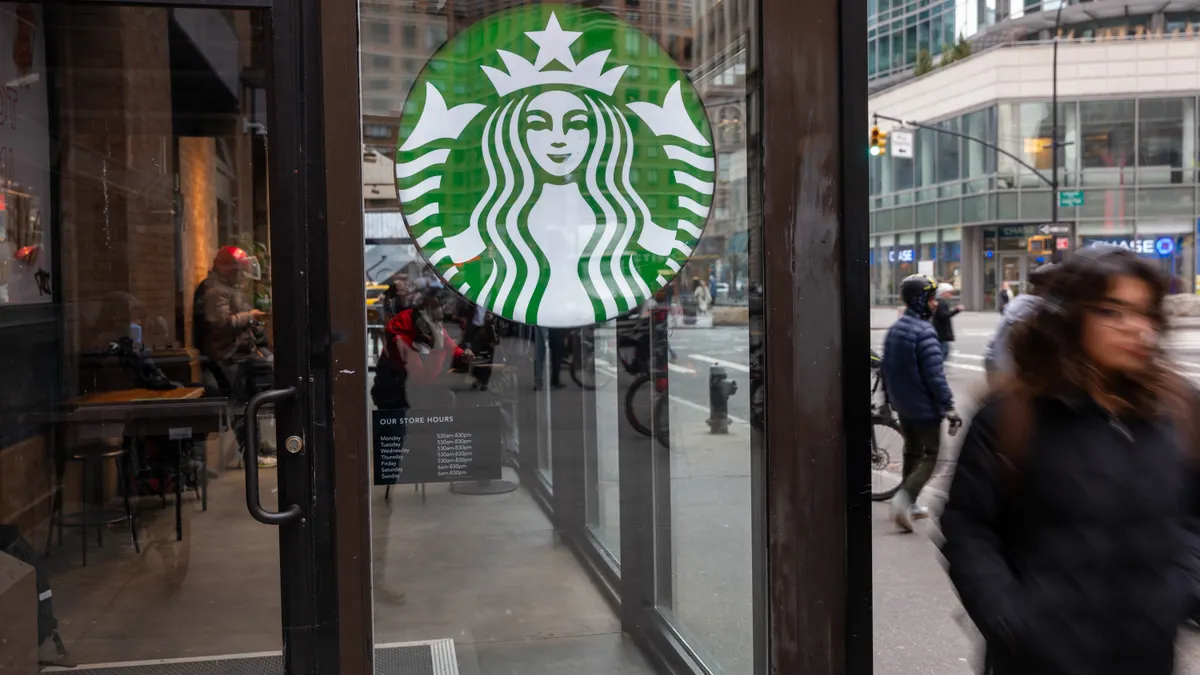
Starbucks has agreed to a $1 million settlement with the Florida Attorney General’s office, voluntarily resolving a lawsuit that alleged the coffee giant engaged in illegal race-based hiring and advancement practices. The agreement, announced by Florida Attorney General James Uthmeier’s office on September 18, 2026, marks a significant development in the ongoing scrutiny of diversity, equity, and inclusion (DEI) initiatives within major corporations. The lawsuit, filed in late 2025, mirrored a broader trend of federal enforcement actions targeting DEI programs perceived as potentially discriminatory.
Allegations of Discriminatory Practices
The core of Florida’s lawsuit centered on accusations that Starbucks "excluded or disfavored nonminorities" through various employment practices and programs. Specifically, the complaint detailed allegations that the company had implemented racial quotas for hiring, offered differential pay based on an employee’s race, and tied executive compensation to participation in race-based mentorship programs. Furthermore, the state asserted that individuals from "disfavored races" were allegedly excluded from crucial networking and mentorship opportunities.
Publicly available documents cited by the state highlighted specific instances that fueled these allegations. A 2020 report from Starbucks indicated an intention to hire people of color for 40% of its retail and distribution center positions and 30% of its corporate roles. More recently, a 2024 regulatory filing revealed that 7.5% of an executive’s pay during the current fiscal year was contingent on their role as a mentor to individuals identifying as Black, Indigenous, or people of color (BIPOC). These figures, according to the Florida Attorney General’s office, demonstrated a pattern of employing race as a determinative factor in employment decisions, thereby violating civil rights statutes.
Timeline of the Legal Action
The legal entanglement between the Florida Attorney General’s office and Starbucks began in late 2025 when the state formally filed its lawsuit. This action followed a period of heightened awareness and increased scrutiny of corporate DEI policies, both at the state and federal levels. The lawsuit was initiated shortly after the U.S. Department of Justice and the Equal Employment Opportunity Commission (EEOC) had begun issuing guidance and taking enforcement actions against companies with DEI programs that were alleged to be discriminatory.
The voluntary resolution announced on September 18, 2026, brings an end to this particular legal challenge. Under the terms of the agreement, Starbucks has committed to adhering to Florida’s Civil Rights Act, which explicitly prohibits the discriminatory practices alleged in the lawsuit. The coffee chain has also agreed not to participate in organizations that mandate increased racial diversity on its corporate board. Over a four-year period, Starbucks’ chief legal officer will be required to submit annual certifications confirming the company’s ongoing compliance with these terms.
Starbucks’ Response and Position
In a statement accompanying the Attorney General’s announcement, Pilar Ramos, Starbucks’ Executive Vice President and Chief Legal Officer, emphasized that the company did not admit to any wrongdoing. This stance is critical, signaling that the settlement is a resolution of legal claims rather than an acknowledgment of guilt.
"We will continue to focus on offering great jobs and career opportunities to our partners who wear the green apron, while making a positive impact on the communities we serve in Florida and around the world," Ramos stated. This quote underscores Starbucks’ commitment to its workforce and its broader community engagement, while implicitly defending its employment practices. The company’s assertion of no wrongdoing is a common tactic in such settlements, aiming to mitigate reputational damage and avoid setting legal precedents that could be used against them in future litigation.

Broader Context: Federal Enforcement and DEI Scrutiny
Attorney General Uthmeier’s action against Starbucks is not an isolated incident but rather part of a larger, multiyear campaign against workplace DEI initiatives that has been observed at the federal level, particularly during the Trump administration. Agencies such as the U.S. Equal Employment Opportunity Commission (EEOC) and the U.S. Department of Justice (DOJ) have been actively issuing guidance and pursuing legal action against employers whose DEI programs are seen as potentially violating anti-discrimination laws.
This federal oversight has led to several high-profile cases and significant financial settlements. For instance, in the week preceding the Starbucks announcement, the DOJ finalized a $25 million settlement with Accenture. This resolution stemmed from allegations that the consulting firm had considered race and sex in its hiring and promotion decisions, thereby favoring candidates who advanced its demographic objectives. Similarly, in August 2026, the DOJ reached a $21.5 million agreement with Deloitte to resolve claims of alleged discrimination in hiring, promotion, and staffing decisions driven by the firm’s DEI programs.
The EEOC has also been instrumental in this enforcement trend, launching numerous investigations into employers facing similar allegations. Attorneys familiar with the process have indicated that the EEOC is likely to succeed in compelling employers to cooperate with subpoenas seeking information related to their DEI programs, a prediction that has been borne out by court rulings. A notable example occurred in July 2026, when a federal judge ordered Northwestern Mutual to comply with an EEOC probe into its DEI policies, underscoring the commission’s authority and the increasing legal challenges faced by companies in this area.
Analysis of Implications and Trends
The Starbucks settlement, along with other recent enforcement actions, signals a critical juncture for DEI programs in the American workplace. Companies that have enthusiastically embraced DEI initiatives, often with the goal of fostering diversity and inclusion, are now facing increased legal scrutiny regarding the methods employed to achieve these objectives. The legal challenge hinges on the interpretation of anti-discrimination laws, particularly Title VII of the Civil Rights Act of 1964, which prohibits employment discrimination based on race, color, religion, sex, and national origin.

The concern for many companies is that certain DEI practices, such as setting specific racial quotas or offering preferential treatment based on race, could be construed as reverse discrimination. This legal interpretation, which has gained traction with federal enforcement agencies and some court decisions, suggests that any employment practice that uses race as a determinative factor, even with the aim of achieving diversity, may be deemed unlawful.
The Starbucks case exemplifies this trend. By allegedly setting targets for hiring and tying executive pay to mentorship of specific racial groups, the company, according to Florida’s allegations, crossed a line from promoting diversity to potentially engaging in discriminatory practices. The substantial financial settlements and ongoing investigations indicate that companies are being compelled to re-evaluate their DEI strategies to ensure compliance with evolving legal interpretations.
The voluntary resolution with Starbucks suggests a pragmatic approach by the company to avoid prolonged litigation and potential further reputational damage, even while maintaining its stance of no wrongdoing. This settlement, valued at $1 million, while significant, may be viewed by Starbucks as a manageable cost to resolve the legal claims in Florida and move forward. However, the ongoing need for annual certifications of compliance highlights a commitment to greater transparency and accountability in its employment practices moving forward.
The broader implication for businesses is a need for careful legal review of all DEI initiatives. Companies are increasingly seeking legal counsel to ensure that their programs are designed to promote equal opportunity without creating new forms of discrimination. This may involve a shift towards focusing on broader inclusivity, skills-based hiring, and training programs that emphasize equal development rather than race-based quotas or preferences. The landscape of DEI is clearly becoming more complex, requiring a delicate balance between aspirational goals and legal imperatives. As more cases are adjudicated and guidance continues to be issued, businesses will need to remain vigilant and adaptable to navigate this evolving regulatory environment. The Starbucks settlement serves as a clear indicator that the era of unchecked DEI implementation may be giving way to a more legally scrutinized and compliance-driven approach.
About the Author