The technology industry is currently investing billions of dollars in developing AI agents designed to automate and personalize the shopping experience, a concept increasingly referred to as "agentic commerce." Giants like Google and OpenAI are at the forefront of this push, with Google developing its Universal Commerce Protocol to streamline AI-driven transactions and OpenAI integrating advanced shopping capabilities into ChatGPT. These initiatives aim to allow AI agents to guide consumers from product discovery all the way to purchase, often without direct human intervention. However, Ron Johnson, a seasoned retail innovator with a profound understanding of consumer behavior, argues that the industry is overestimating the extent to which shoppers will cede control to machines, particularly for significant purchases.
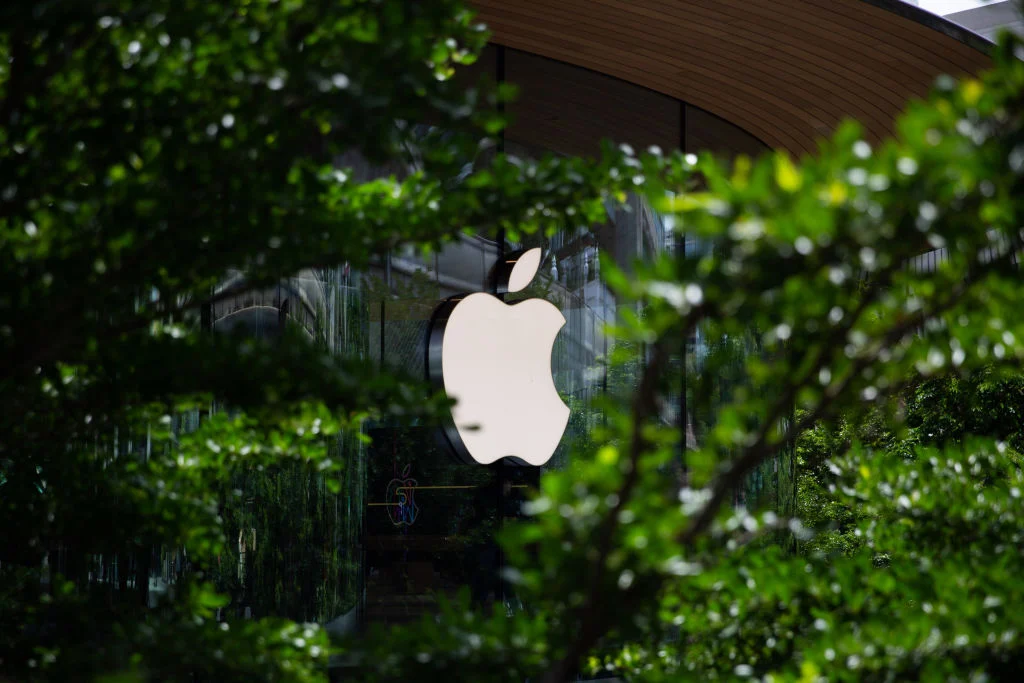
Johnson, who joined Apple in 2000 with the mandate to build its retail presence from the ground up, witnessed firsthand the nascent rise of e-commerce. His vision was instrumental in transforming Apple Stores into more than just points of sale; they became immersive brand experiences, crucial for product demonstration, customer education, and ongoing support. Reflecting on the current AI boom, Johnson stated in a recent interview, "AI is a new technology that will improve the online shopping experience. But I don’t know that it’s going to change which way we shop."
His skepticism is particularly pronounced when considering high-value purchases. When presented with the hypothetical scenario of a consumer allowing an AI agent to select and purchase a laptop costing $1,000 to $2,000 without any direct website or store interaction, Johnson was resolute: "Honestly, nobody’s going to do that." He posits that for items of such significant personal and financial investment, the act of purchasing is too deeply intertwined with sensory experience and personal validation to be fully delegated to an algorithm. The tactile feel of a device, the visual clarity of its display, and the ergonomic fit are crucial elements that AI, in its current form, cannot replicate. While AI may excel at narrowing down options and providing detailed product comparisons, Johnson maintains that the fundamental human desire to physically interact with and experience a product before committing a substantial sum will persist.
"AI will never be able to have you physically experience a product," Johnson elaborated. Instead, he envisions AI agents serving as powerful pre-shopping tools, equipping consumers with enhanced knowledge and insights before they even set foot in a physical store. "They’ll just become more informed shoppers when they come to the store," he predicted, emphasizing that AI’s role will be to augment, rather than replace, the in-store experience.
Johnson’s conviction is rooted in the foundational principles that guided Apple’s retail strategy over two decades ago. The Apple Stores were conceived as holistic environments where customers could not only acquire products but also engage with them, receive expert guidance, and find solutions to any issues that arose. This philosophy of creating a customer-centric ecosystem, where the physical space facilitated a deeper connection with the brand and its offerings, remains a cornerstone of his retail philosophy.
These enduring principles are further explored in Johnson’s new book, "Shop Different: How Retail Revealed Apple’s Genius," co-authored with Zander Nethercutt. The book delves into the intricacies of building Apple’s retail empire alongside Steve Jobs, highlighting how competitors often mimicked Apple’s aesthetic – its minimalist, glass-heavy design and open layouts – and even its service models like the Genius Bar, but frequently missed the crucial human element. "The secret sauce for Apple has always been its people, the people in the store, and how they treat the customer," Johnson asserted, underscoring the irreplaceable value of human interaction in retail.
A key differentiator of the Apple Store model, as detailed by Johnson, was the deliberate decision to forgo commission-based sales. This approach aimed to liberate employees from the pressure to upsell, instead fostering an environment where their primary objective was to understand and address the genuine needs of each customer. This people-centric approach, he believes, is at the heart of successful retail.
Johnson’s career trajectory has been marked by ambitious ventures, including his transformative tenure at J.C. Penney. In 2011, he took the helm of the struggling department store chain with a bold plan for reinvention. However, the ambitious overhaul proved too disruptive, and he was ousted less than two years later amid a significant sales decline. Reflecting on this period, Johnson admitted to a miscalculation: "I applied a startup mentality to what needed to be a turnaround transformation." He recognized that attempting to implement radical changes too rapidly, without adequately bringing employees and customers along on the journey, was a fundamental error. While Apple’s stores evolved organically as a startup alongside the company’s burgeoning product lines, J.C. Penney required a more nuanced turnaround strategy that prioritized existing customer loyalty and employee buy-in.
Following his J.C. Penney experience, Johnson returned to the startup world with Enjoy Technology, an e-commerce venture focused on delivering technology products and setup services directly to consumers’ homes. Despite initial promise and significant funding, Enjoy Technology filed for bankruptcy in 2022, with its assets subsequently acquired by Asurion. These experiences, though challenging, have undoubtedly shaped Johnson’s nuanced perspective on retail innovation and the complexities of organizational change.
Despite his reservations about the immediate impact of AI on the fundamental nature of shopping, Johnson remains an ardent advocate for the technology itself. "I’m a real believer in AI. I’m an AI optimist," he declared. He draws a parallel with Steve Jobs’s forward-thinking approach, suggesting that Jobs would have embraced AI, not as a replacement for human ingenuity, but as a powerful tool to augment it. "There’s no substitute for human intuition," Johnson concluded, echoing Jobs’s profound belief in the power of bringing intelligent minds together to grapple with complex problems and forge innovative solutions. This belief in human judgment, combined with the strategic application of advanced technology, represents Johnson’s vision for the future of retail.
The Evolving Landscape of Agentic Commerce
The current surge in investment in agentic commerce is driven by a confluence of technological advancements and shifting consumer expectations. Large language models (LLMs) have reached a level of sophistication that allows them to understand complex natural language queries, process vast amounts of information, and even engage in multi-turn conversations. This capability is being leveraged to build AI agents that can act on behalf of consumers, performing tasks that were previously reserved for human shoppers.
Google’s Universal Commerce Protocol: Announced with a projected rollout in early 2026, this initiative aims to establish a standardized framework for AI agents to interact with e-commerce platforms. The protocol is designed to facilitate a seamless transition from product discovery to purchase by enabling AI agents to access product information, compare prices, manage inventory, and execute transactions across various online retailers. The potential implications are vast, promising to streamline online shopping and unlock new efficiencies for both consumers and businesses. However, challenges remain in ensuring interoperability across diverse e-commerce ecosystems and establishing robust security protocols.
OpenAI’s ChatGPT as a Shopping Destination: OpenAI’s integration of shopping features into ChatGPT represents a significant step towards creating conversational commerce experiences. Users can now research products, compare specifications, and in some instances, complete purchases directly within the chatbot interface. This approach blurs the lines between information retrieval and transactional activity, offering a more integrated and potentially less friction-filled shopping journey for certain types of goods. The success of this model hinges on the AI’s ability to accurately understand user intent, provide relevant recommendations, and ensure a secure and trustworthy purchasing process.
Data and Trends in Retail
While AI’s impact on agentic commerce is still unfolding, existing data highlights the enduring significance of physical retail and the complex interplay between online and offline channels.
- E-commerce Growth: Global e-commerce sales have seen consistent growth over the past decade, projected to reach trillions of dollars annually. However, this growth has seen some moderation in recent years, suggesting a stabilization rather than an unchecked exponential increase.
- Omnichannel Strategies: A significant portion of consumers engage in omnichannel shopping behaviors, researching products online before purchasing in-store, or vice versa. Data from various retail analytics firms indicates that consumers who utilize both online and physical channels tend to have higher purchase values and greater brand loyalty.
- Experiential Retail: The concept of "experiential retail" – where physical stores offer unique brand experiences, community engagement, or interactive elements – has gained traction as a strategy to differentiate from online competition. Stores that focus on creating memorable experiences often report higher customer engagement and satisfaction.
- High-Value Purchases: For categories like electronics, furniture, and apparel, consumers frequently cite the ability to touch, feel, and try products as a critical factor in their purchasing decisions. Studies on consumer behavior consistently show a higher preference for in-person evaluation for these product types, particularly when the price point is substantial.
Historical Context: The Rise and Evolution of Retail
The current discourse surrounding AI in retail is the latest chapter in a long history of technological disruption and adaptation in the industry.
- The Dawn of E-commerce (Late 1990s – Early 2000s): The proliferation of the internet and the development of secure online payment systems paved the way for the emergence of e-commerce. Companies like Amazon revolutionized how goods were sold and delivered, challenging traditional brick-and-mortar retailers.
- The Apple Retail Revolution (2000s): Ron Johnson’s tenure at Apple marked a pivotal moment, demonstrating that physical retail could be reimagined as a powerful brand-building and customer-engagement tool. The Apple Store model, with its emphasis on product experience and knowledgeable staff, became a benchmark for modern retail design and strategy.
- The Omnichannel Era (2010s): As online and offline channels became more integrated, retailers began to focus on providing a seamless customer experience across all touchpoints. This led to the development of click-and-collect services, integrated inventory management, and personalized marketing efforts that spanned both digital and physical realms.
- The AI Influence (Present): The current wave of AI integration, particularly in the form of agentic commerce, represents a new frontier. The industry is grappling with the potential for AI to automate complex decision-making processes and personalize shopping at an unprecedented scale.
Implications and Future Outlook
Ron Johnson’s perspective offers a crucial counterpoint to the prevailing optimism surrounding agentic commerce, emphasizing that technological advancement does not necessarily equate to a complete paradigm shift in human behavior. His insights suggest that the future of retail will likely involve a sophisticated integration of AI tools that enhance, rather than supersede, the fundamental human desire for tangible experience and personal connection.
The success of agentic commerce will depend on its ability to address the nuanced psychological and practical aspects of consumer decision-making, particularly for high-involvement purchases. While AI may excel at optimizing efficiency and providing data-driven recommendations, the emotional and sensory dimensions of shopping, which are often critical for high-value items, remain firmly within the domain of human experience.
Therefore, retailers are likely to see a bifurcated approach to AI adoption. For routine, low-consideration purchases, AI agents may indeed become the primary mode of interaction, streamlining transactions and saving consumers time. However, for significant investments, the physical store, augmented by AI-powered insights and personalized human interaction, is poised to retain its relevance, serving as a critical touchpoint for sensory engagement, expert advice, and informed decision-making. The challenge for the industry lies in finding the optimal balance between technological automation and the indispensable human element that has always defined the art of commerce.
About the Author