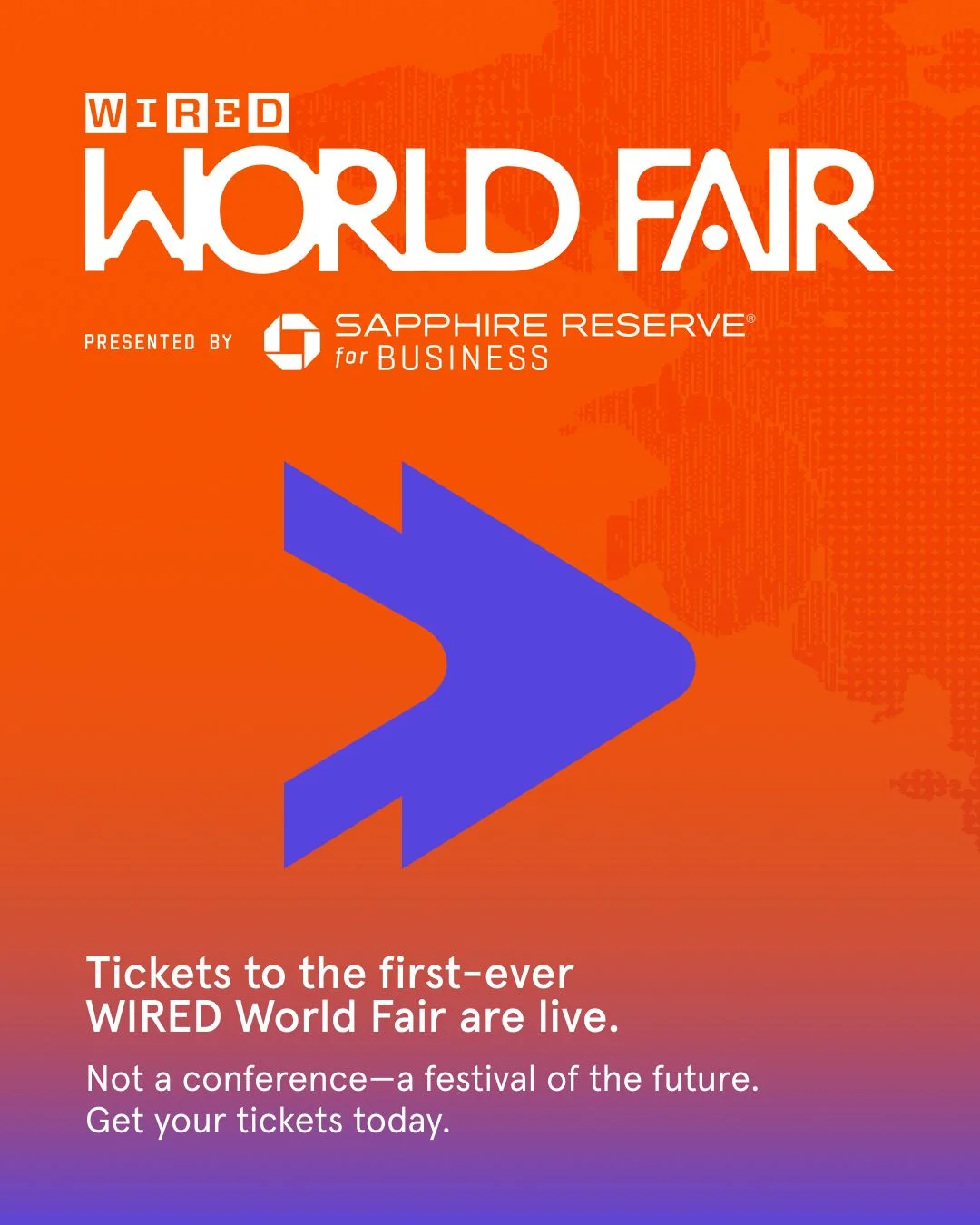
The global media landscape is set to witness a physical manifestation of future-forward journalism as WIRED prepares to launch the WIRED World Fair in Miami on November 4. For more than a century, World’s Fairs have served as the premier stage for humanity to witness the first glimpses of transformative breakthroughs, from the introduction of the telephone and television to the unveiling of the X-ray machine. This upcoming event, hosted at the Sacred Space in Miami’s Wynwood district, aims to reimagine that tradition by bringing the most significant technological, political, and cultural forces of the 21st century off the digital page and into a tangible, interactive environment.
The one-day event is designed to serve as a nexus for industry leaders, researchers, and the public to engage with the ideas currently reshaping the everyday lives of global citizens. By focusing on sectors such as biotechnology, artificial intelligence, and space exploration, the fair seeks to provide a comprehensive overview of the trajectory of modern civilization.
A Legacy Reimagined: From the Great Exhibition to the Digital Age
The concept of the World’s Fair, or Universal Exposition, dates back to the 1851 Great Exhibition in London, which showcased the industrial wonders of the Victorian era. Throughout the 20th century, these events became synonymous with optimism and progress, exemplified by the 1939 New York World’s Fair and its "World of Tomorrow" theme. However, as information became decentralized through the internet, the frequency and cultural dominance of physical expos shifted.
WIRED’s decision to revive this format reflects a growing demand for experiential journalism—a medium where audiences do not merely read about innovation but interact with it directly. The choice of Miami as the host city is significant. Over the last five years, Miami has undergone a dramatic transformation, evolving from a tourism-centric economy into a burgeoning hub for financial technology and venture capital. The Wynwood district, specifically, has transitioned from an industrial warehouse zone into a global center for art and innovation, making it a symbolic backdrop for an event focused on the "next" in human achievement.
Core Programming and Key Participants
The programming for the WIRED World Fair is curated to represent a cross-section of the most disruptive forces in modern society. One of the central pillars of the event is the exploration of artificial intelligence and its intersection with governance and ethics. High-level conversations will feature luminaries from the AI sector, focusing on the rapid advancement of generative models and the resulting political implications.
In a move that bridges the gap between media and satire, the event will feature participation from The Onion. Recently back in the headlines for its strategic moves in the media landscape, including its involvement with the Infowars parody, The Onion’s presence suggests a critical look at the role of truth and misinformation in the digital age. This inclusion highlights the fair’s commitment to addressing not just the hardware of the future, but the social and psychological software that governs public discourse.
Scientific inquiry will also take center stage with a focus on interspecies communication. A featured researcher will present work on decoding the language of dolphins, a field that has seen significant advancements due to the application of machine learning algorithms capable of identifying patterns in acoustic data that were previously undetectable by human ears. This research represents a broader trend in biology where technology is used to deepen the human understanding of the natural world.
Space Exploration and the Frontier of Human Experience
The fair will provide a deep dive into the second space race, an era defined by the interplay between national space agencies and private enterprises. A central highlight is the screening of the Musk documentary, which chronicles the influence of Elon Musk on the aerospace and automotive industries. As SpaceX continues to dominate the commercial launch market and push toward Mars, the documentary serves as a case study in how individual ambition can alter the course of global infrastructure.
Attendees will also have the opportunity to interact with the same training software used by astronauts. As NASA’s Artemis program aims to return humans to the lunar surface and eventually establish a presence on Mars, the software provides a factual look at the rigorous preparation required for long-duration spaceflight. This immersive element is designed to demystify the complexities of orbital mechanics and life-support systems for a general audience.
The Intersection of Robotics and Immersive Art
The physical presence of robotics at the fair will showcase the transition of machines from controlled industrial environments to the messy, unpredictable world of human interaction. This segment of the fair will highlight advancements in computer vision, haptics, and autonomous navigation.
Complementing the technological displays are immersive art installations, most notably from Marina Abramović. Known for her work in performance art that explores the relationship between performer and audience, the limits of the body, and the possibilities of the mind, Abramović’s inclusion suggests a synthesis of technology and human consciousness. Her work often requires a level of presence and endurance that contrasts with the fast-paced nature of digital consumption, offering a contemplative space within the high-energy environment of the fair.
Supporting Data: The Economic and Social Context
The launch of the WIRED World Fair comes at a time of record investment in the sectors it covers. According to recent market data, global investment in artificial intelligence reached nearly $200 billion in 2023, with projections suggesting it will contribute up to $15.7 trillion to the global economy by 2030. Similarly, the biotechnology market is expected to surpass $2.4 trillion by 2028, driven by breakthroughs in gene editing and personalized medicine.
Miami’s specific economic climate further justifies its selection as the host city. The Miami-Fort Lauderdale-West Palm Beach area saw a 24% increase in tech job postings in recent years, one of the highest growth rates in the United States. By situating the fair in this environment, WIRED is tapping into a community that is actively building the future that the publication has covered for decades.
Implications for the Future of Public Engagement
The WIRED World Fair represents a shift in how media organizations interact with their audiences. In an era where digital content is infinite and often ephemeral, physical events provide a sense of permanence and community. For the tech industry, such fairs act as a vital bridge to the public, offering a platform to explain complex technologies that are often viewed with a mix of awe and skepticism.
From a sociological perspective, the event addresses the "innovation gap"—the distance between the cutting edge of research and the public’s understanding of its implications. By presenting robots, space software, and biotech research in an accessible format, the fair facilitates a more informed public dialogue about the ethical and regulatory frameworks that will be needed in the coming years.
Official Expectations and Forward Outlook
While official statements from the organizers emphasize the "celebratory" nature of the event, the underlying objective is clearly educational and strategic. Organizers have indicated that more programming will be announced as the date approaches, suggesting a dynamic schedule that may respond to real-time developments in the tech world.
The event at the Sacred Space is expected to draw a diverse crowd, including venture capitalists looking for the next big shift, engineers seeking to network, and students interested in the frontiers of science. By blending high-level discourse with interactive exhibits, the WIRED World Fair aims to create a blueprint for how future-focused information can be disseminated in a post-digital world.
As the world moves closer to November 4, the focus remains on whether this modern iteration of the World’s Fair can capture the same sense of wonder that its predecessors did a century ago. In a time of rapid change and uncertainty, the fair offers a curated, fact-based look at the tools and ideas that will likely define the next hundred years of human history. The convergence of satire, science, art, and industry in Miami suggests that the future is not just something to be predicted, but something to be experienced, debated, and ultimately, shaped by the collective engagement of society.
About the Author