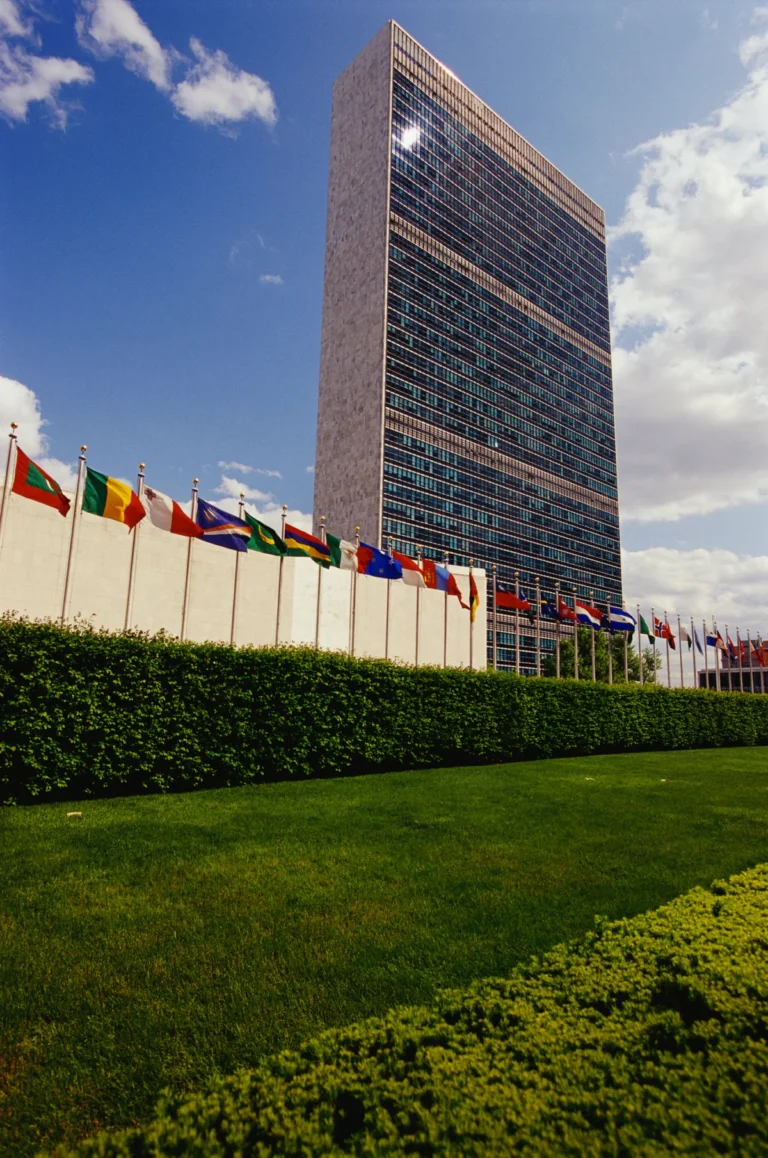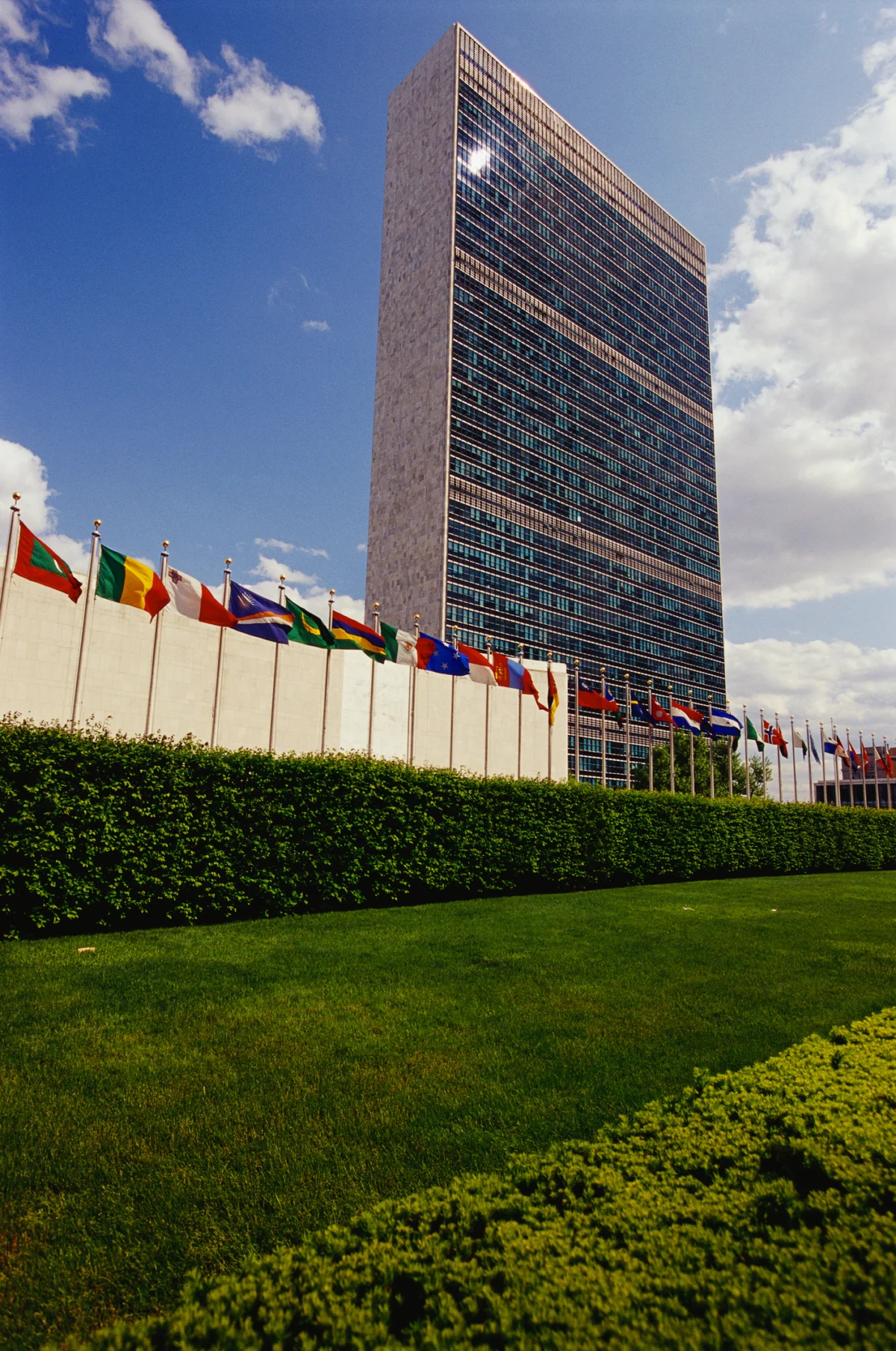
Speaking before a high-level side event at the United Nations General Assembly, John Denton, the Secretary General of the International Chamber of Commerce (ICC), issued a stark warning regarding the fragile state of global food security. Addressing a distinguished assembly that included the European Union’s High Representative for Foreign Affairs and Security Policy, Josep Borrell, as well as foreign ministers and senior officials from more than 25 nations and heads of United Nations humanitarian agencies, Denton emphasized that trade must be viewed as a vital humanitarian tool. He called for immediate, coordinated international action to restore critical trade routes in the Black Sea, noting that the window to prevent a significant worsening of global hunger is rapidly closing.
The address comes at a period of heightened volatility for global commodity markets. Denton highlighted that the disruption of key maritime corridors does not merely affect the immediate parties to a conflict but sends shockwaves through the global economy. These disruptions are felt most acutely by small-scale farmers in developing regions, such as East Africa, who are unable to access essential fertilizers, and by families in vulnerable nations who are forced to contend with soaring food inflation. According to Denton, the current convergence of geopolitical tensions and environmental risks threatens to undermine the progress made in stabilizing global food supplies over the past year.
The Success and Collapse of the Black Sea Grain Initiative
Central to Denton’s address was the precedent set by the Black Sea Grain Initiative (BSGI). Brokered in July 2022 by the United Nations and Türkiye, the initiative was designed to facilitate the safe navigation of commercial ships carrying grain and other foodstuffs from three key Ukrainian ports: Odesa, Chornomorsk, and Yuzhny/Pivdennyi. As a member of the UN Global Crisis Response Group, the ICC played a pivotal role in ensuring that the initiative remained grounded in the practical realities of the private sector, including agricultural supply chains, shipping logistics, and commodity insurance.
During its operation, the BSGI enabled the export of nearly 33 million tonnes of grain and food products to global markets. This massive influx of supply was instrumental in stabilizing global food prices, which had reached record highs following the onset of the conflict in Ukraine in early 2022. Beyond the sheer volume of goods, Denton noted that the initiative’s most significant contribution was the restoration of market confidence. It proved that even amidst active conflict, political cooperation could create "humanitarian maritime corridors" that allow trade to function for the benefit of the world’s most vulnerable populations.
However, the expiration of the deal in July 2023, following Russia’s decision to withdraw, has reintroduced a period of extreme uncertainty. The subsequent targeting of port infrastructure and the imposition of naval blockades have once again restricted Ukraine’s ability to export its harvests via the Black Sea. Denton warned that the lessons learned from the BSGI must not be forgotten, asserting that preventing a food crisis through diplomacy and trade facilitation is far more effective and less costly than responding to a full-scale humanitarian catastrophe after it has already begun.
A Convergence of Global Risks: The "Polycrisis" in Food Security
The ICC’s concern is driven by what many analysts describe as a "polycrisis"—a situation where multiple independent risks converge to create a compounding negative effect. Denton identified three primary drivers of current food security risks: the continued blockade of Black Sea ports, disruptions in the Strait of Hormuz, and the looming impact of the El Niño weather phenomenon.
While the Black Sea is a primary artery for wheat, corn, and sunflower oil, the Strait of Hormuz remains the world’s most important oil transit chokepoint. Any instability in the Middle East that affects this route has an immediate impact on energy costs, which in turn drives up the cost of agricultural production, processing, and transport. Furthermore, the return of El Niño conditions—a climate pattern characterized by the warming of surface waters in the eastern Pacific Ocean—is expected to disrupt global weather patterns. Historical data suggests that El Niño can lead to severe droughts in Southeast Asia and Australia, while causing heavy rainfall and flooding in parts of the Americas and East Africa. These climate-driven disruptions threaten to reduce yields of rice, sugar, and other staples, further tightening global supplies.
Denton argued that while the full effects of these risks may not be visible in today’s market prices, they are likely to manifest in the coming months. "The time to act is before the impacts are visible, not after they are felt," Denton stated, urging leaders to implement preventive measures to ensure that reduced harvests and tighter supplies do not translate into a new wave of global instability.
Supporting Data and the Economic Reality of Food Inflation
The urgency of Denton’s message is supported by data from the Food and Agriculture Organization of the United Nations (FAO). The FAO Food Price Index, which tracks the monthly change in international prices of a basket of food commodities, saw a significant decline during the period the Black Sea Grain Initiative was active. From its peak in March 2022, the index trended downward as Ukrainian grain reached markets in the Middle East, Africa, and Asia.
According to UN data, approximately 64% of the wheat exported through the BSGI went to developing nations. The World Food Programme (WFP), which provides life-saving food assistance to millions of people in conflict and disaster zones, sourced a significant portion of its grain from Ukraine. The cessation of these exports forces the WFP and other humanitarian agencies to source grain from more distant and expensive markets, stretching their already limited budgets at a time when the number of people facing acute food insecurity is at a record high.
Furthermore, the ICC’s network in Ukraine has reported a critical logistical bottleneck. With the Black Sea routes restricted, Ukraine has been forced to rely on overland "Solidarity Lanes" through Europe. While these routes have been helpful, they lack the capacity to handle the sheer volume of Ukrainian production. Denton noted that Ukrainian storage facilities are expected to reach full capacity within the next six weeks. If the grain cannot be moved, it will rot in silos, and farmers will lack the space or the financial capital to plant the next season’s crop, creating a multi-year deficit in global food availability.
Official Responses and the Search for Commercial Viability
The international community has reacted with varying degrees of optimism regarding the possibility of a new maritime agreement. EU High Representative Josep Borrell has consistently advocated for the "Solidarity Lanes" but acknowledges that maritime transport remains the only way to export grain at the scale required to feed the world. European leaders have expressed support for Ukraine’s efforts to establish a temporary "humanitarian corridor" that hugs the coastlines of NATO members Romania and Bulgaria, though this route remains fraught with security risks and high insurance premiums.
Denton emphasized that any long-term solution must be "commercially workable" and "operationally practical." For the private sector to participate, shipping companies must have guarantees of safety, and insurers must be able to provide coverage at rates that do not make the grain prohibitively expensive. The ICC has offered its expertise to work with international partners to design a framework that meets these criteria, bridging the gap between high-level political agreements and the logistical realities of global shipping.
Reacting to the ICC’s call, representatives from several African and Middle Eastern nations expressed their support for a renewed Black Sea agreement. These regions are particularly sensitive to price fluctuations; in countries like Egypt and Lebanon, where bread is a heavily subsidized staple, even a minor increase in international wheat prices can have significant fiscal and social consequences.
Broader Implications and the Path Forward
The situation in the Black Sea serves as a litmus test for the effectiveness of international cooperation in a multipolar world. The ICC’s stance is that trade is not just a commercial activity but a pillar of global stability. When trade routes are weaponized or allowed to fail, the resulting economic pressure can lead to social unrest, migration, and the destabilization of governments.
The ICC’s advocacy highlights a shift in how global business organizations are engaging with international diplomacy. By positioning trade as a humanitarian tool, the ICC is calling for a more integrated approach to crisis management—one where economic actors and political leaders work in tandem to protect the global commons.
As the United Nations General Assembly continues, the focus remains on whether the international community can find the political will to overcome the current deadlock. The "six-week window" mentioned by Denton provides a clear deadline for action. Without a breakthrough that allows for the large-scale export of Ukrainian grain, the world may face a winter characterized by tightening supplies and rising prices, undoing much of the recovery seen in 2023.
In his concluding remarks, Denton reiterated that the lesson from the Black Sea experience is clear: the cost of prevention is a fraction of the cost of failure. The International Chamber of Commerce remains committed to facilitating the dialogue necessary to reopen these vital trade arteries, ensuring that the global food system remains resilient in the face of unprecedented geopolitical and environmental challenges. The call to action is now with the world’s leaders to ensure that the tools of trade are utilized to protect the world’s most vulnerable populations from a preventable catastrophe.
About the Author