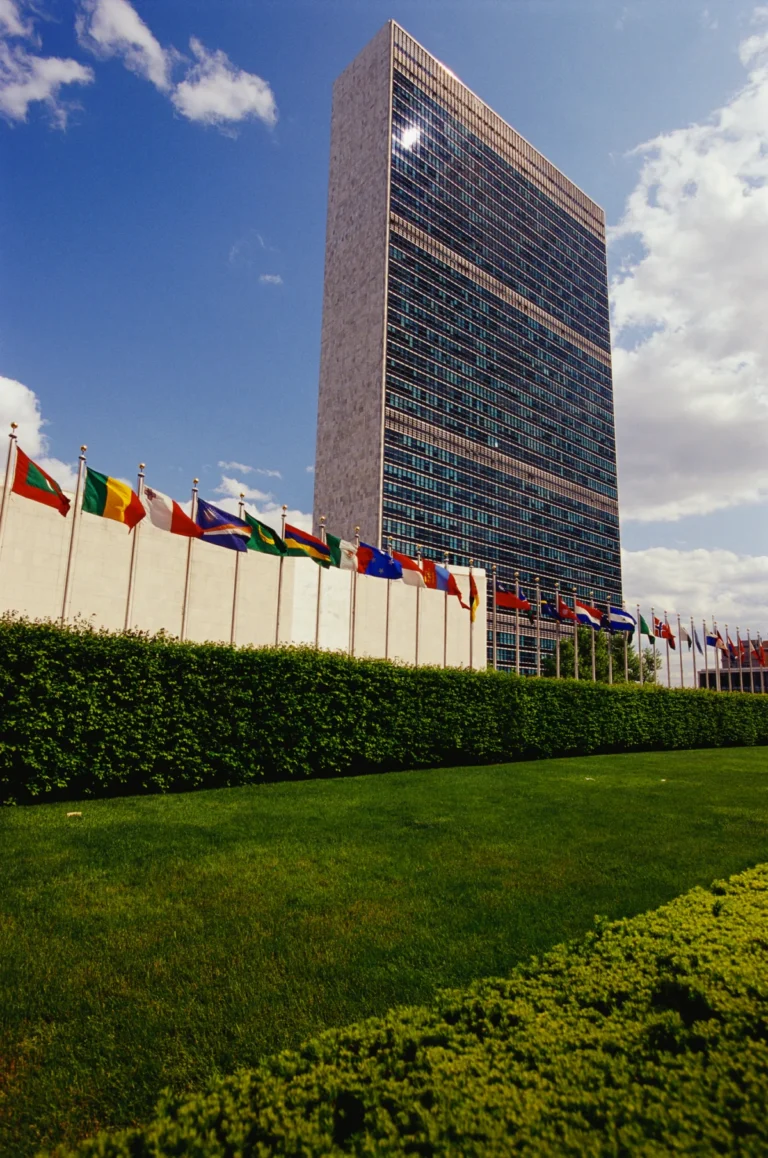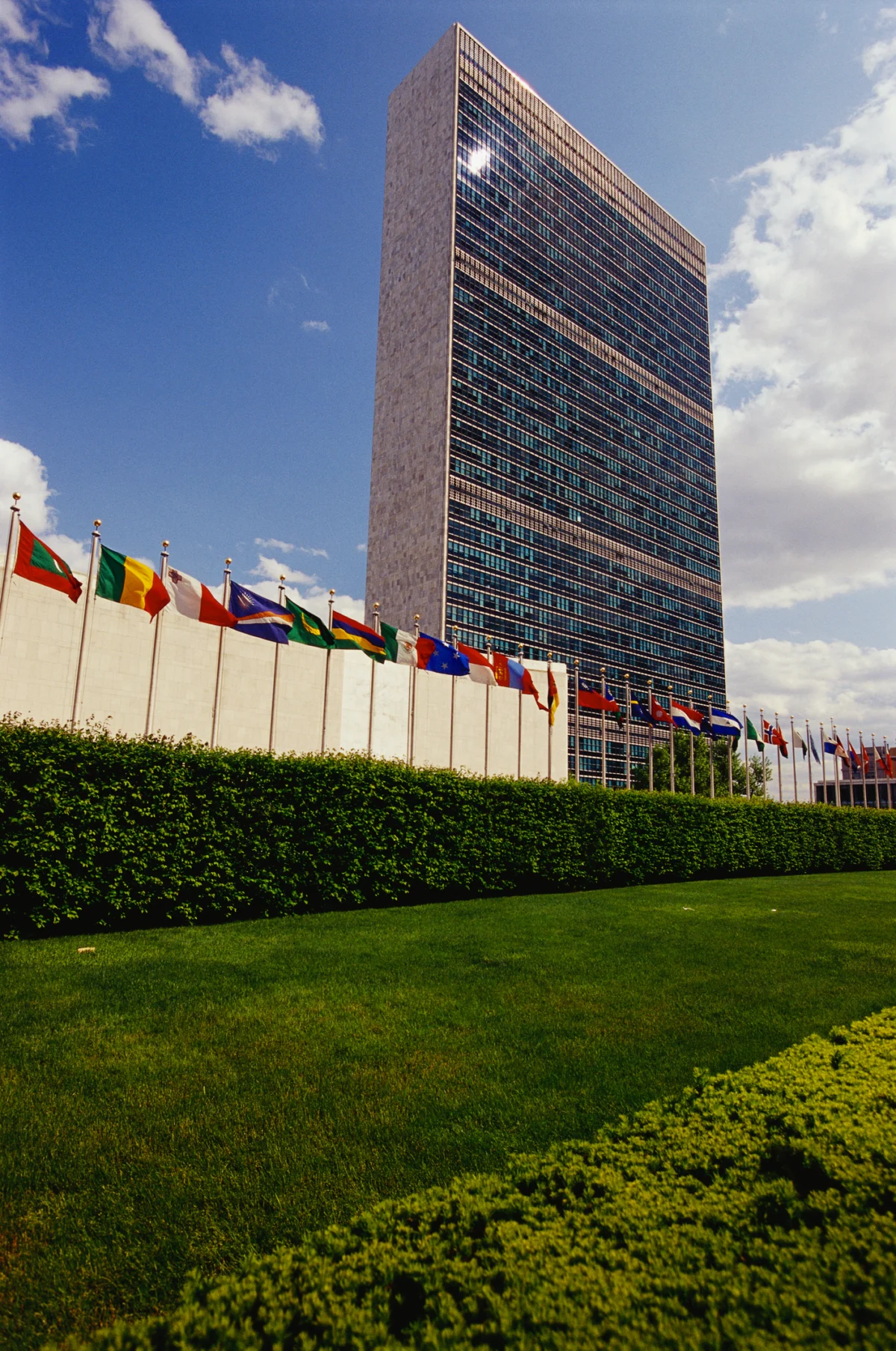
Addressing a high-level assembly at the United Nations General Assembly, John Denton, the Secretary-General of the International Chamber of Commerce (ICC), issued a stark warning regarding the fragile state of global food security and the imperative need for international cooperation to restore critical trade routes. Speaking to a distinguished audience that included the European Union’s High Representative for Foreign Affairs and Security Policy, Josep Borrell, as well as foreign ministers and senior officials from more than 25 nations and leaders of United Nations humanitarian agencies, Denton framed trade not merely as a commercial activity, but as a vital humanitarian instrument. His address centered on the escalating risks posed by the continued disruption of Black Sea maritime corridors and the broader systemic threats facing the global agricultural supply chain.
Denton’s remarks come at a precarious moment for international diplomacy and global logistics. The ICC, representing over 45 million companies in more than 170 countries, has been a central private-sector partner in navigating the economic fallout of the conflict in Ukraine. During his address, Denton underscored that when critical trade routes are severed, the shockwaves are felt far beyond the immediate geography of the conflict. He highlighted the plight of smallholder farmers in East Africa awaiting essential fertilizers and families across the Global South grappling with the inflationary pressure on basic staples. The Secretary-General emphasized that for humanitarian agencies, the closure of these routes translates directly into a diminished capacity to procure and distribute life-saving aid to the world’s most vulnerable populations.
The Evolution of the Black Sea Grain Initiative
To understand the gravity of the current situation, it is necessary to look at the precedent set by the Black Sea Grain Initiative (BSGI). Brokered in July 2022 by the United Nations and the Republic of Türkiye, the initiative was designed to facilitate the safe navigation of commercial vessels carrying grain and other foodstuffs from three key Ukrainian ports: Odessa, Chornomorsk, and Yuzhny. The ICC played a pivotal role as a member of the UN Global Crisis Response Group, providing the practical business intelligence necessary to make a humanitarian maritime corridor commercially viable.
Between its inception in July 2022 and its expiration in July 2023, the BSGI enabled the export of nearly 33 million tonnes of grain and food products. This massive volume of exports was instrumental in stabilizing global commodity markets, which had seen record price spikes following the start of the conflict in February 2022. According to data from the UN Food and Agriculture Organization (FAO), the initiative contributed to a sustained drop in the Food Price Index for several consecutive months, providing much-needed relief to import-dependent nations.
However, the initiative was not merely about volume; it was about the restoration of confidence. Denton noted that the BSGI proved that even in the midst of active hostilities, political cooperation could create the conditions necessary for the private sector to operate. Shipping companies, insurers, and commodity traders were able to return to the region because of the structured guarantees provided by the international community. The ICC’s involvement ensured that the technical requirements of shipping—such as insurance premiums and vessel inspections—were addressed in a manner that allowed the market to function under extraordinary circumstances.
A Convergence of Global Risks
While the Black Sea remains a focal point of concern, Denton’s address pointed to a "convergence of food security risks" that threatens to create a "perfect storm" for the global economy. The current blockade of Ukrainian ports is being compounded by other geopolitical and environmental factors.
Firstly, the ICC highlighted continued disruptions in the Strait of Hormuz, a critical chokepoint for global energy and trade. Any instability in this region adds significant costs to global shipping and increases the price of fuel, which is a primary input for agricultural production and transport. Secondly, the potential return of El Niño weather patterns poses a significant threat to crop yields in major producing regions, including Southeast Asia and parts of the Americas. El Niño typically brings extreme weather conditions—ranging from droughts to heavy flooding—that can devastate harvests of rice, corn, and wheat.
Denton argued that while the full effects of these combined risks may not be visible in today’s market prices, they are likely to manifest in the coming months. The lag between supply chain disruptions and retail price increases means that the international community is currently in a "quiet period" before a potential crisis. He stressed that the case for early, coordinated preventive action is undeniable, as the cost of responding to a full-scale famine or economic collapse far outweighs the cost of maintaining open trade routes.
The Six-Week Countdown: Ukraine’s Storage Crisis
A critical element of Denton’s address was the immediate logistical bottleneck facing Ukraine. According to reports from the ICC’s network within the country, Ukraine is facing a race against time regarding its grain storage capacity. With the autumn harvest approaching, existing silos and storage facilities are reaching their limits. Denton informed the UN assembly that there is an urgent need to move grain out of the country within the next six weeks to make room for new crops.
If the grain cannot be moved, it risks spoiling, or farmers may be forced to leave crops in the fields, leading to a massive loss of potential food supply. This storage crisis has a secondary effect: it disincentivizes future planting. If farmers cannot sell or store their current harvest, they will lack the capital and the space to plant for the next season, ensuring that the food shortage persists into the next calendar year. The ICC emphasized that delays in reopening the Black Sea routes will have long-term consequences for global food availability and affordability that could take years to rectify.
Supporting Data and Economic Impact
The scale of the disruption is reflected in the data surrounding Ukraine’s role in global agriculture. Prior to the conflict, Ukraine was often referred to as the "breadbasket of Europe," accounting for 10% of the world wheat market, 15% of the corn market, and 13% of the barley market. Most significantly, it provided over 50% of the global trade in sunflower oil.
The World Food Programme (WFP) historically procured a significant portion of its wheat from Ukraine to support operations in countries like Afghanistan, Ethiopia, and Yemen. When the Black Sea routes are closed, the WFP is forced to buy grain from more distant markets at higher prices, effectively reducing the amount of aid they can provide with the same budget. Data from the UN shows that under the BSGI, roughly 65% of the wheat exported went to developing countries. The loss of this direct pipeline places an asymmetric burden on the world’s poorest nations.
Furthermore, the ICC pointed out that the disruption affects the global fertilizer market. Russia and Belarus are major exporters of potash and nitrogen-based fertilizers. The logistical and sanctions-related hurdles in moving these products have led to a "fertilizer crunch." When farmers in developing nations cannot afford or access fertilizer, their crop yields drop, creating a secondary wave of food insecurity that is localized but no less devastating.
The Call for Commercial Workability
A recurring theme in Denton’s advocacy is the necessity of "commercial workability." For any international agreement to succeed in the Black Sea, it must satisfy the requirements of the private sector. This includes:
- Affordable Marine Insurance: Insurers must be willing to provide hull and cargo insurance for vessels entering a conflict zone. This requires clear security guarantees and potentially the creation of international backstop funds.
- Operational Practicality: Inspection regimes must be efficient. Under the previous BSGI, delays in the Joint Coordination Centre (JCC) in Istanbul often led to a backlog of ships, increasing costs for shipowners and reducing the overall throughput of the corridor.
- Scale: Any solution must be capable of handling the millions of tonnes required to clear Ukraine’s silos. While "Solidarity Lanes" via rail and road through Europe have been helpful, they lack the capacity of high-volume maritime transport.
Denton stated that the ICC stands ready to work with international partners to ensure that any new solution meets these criteria. The organization’s role is to bridge the gap between high-level diplomatic negotiations and the ground-level realities of shipping and trade finance.
International Response and Strategic Implications
The reaction from the international community at the UNGA event was one of cautious urgency. EU High Representative Josep Borrell has frequently pointed out that the "weaponization of food" is a violation of international norms. Representatives from several African and Middle Eastern nations echoed Denton’s concerns, noting that their domestic stability is closely tied to the price of bread and fuel.
The strategic implication of Denton’s message is a shift in how trade is viewed in the context of conflict. Traditionally, trade is often seen as a casualty of war or a tool for sanctions. However, the ICC’s perspective reclaims trade as a stabilizing force. By maintaining commercial links, the international community can mitigate the humanitarian fallout of geopolitical tensions.
The Secretary-General’s conclusion was a call to proactive diplomacy. "The lesson from the Black Sea experience is clear: preventing a food crisis is far easier than responding to one," Denton told the delegates. He argued that the international community often waits for the "visible impacts"—such as images of famine or mass protests—before taking decisive action. The ICC’s position is that the indicators of a coming crisis are already present in the supply chain data, and the time to act is now, before the window of opportunity provided by the remaining storage capacity in Ukraine closes.
As the UN General Assembly continues, the ICC’s advocacy serves as a reminder that the global economy is an interconnected web. The blockage of a port in the Black Sea is not a localized event; it is a disruption to a global system that billions of people rely on for their basic survival. The challenge for the gathered world leaders is to find the political will to match the practical solutions offered by the global business community. Without a swift return to the negotiating table to secure a commercially viable and operationally sound maritime corridor, the "humanitarian tool" of trade will remain locked, with devastating consequences for global food security in the months to come.
About the Author