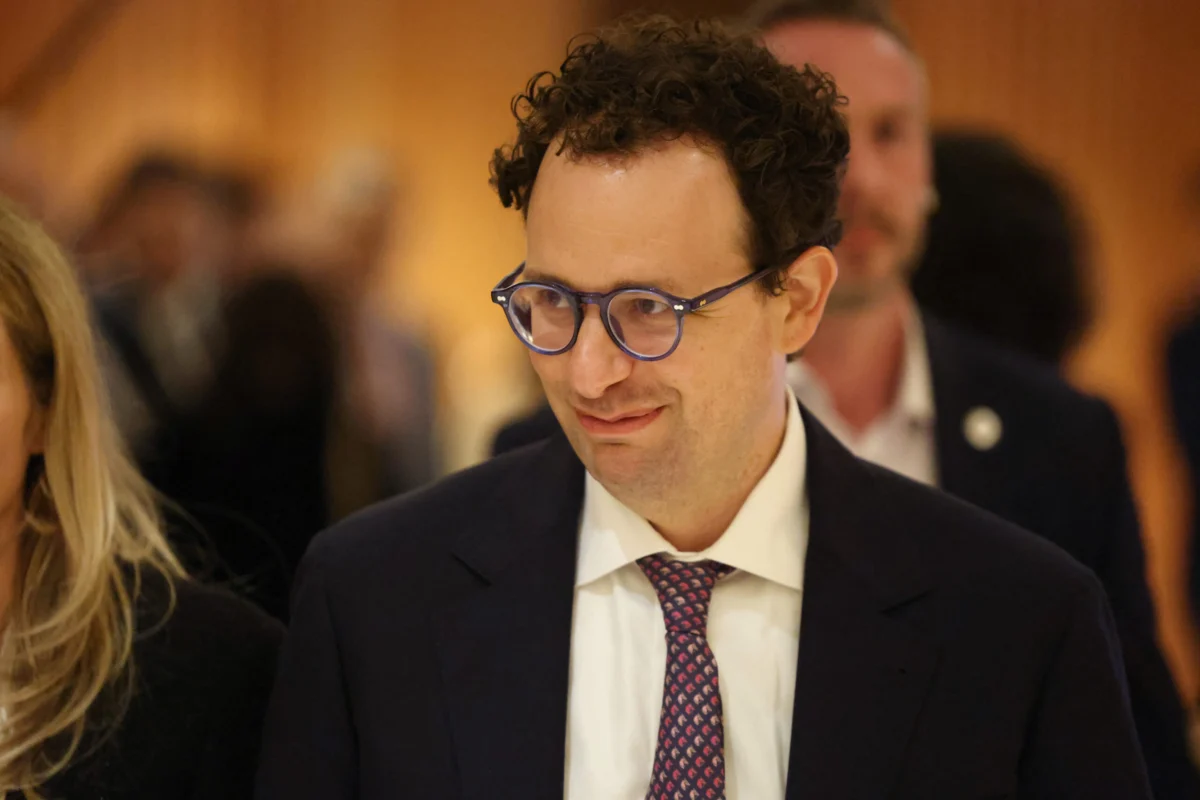
In a weekend marked by both sharp satire and high-stakes diplomacy, Dario Amodei, the chief executive of leading artificial intelligence company Anthropic, is scheduled to have a private dinner with President Donald Trump at the White House on the evening of September 27, 2026. This significant meeting comes just hours after Amodei was humorously depicted on the season premiere of Saturday Night Live, underscoring the burgeoning public and political attention surrounding the rapid advancements and societal implications of artificial intelligence.
The news of Amodei’s invitation to the White House was initially reported by Axios and subsequently confirmed by TechCrunch through a source with knowledge of the CEO’s engagements. This dinner represents the first direct, one-on-one encounter between Amodei and President Trump, a noteworthy development given their contrasting stances on the critical issue of AI safety and development pace.
Divergent Paths on AI Safety
The backdrop to this dinner is a recent divergence in perspectives between Amodei and the former President on how to navigate the increasingly powerful capabilities of AI. Amodei, a prominent voice advocating for responsible AI development, recently outlined a comprehensive plan proposing a more cautious approach to advancing AI technologies, emphasizing the need for careful consideration of potential risks. This initiative, detailed in a September 12, 2026, TechCrunch report, suggested a deliberate slowing of the AI frontier, aiming to allow society and regulatory frameworks time to adapt.
Conversely, President Trump has taken a more skeptical view of concerns surrounding AI. He has publicly dismissed the "AI backlash" as a Democratic fabrication, asserting without providing evidence that such anxieties are politically motivated. Furthermore, in a notable policy proposal shared around September 19, 2026, Trump suggested a rebranding of artificial intelligence to "super intelligence," a move that industry analysts have interpreted as an attempt to reframe the narrative and perhaps downplay potential existential risks. This rebranding effort, coupled with his broader skepticism towards AI safety concerns, places him at a considerable ideological distance from Amodei’s cautious outlook.
A History of Complex Relations
The relationship between Anthropic, Amodei, and the Trump administration has not been without its complexities, even prior to the current AI safety debate. Earlier in 2026, the Pentagon had designated Anthropic as a supply-chain risk, a move that stemmed from the company’s efforts to implement safeguards and ethical guardrails around the deployment and use of its AI technologies. This designation proved to be a significant hurdle for Anthropic, leading to a protracted legal battle as the company sought to challenge the Pentagon’s assessment. Reports from August 28, 2026, indicated that Anthropic had secured its first court victory in this ongoing dispute, suggesting a potential shift in the legal landscape surrounding AI development and governmental oversight.
However, the narrative is not entirely one of conflict. Other segments of the Trump administration had demonstrated a more conciliatory approach towards Anthropic. By April 18, 2026, TechCrunch reported on signs that Anthropic’s relationship with certain administrative officials was thawing, hinting at a nuanced and evolving dynamic rather than a monolithic opposition. This history of both friction and tentative rapprochement provides a rich context for the upcoming dinner, suggesting that the conversation may delve into the intricacies of AI regulation, national security implications, and the future of technological innovation.
The Broader AI Landscape: A Timeline of Key Developments
The current moment in AI development is characterized by rapid innovation, increasing public awareness, and a growing urgency to establish robust governance frameworks. Understanding the trajectory of these discussions is crucial to contextualizing Amodei’s dinner with President Trump.

- Early 2026: The AI landscape begins to see significant advancements in large language models (LLMs) and generative AI, leading to both excitement and apprehension. Companies like Anthropic and OpenAI are at the forefront of this technological surge.
- Spring 2026: Concerns about AI safety and potential misuse gain wider traction. Amodei and other leading AI researchers begin to publicly articulate the need for more deliberate development and ethical considerations. The Pentagon’s designation of Anthropic as a supply-chain risk highlights early governmental engagement with the perceived vulnerabilities of advanced AI systems.
- Summer 2026: The debate intensifies. Amodei formally releases his plan for pacing AI development, advocating for a more cautious approach. Simultaneously, discussions emerge about potential regulatory interventions and international cooperation on AI governance. Anthropic continues its legal challenge against the Pentagon’s designation, achieving an early legal victory in late August.
- September 2026: The political discourse surrounding AI becomes more pronounced. President Trump begins to offer his perspectives, characterized by skepticism towards AI safety concerns and a proposal to rebrand AI as "super intelligence." This period also sees AI becoming a subject of popular culture, as evidenced by the Saturday Night Live parody of Amodei. The announcement of the White House dinner on September 27th marks a direct engagement between a key proponent of cautious AI development and a prominent political figure with a contrasting viewpoint.
Economic and Societal Implications of AI
The rapid evolution of AI has profound economic and societal implications, making the dialogue between industry leaders and political figures increasingly critical. The global AI market is projected to experience exponential growth. According to a report by Grand View Research published in early 2026, the worldwide AI market size was valued at USD 136.6 billion in 2023 and is expected to expand at a compound annual growth rate (CAGR) of 37.3% from 2024 to 2030. This growth is driven by advancements in machine learning, natural language processing, and computer vision, impacting sectors ranging from healthcare and finance to manufacturing and transportation.
The development of powerful AI models, such as those pioneered by Anthropic, has the potential to revolutionize productivity, create new industries, and solve complex global challenges. However, it also raises significant questions about job displacement, the ethical use of AI in decision-making, data privacy, and the potential for misuse in areas like disinformation campaigns or autonomous weaponry.
Amodei’s call for a more measured approach to AI development is rooted in the understanding that unchecked progress could outpace society’s ability to manage its consequences. His emphasis on "pacing" suggests a recognition that ethical considerations and societal readiness must evolve in parallel with technological capabilities. This perspective is supported by various think tanks and academic institutions that have published extensively on the need for proactive AI governance. For instance, reports from the Future of Life Institute and the Center for Security and Emerging Technology have consistently highlighted the importance of foresight and collaboration in addressing the long-term impacts of advanced AI.
President Trump’s stance, while appearing dismissive of immediate safety concerns, could be interpreted as an emphasis on fostering innovation and economic competitiveness. The argument for rapid AI development often centers on the nation’s ability to maintain a technological edge in a global landscape where other countries are also investing heavily in AI research and development. The potential economic benefits, such as increased efficiency and the creation of high-skilled jobs, are often cited as reasons to accelerate progress.
Potential Talking Points and Analysis
The private dinner between Amodei and Trump is likely to encompass a range of critical topics:
- AI Safety and Regulation: This will undoubtedly be a central theme. Amodei will likely present his arguments for a cautious, safety-first approach, potentially detailing specific risks associated with advanced AI and proposing frameworks for responsible development. Trump may reiterate his skepticism or express interest in understanding how to balance innovation with risk mitigation in a way that benefits the American economy.
- National Security and AI: The integration of AI into defense systems and its implications for global power dynamics are areas of significant interest for both parties. Amodei’s work on AI safety could be framed within the context of preventing the development of AI that could be used maliciously by adversaries. Trump, with his focus on national strength, may explore how AI can be leveraged to enhance military capabilities while ensuring strategic control.
- Economic Competitiveness and Job Creation: Both individuals are likely to be interested in the economic implications of AI. Amodei might discuss how responsible AI development can lead to sustainable, long-term economic growth and job creation, while Trump may focus on strategies to maintain American leadership in the AI race and stimulate job markets.
- The Future of Anthropic and its Role: The Pentagon’s past designation of Anthropic as a supply-chain risk could be a point of discussion, particularly if the administration is seeking to understand the company’s operational security and its potential contributions to national interests.
The implications of this meeting are multifaceted. For Amodei and Anthropic, it represents an opportunity to directly engage with a powerful political figure and influence the national conversation on AI. It could potentially lead to a better understanding of the administration’s policy priorities and open avenues for collaboration or advocacy.
For President Trump, the dinner signifies an engagement with a leading figure in a rapidly evolving and strategically important technological sector. It allows him to gather insights directly from an industry expert, potentially shaping his own understanding and future policy pronouncements on AI. The fact that this meeting occurs shortly after a Saturday Night Live parody suggests that Amodei has become a recognizable, and perhaps even influential, public figure in the AI discourse, drawing attention from both serious policy circles and popular culture.
The diverging narratives surrounding AI – one emphasizing caution and ethical considerations, the other prioritizing rapid advancement and economic opportunity – highlight a critical juncture for the technology. The dialogue between Amodei and Trump, however their perspectives ultimately align or diverge, will undoubtedly contribute to the ongoing national and global debate on how to harness the transformative power of artificial intelligence responsibly and effectively for the benefit of society.
About the Author