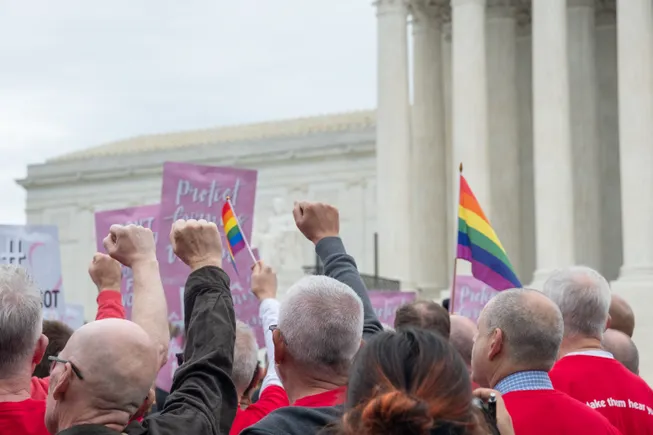
The landmark Supreme Court decision in Bostock v. Clayton County, which held that Title VII of the Civil Rights Act of 1964 prohibits employment discrimination based on sexual orientation and transgender status, continues to be a focal point for legal interpretation and ongoing disputes. While Bostock aimed to clarify that firing an individual for being gay or transgender is a form of sex discrimination, the practical application of this ruling in lower courts has revealed persistent ambiguities and divergent approaches to analyzing such claims. A recent case, Kulwicki, exemplifies this ongoing judicial wrestling with the implications of the 2020 decision, highlighting a key contention over how to properly apply the Bostock framework when evaluating employment policies.
The Central Dispute: Interpreting Bostock’s Analytical Framework
At the heart of the Kulwicki case lay a fundamental disagreement between the plaintiff and her employer regarding the analytical method required by Bostock. The plaintiff argued that Bostock mandated a direct analysis of her claims through the lens of sexual orientation, independent of any consideration of sex. In essence, she contended that the discrimination was solely based on her being attracted to women, and this should be assessed directly.
Conversely, her employer, and a magistrate judge who initially presided over the case, posited a different interpretation. They argued that a faithful application of Bostock necessitates a "sex-flip" analysis. This approach requires courts to substitute the plaintiff’s sex with the opposite sex to determine whether the challenged employment policy or action would still be discriminatory. This method, they contended, directly addresses the Supreme Court’s reasoning that discrimination based on sexual orientation is inherently a form of sex discrimination.
Judge Michael Brown of the U.S. District Court for the Northern District of Georgia ultimately sided with the employer’s interpretation. In his ruling, Judge Brown emphasized that Bostock did not create sexual orientation or transgender status as standalone protected characteristics separate from sex. Instead, he explained, these identities are "swept in" as protected categories when a court determines whether a plaintiff’s sex was the "but-for" cause of an adverse employment decision.
"The Court cannot elevate Bostock‘s statement that discrimination on the basis of sexual orientation entails discrimination on the basis of sex without considering how the Supreme Court got there," Judge Brown wrote in his decision. "The upshot from this discussion is clear: faithful application of Bostock requires flipping one thing – Plaintiff’s sex – and deciding whether the plan treats her differently on that basis."
Applying the Sex-Flip Analysis to Fertility Benefits
In Kulwicki, the plaintiff’s claim stemmed from her employer’s fertility benefits policy. She alleged that the policy discriminated against her on the basis of her sexual orientation because it offered less favorable coverage for fertility treatments when the intended parent was a woman in a same-sex relationship compared to a heterosexual couple.
Applying the sex-flip methodology, Judge Brown constructed a hypothetical male comparator. He reasoned that if the plaintiff were a man, and assuming the fertility benefit plan did not cover male infertility treatment, a hypothetical male employee would not receive better treatment under the plan’s existing conditions. The key here, according to the judge, was that the plan’s limitations were tied to the nature of the treatment and the anatomical capabilities of the individuals involved, not solely their sex or sexual orientation.
Furthermore, Judge Brown addressed the complexity of hypothetical scenarios. He stated that even if the plan had covered male infertility treatment, changing the type of treatment sought by the hypothetical male plaintiff would constitute altering a variable beyond the plaintiff’s sex. This, he concluded, would not lead to a similarly situated comparator, as the comparison must remain as close as possible to the original plaintiff’s situation, with only the sex being altered.
The judge also rejected a second hypothetical scenario proposed by the magistrate judge. This scenario involved comparing the plaintiff to a hypothetical male employee whose female partner could access a lower-cost eligibility option unavailable to the plaintiff. Judge Brown found this scenario problematic because it "implicates a completely different set of facts" and introduced too many additional variables beyond the sex of the comparator.
The Influence of Eleventh Circuit Precedent
Judge Brown’s decision in Kulwicki also drew upon a significant en banc ruling from the 11th U.S. Circuit Court of Appeals in the case of Lange v. Houston County, Ga.. This 2025 decision involved a transgender female plaintiff who challenged her employer’s health insurance policy for excluding certain gender reassignment procedures.
In Lange, the Eleventh Circuit, sitting en banc, reversed a prior panel decision and ruled in favor of the employer. The en banc court held that the benefits policy was not discriminatory under Bostock because it did not treat any employees differently based on a protected characteristic. The court’s reasoning mirrored the sex-flip analysis employed in Kulwicki. The Eleventh Circuit reasoned that by changing the plaintiff’s sex to establish a comparator – a male employee seeking coverage for gender reassignment from male to female – the same plan would deny coverage. Therefore, no disparate treatment based on sex was found.
This reliance on Lange underscores a trend where courts are increasingly adopting the sex-flip analytical framework, even when faced with complex discrimination claims related to gender identity and sexual orientation.
Broader Implications and Ongoing Debates
The persistent legal wrangling over the interpretation of Bostock highlights the challenges of applying a broad Supreme Court ruling to the myriad factual scenarios that arise in employment law. While Bostock provided a crucial legal foundation for LGBTQ+ workplace protections, its practical implementation continues to be debated and refined.
Timeline of Key Developments:
- June 15, 2020: The Supreme Court issues its decision in Bostock v. Clayton County, holding that Title VII prohibits employment discrimination based on sexual orientation and transgender status.
- Post-Bostock Era: Numerous lower court cases emerge, grappling with the interpretation and application of the Bostock ruling.
- 2025 (Hypothetical En Banc Ruling): The 11th U.S. Circuit Court of Appeals issues its en banc decision in Lange v. Houston County, Ga., affirming the use of the sex-flip analysis in gender identity discrimination cases.
- Recent Case (Kulwicki): The U.S. District Court for the Northern District of Georgia, in Kulwicki, adopts the sex-flip analysis, ruling against a plaintiff alleging discrimination in fertility benefits.
Supporting Data and Context:
The Bostock decision followed a significant shift in societal attitudes and a growing body of legal precedent at the state and federal levels recognizing LGBTQ+ rights. However, the legal landscape remained fragmented, with federal agencies and different circuit courts offering varying interpretations. The Bostock ruling aimed to create a unified federal standard.
The complexity of analyzing employment policies for discrimination is further illustrated by the nature of the Kulwicki claim. Fertility benefits, often tied to complex medical procedures and eligibility criteria, can inadvertently create disparate impacts. While the Bostock decision protects against intentional discrimination, the analysis of seemingly neutral policies that disproportionately affect certain groups remains a critical area of litigation. The "but-for" causation standard, as emphasized by Judge Brown, requires a direct link between the protected characteristic and the adverse employment action.
Official Responses and Regulatory Landscape:
The debate over Bostock‘s implications has extended beyond the courtroom. Federal agencies, including the U.S. Equal Employment Opportunity Commission (EEOC), have been tasked with developing guidance and enforcing Title VII protections.
For instance, the EEOC initially proposed workplace harassment guidance that incorporated Bostock‘s protections, explicitly labeling certain acts affecting LGBTQ+ employees and employees who have had an abortion as harassment. However, this guidance was later rescinded, sparking a strong reaction from Democratic lawmakers. In February, following the EEOC’s decision, they reintroduced legislation aimed at addressing such harassment. This demonstrates the broader political and social dimensions of the ongoing conversation surrounding LGBTQ+ workplace rights.
Broader Impact and Implications:
The Kulwicki decision and the continued reliance on the sex-flip analysis in cases like Lange suggest that the path to fully realizing the protections intended by Bostock may be more protracted than initially anticipated. Employers, legal practitioners, and employees alike will need to navigate these evolving interpretations.
For employers, the need for clear, equitable, and consistently applied employment policies remains paramount. Understanding the nuances of Title VII, as interpreted in light of Bostock and subsequent case law, is crucial for mitigating legal risks. This includes a careful review of benefits packages, anti-discrimination policies, and complaint procedures.
For employees and their advocates, the Kulwicki ruling serves as a reminder that establishing a claim of discrimination under Bostock requires a meticulous and often complex legal analysis. The focus on the "but-for" causation and the method of constructing comparators will likely continue to be a point of contention.
The ongoing legal discourse surrounding Bostock v. Clayton County signifies a critical period in the evolution of employment law. While the Supreme Court’s decision was a significant victory for LGBTQ+ rights, the judiciary’s efforts to translate that ruling into practical application are revealing the inherent complexities of discrimination law and the need for continued clarity and potential legislative action to ensure comprehensive protections for all workers. The legal journey to fully understand and implement the broad mandate of Bostock is far from over, with future cases expected to further shape its interpretation and impact on the American workplace.
About the Author