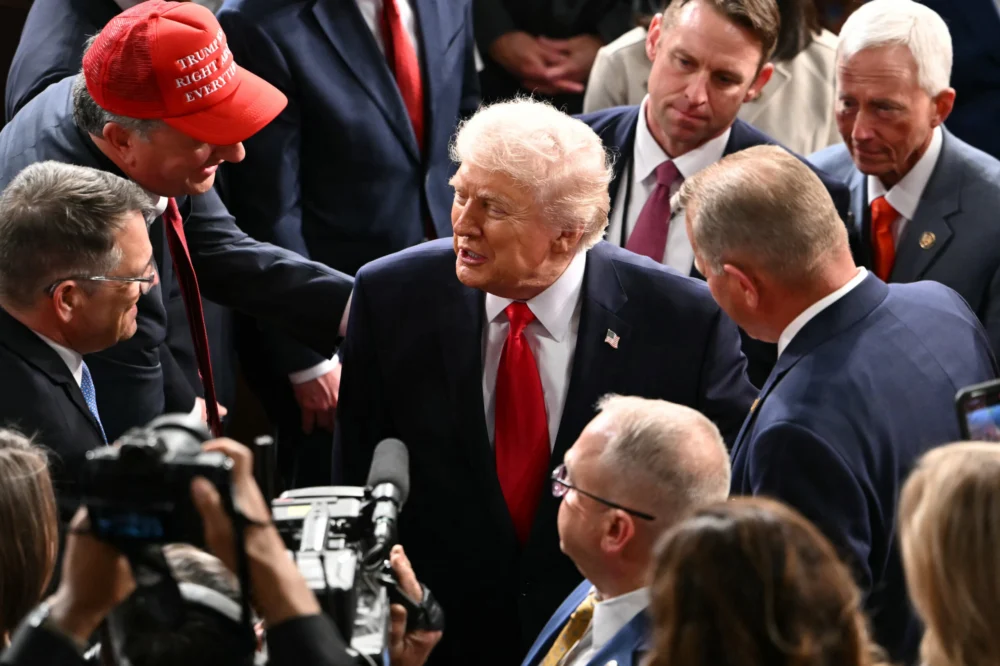
WASHINGTON D.C. – In a notable strategic departure from his previous addresses, U.S. President Donald Trump refrained from directly naming China during his State of the Union address on Tuesday, February 24, 2026, a significant omission just weeks before his highly anticipated trip to Beijing. The nearly 90-minute speech, one of the longest in U.S. presidential history, spanned a broad spectrum of domestic and international issues, yet deliberately downplayed overt confrontation with the world’s second-largest economy, signaling a calculated shift in diplomatic posture.
A Deliberate Diplomatic Silence
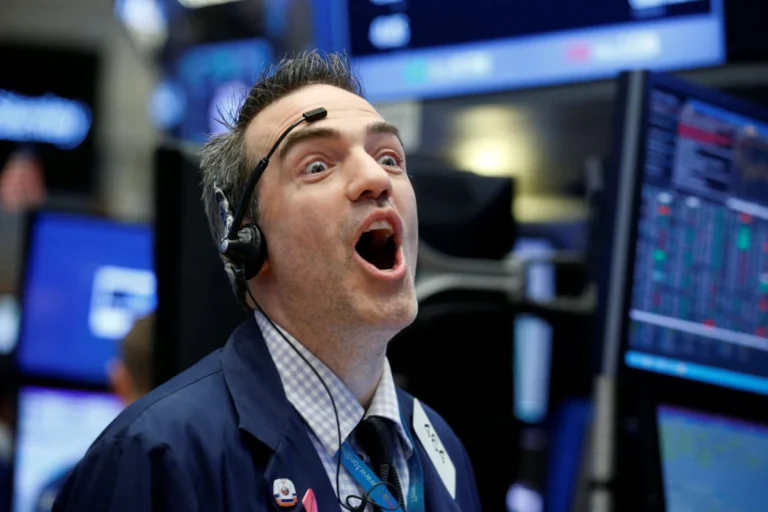
President Trump’s address, delivered in the House Chamber of the U.S. Capitol, focused heavily on themes of economic prosperity, national security, and judicial appointments. He touched upon inflation, celebrated recent stock market records, and highlighted legislative achievements. However, the absence of direct, critical references to China stood in stark contrast to his past rhetoric. During his first term from 2017 to 2021, Trump consistently used his State of the Union platforms to underscore perceived threats from Beijing, particularly concerning trade imbalances, intellectual property theft, and regional military expansion. These earlier speeches often featured direct criticisms of Chinese trade practices and calls for reciprocal market access, reflecting the escalating trade tensions of that era.
The singular mention of China within the 2026 address was indirect, embedded in a broader critique of international adversaries. Trump referenced "Russian and Chinese military technology" as guarding Venezuelan President Nicolas Maduro during the operation that ultimately led to the foreign leader’s capture. This isolated reference, devoid of any broader policy critique or economic challenge, underscored the President’s apparent strategy to avoid a direct diplomatic spat with Beijing in the immediate lead-up to his visit.
Context of Previous Engagements and Escalating Tensions
The period between Trump’s first term and the current juncture witnessed a dramatic recalibration of U.S.-China relations. Beginning in 2018, the two economic superpowers embarked on a protracted trade war, characterized by the imposition of punitive tariffs on hundreds of billions of dollars worth of goods. By the spring of the previous year, tariffs had escalated significantly, with rates on certain goods reaching well over 100%. This period of intense economic friction saw American businesses and consumers grapple with increased costs, while Chinese manufacturers faced reduced access to a crucial export market.
A temporary reprieve arrived in October of the previous year with a "trade truce" agreement, which saw both nations reduce tariff rates to below 50% for a period of twelve months. This détente was accompanied by Beijing tightening its restrictions on rare earths exports worldwide. China, a dominant force in the global supply chain for these critical minerals—essential for technologies ranging from smartphones to defense systems—exercised its leverage, adding another layer of complexity to the bilateral relationship.

Analysts Weigh In: Election Year Calculus and Strategic Stability
Analysts are largely in agreement that the omission was a deliberate strategic choice, heavily influenced by the upcoming U.S. midterm elections in November and the imminent diplomatic visit. "Trump doesn’t want to pick a fight with China in an election year," remarked Gabriel Wildau, managing director at Teneo, a global CEO advisory firm. "Stability in U.S.-China relations is a priority for the president at least this year and potentially for the rest of his term." This perspective highlights the domestic political calculations at play, suggesting that a confrontational stance on China might not align with the administration’s electoral objectives, particularly when focusing on domestic economic narratives.
The planned visit to Beijing, scheduled from March 31 to April 2, marks the first trip by a U.S. president to China since 2017. This visit is laden with symbolic and substantive significance, offering a crucial opportunity to either solidify the recent trade truce or address lingering points of contention. However, a subtle diplomatic tension has emerged regarding the visit’s logistics. George Chen, a partner at The Asia Group, a strategic advisory firm, pointed out that "China’s foreign ministry has yet to confirm exact dates for the visit." Chen elaborated, "That makes Trump look more desperate to visit China more than how much [Chinese President Xi Jinping] wants to host him." This observation suggests a power dynamic where China may be subtly asserting its diplomatic position, making the U.S. appear more eager for engagement. Chen concluded, "The lack of mentions about China in Trump’s speech is another example to show how Trump stays cautious now about U.S.-China relations."
The Economic Undercurrents: Tariffs, Rare Earths, and the Supreme Court
The economic backdrop to Trump’s address is complex, marked by both the existing trade truce and new uncertainties regarding tariff policy. The U.S. Supreme Court, just days before the SOTU, delivered a significant ruling that struck down certain tariffs Trump had imposed on a swath of countries last year. This legal setback created a momentary void in the administration’s trade arsenal. However, the President quickly signaled his intent to find an "alternative basis" for raising global tariff rates, demonstrating his continued commitment to leveraging tariffs as a policy tool.
This uncertainty underscores the precarious nature of global trade relations, even as the U.S. and China attempt to stabilize their own. Wildau further analyzed the President’s priorities, stating, "The state of the union showed Trump thinks glorifying U.S. military triumphs over weak states like Venezuela makes better election year politics than fighting with China over rare earths." This analysis suggests a calculated trade-off: prioritize readily digestible narratives of military strength and domestic economic success over the more intricate and potentially contentious issue of trade disputes with China, especially those involving critical resources like rare earths. The global market for rare earths, where China commands an estimated 80-90% of processing capacity, represents a significant strategic vulnerability for the U.S. and its allies. Diversifying these supply chains is a long-term strategic goal, but one that is difficult to achieve quickly.
Domestic Repercussions and International Perceptions
While the U.S. media dissected Trump’s speech, local attention in China was notably muted. Chinese state media outlets, primarily on social media platforms like Weibo, highlighted opposition within the U.S. Congress to Trump’s address, focusing on domestic political divisions rather than the substance of U.S.-China relations. This selective reporting suggests a cautious approach from Beijing, perhaps awaiting the outcome of the upcoming presidential visit before offering more definitive commentary.

The unpredictability of Trump’s policy on Beijing was also highlighted by Yue Su, principal economist at the Economist Intelligence Unit (EIU). "Trump’s limited mention of China also reflects how unpredictable his policy on Beijing can be," she observed. Su drew a contrast with Trump’s predecessor, Democrat U.S. President Joe Biden, who "consistently referred to China in his speeches, which underscored a degree of continuity and predictability in his China policy." This lack of consistent messaging, while potentially strategic, can create uncertainty for businesses and international partners.
The Democratic Party’s official rebuttal to Trump’s State of the Union, delivered by Virginia Governor Abigail Spanberger, seized upon the perceived weakness in Trump’s foreign policy. Spanberger directly criticized the President, stating, "But as the president spoke of his perceived successes tonight, he continues to cede economic power and technological strength to Russia, bow down to China, bow down to a Russian dictator and make plans for war with Iran." This robust critique from the opposition signals that China policy, despite Trump’s current soft-pedaling, remains a potent political weapon in the U.S. domestic arena.
The Prospect of a "Big Deal" and Future Implications
For a U.S. president who, in his first term, frequently called out Chinese President Xi Jinping by name in public speeches, the conspicuous absence of direct confrontation with the world’s second-largest economy in this SOTU marks a significant strategic pivot. This shift is widely interpreted as paving the way for a potentially significant outcome from the upcoming Beijing trip.
EIU’s Yue Su articulated the dual strategic benefit for Trump: "If Trump seals a deal during his Beijing trip, he could easily frame it as a major achievement for his base." Such a deal, potentially involving significant Chinese purchases of U.S. agricultural products or concessions on market access, could be presented as a tangible victory for American workers and farmers, bolstering his image as a dealmaker ahead of the midterms. Conversely, Su added, "And if negotiations do not go well, a retaliatory or hardline approach could be presented in a similarly positive light domestically." This suggests a flexible strategy where either success or failure can be spun to domestic political advantage, underscoring the transactional nature of Trump’s foreign policy approach.
Steven Okun, founder and CEO of Singapore-based APAC Advisors, reiterated that the SOTU’s focus was understandably on topics directly impacting the midterm elections, which, in this specific context, did not overtly include China. However, Okun pointed out a crucial economic lever: "If Trump really wanted to address U.S. consumer affordability, lowering tariffs on China would show up much quicker in people’s pocketbooks." He concluded on CNBC’s "Access Middle East" that "we may see a deal on tariffs with China end of March or early April," indicating that tariff reductions could be a central component of any agreement reached in Beijing.
The expectation is high that numerous U.S. company executives will accompany President Trump on his trip to China. These business leaders often play a crucial role in facilitating and supporting commercial deals, particularly large-scale purchases of American goods, which could be a key deliverable of the visit. The prospect of such agreements has led to considerable speculation among market watchers. Marko Papic, chief strategist at global investment research firm BCA Research, succinctly summarized the prevailing sentiment when asked about Trump’s limited discussion of China: "A big deal is coming!"
The coming weeks will reveal the true extent of this diplomatic tightrope walk. President Trump’s calculated silence on China in his State of the Union address, combined with the anticipation surrounding his Beijing visit, sets the stage for a critical juncture in U.S.-China relations. The outcome will not only shape trade and geopolitical dynamics but also carry significant weight for President Trump’s domestic political standing as the U.S. heads into its midterm election cycle.
About the Author