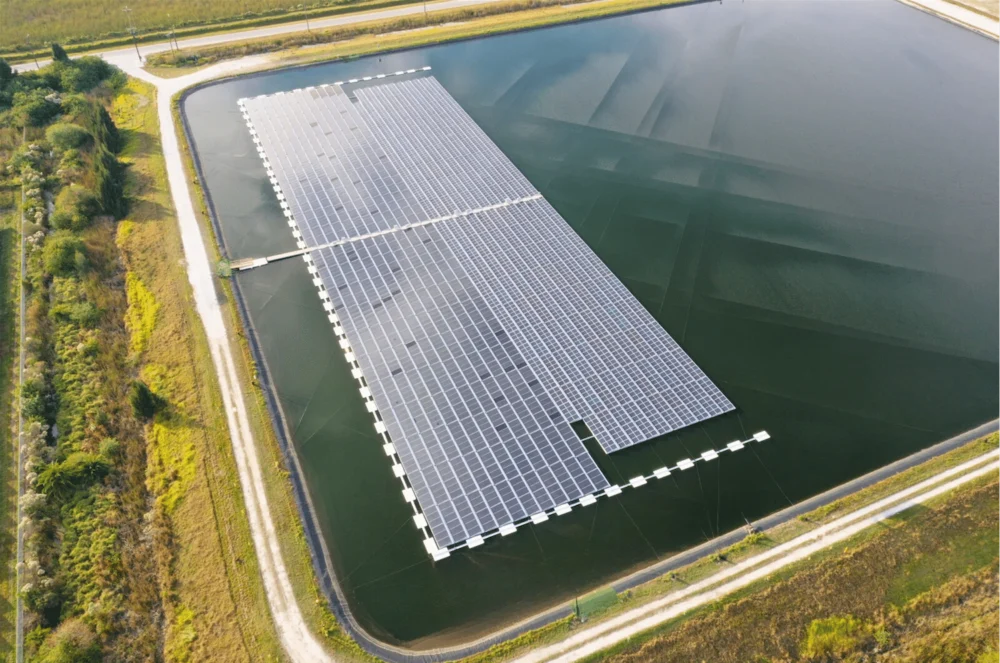
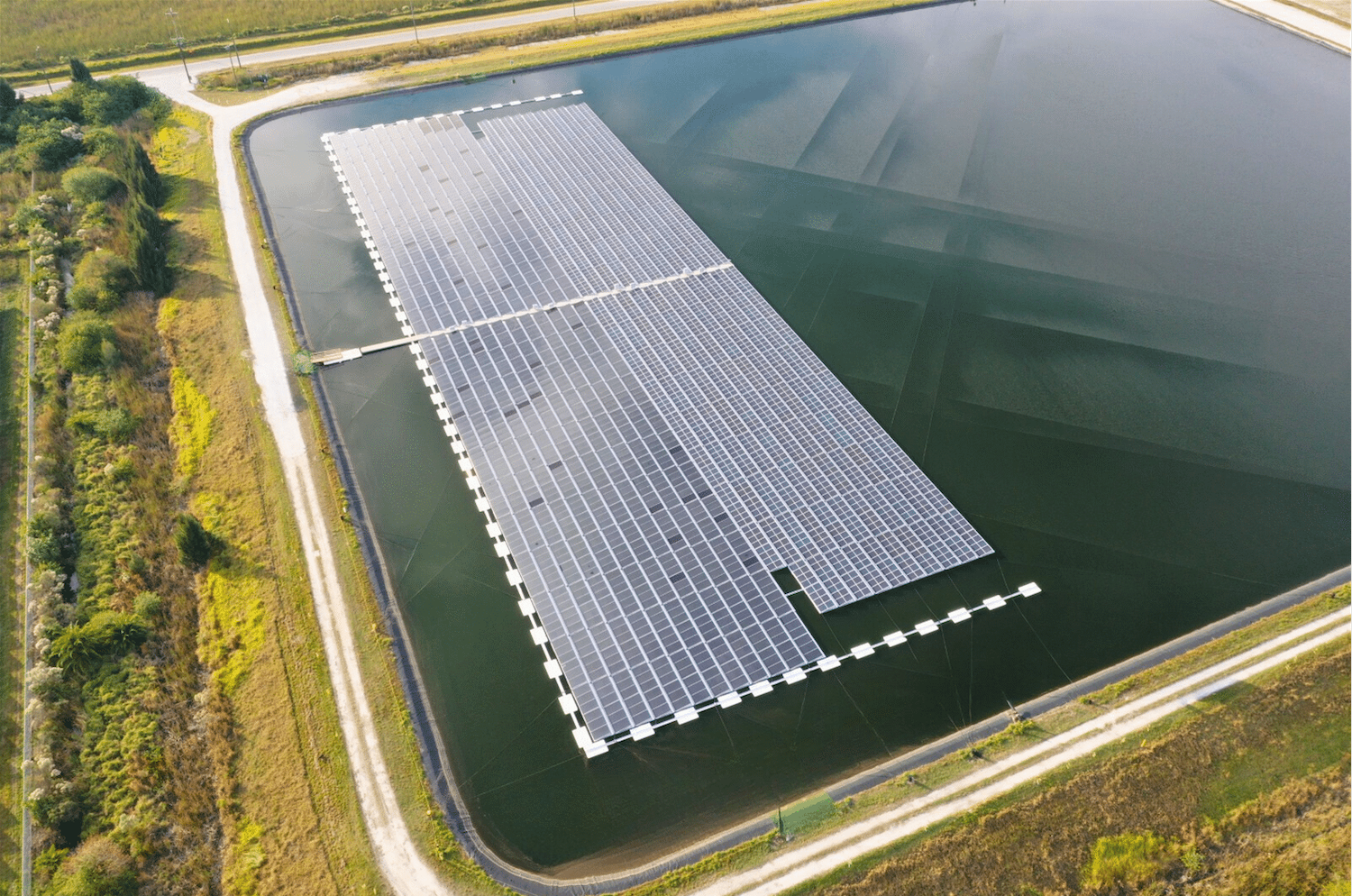
The United States energy sector is witnessing a strategic pivot toward floating solar photovoltaics, an emerging subset of the renewable energy industry that involves mooring solar arrays on the surface of water bodies. As the nation grapples with the dual challenges of meeting aggressive decarbonization goals and managing increasingly scarce land resources, "floatovoltaics" offer a compelling solution. By utilizing the surfaces of man-made reservoirs, irrigation ponds, and industrial basins, developers are discovering that they can generate significant amounts of clean electricity without competing with agriculture, urban development, or terrestrial conservation efforts. However, as the technology moves from niche applications to utility-scale deployment, the industry is confronting a complex landscape of site selection, ecological variability, and technical integration.
The Strategic Advantages of Aquatic Solar Deployment
The fundamental appeal of floating solar lies in its ability to solve the "land use" dilemma. Traditional utility-scale solar farms require vast tracts of land—often thousands of acres—which can lead to friction with local communities, farmers, and environmentalists concerned about habitat fragmentation. Floating solar bypasses these conflicts by occupying "underused" water surfaces. Beyond simple space-saving, the technology offers three primary operational advantages.
First, for the project developer, water provides a naturally flat and unobstructed surface. Unlike land-based projects, which may require extensive grading, vegetation removal, and soil stabilization, floating systems can be deployed with minimal site preparation. This can significantly reduce the "soft costs" associated with civil engineering. Second, the water body acts as a natural heat sink. Solar panels operate more efficiently at lower temperatures; the cooling effect of the water beneath the arrays can boost energy yield by as much as 5 to 10 percent compared to land-based systems in similar climates.
Third, for the owners of the water infrastructure—such as municipal utilities or agricultural cooperatives—floating solar represents a new revenue stream or a way to offset operational costs. By covering a portion of a reservoir, the panels also reduce evaporation, a critical benefit in drought-prone regions like the American Southwest, and can inhibit the growth of harmful algae blooms by limiting the amount of sunlight that penetrates the water column.
Ecological Complexity and the Challenge of Site Selection
Despite the clear benefits, the transition to water-based energy is not without environmental nuance. Recent research suggests that the ecological impact of floating solar is highly dependent on the specific characteristics of the host body of water. A comprehensive study conducted by researchers at Oregon State University (OSU) highlighted that there is no "one-size-fits-all" design for these systems. After examining 11 reservoirs across six states, the OSU team determined that water conditions vary so significantly that a design which benefits one ecosystem might disrupt another.
Evan Bredeweg, the lead author of the OSU study, noted that ecology is inherently "messy," and the interaction between solar arrays and aquatic life requires site-specific modeling. While the cooling effect is generally beneficial, the reduction in sunlight can alter the thermal stratification of a lake or reservoir, potentially impacting oxygen levels and the health of fish populations.
Furthermore, avian conservation has emerged as a primary concern for regulators. A study from Cornell University focused on 16,000 potential sites along the Atlantic Flyway—a major bird migration route stretching from New England to Virginia. The research, led by Assistant Professor Steven Grodsky, suggested that larger water bodies with high energy potential might actually pose less risk to bird populations than smaller ponds. The logic follows that water birds are more likely to interact with or be displaced by arrays on smaller, more confined bodies of water. Grodsky emphasized that "ecologically informed siting" is the key to ensuring that the expansion of renewable energy does not come at the expense of biodiversity.
A Chronology of Innovation: From Docks to Decarbonization
The history of floating solar in the United States is a testament to the cross-pollination of industries. The nation’s first significant "floatovoltaic" project was commissioned in 2009 at the Far Niente Winery in Napa Valley, California. The project utilized an irrigation pond to house a solar array, allowing the winery to preserve its valuable vineyard land for grape production.
The floats for that pioneering 2009 project were provided by AccuDock, a Florida-based company that had been manufacturing floating docks since 2007. This early involvement eventually led to the birth of AccuSolar, a dedicated floating solar firm founded by Jason Harrison. Harrison’s transition from marine infrastructure to renewable energy mirrors the broader evolution of the industry. By 2020, the focus shifted from simple buoyancy to sophisticated structural engineering designed to withstand wind loads, wave action, and fluctuating water levels.
In the last five years, the industry has moved beyond agricultural ponds and into the industrial and municipal sectors. In 2024, AccuSolar secured contracts for a 2.4-megawatt project at a Florida mining facility and a 1.8-megawatt installation at a manufacturing plant in Oklahoma. These projects demonstrate a growing trend: using "unusable" industrial land and water features to create self-sustaining energy hubs.
Quantifying the National Potential
The data supporting the expansion of floating solar is robust. An initial assessment by the U.S. Department of Energy’s National Renewable Energy Laboratory (NREL) identified approximately 24,000 human-made reservoirs across the United States that are suitable for floating solar. The study estimated that if these sites were utilized, they could generate enough electricity to meet roughly 10 percent of the nation’s total demand. To achieve the same output on land, the U.S. would need to dedicate more than 5 million acres of territory.
More recent data from NREL has narrowed the focus to federally owned or regulated reservoirs. This subset alone represents a technical potential of 1,475 terawatts of electricity annually—enough to power 100 million American homes. While technical potential does not account for economic or regulatory hurdles, even the deployment of a small fraction of this capacity would represent a massive leap forward in the U.S. renewable energy portfolio.
Technical Evolution: Trackers and Efficiency Gains
The next frontier for the industry involves the integration of advanced solar technologies that were originally perfected for land-based use. Chief among these is the solar tracker. On land, trackers allow panels to follow the sun’s arc throughout the day, maximizing energy capture. Implementing this on water is significantly more difficult due to the fluid nature of the mounting surface.
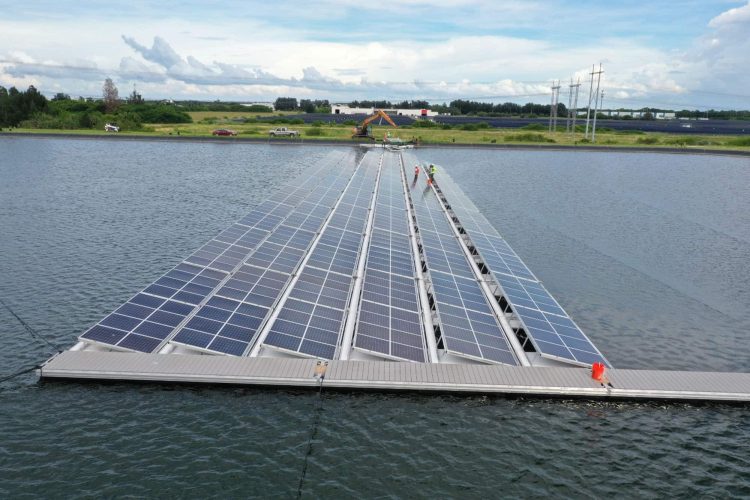
U.S.-based firms like Noria Energy are currently pilot-testing systems such as the "AquaPhi" tracking system. These systems allow floating arrays to rotate or tilt, further increasing the efficiency gains already provided by the water’s cooling effect. As solar cell efficiency continues to rise—meaning more power can be generated from a smaller surface area—the "footprint" of floating solar on any given body of water will decrease, potentially mitigating some of the ecological concerns regarding light penetration and habitat displacement.
Expanding the Horizon: Stormwater and Infrastructure Integration
As the technology matures, developers are looking toward non-traditional water bodies. Stormwater retention sites and flood zones represent a massive, untapped opportunity. In these environments, floating solar arrays are designed to rest on dry ground during the majority of the year. When heavy rains occur and the basins fill, the arrays rise with the water level. This dual-purpose use of infrastructure allows municipalities to generate power from land that must remain clear of permanent structures for flood-control purposes.
Irrigation canals are another area of active exploration. Covering canals with solar panels not only generates electricity but also significantly reduces water loss through evaporation—a critical factor for the agricultural economy in the Western United States. Projects in California and Arizona are already exploring the feasibility of "solar canals," which could provide a template for thousands of miles of water-conveyance infrastructure.
Implications for the Future Energy Mix
The expansion of floating solar has profound implications for the U.S. energy grid and the economy. Economically, it allows for the "stacking" of benefits—water conservation, land preservation, and energy production—on a single site. This efficiency is attractive to institutional investors and utilities looking for "ESG-friendly" (Environmental, Social, and Governance) projects that have a lower conflict profile than traditional land-based developments.
From a policy perspective, the growth of the floating solar market will likely necessitate new regulatory frameworks. Currently, permitting for floating solar can be complex, as it often involves a mix of energy, water, and wildlife agencies. Streamlining these processes while maintaining rigorous environmental standards will be the primary challenge for lawmakers in the coming decade.
Ultimately, the rise of floating solar represents a sophisticated maturation of the renewable energy industry. By moving beyond the "land vs. energy" debate and embracing the complexity of aquatic ecosystems, the United States is positioning itself to unlock a massive reservoir of clean power. As companies like AccuSolar and Noria Energy continue to refine the hardware, and institutions like OSU and Cornell provide the ecological roadmap, floating solar is set to become a cornerstone of the 21st-century energy landscape.
About the Author