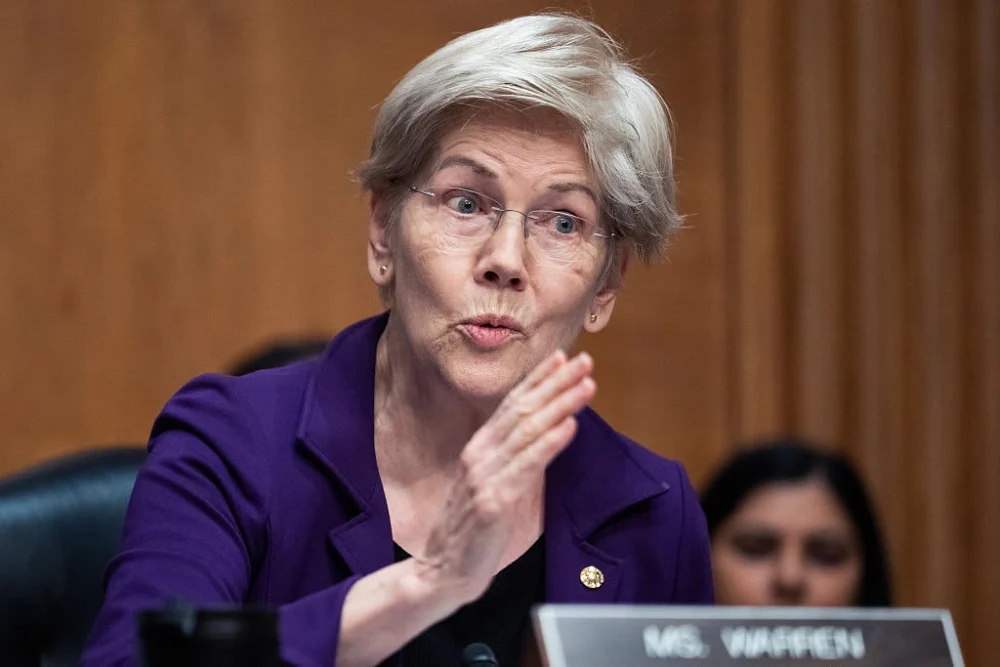
Senator Elizabeth Warren (D-Mass.) has launched a direct and pointed challenge to President Donald Trump’s recent assertions that his administration is successfully "ending" the nation’s affordability crisis, a move that significantly escalates the economic rhetoric leading into the critical 2026 midterm elections. The ranking member of the Senate Banking, Housing, and Urban Affairs Committee dispatched a scathing letter to the President, shared exclusively with CNBC, just hours after his State of the Union address, accusing him of being "directly at odds with the day-to-day experiences of American households."
Warren’s letter, sent late Wednesday, February 25, 2026, sharply rebutted the President’s triumphant declaration that his policies were "rapidly ending" high prices, arguing instead that "prices have skyrocketed for American households" over the past year across essential categories such as food, housing, healthcare, childcare, and electricity. This confrontation marks a deliberate strategic offensive by Democrats, positioning the cost of living as a central wedge issue in their campaign to regain control of Congress in November.
The President’s State of the Union Address: A Narrative of Economic Triumph
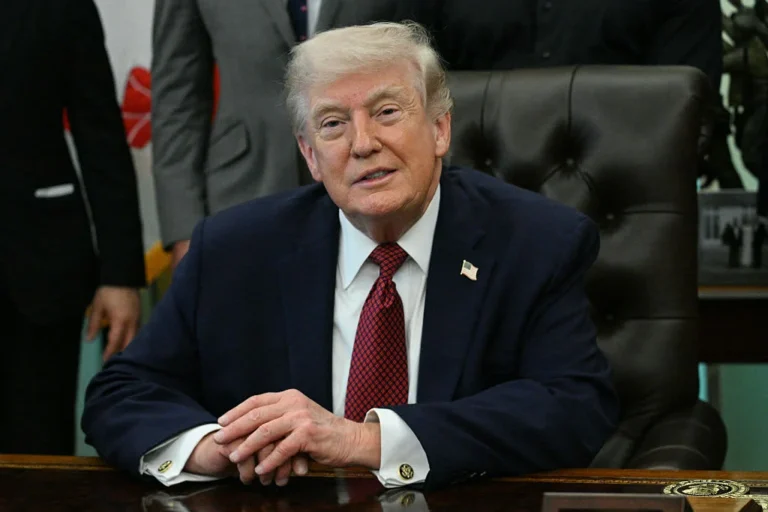
President Trump’s State of the Union address on February 24, 2026, delivered against a backdrop of intensifying political and economic debate, painted a picture of a "roaring" American economy and an administration actively dismantling the financial burdens on ordinary citizens. During his speech, the President unequivocally stated, "You caused that problem," referring to the affordability crisis, and asserted that Democrats’ "policies created the high prices, our policies are rapidly ending them." He laid blame solely at the feet of the opposing party, ignoring the complex interplay of global and domestic factors influencing economic conditions.
While the President did highlight certain initiatives aimed at addressing consumer costs, such as his call for a ban on institutional investors from purchasing homes – a proposal that surprisingly aligns with some progressive priorities, including Warren’s – he notably omitted other previously floated ideas, such as a cap on credit card interest rates. His primary economic message, however, revolved around the notion of a solved inflation problem and a thriving economy, despite mounting evidence of public discontent over persistent high costs. The President’s approval rating on the economy has notably dipped in recent months, with various polls, including a CNBC survey from October 2025, indicating widespread voter concern about the escalating cost of living.
Senator Warren’s Counter-Offensive: Challenging the Narrative with Lived Experience
Senator Warren’s immediate and forceful response was designed to dismantle the President’s narrative. Her letter served as a direct challenge, asserting that Trump’s claims were "directly at odds with the day-to-day experiences of American households, who are struggling with rising costs of essentials." She explicitly stated, "Despite your claims, you have not ‘solved’ affordability or ‘defeated’ inflation."
Warren’s critique is not merely rhetorical; it is underpinned by tangible economic realities that continue to vex millions of American families. While top-line inflation figures, as measured by the Consumer Price Index (CPI), have indeed cooled from their peaks seen in late 2024 and early 2025, the cumulative effect of price increases over the past two years means that many goods and services remain significantly more expensive than before the COVID-19 pandemic. For instance, food prices have seen a sustained increase, with average grocery bills reportedly 15-20% higher than in early 2023, according to various consumer expenditure reports. Housing costs, fueled by a persistent supply shortage and high interest rates, have remained stubbornly inflated, with median home prices in many metropolitan areas still inaccessible for average-income families, and rental markets experiencing consistent year-over-year increases of 5-8% in major cities.
Healthcare expenses continue their upward trajectory, often outpacing wage growth, while childcare costs have become a prohibitive burden for many working parents, frequently rivaling or exceeding mortgage payments in some regions. Furthermore, electricity prices have seen a notable surge, driven by increased demand from burgeoning data centers and artificial intelligence infrastructure, alongside rising fuel costs and grid modernization efforts. According to the Energy Information Administration, residential electricity prices have climbed by an average of 10-12% nationally in the past year alone. These real-world impacts on household budgets form the core of Warren’s argument, positioning her as an advocate for the millions of Americans feeling the pinch.
The Tariff Tangle: A Key Point of Contention
A significant portion of Warren’s criticism, and a potential flashpoint for future economic debate, centers on President Trump’s persistent tariff agenda. Despite a recent setback at the Supreme Court, which reportedly "knocked down the authority he had been using to implement them," the President reaffirmed his commitment to tariffs during his State of the Union address, stating they would "remain in place under fully approved and tested alternative legal statutes."

To Warren, this stance is not a solution but an exacerbation of the problem. "Rather than providing relief to consumers, you are pursuing additional across-the-board tariffs through other mechanisms – opening the door to yet another wave of price hikes," she wrote. Tariffs, essentially taxes on imported goods, are often passed on to consumers in the form of higher prices. Industries reliant on imported raw materials or finished products, ranging from manufacturing to retail, typically absorb these additional costs or transfer them to the end-user.
In a related move on Wednesday evening, Warren also sent a separate letter to Amazon CEO Andy Jassy, pressing the online retail giant on its transparency regarding the impact of Trump’s tariffs on consumer prices. She criticized Amazon for being "tardy" in publicly acknowledging that tariffs contributed to price increases on its platform since their enactment and demanded answers about the company’s future pricing strategies given the President’s renewed commitment to protectionist trade policies. This specific inquiry highlights Warren’s intention to target not just government policy but also corporate accountability in the broader affordability debate. Spokespersons for Amazon and the White House did not immediately respond to CNBC’s request for comment regarding Warren’s letters.
Chronology of Events and Political Positioning
The unfolding economic debate follows a clear chronological and strategic sequence:
- February 5, 2026: Senator Warren, in her capacity as ranking member, questions Treasury Secretary Scott Bessent during a Senate Banking, Housing and Urban Affairs Committee hearing titled "The Financial Stability Oversight Council’s Annual Report to Congress." This earlier engagement underscores her consistent focus on economic stability and consumer protection, setting the stage for her later challenge to the President.
- February 24, 2026: President Trump delivers his State of the Union address, asserting his administration’s success in "ending" the affordability crisis and blaming Democrats for existing economic woes.
- Late February 25, 2026: Senator Warren dispatches her letters to President Trump and Amazon CEO Andy Jassy, directly refuting the President’s claims and initiating her "frontal assault" on his economic policies.
- Over the Coming Weeks: Warren has vowed to continue her campaign, stating, "Over the coming weeks, I will be writing to Administration officials, companies, and industry representatives directly about your chaotic tariffs and failed economic policies — seeking answers for the American people who are being forced to pay more on everything from groceries to housing."
- November 2026: The midterm elections loom, with affordability emerging as a potential deciding factor for congressional control.
This carefully orchestrated sequence of events demonstrates the Democratic strategy to make affordability the defining issue of the midterms, seeking to capitalize on voter frustration over economic conditions.
Broader Impact and Implications for the Midterm Elections
The exchange between Senator Warren and President Trump is more than a mere political skirmish; it represents the opening salvo in a high-stakes battle for the narrative surrounding the American economy, with profound implications for the 2026 midterm elections. Historically, economic conditions have often been a decisive factor in voters’ choices, and with President Trump’s approval ratings on the economy dipping, Democrats see a clear opportunity.
By framing the election as a choice between a Republican administration that claims prosperity but delivers price hikes, and a Democratic party committed to addressing the daily financial struggles of ordinary families, Democrats hope to energize their base and sway undecided voters. Warren’s pledge to continue her inquiries into specific administrative policies, corporate practices, and the impact of tariffs signals a sustained campaign designed to keep economic pain points in the public discourse. This includes highlighting the disparity between official economic indicators, such as a strong job market or GDP growth, and the personal financial realities of many Americans who feel their wages are not keeping pace with the rising cost of living.
From a policy perspective, this renewed focus on affordability could force both parties to refine their economic platforms. While Trump has proposed specific measures like the ban on institutional home purchases, and previously the credit card interest rate cap, Democrats are likely to push for more comprehensive solutions, including potentially stronger consumer protections, price caps on essential goods, increased subsidies for childcare, and reforms to healthcare pricing. The debate over tariffs will also intensify, forcing a deeper examination of their actual economic benefits versus their inflationary pressures.
The outcome of this affordability battle will not only determine the composition of the next Congress but also shape the direction of economic policy for years to come, influencing everything from trade agreements to consumer finance regulations. As the 2026 midterms draw closer, the economic struggles of American households are set to remain at the forefront of the political agenda, with Senator Warren leading the charge to challenge the official narrative and demand accountability.
About the Author