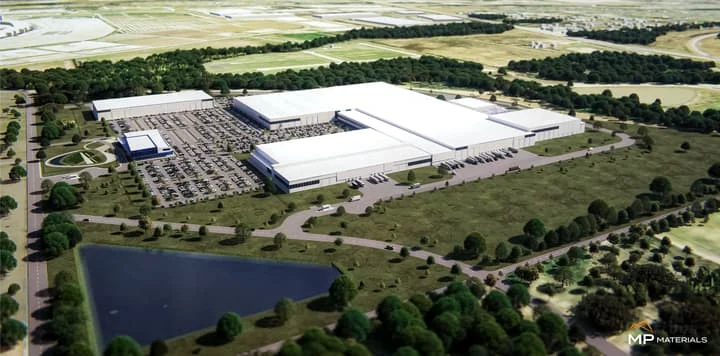
MP Materials, a leading American producer of rare earth materials, has officially announced Northlake, Texas, as the chosen site for its ambitious new $1.25 billion rare earth magnet manufacturing campus. The strategic decision, unveiled on Thursday, marks a significant milestone in the nation’s concerted effort to fortify domestic supply chains for metals deemed critical across a vast array of sectors, from cutting-edge data centers and sophisticated defense systems to ubiquitous personal electronics and burgeoning electric vehicle industries. This investment underscores a broader national imperative to reduce foreign dependence, particularly on nations that have historically dominated and, at times, weaponized control over these indispensable resources.
The Strategic Imperative: Why Rare Earths Matter
Rare earth elements (REEs) are a group of 17 chemically similar metallic elements that possess unique magnetic, catalytic, and luminescent properties, making them indispensable components in nearly all modern high-tech applications. Despite their name, many rare earth elements are not particularly rare in the Earth’s crust; however, they are rarely found in economically concentrated deposits, and their extraction and separation from other minerals are complex and environmentally challenging. The true scarcity lies in their processing and refining capabilities.
At the heart of MP Materials’ new facility is the production of rare earth magnets, specifically neodymium iron boron (NdFeB) magnets. These permanent magnets are the strongest known magnets and are vital for the efficient operation of numerous technologies, including electric vehicle (EV) motors, wind turbine generators, missile guidance systems, drone technology, hard disk drives, and a myriad of consumer electronics like smartphones and laptops. Without a secure and stable supply of these magnets, the advancement of green energy initiatives, the robustness of the defense industrial base, and the competitiveness of American technological innovation would be severely hampered. The global demand for these magnets is projected to surge in the coming decades, driven by the accelerating transition to electrification and renewable energy sources, further amplifying the urgency of domestic production.
A Pivotal Investment in Domestic Manufacturing and Integrated Supply Chains
Dubbed the "10X" facility, MP Materials’ Northlake campus represents a monumental step towards establishing a fully integrated rare earth supply chain within the United States. The facility is strategically designed to utilize rare earth raw materials that will be sourced and processed from MP Materials’ Mountain Pass mine in California. Mountain Pass holds the unique distinction of being the only commercial-scale rare earths mine currently operating in the U.S., providing a foundational domestic source for the critical elements.
Once fully operational in 2028, the 10X facility is projected to produce approximately 7,000 metric tons of rare earth magnets annually. This new capacity, combined with the output from the company’s existing magnet facility in Fort Worth, Texas, will elevate MP Materials’ total annual production capacity to an impressive 10,000 metric tons per year. The Fort Worth facility, which commenced commercial production in 2025, currently boasts a capacity of around 3,000 metric tons per year and serves prominent customers such as General Motors and Apple, underscoring the immediate industrial demand for domestically produced magnets. The new Northlake campus is also expected to create approximately 1,500 direct manufacturing and engineering jobs at the site, injecting significant economic vitality into the North Texas region and fostering a skilled workforce in advanced materials manufacturing.

A History of Dependence and the Push for Reshoring
For decades, the United States has largely ceded its leadership in the rare earth sector, becoming increasingly reliant on foreign suppliers. The decline of the U.S. rare earth industry began in the late 20th century, primarily driven by stringent environmental regulations and the allure of lower production costs offered by overseas competitors. This vacuum was swiftly filled by China, which strategically invested heavily in rare earth mining, processing, and magnet manufacturing. Over time, China consolidated its position to such an extent that it now controls more than 90% of the global processing, separation capacity, and magnet manufacturing for rare earth elements.
This overwhelming dominance has created a critical chokepoint in the global supply chain, a vulnerability that became starkly apparent when China demonstrated its willingness to leverage its control for geopolitical ends. Last year, the nation notably curbed exports of certain rare earth materials, sending ripples of concern through global markets and exposing the precariousness of depending on a single foreign source for such essential inputs. This "weaponization" of critical minerals served as a potent wake-up call for the U.S. and its allies, highlighting the urgent need for diversification and reshoring of production capabilities. The U.S. imports of rare earth magnets, for instance, reportedly fell to about 6,000 tons in 2025 amidst these export controls, underscoring the direct impact of China’s actions. While MP Materials’ new factory aims to significantly reduce direct import dependence, the nation’s overall demand, including through finished products like cars and phones that incorporate rare earth magnets, remains substantially higher, indicating the scale of the challenge ahead.
Government Backing and National Security Implications
The establishment of the 10X facility in Northlake is not merely a private sector initiative but a testament to a robust public-private partnership aimed at safeguarding national interests. Recognizing the critical nature of rare earths, successive U.S. administrations have launched a host of initiatives designed to bolster domestic mining, processing, and manufacturing capabilities. The Trump administration, for instance, placed a significant emphasis on critical minerals, issuing executive orders aimed at reducing foreign reliance.
A pivotal element of this governmental support for MP Materials came last year when the Department of Defense (DOD) announced a substantial $400 million stake in the company. This investment was accompanied by a crucial guarantee: the Pentagon committed to a minimum price of $110 per kilogram for 10 years for neodymium-praseodymium (NdPr) oxide, a key precursor used in the production of high-performance magnets. This long-term price certainty de-risks domestic production and provides a stable foundation for MP Materials’ expansion. In a further demonstration of its strategic importance, all of the output from the new 10X facility is currently committed to the Pentagon for a decade as part of this previously announced deal. However, this arrangement also includes provisions that allow for commercial customers to utilize the material, subject to the DOD’s agreement, ensuring that the facility can serve both national security and broader industrial needs.
James Litinsky, founder and CEO of MP Materials, underscored the dual purpose of the initiative in his statement: "We are advancing key objectives under our public-private partnership with the Department of War and accelerating America’s rare earth and magnet independence with an uncompromising focus on speed, execution, and delivery." His remarks highlight the urgency and precision with which this strategic independence is being pursued. Senator Ted Cruz (R-Texas) echoed these sentiments, emphasizing the geopolitical dimension: "The Chinese Communist Party represents the most acute national security threat to the United States, yet we remain dependent on the CCP for critical minerals. MP Materials is building the infrastructure needed to undo that dependence and bolster American national security." These statements reflect a bipartisan understanding of the strategic imperative to secure critical mineral supply chains, positioning the Northlake facility as a cornerstone of U.S. defense and economic resilience.
Economic Impact and Regional Development

The selection of Northlake, Texas, for such a significant industrial investment is poised to generate substantial economic benefits for the region. The creation of approximately 1,500 direct manufacturing and engineering jobs will provide high-skill employment opportunities, fostering a specialized workforce and attracting further talent to the area. Beyond direct employment, the establishment of the 10X campus is expected to create a ripple effect throughout the local economy, stimulating growth in support industries, logistics, and service sectors. Local businesses will likely benefit from increased demand, and the broader tax base will be strengthened, providing resources for community development and infrastructure improvements.
Northlake, situated within the dynamic Dallas-Fort Worth metroplex, offers strategic advantages including access to skilled labor, robust infrastructure, and a business-friendly environment that has attracted numerous advanced manufacturing and logistics operations. MP Materials’ investment solidifies the region’s position as a burgeoning hub for critical technology and advanced materials production, aligning with broader national efforts to revitalize American manufacturing and foster innovation domestically. This project represents a tangible commitment to building future-focused industries within the U.S., ensuring that the economic benefits of technological advancement are realized at home.
The Path Forward: Challenges and Opportunities
While the 10X facility marks a monumental leap forward, the path to complete rare earth independence for the U.S. is multifaceted and presents both challenges and opportunities. One significant challenge lies in bridging the remaining demand gap. Even with 10,000 metric tons of domestic magnet production, the U.S. still imports a substantial volume of end products that rely on rare earth magnets. Achieving true independence would require not only domestic magnet production but also robust domestic manufacturing of the high-tech goods that consume these magnets, such as electric vehicles, consumer electronics, and defense systems. This necessitates continued investment across the entire value chain, from raw material to finished product.
Technological advancements in mining, processing, and magnet manufacturing will be crucial. Developing more efficient, cost-effective, and environmentally sustainable methods for rare earth extraction and separation is an ongoing area of research and development. MP Materials’ integrated approach, leveraging its Mountain Pass mine, offers a significant advantage in controlling quality and ensuring ethical sourcing, potentially setting a new standard for responsible rare earth production.
The long-term vision involves cultivating a resilient and diversified supply chain that is less susceptible to geopolitical disruptions. This could include exploring partnerships with allied nations, investing in recycling technologies for rare earth elements from end-of-life products, and fostering continuous innovation in materials science to reduce reliance on specific rare earths or find suitable alternatives. The commitment of the 10X output to the Pentagon also highlights the continuous need for strategic foresight, ensuring that national security requirements are met while simultaneously fostering a competitive commercial market.
The MP Materials 10X facility in Northlake, Texas, stands as a powerful symbol of America’s renewed resolve to reclaim its leadership in critical minerals. It represents not just an investment in a factory, but an investment in national security, economic resilience, and a future where the nation’s technological ambitions are powered by secure, domestically produced resources. This venture is a crucial step on a longer journey, but one that undeniably moves the United States closer to a self-sufficient and robust rare earth supply chain.
About the Author