The Rio de Janeiro Carnival, often heralded as the greatest show on Earth, is undergoing a profound environmental transformation as local initiatives seek to mitigate the massive ecological footprint left by the annual festivities. At the center of this movement is Sustenta Carnaval, a pioneering project dedicated to rescuing and upcycling the tons of plastic, polyester, and ornate materials that typically inundate the city’s waste management systems following the world-famous parades. By bridging the gap between cultural expression and environmental stewardship, the project is establishing a new blueprint for how large-scale international events can transition toward a circular economy.
Rio’s Carnival is a titan of the global tourism industry and a cornerstone of Brazilian identity. Centered at the Sambadrome—a massive, purpose-built stadium designed by the legendary architect Oscar Niemeyer—the event features elite samba schools competing in a display of music, choreography, and staggering visual opulence. In 2026, the event is projected to inject nearly 10 billion Brazilian reais (approximately US$2 billion) into the local economy, supporting upwards of 70,000 temporary jobs ranging from seamstresses and float builders to security and hospitality staff. However, the sheer scale of the celebration brings a commensurate environmental challenge. Historically, the four days of parades have generated hundreds of tons of refuse, much of it composed of non-biodegradable synthetic fibers and petroleum-based plastics.

The Magnitude of the Waste Challenge
To understand the necessity of Sustenta Carnaval, one must examine the metrics of waste generated during the peak of the festivities. In 2019, the Rio de Janeiro Municipal Urban Cleaning Company (Comlurb) reported that the four days of official parades at the Sambadrome alone produced 293 tons of trash. This figure includes waste from the spectator stands as well as the materials left on the "Passarela do Samba" (the parade runway) by the performing schools. While the leading samba schools are remarkably efficient—recycling approximately 95 percent of their professional-grade costumes and float components internally for future years—the remaining 5 percent represents a significant environmental hazard.
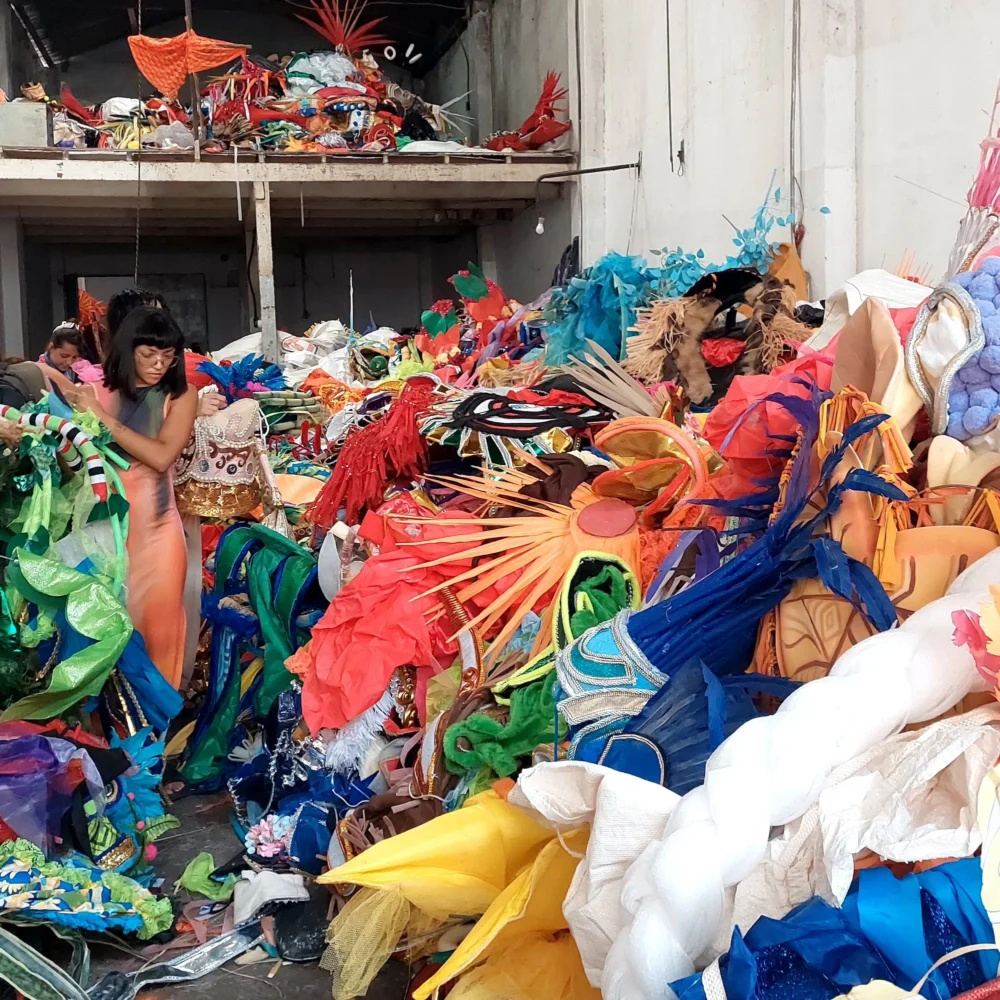
This 5 percent primarily consists of costumes sold to the general public or tourists who pay to participate in a school’s parade. Unlike the professional performers, these participants often have no place to store bulky, elaborate outfits once the parade ends. Consequently, thousands of costumes are abandoned in or around the Sambadrome. These garments are predominantly made from polyester, nylon, and ethylene-vinyl acetate (EVA) foam—materials that can take centuries to decompose in landfills and which contribute to microplastic pollution in Rio’s coastal waters.
The Genesis and Evolution of Sustenta Carnaval
Launched in 2022, Sustenta Carnaval was conceived to intercept this specific waste stream. The project operates through a strategic coalition involving the Independent League of the Samba Schools of Rio de Janeiro (LIESA), the Municipal Secretariat of Environment and Climate, and Comlurb. This partnership ensures that as soon as the parades conclude, the discarded materials are diverted from landfills and transported to sorting facilities.

Mariana Pinho, the founder of Sustenta Carnaval, views the project as a critical evolution of the festival’s legacy. According to Pinho, the objective is to transform potential waste into creative, educational, and social raw material. By doing so, Rio de Janeiro is positioning itself as a global benchmark for environmental responsibility in the arts. Over the past five years of operations and pilot programs, the initiative has successfully rescued 66 tons of waste. This material is not merely stored; it is reintegrated into the economy through a variety of channels, including resale, rental, and donation to educational programs in municipalities that have previously struggled to fund their own local carnival celebrations.
Social Impact and Global Collaborations
The implications of Sustenta Carnaval extend beyond environmental metrics into the realm of social enterprise. A significant portion of the rescued textiles is transformed into high-quality bags and accessories through a partnership with the Women from the Global South Institute. This collaboration provides a steady source of income for migrant women and residents of local communities, offering vocational training in sewing and design while utilizing materials that cost nothing to source.
Furthermore, the project has gained international academic and cultural recognition. Sustenta Carnaval currently facilitates artist residencies and upcycling workshops in the United Kingdom, partnering with prestigious institutions such as the University of the Arts London and Norwich University of the Arts. These programs allow international designers to study the complex construction of Brazilian carnival costumes and apply circular design principles to global fashion. The project’s reach also extends to other major festivals, including the Notting Hill Carnival in London and the World of Music, Arts and Dance (WOMAD) festival, fostering a global exchange of sustainable festival management practices.

Community Engagement in the Gamboa Neighborhood
In the historic Gamboa neighborhood of Rio, Sustenta Carnaval maintains a physical hub that serves as a warehouse and a public-facing workshop. Here, the project sells rescued materials to the public for a nominal fee of approximately $10 per kilogram. This accessibility is vital for the "Carnaval de Rua" (Street Carnival), a series of hundreds of free, informal block parties (blocos) that take place throughout the city simultaneously with the Sambadrome parades.
While the Sambadrome is a controlled environment, the street parties present an even larger waste management hurdle. In 2025, Comlurb collected nearly 8 tons of waste specifically from street party routes over a five-day period. By providing affordable, upcycled materials in Gamboa, Sustenta Carnaval encourages "bloco" participants to create their own costumes from existing waste rather than purchasing cheap, disposable outfits from mass-market retailers.
Lohanne Tavares, a costume designer and partner in the project, conducts workshops at the Gamboa site to teach the technical aspects of upcycling. Tavares emphasizes that working with existing materials requires a higher level of strategic planning than traditional garment construction. Participants are taught to observe the weight, stretch, and durability of discarded fabrics before making alterations. This "slow fashion" approach is intended to create costumes with longevity, ensuring that the items created in the workshop do not return to the waste stream the following year.

The Role of Costume Exchanges and Grassroots Activism
The shift toward sustainability is also being driven by grassroots community efforts that complement the work of Sustenta Carnaval. Since 2019, designer and content creator Amanda Britto has organized large-scale costume exchange events. These gatherings allow residents to trade pieces from previous years, effectively extending the lifecycle of garments that might otherwise be discarded due to changing trends or personal preferences.
Britto’s initiative, which relies on a volunteer force of approximately 30 people to categorize and value items, has recently partnered with Sustenta Carnaval. By incorporating professional-grade materials rescued from the Sambadrome into her community exchange, Britto is able to provide her followers with high-quality components for DIY projects. This synergy between large-scale institutional recovery and neighborhood-level sharing economy models is a key factor in the changing cultural attitude toward waste in Rio.
Environmental and Economic Implications for the Future
The move toward a more sustainable Carnival is not merely a matter of cultural preference but a response to the intensifying climate crisis. Rio de Janeiro is increasingly vulnerable to extreme weather events, including heatwaves and torrential rains, which can disrupt the very festivities that the city relies on for its economic health. The production of new polyester fabrics is a carbon-intensive process, and the methane generated by decomposing organic waste in landfills further exacerbates global warming.

By diverting 66 tons of synthetic waste, Sustenta Carnaval is effectively reducing the carbon footprint of the event. Moreover, the project’s model of "re-signifying" waste contributes to the "Orange Economy"—a term used to describe the sectors of the economy whose main value is based on intellectual property and cultural creativity. By proving that waste can be a valuable commodity, Rio is creating a more resilient economic structure that is less dependent on the constant consumption of new raw materials.
Conclusion: A Paradigm Shift in Global Festivity
As the 2026 Rio Carnival approaches, the work of Sustenta Carnaval and its partners serves as a reminder that tradition and sustainability are not mutually exclusive. The transition from a linear "take-make-waste" model to a circular one requires the cooperation of government agencies, private corporations, and the general public.
The success of these initiatives demonstrates that the creative spirit of Carnival can be harnessed to solve the very problems the festival creates. As Mariana Pinho and Lohanne Tavares suggest, the goal is to move beyond the impulse for temporary consumption and toward a culture of reuse. For Rio de Janeiro, the "Greatest Show on Earth" is no longer just about the four days of performance; it is about the lasting impact of how those performances are built, dismantled, and reborn for the next generation. Through upcycling and community engagement, the city is ensuring that the magic of Carnival does not come at the cost of the planet’s future.
About the Author