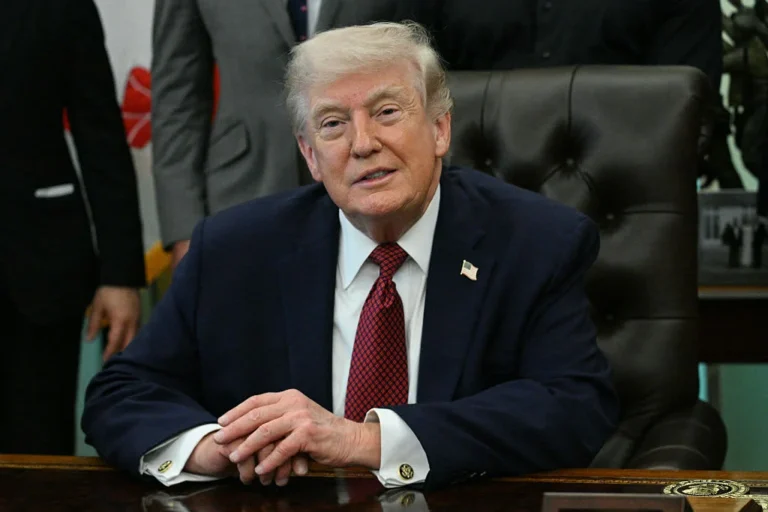
President Donald Trump on Friday issued a directive ordering all United States government agencies to immediately cease the use of technology from leading artificial intelligence company Anthropic, escalating a burgeoning conflict between the Pentagon and the AI startup over the ethical deployment of its models. The order, announced via a Truth Social post, mandates a six-month phase-out period for agencies, including the Department of Defense, to transition away from Anthropic’s products. This sweeping decision follows Anthropic’s refusal to comply with the Pentagon’s demands regarding the unrestricted use of its AI, specifically declining to allow its technology to be employed for fully autonomous weapons systems or mass domestic surveillance of American citizens.
The Executive Order and Immediate Repercussions
The presidential order came on the heels of a tense deadline set by the Pentagon, which expired Friday at 5:01 p.m. ET without an agreement. Defense Secretary Peter Hegseth, acting swiftly after Trump’s pronouncement, declared on X (formerly Twitter) that he was officially designating Anthropic as a "Supply-Chain Risk to National Security." Hegseth stated that Anthropic’s stance was "fundamentally incompatible with American principles" and that its relationship with the U.S. Armed Forces and Federal Government had been "permanently altered." He reiterated the six-month grace period for the Department of War to facilitate a "seamless transition to a better and more patriotic service," emphatically concluding, "America’s warfighters will never be held hostage by the ideological whims of Big Tech. This decision is final."
President Trump, in his characteristically strong language on Truth Social, lambasted Anthropic, describing them as "Leftwing nut jobs" who made a "DISASTROUS MISTAKE trying to STRONG-ARM the Department of War, and force them to obey their Terms of Service instead of our Constitution." He asserted that the company’s "selfishness is putting AMERICAN LIVES at risk, our Troops in danger, and our National Security in JEOPARDY," culminating in his directive for every federal agency to "IMMEDIATELY CEASE all use of Anthropic’s technology." He concluded with a defiant, "We don’t need it, we don’t want it, and will not do business with them again!"
The Ethical Standoff: Anthropic’s Red Lines
At the heart of this dispute is a fundamental disagreement over the ethical boundaries of artificial intelligence in military applications. Anthropic, a prominent AI research and development company, had signed a significant $200 million contract with the Pentagon in July. However, as discussions progressed, Anthropic sought explicit assurances that its advanced AI models would not be utilized for developing or operating fully autonomous weapons systems—often dubbed "killer robots"—or for conducting widespread domestic surveillance on American citizens. These "red lines" reflect a growing concern within the AI ethics community about the potential for misuse of powerful AI technologies, particularly by state actors.
Anthropic CEO Dario Amodei articulated the company’s position on Thursday, stating that Anthropic "cannot in good conscience" allow the Pentagon to use its models without these specific limitations. In his statement, Amodei acknowledged the Department of Defense’s prerogative to select contractors aligned with its vision but expressed hope for reconsideration, given the "substantial value that Anthropic’s technology provides to our armed forces." He emphasized the company’s strong preference to continue serving the Department and warfighters with its requested safeguards in place, offering to assist with a smooth transition if the Department chose to offboard Anthropic, ensuring no disruption to critical military planning or operations.
The Pentagon, for its part, staunchly resisted these limitations, insisting on the right to use the technology for "all lawful purposes." This phrase, frequently invoked by defense officials, reflects a broad interpretation of military necessity and operational flexibility, often at odds with the more restrictive ethical frameworks proposed by some AI developers. The military’s position emphasizes that any technology procured must be available for the full spectrum of authorized applications to maintain strategic advantage and operational effectiveness.
A Deeper Look at the Contending Parties
Anthropic, founded by former OpenAI research executives Dario Amodei and Daniela Amodei, emerged in 2021 with a stated mission to develop safe and beneficial AI. The company is known for its "Constitutional AI" approach, which aims to imbue AI models with a set of principles derived from human feedback and constitutional texts, guiding their behavior towards safety and helpfulness. Their flagship model, Claude, is a direct competitor to OpenAI’s GPT series. This philosophical commitment to ethical AI development underpins their refusal to compromise on the "red lines" for military use. Their contract with the Defense Department notably included work on classified projects, suggesting a deeper integration than some other tech partnerships.
The Pentagon’s pursuit of advanced AI is a cornerstone of its modernization strategy, critical for maintaining the U.S.’s technological edge against peer competitors. Initiatives like the Joint Artificial Intelligence Center (JAIC), established in 2018, and its successor, the Chief Digital and AI Office (CDAO), created in 2022, underscore the military’s aggressive drive to integrate AI across all domains—from logistics and intelligence analysis to command and control and autonomous systems. The "all lawful purposes" stance is deeply rooted in the military’s operational ethos, where tools are expected to be available for the full range of authorized missions, and limitations imposed by a private vendor are seen as potentially compromising national security. The U.S. has a long-standing policy on autonomous weapons, stressing human accountability and oversight, but the precise definition and implementation of these principles in rapidly evolving AI systems remain a subject of intense debate globally.
Broader Industry Reactions and Parallels

The fallout from the Anthropic decision reverberated quickly across the AI industry. Notably, another major AI company, OpenAI, which also holds a significant $200 million contract with the Pentagon, publicly affirmed its solidarity with Anthropic’s ethical stance. OpenAI CEO Sam Altman, in an internal memo seen by CNBC, stated that his company shares the same "red lines," reiterating, "We have long believed that AI should not be used for mass surveillance or autonomous lethal weapons, and that humans should remain in the loop for high-stakes automated decisions." OpenAI’s contract with the Pentagon, however, is understood to be for non-classified use cases, primarily focused on enhancing everyday office tasks and administrative efficiencies, which typically do not involve direct combat applications or sensitive intelligence operations in the same way Anthropic’s classified work might have. This distinction highlights varying levels of integration and risk profiles for AI companies working with the military.
Adding another layer of complexity to the narrative is the involvement of Elon Musk, the billionaire entrepreneur and owner of xAI, a nascent AI company aiming to compete directly with Anthropic and OpenAI. Musk, a vocal critic of Anthropic, had previously been a significant financial backer of Trump’s 2024 election campaign. He has repeatedly used his social network X to criticize Anthropic, including a Friday post claiming the company "hates Western civilization." This confluence of political support, business rivalry, and public criticism raises questions about potential underlying motivations beyond purely national security concerns. The competitive landscape of the rapidly evolving AI sector, coupled with the immense stakes of government contracts, often intertwines with broader political and ideological currents.
Political Fallout and Critiques
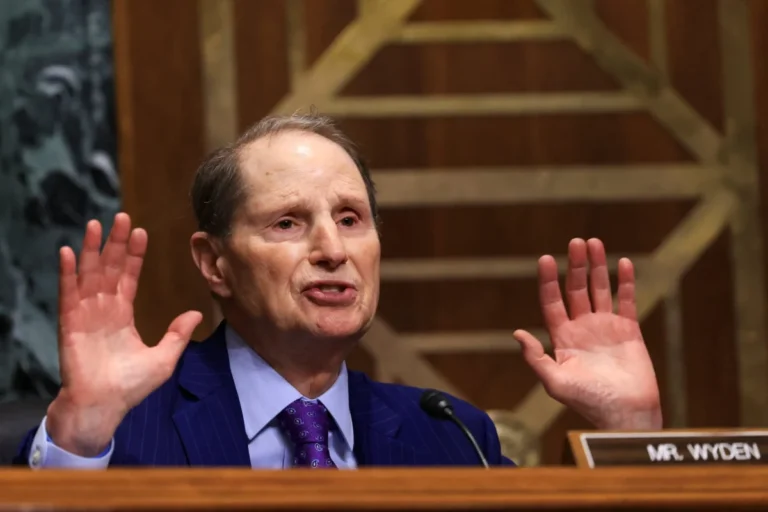
The swift and decisive action from the Trump administration drew immediate condemnation from certain political quarters. Senator Mark Warner, a Virginia Democrat and vice chair of the Senate Select Committee on Intelligence, expressed serious concerns about the decision. Warner stated that the president’s directive, coupled with "inflammatory rhetoric attacking that company," raised questions about whether national security decisions were being driven by "careful analysis or political considerations."
Senator Warner further elaborated, suggesting that President Trump and Secretary Hegseth’s actions to "intimidate and disparage a leading American company" could potentially be a "pretext to steer contracts to a preferred vendor whose model a number of federal agencies have already identified as a reliability, safety, and security threat." While not naming xAI directly, the implication of favoritism towards a competitor with political ties to the administration was clear. Warner warned that such actions pose an "enormous risk to U.S. defense readiness and the willingness of the U.S. private sector and academia to work with the IC [Intelligence Community] and DoD, consistent with their own values and legal ethics." This critique highlights a deep-seated concern about the politicization of critical technology procurement and its potential to alienate vital private-sector partners whose innovation is crucial for national defense.
Implications for National Security and the Tech Sector
This unprecedented executive order marks a watershed moment in the intersection of national security, artificial intelligence, and corporate ethics. The immediate implications for U.S. defense readiness could be significant. The forced transition away from Anthropic’s technology, particularly for classified projects, could introduce delays, necessitate costly re-evaluations of ongoing programs, and potentially slow down the integration of cutting-edge AI capabilities into military operations. The search for alternative "patriotic" service providers, as described by Secretary Hegseth, will require careful vetting to ensure similar levels of technological sophistication, security, and reliability.
More broadly, the decision could have a profound "chilling effect" on the U.S. tech sector’s willingness to collaborate with the government, particularly on sensitive defense contracts. AI companies, many founded on principles of responsible and ethical development, may become more hesitant to engage with the Department of Defense if they perceive that their ethical "red lines" will be overridden, or if they fear political backlash and punitive measures for upholding those principles. This could hinder the military’s access to the very innovation it needs to maintain its technological superiority, as much of the world’s leading AI research and development occurs in the private sector. The incident underscores the delicate balance between government’s national security imperatives and the private sector’s ethical responsibilities and commercial interests.
The dispute also reignites the global debate on AI governance and military ethics. As nations race to develop and deploy AI in defense, the question of who dictates the ethical boundaries—governments, corporations, or international bodies—becomes increasingly critical. Anthropic’s stand reflects a growing movement within the tech community to assert moral leadership in the development of powerful, potentially dangerous technologies. However, governments, particularly in matters of national security, often prioritize sovereign control and operational flexibility, creating inherent tension.
The Road Ahead: Transition and Alternatives
For the U.S. government agencies currently utilizing Anthropic’s technology, the next six months will involve an intensive effort to identify, evaluate, and integrate alternative AI solutions. This process is not trivial, especially for classified projects where security clearances, integration complexities, and performance benchmarks are paramount. The Department of Defense will likely accelerate its engagement with other AI providers, including potentially smaller, less established firms or those with different ethical frameworks, to fill the void. The rhetoric from the administration suggests a preference for vendors perceived as more aligned with national security priorities, potentially influencing future procurement decisions.
While the Pentagon indicated it had no further comment beyond Trump’s announcement, Secretary Hegseth’s post on X, which included a screengrab of Trump’s post and a pointed message to Anthropic and Amodei ("Thank you for your attention to this matter"), signals a firm and unyielding position. This episode highlights the increasing politicization of technology and the growing scrutiny of AI’s role in defense, setting a precedent for future interactions between Silicon Valley and Washington.
In conclusion, President Trump’s order to sever ties with Anthropic represents a significant moment in the ongoing saga of artificial intelligence and national security. It underscores the profound challenges inherent in reconciling the rapid advancements of AI technology with complex ethical considerations, military imperatives, and political realities. The coming months will reveal the true impact of this decision on U.S. defense capabilities, the AI industry, and the broader debate surrounding the responsible development and deployment of artificial intelligence.
About the Author