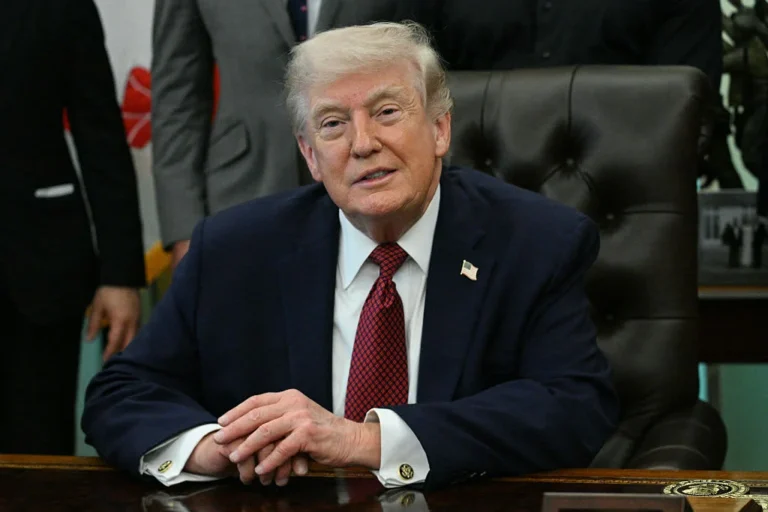
The United States military has commenced "major combat operations" within Iran, U.S. President Donald Trump confirmed on Saturday, as a flurry of explosions reverberated across key cities in the Middle East, and regional allies Qatar and the United Arab Emirates swiftly condemned Iranian missile counterattacks. In a video message posted on his Truth Social account, President Trump articulated the U.S. objective: "Our objective is to defend the American people by eliminating imminent threats from the Iranian regime, a vicious group of very hard, terrible people." This dramatic escalation follows weeks of heightened tensions and a significant military buildup in the strategically vital Persian Gulf region.
Earlier reports from Reuters, citing a U.S. official, had indicated that American forces launched coordinated attacks against Iranian targets via both air and sea. An unidentified Iranian official, also quoted by Reuters, stated that several ministries located in the southern part of the Iranian capital, Tehran, were among the targets. Unconfirmed media reports detailed explosions heard in various critical Middle Eastern urban centers, including Jerusalem, though CNBC noted it had been unable to independently verify these accounts.
Regional Reactions and Missile Interceptions
The immediate aftermath saw strong condemnations from Gulf nations caught in the crossfire. Qatar’s Ministry of Defense issued a forceful statement, declaring, "The State of Qatar expresses its strong condemnation of the targeting of Qatari territory with Iranian ballistic missiles, considering it a flagrant violation of its national sovereignty." This incident reportedly involved a retaliatory strike following the earlier U.S. actions.
Similarly, the United Arab Emirates reported being subjected to an "blatant attack by Iranian ballistic missiles." In a statement posted on its official channels, the UAE Ministry of Defense announced that its air defense systems "dealt with [the attack] with high efficiency and a number of missiles were successfully intercepted." These interceptions underscore the rapid escalation and the region-wide impact of the conflict.
A History of Nuclear Ambitions and Failed Diplomacy
President Trump linked the current military actions directly to Iran’s persistent pursuit of nuclear weapons, despite protracted international negotiations aimed at curtailing its program. He referenced a previous operation, "Midnight Hammer," conducted in June of the previous year, asserting, "operation midnight hammer last June, we obliterated the regime’s nuclear program at Fordow nets. And Isfahan." Trump claimed that following this prior strike, Iran was explicitly warned against resuming its nuclear activities and that the U.S. had repeatedly sought a diplomatic resolution. "But Iran refused," he stated.
Instead, according to Trump, Iran "attempted to rebuild their nuclear program and to continue developing the long-range missiles that can now threaten our very good friends and allies in Europe, our troops stationed overseas and could soon reach the American homeland." This narrative forms the bedrock of the U.S. administration’s justification for the current offensive.
The Pentagon, when contacted for comment, acknowledged receipt of CNBC’s emailed inquiries but declined to issue any further statement at the time. This silence from official U.S. defense channels contrasted sharply with the President’s public confirmation, signaling the sensitivity and rapidly unfolding nature of the situation.
Preceding Israeli Strike and Diplomatic Breakdown
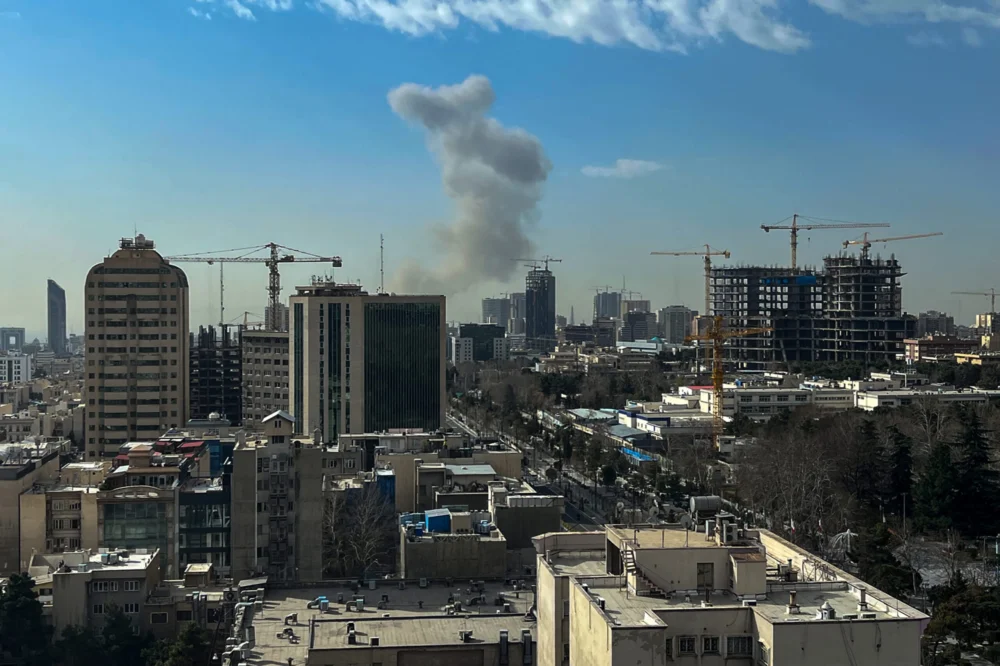
The U.S. operations on Saturday were preceded by a daylight attack launched by Israel on Iran’s capital earlier the same day. The Associated Press reported a conspicuous cloud of smoke rising from downtown Tehran, though the specific target remained unclear immediately. This Israeli strike occurred amidst a substantial U.S. military buildup in the region, including a vast fleet of fighter jets and warships, ostensibly aimed at pressuring Iran into a deal concerning its nuclear program.
Israeli Defense Minister Israel Katz confirmed the attack, describing it as undertaken "to remove threats," without providing further details. Concurrently, the Israel Defense Forces (IDF) reported identifying missiles launched from Iran toward Israel. In a tweet, the IDF stated, "Defensive systems are operating to intercept the threat. In the past few minutes, the Home Front Command has sent a precautionary directive directly to mobile phones in the relevant areas," indicating a significant aerial exchange.
The broader context of these military actions points to a complete breakdown of diplomatic efforts. A senior Middle East diplomat, privy to recent talks between Iran and the U.S., expressed frustration to MS Now, lamenting, "Yet again, when negotiations get close to success… Israel has intervened to preempt diplomacy." This suggests a pattern where military actions from regional actors undermine ongoing, albeit fragile, peace initiatives.
Escalation Across Multiple Iranian Cities
Beyond the capital Tehran, reports confirmed that the cities of Isfahan, Qom, Karaj, and Kermanshah were also targeted in the initial wave of attacks. Isfahan, in particular, is a critical hub for Iran’s nuclear program, hosting facilities like the Uranium Conversion Facility (UCF). Fordow and Natanz, mentioned by President Trump, are also central to Iran’s uranium enrichment efforts, with Fordow being a deeply buried facility, making it particularly resilient to conventional attacks. The targeting of multiple sites across the country suggests a comprehensive strike strategy aimed at degrading Iran’s strategic capabilities.
Regional Alarm and Security Alerts
The intensity of the conflict was immediately evident across the region. In Tehran, early Saturday, residents reported hearing the first blast, followed by Iranian state television’s confirmation of the explosion, though without specifying the cause. Simultaneously, air raid sirens wailed across Israel, prompting the Israeli military to issue a "proactive alert to prepare the public for the possibility of missiles being launched toward the state of Israel."
Bahrain, host to the U.S. Navy’s Fifth Fleet service center, reported its facility being subjected to a missile attack. In response, the U.S. embassy in Manama, Bahrain’s capital, issued an urgent security alert, warning of an "imminent drone/missile attack in Bahrain." The embassy urged "U.S. citizens in Bahrain to shelter in place, review security plans in the event of an attack, and to stay alert in case of additional future attacks. U.S. Embassy personnel are sheltering in place," highlighting the severe and immediate threat perception.
A similar shelter-in-place alert was issued by the U.S. embassy in Abu Dhabi, the capital of the United Arab Emirates, reinforcing the widespread concern for American citizens and personnel across the Gulf.
Impact on Global Travel and Energy Markets
The unfolding conflict quickly reverberated through global travel and energy sectors. Airlines operating in the Middle East swiftly rerouted flights to avoid the airspace above the conflict zones. A spokesperson for Dubai-based carrier Emirates confirmed it was "adjusting our operations in line with the latest developments." German carrier Lufthansa announced the suspension of flights to and from Tel Aviv, Beirut, and Oman until March 7, as reported by Reuters. Dutch airline KLM also reportedly canceled flights to Tel Aviv from Amsterdam, reflecting a broad-based industry response to the elevated risk.
Energy market participants, already on edge due to escalating geopolitical tensions, observed a dramatic surge in oil prices. Following President Trump’s earlier warning in February that "really bad things" would happen if Tehran failed to agree to a nuclear deal, oil prices had already climbed to six-month highs. The current military strikes are expected to exacerbate this trend, potentially pushing prices even higher. Iran, a founding member of OPEC and a significant oil producer, occupies a critical position at the Strait of Hormuz, a narrow maritime chokepoint through which approximately 20% of the world’s oil supply transits daily. Any prolonged disruption or threat to shipping in this vital waterway has profound implications for global energy security and prices.
Diplomatic Failures and Underlying Tensions
The current military confrontation is the culmination of a series of failed diplomatic efforts and deeply entrenched disagreements. The U.S. and Iran had recently concluded a third round of talks in Switzerland on Thursday, an attempt to resolve their longstanding standoff. Ahead of these discussions, U.S. Secretary of State Marco Rubio had underscored Iran’s reluctance to discuss its ballistic missile development program alongside its nuclear program as a "big, big problem." While Iran had expressed willingness to compromise on its nuclear program, it consistently maintained that its missile program was non-negotiable and outside the scope of any talks.
Earlier signs of Washington’s dwindling patience emerged after previous talks, with the White House indicating that Iran was not adequately addressing its core demands. This diplomatic impasse, coupled with Iran’s alleged resumption of its nuclear activities and missile development, laid the groundwork for the current military intervention. In February, Iran had reportedly sent a letter to United Nations Secretary-General Antonio Guterres, asserting that Tehran would respond "decisively" if subjected to military aggression, a stark warning that has now manifested in reciprocal strikes.
Broader Implications and Future Outlook
The initiation of "major combat operations" marks a dangerous new chapter in U.S.-Iran relations and carries profound implications for regional and global stability. The scale and coordination of the attacks suggest a deliberate strategy to significantly degrade Iran’s military and nuclear infrastructure. However, Iran’s immediate ballistic missile counterattacks demonstrate its capability and willingness to retaliate, raising the specter of a prolonged and widening conflict.
The involvement of regional players like Israel, Qatar, and the UAE, either as targets or as participants in the defensive posture, underscores the interconnectedness of security dynamics in the Middle East. The disruption to international travel and the spike in oil prices are immediate economic consequences that will be felt worldwide, potentially impacting global economic recovery.
The current situation also casts a long shadow over any future diplomatic endeavors. The "preempt diplomacy" accusation highlights a deep mistrust and the difficulty of de-escalation once military actions commence. The international community will be closely watching for further developments, seeking avenues to prevent a full-scale regional war that could have catastrophic humanitarian and economic consequences far beyond the Middle East. The coming days will be critical in determining whether this conflict can be contained or if it will spiral into a broader confrontation.
About the Author