A recent joint U.S. and Israeli attack on OPEC member Iran has dramatically escalated geopolitical tensions in the Middle East, immediately triggering fears of a major oil supply disruption that, in a worst-case scenario, could precipitate a global economic recession. The retaliatory missile strikes launched by Iran against U.S. bases in allied Gulf nations have thrust the critical Strait of Hormuz into the spotlight, prompting urgent warnings from energy experts about the fragility of global energy markets.
The Catalyst: U.S.-Israeli Action and Iranian Retaliation
The situation rapidly intensified following reports of a coordinated U.S.-Israeli military action targeting Iran. While specific details of the initial attack remain under wraps, the Iranian response was swift and definitive. State media confirmed that Iran launched a barrage of missile strikes against U.S. military installations located in Qatar, Kuwait, the United Arab Emirates, and Bahrain. These attacks, while ostensibly targeting U.S. assets, carry significant implications for regional stability and the safety of commercial shipping lanes, particularly through the Persian Gulf and its narrow egress, the Strait of Hormuz. The brazen nature of these strikes signals a dangerous new phase in the long-standing animosity between Iran and its regional adversaries, backed by the United States.
The Strategic Chokepoint: The Strait of Hormuz
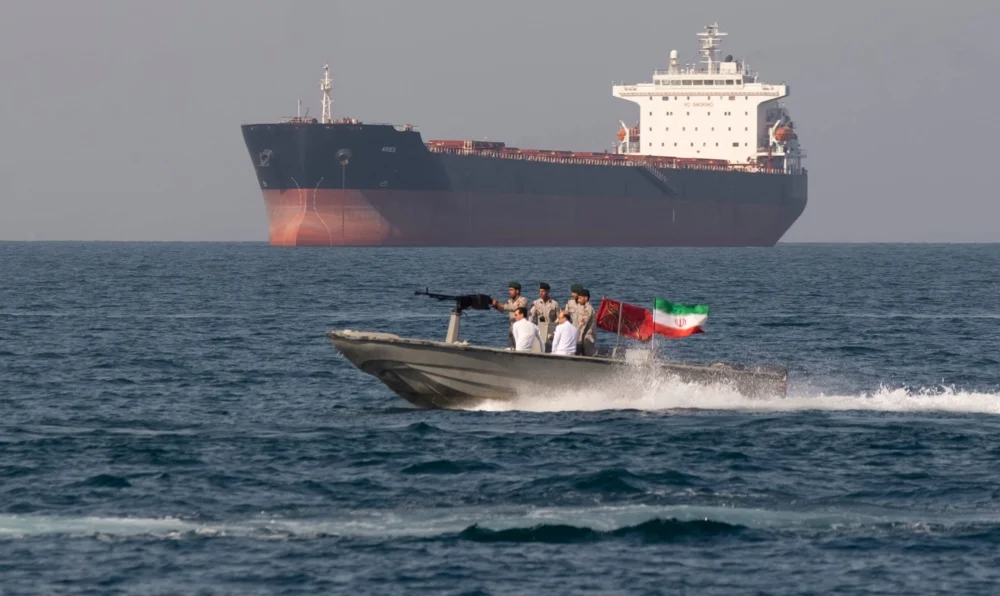
At the heart of the current crisis lies the Strait of Hormuz, an indispensable maritime artery connecting the Persian Gulf to the open waters of the Arabian Sea and beyond. Geographically, this strait is one of the world’s most critical chokepoints, measuring approximately 34 miles (55 kilometers) at its narrowest point, with shipping lanes just two miles wide in each direction. Its strategic importance cannot be overstated, as it serves as the conduit for a substantial portion of the world’s seaborne oil and liquefied natural gas (LNG) exports.
According to data from energy consulting firm Kpler, more than 14 million barrels per day (bpd) of crude oil flowed through the Strait in 2025, accounting for roughly a third of the world’s total seaborne crude exports. This monumental volume underscores its global significance. A staggering three-quarters of these barrels are destined for energy-hungry Asian economies, with China, the world’s second-largest economy, receiving half of its crude imports via this single waterway. Beyond crude, approximately 20% of the world’s liquid natural gas exports, predominantly from Qatar, also traverse the Strait, highlighting its dual importance for both oil and gas markets.
Iran, as the fourth-largest oil producer within OPEC, contributing just over 3 million barrels per day in January, shares a vital coastline with this strategic waterway. This geographical advantage grants Tehran significant leverage, a fact not lost on international observers.
Immediate Market Reaction and Expert Warnings
The immediate aftermath of the escalating conflict saw a palpable shift in market sentiment. While the oil market has historically exhibited a tendency to "shrug off" geopolitical risks in the Middle East, experts warn that the current situation is fundamentally different. Bob McNally, a former White House energy advisor to former President George W. Bush and founder and president of Rapidan Energy, emphatically stated, "This is the real deal." McNally predicted that crude oil future prices would likely see an immediate increase of $5 to $7 per barrel when trading commenced, as the market begins to price in the newfound risk. Prior to the escalation, Brent crude prices had settled at $72.48 a barrel, up $1.73 (2.45%), while U.S. West Texas Intermediate crude finished at $67.02 a barrel, up $1.81 (2.78%), reflecting pre-existing tensions but not the full impact of direct military engagement.
McNally’s assessment highlights a critical disconnect: traders are underestimating the severity of the threat posed by Iranian retaliation. He stressed that Tehran possesses substantial stockpiles of mines and short-range missiles, capabilities that could be deployed to seriously disrupt, if not entirely halt, commercial traffic through the Strait of Hormuz. Such a move, intended to "scare President Donald Trump," could swiftly propel oil prices above the $100 per barrel mark, triggering widespread economic distress.
The Specter of Global Recession
The potential closure or severe disruption of the Strait of Hormuz carries cataclysmic implications for the global economy. "A prolonged closure of the Strait of Hormuz is a guaranteed global recession," McNally warned, articulating a scenario that would ripple through every sector of the world economy.
The mechanism is straightforward: a sudden and severe reduction in global oil supply would lead to an unprecedented price spike. This, in turn, would act as a massive tax on consumers and businesses worldwide, dampening demand across industries. Energy-intensive sectors, from manufacturing to transportation, would face soaring operational costs, leading to layoffs, reduced investment, and contraction. Consumer spending, already sensitive to inflationary pressures, would plummet as higher fuel prices erode disposable income. Central banks would then face an unenviable dilemma: raise interest rates to combat inflation, thereby risking a deeper recession, or allow inflation to spiral, further destabilizing economies.
In such a crisis, McNally predicts a frenzied market response characterized by "hoarding, especially by Asian countries that were big importers of oil and gas when they realized that Hormuz is closed." This would ignite "the mother of all bidding wars," where nations scramble for diminishing supplies, driving prices even higher. The analyst emphasized the inelastic nature of oil demand in the short term, stating, "There just isn’t enough discretionary or elastic demand for oil" to absorb such a supply shock without triggering a significant economic downturn to rebalance the market.
Furthermore, the disruption would extend beyond crude oil. The 20% of the world’s LNG exports that pass through the Strait, largely originating from Qatar, would also be jeopardized. Unlike crude, which has some alternative supply routes, LNG infrastructure is less flexible, meaning these volumes would be virtually impossible to replace quickly, leading to severe gas shortages and price hikes, particularly in Europe and Asia.
Logistics and Insurance Pressures
The immediate impact of Iran’s missile strikes has already begun to manifest in the logistics of maritime trade. Matt Smith, an oil analyst at Kpler, noted that more than 20 million barrels of crude were loaded for export today in the Gulf from Saudi Arabia, Iraq, the United Arab Emirates, Kuwait, and Qatar. Smith observed that some tankers were already diverting from passing through the Strait, a clear indication of heightened risk perception.
The pressure on the shipping industry is immense. Tom Kloza, principal at oil and gas consulting firm Kloza Advisors, explained that Iran’s attacks on neighboring countries in the Persian Gulf fundamentally "changes the calculus." This escalation places significant pressure on insurers, compelling them "to either aggressively raise tanker rates for Strait of Hormuz travel or balk at underwriting any traffic" altogether. A sharp increase in insurance premiums or a refusal by underwriters would effectively make shipping through the Strait prohibitively expensive or impossible, leading to further supply chain disruptions and exacerbating the oil supply crunch. The ramifications would extend beyond oil and gas, impacting all maritime trade passing through the region.
Limited Alternatives and Strategic Reserves
In the event of a sustained closure of the Strait, viable alternative routes for oil exports from the Gulf are severely limited. While some existing infrastructure offers a partial bypass, their capacity pales in comparison to the volume flowing through Hormuz. Saudi Arabia possesses a pipeline that spans the country from its Eastern oilfields to its Western coast on the Red Sea. Similarly, the UAE has a pipeline that terminates at the Gulf of Oman, effectively bypassing the Strait of Hormuz. However, these pipelines can only redirect a small fraction of the crude that typically passes through the Strait, making them inadequate for mitigating a large-scale disruption.
Compounding this challenge, the world’s spare oil capacity, primarily held by Gulf states like Saudi Arabia and the UAE, would itself be unable to pass through the Strait in the event of a closure. As McNally pointed out, this effectively seals off these crucial reserves from the global market precisely when they are most needed.
Recognizing the potential for a catastrophic supply shock, governments possess strategic petroleum reserves. Kevin Book, managing director of Research at ClearView Energy Partners, indicated that the Trump administration could tap the Strategic Petroleum Reserve (SPR) if oil prices spike. The U.S. SPR, the world’s largest emergency oil stockpile, currently holds approximately 415 million barrels, according to data from the Department of Energy. However, Book cautioned clients in a note, "But we’ll say it again: in supply crises, duration matters. Scale does, too." He warned that "a full Hormuz crisis could outstrip offsets provided by strategic stocks in the U.S. and International Energy Agency (IEA) members," emphasizing that even coordinated releases from global strategic reserves might not be sufficient to compensate for a prolonged or complete closure of the Strait.
Broader Geopolitical and Economic Implications
The escalation carries profound geopolitical and economic implications that extend far beyond the immediate oil market. Regionally, the direct missile strikes by Iran on U.S. bases in allied Gulf nations raise the specter of a wider regional conflict, destabilizing an already volatile area. U.S. allies in the Gulf, such as Saudi Arabia and the UAE, would find themselves on the front lines, potentially drawing them further into the conflict. This would exacerbate regional proxy conflicts and create new alliances or realignments.
For major oil-importing nations, particularly China, India, Japan, and South Korea, the crisis underscores acute energy security vulnerabilities. Their heavy reliance on the Strait of Hormuz for crude imports means their economies are disproportionately exposed to disruptions. This could accelerate efforts to diversify energy sources, invest in alternative technologies, and strengthen strategic alliances to safeguard supply chains, though such shifts require significant time and investment.
Economically, the inflationary pressures generated by soaring oil prices would not be confined to energy sectors. Higher transportation costs would permeate supply chains, leading to increased prices for virtually all goods and services. This broad-based inflation would erode purchasing power, reduce corporate profits, and potentially trigger a wave of bankruptcies in vulnerable industries. Governments and central banks worldwide would grapple with stagflationary pressures—high inflation combined with stagnant economic growth—making policy responses exceptionally challenging.
Historical Context of Oil Shocks
History offers stark precedents for the economic havoc wrought by geopolitical disruptions to oil supplies. The 1973 Arab oil embargo, triggered by the Yom Kippur War, led to quadrupling oil prices and a global recession. Similarly, the 1979 Iranian Revolution and the subsequent Iran-Iraq War caused significant supply disruptions, sending oil prices soaring and contributing to a decade of economic malaise in many Western economies. The 1990 Iraqi invasion of Kuwait and the ensuing Gulf War also sparked a sharp, albeit temporary, spike in oil prices and economic uncertainty. These historical episodes serve as sobering reminders of how intertwined global energy security is with geopolitical stability, and how rapidly political crises can translate into economic hardship.
Looking Ahead
The current situation represents a critical juncture for global stability and economic prosperity. The joint U.S.-Israeli attack on Iran and Iran’s subsequent retaliatory missile strikes have shattered any lingering complacency about Middle Eastern geopolitical risks. With the Strait of Hormuz now firmly in the crosshairs, the international community faces the urgent challenge of de-escalating tensions to prevent a full-blown crisis that could plunge the world into a severe economic recession. The coming days will be crucial in determining whether diplomacy can avert catastrophe or if the world is indeed on the precipice of "the real deal."
About the Author