The death of Iran’s Supreme Leader Ayatollah Ali Khamenei, confirmed by Iranian state media following a joint military strike by Israel and the United States, has initiated a highly anticipated yet profoundly uncertain succession process. The passing of the 86-year-old leader, who was reportedly at his office within his residence at the time of the fatal attack on February 28, 2026, marks only the second leadership transition since the 1979 Islamic Revolution. This pivotal moment carries immense implications for Iran’s intricate political stability, its enduring struggle against international sanctions, and its already strained economy, triggering immediate celebrations among some exiled Iranians while experts warn against premature expectations of fundamental change.
The End of an Era: Khamenei’s Ascendancy and Legacy
Ayatollah Ali Khamenei’s four-decade-long tenure as Iran’s spiritual and political guide was a defining period for the Islamic Republic. He assumed power in 1989 following the death of Ayatollah Ruhollah Khomeini, the founder of the Islamic Republic, inheriting a revolutionary state still grappling with the aftermath of the devastating Iran-Iraq War (1980-1988) and striving to consolidate its unique political-religious system. His succession was, at the time, far from a foregone conclusion. Khamenei, a mid-ranking cleric, initially lacked the deep religious credentials traditionally deemed necessary for the position of Supreme Leader under the original 1979 constitution.
However, a crucial constitutional revision just months before Khomeini’s death paved the way for his elevation. This amendment modified the requirement for the Leader from a "Marja-e Taqlid" (a Grand Ayatollah, a leading religious authority to whom Shiite Muslims refer for guidance) to simply an "expert in Islamic jurisprudence with political and managerial ability." This pragmatic shift enabled Khamenei, then president, to ascend to the highest office, demonstrating the inherent flexibility and political maneuvering within the revolutionary system.
Over the subsequent decades, Khamenei meticulously consolidated his authority, systematically extending the Supreme Leader’s control over virtually all key institutions of the state. While presidents and parliamentary majorities shifted through elections, Khamenei remained the ultimate arbiter, retaining final say over the military, the judiciary, state broadcasting, and all major strategic decisions, as enshrined in Article 110 of the Iranian constitution. He fostered a deep state structure, with the Islamic Revolutionary Guard Corps (IRGC) evolving into a powerful parallel institution, loyal directly to him, exerting significant influence across economic, political, and military spheres.
Khamenei’s foreign policy was characterized by an unwavering distrust of the West, particularly the United States and Israel. He championed a "resistance economy" doctrine, aimed at fostering self-sufficiency and mitigating the impact of crippling international sanctions imposed largely over Iran’s nuclear program and its regional activities. Domestically, his rule was marked by a consistent crackdown on dissent and reformist movements. He systematically suppressed voices advocating for greater social freedoms or political liberalization, viewing them as threats to the revolutionary ideals and national security.
A Rule Defined by Crises and Crackdowns
Khamenei’s leadership was repeatedly tested by waves of popular discontent, reflecting deep-seated grievances within Iranian society.
- 2009 Green Movement: Mass protests erupted following allegations of widespread fraud in the presidential election, which saw Mahmoud Ahmadinejad re-elected. The demonstrations, which drew millions into the streets, were met with a brutal crackdown by security forces, leading to numerous arrests and casualties.
- 2017-2018 Protests: A series of sporadic, localized protests quickly escalated into nationwide demonstrations, primarily driven by economic hardship, inflation, and corruption. While less organized than the Green Movement, they highlighted the pervasive economic distress.
- 2019 Fuel Price Protests: A sudden increase in fuel prices triggered widespread and exceptionally violent protests across hundreds of cities and towns. The government responded with lethal force, shutting down internet access and reportedly killing hundreds, if not thousands, of protesters.
- 2022 Women’s Rights Protests: The death of Mahsa Amini in morality police custody ignited a powerful, women-led protest movement that challenged the Islamic Republic’s mandatory hijab laws and broader authoritarian control. The protests, which saw unprecedented levels of defiance, persisted for months, again met with severe state repression.
- Late 2025/Early 2026 Unrest: The most recent challenge to Khamenei’s authority emerged in late December 2025, when escalating economic grievances, exacerbated by chronic inflation and high unemployment, spiraled into nationwide unrest. These demonstrations were particularly alarming for the regime as some protesters openly voiced demands for the overthrow of the Islamic Republic itself, a direct challenge to the very foundation of the state.
The joint US-Israeli military strike that claimed Khamenei’s life underscores the escalating tensions that characterized his final years, particularly concerning Iran’s nuclear program and its expansive network of regional proxies.
The Succession Mechanism: A Complex and Opaque Process
With Khamenei’s death, the focus immediately shifts to the intricate and largely opaque succession process mandated by the Iranian constitution. The primary body responsible for selecting a new Supreme Leader is the Assembly of Experts, an 88-member body of high-ranking clerics, elected by popular vote but heavily vetted by the Guardian Council (itself appointed by the Supreme Leader). This body is constitutionally tasked with both appointing and, theoretically, overseeing the Supreme Leader.
The Assembly’s deliberations are conducted in secret, adding to the uncertainty. Potential candidates typically emerge from a pool of influential clerics who have held significant positions within the establishment, possess strong revolutionary credentials, and crucially, maintain the trust and loyalty of the IRGC and other powerful factions. Historically, the process has been carefully managed to ensure continuity and prevent any deviation from the established ideological framework of the Islamic Republic. While the constitution outlines the process, the ultimate decision is heavily influenced by behind-the-scenes negotiations and the power dynamics among various factions, particularly the IRGC and the intelligence apparatus.
Immediate Reactions and Expert Outlook
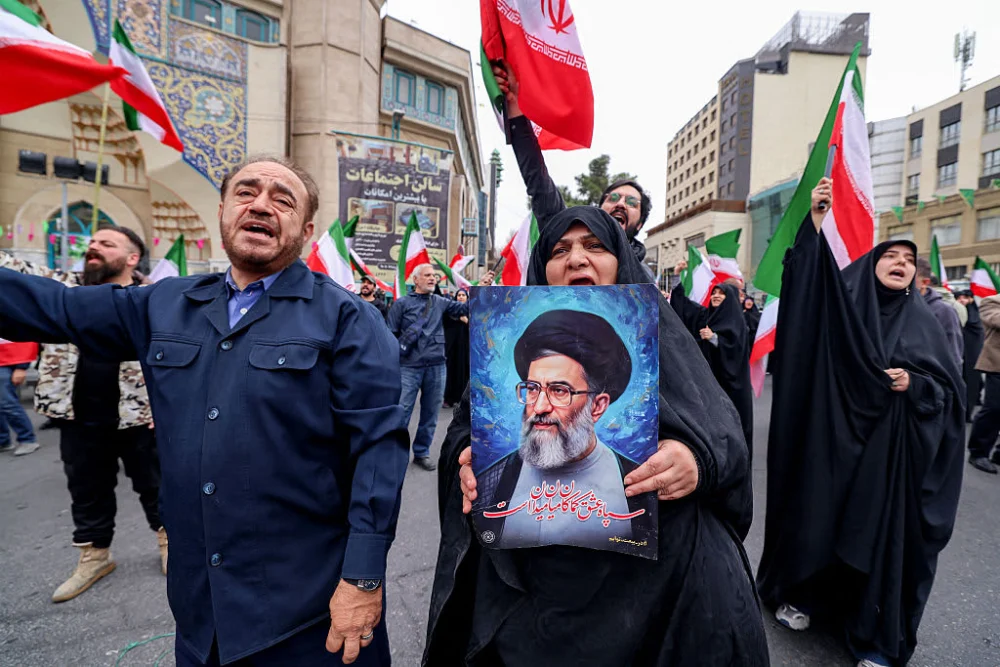
The news of Khamenei’s death elicited starkly contrasting reactions. Among many Iranians in exile and a significant portion of the population within Iran, the news was met with jubilation. "Khamenei is dead. This is the best day of my life. This is a glorious day for Iran," exclaimed Masoud Ghodrat Abadi, an Iranian engineer now based in the United States who left Iran at age 27. "I believe his death could mark the beginning of a new chapter in our nation’s history… In the long run, I hope this moment will prove transformative." Social media platforms were inundated with reports and videos of Iranians taking to the streets in celebration, according to accounts from The New York Times, reflecting a deep-seated desire for change among those who have long suffered under his autocratic rule.

However, seasoned analysts quickly tempered these celebratory sentiments with cautious warnings. "Taking out Iranian Supreme Leader Ayatollah Ali Khamenei is not the same as regime change. The Islamic Revolutionary Guard Corps is the regime," noted the Council on Foreign Relations (CFR) in the immediate aftermath of his passing. This assessment highlights the profound institutionalization of power within Iran, suggesting that the removal of a single figure, even one as central as the Supreme Leader, does not automatically dismantle the existing power structures.
The CFR further elaborated on the potential trajectories for Iran’s leadership change, outlining three primary scenarios:
- Regime Continuity: This outcome, essentially "Khamenei-ism without Khamenei," would see the selection of another hardliner who largely upholds the existing policies and ideological framework. While this might provide a semblance of stability, a new leader would need to "learn on the job," navigating a complex domestic and international landscape with limited resources and intensifying internal strains.
- Military Takeover: A more overt shift towards military dominance, where the IRGC or a faction within it assumes more direct political control. While such a model might emphasize stability and economic management, experts like the CFR suggest it would still struggle against Iran’s "deeply distorted economy," characterized by "persistent inflation and a collapsing currency," without fundamental structural reforms.
- Regime Collapse: This is considered the least likely immediate scenario but remains a possibility under extreme internal or external pressure. However, the existing resilience of the state apparatus, particularly the IRGC, makes outright collapse improbable in the short term.
Marko Papic, chief strategist of Clocktower Group, echoed the dire economic outlook, stating, "The Iranian economy is soon to be a parking lot unless the next Supreme Leader is more amenable to negotiating with the U.S." He warned that if another hardliner committed to regional confrontation assumes power, US military operations could become punitive, potentially driving Iran "back to the Medieval Age." Keith Fitzgerald, managing director at Sea-Change Partners, offered a blunt analogy: "Killing Khamenei is not, in itself, ‘regime change.’ Think of it as changing a light bulb: To change it, you must first remove the broken bulb that was there. But doing so is not changing the bulb. That requires replacing it with a new one."
Profound Economic and Regional Implications
The death of Khamenei throws Iran’s already precarious economic situation into even sharper relief. Decades of Western sanctions, primarily targeting its oil exports, financial sector, and advanced technologies, have severely hampered economic growth. The "resistance economy" championed by Khamenei, while aiming for self-sufficiency, often led to inefficiencies, corruption, and a reliance on informal and illicit networks. The national currency, the rial, has seen dramatic devaluations, and inflation has consistently eroded the purchasing power of ordinary Iranians, leading to widespread hardship and contributing significantly to the recent unrest.
A new leader, regardless of their specific ideology, will inherit an economy in crisis. The immediate outlook for investors and households remains fraught with uncertainty. Even a continuity candidate would face immense pressure to address the economic grievances that fueled recent protests. Any meaningful shift towards economic liberalization or engagement with the West would require a significant ideological pivot, which is unlikely from a hardline successor. Without such a shift, the prospects for easing sanctions or attracting substantial foreign investment remain dim.
Regionally, Khamenei’s death introduces a new variable into an already volatile Middle East. His leadership was characterized by an assertive, often confrontational, foreign policy that saw Iran expand its influence through a network of proxies in Lebanon (Hezbollah), Iraq, Syria, and Yemen (Houthis). The joint US-Israeli strike itself underscores the depth of animosity and the potential for wider conflict. A new leader will face immediate pressure to either maintain or re-evaluate this regional strategy.
- United States: Washington’s policy towards Iran has long swung between containment and limited engagement. The strike on Khamenei signals a decisive shift. The US will likely watch the succession closely, looking for any signs of a change in Iran’s nuclear ambitions or regional behavior. Any successor perceived as equally or more confrontational could lead to further escalation.
- Israel: Israel views Iran as its primary existential threat, citing its nuclear program and support for groups like Hezbollah and Hamas. The strike suggests a heightened willingness to take direct action. Israel will be particularly keen to see if a new leader alters Iran’s nuclear trajectory or its support for proxy forces.
- Gulf States: Sunni-majority Gulf states, particularly Saudi Arabia and the UAE, have long been wary of Iran’s regional ambitions. While recent years saw some diplomatic de-escalation, Khamenei’s death could re-ignite regional rivalries or, conversely, open new avenues for dialogue if a more pragmatic leader emerges.
The Fragmented Opposition and the IRGC’s Enduring Grip
The prospects for a rapid, transformative change from within Iran are further complicated by the state of the Iranian opposition. Ali J.S., a former strategic intelligence analyst at the NATO Joint Warfare Center, noted that the Iranian opposition in exile remains "fragmented and lacks unified leadership." This diverse opposition includes monarchists aligned with Reza Pahlavi (the son of the late Shah), republican and secular-democratic activists dispersed across Europe and North America, Kurdish opposition groups, and the People’s Mojahedin Organization of Iran (MEK). While some maintain organized networks abroad, their credibility and ability to mobilize significant support inside Iran are often limited.
"Importing a political figurehead from abroad, whether a restored monarchy or another alternative, has limited credibility on the ground and risks repeating past experiments with parachuted elites that ended badly elsewhere," Ali J.S. warned. The lack of a cohesive, widely recognized internal or external leadership poses a significant challenge to any aspirations for a fundamental political overhaul.
Crucially, the Islamic Revolutionary Guard Corps (IRGC) remains the most powerful and cohesive institution in Iran. It possesses vast economic holdings, controls significant military capabilities, and maintains a pervasive intelligence network. Its loyalty is not just to an individual Supreme Leader but to the foundational principles of the Islamic Revolution, as interpreted by the hardline establishment. Any successor to Khamenei will need the unequivocal backing of the IRGC to consolidate power, ensuring that the institution’s interests and influence will continue to shape Iran’s future trajectory.
An Uncharted Future
The death of Ayatollah Ali Khamenei marks the end of an era and ushers Iran into an uncharted future. While the celebrations among some Iranians reflect a deep yearning for change, the immediate reality is one of profound uncertainty. The succession process, while constitutional, will be a tightly managed affair, heavily influenced by the powerful institutions Khamenei himself painstakingly built, particularly the IRGC.
The most likely immediate outcome remains a form of "Khamenei-ism without Khamenei," where a new hardline leader maintains the existing power structure and ideological direction, albeit with potentially different leadership styles. This scenario offers little hope for immediate political or economic liberalization and suggests continued confrontation with the West. However, the long-term implications are far more complex. The profound economic challenges, the persistent public discontent, and the intensifying regional pressures mean that even a continuity candidate will face immense pressure to adapt. The coming months will be a critical period for Iran, shaping not only its internal dynamics but also its role in a highly volatile region and its complex relationship with the global community.
About the Author