The volatile landscape of the Middle East has plunged into its third day of intense conflict following unprecedented U.S.-Israeli strikes against Iran, which resulted in the death of Supreme Leader Ayatollah Ali Khamenei. This audacious move has triggered fierce retaliatory actions from Tehran, igniting a dangerous cycle of escalation that has sent shockwaves through global markets and sparked widespread fears of a broader regional conflagration. The immediate aftermath has seen each side hardening its stance, threatening sharper responses in the days ahead and deepening anxieties over the potential for a conflict that could severely rattle the global economy and reshape geopolitical alliances.
A Volatile Chronology: From Assassination to Retaliation
The current crisis escalated dramatically on Saturday, March 1, 2026, when Washington and Israel launched a series of massive, coordinated attacks deep within Iranian territory. The primary target, and indeed the most significant casualty, was Ayatollah Ali Khamenei, Iran’s Supreme Leader for over three decades, whose death marks a monumental shift in the Islamic Republic’s leadership. The strikes, described by sources as precision operations, aimed at dismantling key military and leadership infrastructure, but the death of Khamenei, the ultimate authority in Iran, immediately transformed the conflict’s trajectory.
Tehran’s response was swift and decisive. Within hours, Iran launched a barrage of missiles and drones targeting Israel and several Gulf countries hosting U.S. military bases. These retaliatory strikes underscored Iran’s capability and willingness to project power across the region. Among the targets hit were the United Arab Emirates, Qatar, Kuwait, and Saudi Arabia. Alarmingly, civilian infrastructure also bore the brunt of these attacks, with reports confirming hits on prominent landmarks such as Dubai’s luxury hotel Fairmont The Palm and the bustling Dubai International Airport, causing significant damage and disrupting international travel.
The human cost has been tragically mounting. Iranian state media reported that over 200 people have been killed during the initial U.S.-Israeli strikes and subsequent Iranian retaliations. Meanwhile, the U.S. military confirmed on Sunday that three American service members lost their lives and another five sustained serious injuries, highlighting the direct engagement and growing peril for foreign forces in the region.
Leadership Vacuum in Tehran and Succession Scenarios
The death of Ayatollah Ali Khamenei, who held ultimate power and had not publicly designated a successor, has thrown Iran into an unprecedented leadership crisis. For over 30 years, Khamenei served as the spiritual and political guide for the nation, and his sudden demise leaves a profound void. On Sunday, a temporary council comprising Iranian President Masoud Pezeshkian, the head of the judiciary, and a member of the powerful Guardians Council, assumed leadership duties. This interim arrangement is designed to maintain continuity while the complex process of selecting a new Supreme Leader unfolds.

The selection of a new Supreme Leader is a meticulously guarded process typically overseen by the Assembly of Experts, an 88-member body of high-ranking clerics. Potential successors often include prominent religious figures with strong ties to the revolutionary establishment. Among the names previously whispered in political circles were Khamenei’s son, Mojtaba Khamenei, though the idea of a dynastic succession is contentious within Iran’s revolutionary ideology. Another prominent figure often cited was the late Ebrahim Raisi, who served as president, but his prior passing has removed him from contention. The current interim council will likely manage affairs until a new, permanent Supreme Leader can be formally chosen and confirmed, a process that could be fraught with internal power struggles and political maneuvering, further destabilizing an already volatile nation. The outcome of this succession will profoundly impact Iran’s domestic and foreign policy for decades to come.
Global Markets Reel as Conflict Intensifies
The escalating hostilities have immediately translated into significant volatility across global financial markets, underscoring the Middle East’s critical role in the world economy, particularly its energy supply.
Crude oil prices surged dramatically on Monday morning as traders grappled with the implications of a drawn-out conflict and the very real prospect of major oil supply disruptions from the region. U.S. crude (WTI) initially soared by more than 8%, or $5.55, reaching $72.57 per barrel. Concurrently, the global benchmark Brent crude jumped approximately 9%, or $6.54, to $79.41. While both benchmarks pared some of their initial gains later in the day, they remained significantly elevated, reflecting sustained investor apprehension. The Strait of Hormuz, a vital chokepoint for global oil shipments, lies at the mouth of the Persian Gulf, and any threat to its transit could send oil prices spiraling even higher, impacting energy security worldwide.
In a classic flight to safety, investors flocked to precious metals. Gold and silver prices climbed around 2% each, as these traditional safe-haven assets became attractive hedges against geopolitical uncertainty and economic instability. The U.S. dollar index, another common safe haven, strengthened by 0.26% to 97.863, indicating a preference for dollar-denominated assets amidst global risk aversion. The 10-year Treasury yield, a benchmark for borrowing costs, showed little change at 3.97%, regaining some ground after briefly dipping to an 11-month low of 3.926% on Friday, reflecting a complex interplay of safe-haven demand and inflationary concerns from higher oil prices.
Conversely, risk assets experienced a sharp pullback. Futures on the Dow Jones Industrial Average dropped 521 points, or 1%, signalling a pessimistic outlook on corporate earnings and economic growth. S&P 500 futures lost 1%, and Nasdaq 100 futures declined slightly more than 1%, indicating broad-based selling pressure across U.S. equities. The ripple effect was felt globally, with Asian markets also suffering significant losses. Japan’s Nikkei 225 slipped 1.2%, while the broader Topix index fell 1.34%. Hong Kong’s Hang Seng index opened 1.15% down, and mainland China’s CSI 300 registered a 0.25% decline. Australia’s S&P/ASX 200 also fell 0.48%. This synchronized global market reaction underscores the interconnectedness of the world economy and the profound impact that a major conflict in the Middle East can have on investor sentiment and asset valuations. A prolonged conflict risks exacerbating existing global inflationary pressures, disrupting supply chains, and potentially tipping vulnerable economies into recession.
Political Rhetoric and Diplomatic Deadlocks
The escalating crisis has been accompanied by a flurry of political statements and diplomatic maneuvering, highlighting deep divisions on how to address the unfolding situation.

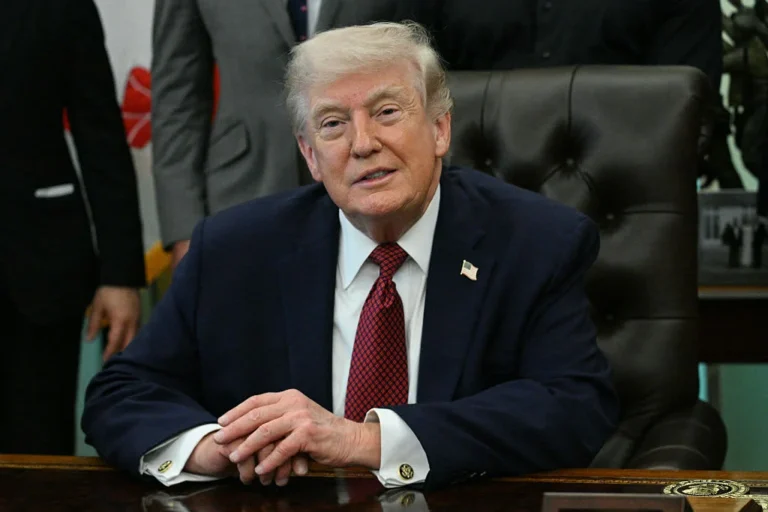
U.S. President Donald Trump has issued stern warnings regarding the conflict’s potential trajectory. Speaking to the Daily Mail newspaper on Sunday, President Trump cautioned that there would "likely be more American casualties as the operations unfold." He further suggested that the conflict with Iran could persist for approximately four weeks. "It’s always been a four-week process. We figured it will be four weeks or so. It’s always been about a four-week process so – as strong as it is, it’s a big country, it’ll take four weeks – or less," Trump was quoted as saying, implying a calculated military timeline.
However, President Trump’s statements regarding diplomatic avenues have appeared contradictory. In an interview with The Atlantic magazine, he claimed that Iran’s new leadership desired to resume negotiations and that he had agreed to engage in talks. "They want to talk, and I have agreed to talk, so I will be talking to them. They should have done it sooner. They should have given what was very practical and easy to do sooner. They waited too long," Trump stated, without providing details on when such talks might occur. This assertion was swiftly refuted by Iran’s security chief, Ali Larijani, a former adviser to the late Supreme Leader. In a post on X (formerly Twitter), Larijani emphatically rejected any prospects of resuming negotiations, declaring, "We will not negotiate with the United States." This direct contradiction underscores the profound distrust and chasm between Washington and Tehran, making a diplomatic resolution exceedingly difficult in the immediate future.
The legality of the U.S. strikes has also drawn sharp criticism and sparked debate within the United States. Brian Finucane, senior advisor at the International Crisis Group, a Brussels-based think tank, articulated concerns, stating, "There is no plausible legal justification for the U.S. attack on Iran." He emphasized that under the U.S. Constitution, only Congress has the right to declare war, and the president’s actions were not in response to a sudden attack on the U.S. "Even by the standards of unilateral executive military action of recent decades, President Trump’s unauthorized attack on Iran stands apart due to its scale and likely repercussions, including for U.S. forces in the region," Finucane added, highlighting the profound implications for constitutional checks and balances.
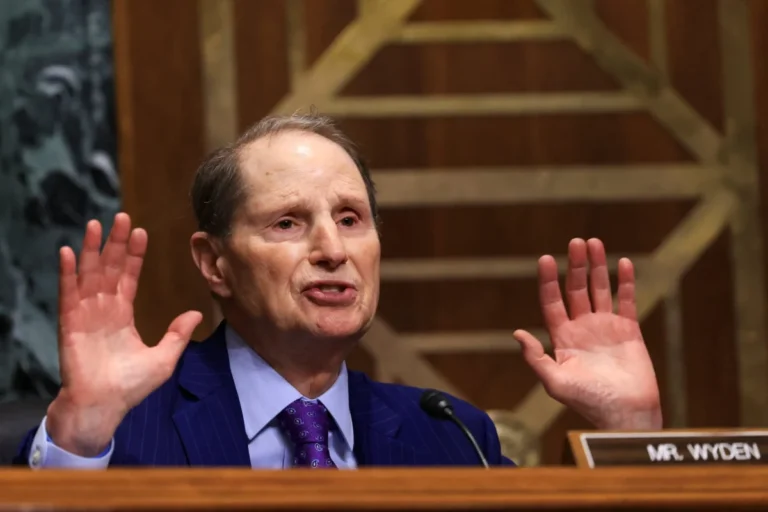
U.S. lawmakers across the political spectrum have voiced concerns. Senator Tom Cotton, the Republican Chairman of the Senate Intelligence Committee from Arkansas, acknowledged the uncertainty on CBS News’ "Face the Nation," stating that "there is no simple answer for what’s going to come next." Echoing this sentiment, Senator Chris Murphy, a Connecticut Democrat, sharply criticized the administration: "It’s no secret that this administration has no plan for the chaos that is unfolding right now in the Middle East." These statements reflect bipartisan unease over a potentially prolonged and costly war in the Middle East and the apparent lack of a comprehensive strategy.
Global Reactions: A Divided World Stage
The U.S.-Israeli strikes and Iran’s subsequent retaliation have deeply polarized the international community, forcing global leaders to assess the immediate fallout and long-term implications.
China and Russia, aligned in their opposition to perceived Western hegemony, have strongly condemned the U.S.-Israeli actions. Chinese Foreign Minister Wang Yi, in a phone call with his Russian counterpart, stated that it was "unacceptable for the U.S. and Israel to launch attacks against Iran… still less to blatantly assassinate a leader of a sovereign country and instigate regime change." Wang reiterated Beijing’s call for an "immediate ceasefire" and an "earliest possible return to dialogue and negotiation," underscoring China’s diplomatic stance which prioritizes stability and non-interference.
Russian President Vladimir Putin reportedly expressed condolences over Khamenei’s death, describing the act as "a murder committed in cynical violation of all norms of human morality and international law." The Russian foreign ministry issued a statement on Saturday calling for "an immediate return to a political and diplomatic track." Both China and Russia view the U.S. actions as a dangerous precedent, potentially destabilizing international law and sovereign borders.

The Gulf states, many of whom host U.S. military bases and have historically viewed Iran as a regional rival, found themselves in a precarious position. Following Iran’s retaliatory strikes that hit their territories, these U.S.-aligned countries issued a joint statement. They vowed to "stand united in defense of our citizens, sovereignty and territory, and reaffirm our right to self-defense in the face of these attacks." This unified front, while supportive of their own security, also highlights the inherent tension of being caught between a powerful U.S. alliance and immediate regional proximity to Iran.
Across the Atlantic, European leaders offered a more nuanced, yet largely supportive, stance towards the U.S. position. Ursula von der Leyen, President of the EU Commission, appeared to endorse the underlying U.S. objective of regime change in Iran, calling for a "credible transition" that could restore stability and reflect the "democratic aspirations of the brave people of Iran." This statement, while couched in diplomatic language, signals a willingness to see a fundamental shift in Iran’s political landscape.
The United Kingdom government, while stating it had not participated directly in the strikes and did "not want to see further escalation into a wider regional conflict," demonstrated its solidarity with the U.S. Prime Minister Keir Starmer confirmed that London had "agreed to let the U.S. use its military bases for ‘defensive’ strikes on Iranian missile sites," highlighting the UK’s strategic alliance while attempting to manage perceptions of direct involvement.
In the Pacific, Australia’s Prime Minister Anthony Albanese highlighted Iran’s decades-long role as a "destabilizing force." He stated, "We support the United States acting to prevent Iran from obtaining a nuclear weapon and to prevent Iran continuing to threaten international peace and security," aligning Australia with the U.S. rationale for intervention. Similarly, Canadian Prime Minister Mark Carney also backed the U.S. action, affirming, "Canada supports the United States acting to prevent Iran from obtaining a nuclear weapon and to prevent its regime from further threatening international peace and security." These statements from key allies underscore a broad consensus among Western nations regarding the perceived threat posed by Iran.
Public Dissent and Broader Implications
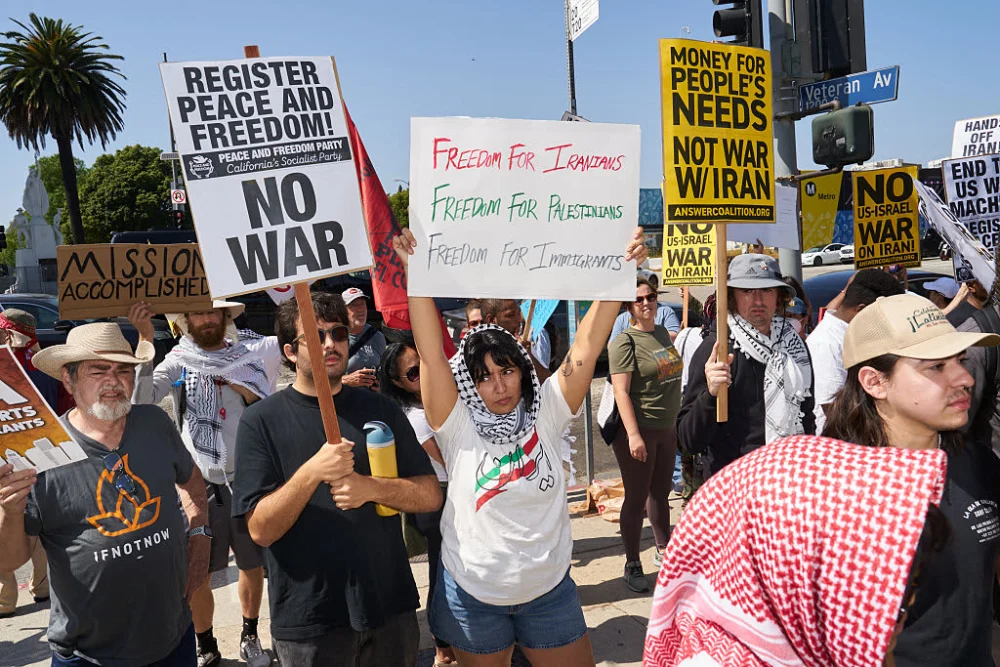
Amidst the geopolitical maneuvering and military actions, public dissent has also emerged. On June 22, 2026, a significant demonstration took place outside the Westwood Federal Building in Los Angeles. Protesters rallied against the U.S. and Israeli strikes on Iran, condemned ICE immigration raids, and voiced strong support for Palestinians, illustrating the complex and interconnected nature of regional conflicts and domestic policies. Such protests highlight a segment of public opinion concerned about the humanitarian cost and the potential for wider conflict, urging for de-escalation and diplomatic solutions.
The current conflict holds profound implications that extend far beyond the immediate battlefields. The assassination of a sitting Supreme Leader, an act unprecedented in modern history, sets a dangerous new precedent for international relations and the sovereignty of nations. The ongoing leadership transition in Iran introduces a period of immense uncertainty, with potential for either a more hardline stance or, less likely in the immediate aftermath, a shift towards moderation.
For the global economy, the threat to oil supplies and the general climate of instability could trigger a severe economic downturn, complicating recovery efforts from previous global crises. Furthermore, the polarization of international responses risks deepening existing geopolitical fault lines, potentially strengthening alliances between countries like Russia, China, and a new, potentially more aggressive Iran, while straining Western unity. The path forward is fraught with peril, with the world watching anxiously to see if diplomacy can eventually prevail over the drums of war.
About the Author