Beijing finds itself at a critical juncture, grappling with mounting uncertainty surrounding U.S. President Donald Trump’s high-stakes diplomatic visit, scheduled for late March 2026. This trepidation stems from a series of aggressive foreign policy maneuvers by Washington, which saw the U.S. and Israeli forces launch strikes resulting in the death of Iran’s Supreme Leader, Ayatollah Ali Khamenei, on February 28, 2026. This unprecedented action followed closely on the heels of the U.S. capture of Venezuelan leader Nicolas Maduro and his wife from their residence in early January, marking a dramatic and alarming shift in American engagement with sovereign states. The convergence of these events has injected profound instability into the global diplomatic landscape, particularly complicating the delicate balance of U.S.-China relations and raising questions about the viability and tone of the impending summit.
A New Era of Assertive American Foreign Policy
The actions taken against Iran and Venezuela signal a pronounced reassertion of the "America First" doctrine under President Trump’s second term, which began in January 2025. This phase of U.S. foreign policy appears characterized by a willingness to undertake unilateral or limited-coalition military and intelligence operations targeting perceived adversaries’ leadership, bypassing traditional diplomatic channels and international norms. The administration’s stated rationale for these operations often centers on national security, countering terrorism, promoting democracy, and disrupting state-sponsored malfeasance, yet their execution has sent shockwaves through the international community.
The joint U.S.-Israel strikes on Iran, which culminated in the death of the octogenarian Supreme Leader Ayatollah Ali Khamenei, represented a dramatic escalation of long-standing tensions. For decades, U.S.-Iran relations have been defined by animosity, fueled by Iran’s nuclear program, its support for regional proxy groups, and its anti-Western rhetoric. Following the U.S. withdrawal from the Joint Comprehensive Plan of Action (JCPOA) in 2018 and the subsequent imposition of crippling sanctions, Tehran and Washington had been locked in a cycle of confrontation. The Trump administration had repeatedly accused Iran of destabilizing the Middle East, sponsoring terrorism, and pursuing nuclear weapons capabilities, allegations Tehran consistently denied, asserting its nuclear program was for peaceful purposes. The intelligence leading to the February 28 operation reportedly cited an imminent threat to U.S. assets or allies, though specific details remain classified. The targeting and killing of a sitting Supreme Leader, a figure of immense religious and political authority, is an act without modern precedent, instantly creating a power vacuum within Iran and sending a clear, albeit unsettling, message about the U.S.’s resolve.
Preceding this, the capture of Venezuelan President Nicolas Maduro in early January had already set an alarming precedent. The U.S. had long refused to recognize Maduro’s legitimacy, backing opposition leader Juan Guaidó and imposing extensive sanctions aimed at pressuring Maduro’s socialist government. Accusations of drug trafficking, human rights abuses, and electoral fraud had shadowed Maduro’s presidency. While details of the capture remain sparse, U.S. officials confirmed the operation, stating it was intended to restore democratic governance and bring Maduro to justice for alleged crimes. This move, too, represented a significant departure from traditional international relations, where the capture of a sitting head of state, however controversial, is generally seen as a violation of sovereign immunity and international law. The implications for the stability of governments around the world, particularly those at odds with Washington, were immediately apparent.
Beijing’s Diplomatic Quandary: Balancing Principle and Pragmatism
These events have placed Beijing in a precarious diplomatic position, forcing it to recalibrate its approach to the impending visit from President Trump. China’s Foreign Ministry, in a statement on Sunday, March 1, 2026, unequivocally condemned Khamenei’s killing, labeling it "a grave violation of Iran’s sovereignty and security" and urging an immediate ceasefire. This stance aligns with China’s long-held foreign policy principles of non-interference in the internal affairs of sovereign states and respect for national sovereignty. Beijing has historically maintained relatively cordial relations with both Tehran and Caracas, driven by energy interests, trade, and a shared skepticism of unilateral Western interventionism. China is Iran’s largest oil customer and a significant investor, while Venezuela has been a key supplier of oil to China and a recipient of Chinese loans and infrastructure projects.
The sentiment among Chinese analysts and officials is one of deep unease. George Chen, a partner at The Asia Group, articulated this concern, stating, "President Xi Jinping won’t feel easy about the death of the top leader of Iran." Chen further questioned, "How can Xi feel everything is normal and alright and be prepared to welcome Trump to visit in [a] happy mood?" This reflects a fundamental concern in Beijing: if the U.S. is willing to target the leaders of Iran and Venezuela, what message does that send to other nations, including China, regarding their sovereignty and the sanctity of their leadership? While China’s condemnation of the U.S. role in Khamenei’s death was firm, some observers noted it was "unusually softer" than its direct criticism following Maduro’s capture, as highlighted by Jack Lee, an analyst at China Macro Group. This nuanced response suggests Beijing’s delicate balancing act: upholding its principles while carefully avoiding further antagonizing Washington ahead of the crucial summit.

The scheduled visit from March 31 to April 2 would mark the first trip by a sitting U.S. president to China since 2017. It was intended to solidify a "fragile trade truce" reached in late October 2025, a pause in the prolonged U.S.-China trade war that had begun in 2018. The truce had brought a temporary cessation to new tariffs and established a framework for further negotiations on intellectual property, technology transfer, and market access. For Beijing, the trip represented an opportunity to stabilize economic relations, project an image of global leadership, and potentially make progress on contentious issues. However, the lack of official confirmation from Beijing regarding the dates signals the depth of the internal deliberations and potential hesitation.
Economic Fallout and Business Community Jitters
The diplomatic chill has tangible economic ramifications, particularly for the U.S. business community that had hoped to leverage the presidential visit for new deals and market access. Numerous U.S. executives were expected to accompany President Trump to Beijing, following a pattern of business delegations that often shadow leaders on high-profile international trips, aiming to strike lucrative agreements. However, the recent geopolitical turbulence has dampened enthusiasm. An active member of the American business community in China, who requested anonymity, noted, "Prior to the attack on Iran, many American CEOs were already unwilling to go with Trump to China. Now the situation is even more tricky." The prospect of associating with an administration engaged in such aggressive foreign policy actions, coupled with the potential for further instability, has created significant apprehension.
This sentiment is reflected in U.S.-based prediction markets. As of late Monday morning, March 3, 2026, Polymarket showed a sharp drop in expectations for Trump visiting China by March 31, plummeting to 42% from 83.9% on February 21. While wagers on a visit by April 30 remained relatively high at 81%, the immediate uncertainty was palpable. Kalshi, another prediction market, registered a slight drop in expectations for Trump to visit China by 2027, though it still hovered at a high 91%. These metrics, while not definitive, underscore the growing doubt among investors and the broader public regarding the near-term viability of the visit.
The economic stakes for both nations are immense. U.S.-China bilateral trade reached an estimated $750 billion in 2025, with American companies investing tens of billions in the Chinese market. A stable trade relationship is crucial for global economic growth, and any disruption to the fragile truce could have cascading effects on supply chains, corporate earnings, and consumer prices worldwide. The uncertainty could deter new foreign direct investment into China and potentially accelerate the trend of supply chain diversification away from the country, a movement that gained momentum during the initial trade war.
Broader Geopolitical Ripple Effects and Regional Instability
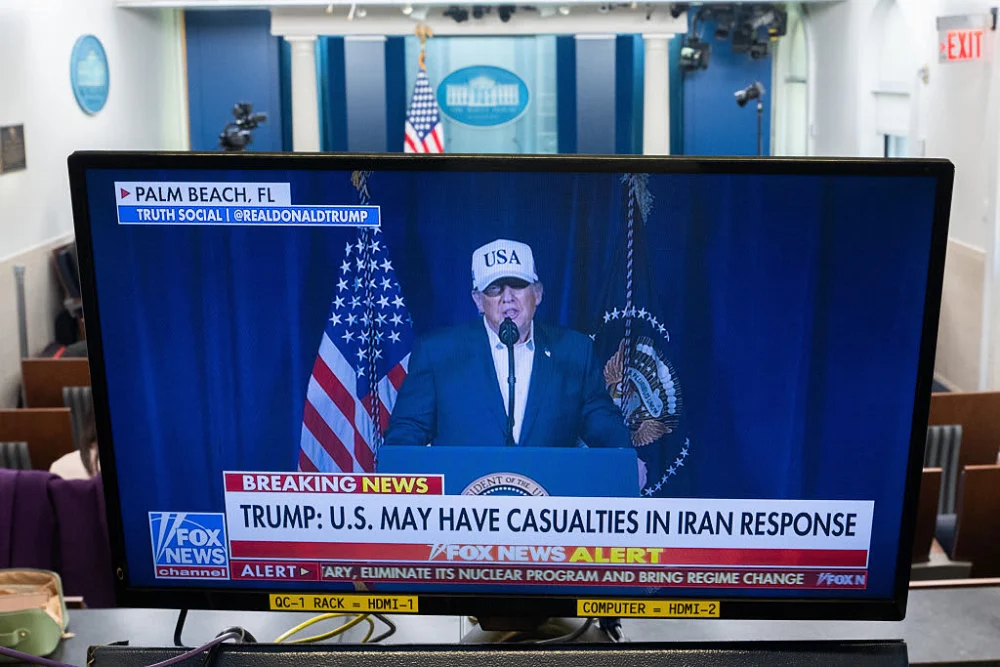
The fallout from the U.S. actions extends far beyond U.S.-China relations, threatening to destabilize the Middle East and challenge the foundations of international law. President Trump’s statement to the British newspaper The Daily Mail, indicating that U.S. strikes on Iran "could last four weeks," has exacerbated fears of a prolonged regional conflict. This timeframe directly overlaps with the planned start date of his China trip, adding another layer of complexity. Chinese state media prominently highlighted this statement, underscoring Beijing’s concern about the potential for protracted instability.
Should the conflict escalate into a broader regional war, as suggested by Yue Su, principal economist at the Economist Intelligence Unit, "it’s not impossible that Trump might delay the trip." The immediate reactions from Middle Eastern powers have been varied. Saudi Arabia and the UAE, while traditionally wary of Iran, have called for de-escalation, concerned about regional stability and the flow of oil. Israel, a key partner in the operation, has reportedly heightened its security posture, anticipating retaliatory actions from Iranian proxies. Global oil prices spiked immediately following the news of Khamenei’s death, reflecting market anxieties about supply disruptions from the Strait of Hormuz, a critical chokepoint for global energy shipments.
Internationally, the actions have sparked a vigorous debate about the legality and morality of targeting sovereign leaders. The United Nations Security Council convened an emergency session, though resolutions condemning the U.S. actions faced likely vetoes. Russia and several European Union member states, while not always aligned with Iran, expressed deep concern over the violation of sovereignty and the potential for a dangerous precedent. China, along with other non-aligned nations, will likely continue to advocate for a return to multilateralism and respect for international law, positions that stand in stark contrast to the U.S.’s recent unilateralism.

The issue of Taiwan also looms large as a central flashpoint in U.S.-China relations. The democratically self-ruled island, which Beijing claims as its own territory, receives significant military support from the U.S. Any perceived weakening of China’s diplomatic standing, or an emboldened U.S. foreign policy, could impact the delicate cross-strait balance. While China’s top diplomat Wang Yi had emphasized expanding areas of cooperation with U.S. Secretary of State Marco Rubio at the Munich Security Conference in mid-February, the current climate raises questions about Washington’s potential "restraint on arms sales to Taiwan," as noted by Jack Lee.
Pathways to Dialogue Amidst Deepening Distrust
Despite the profound challenges, many analysts still believe the Trump-Xi meeting should, and likely will, proceed, albeit under a cloud of unprecedented tension. Dong Shaopeng, a senior researcher at Renmin University of China, acknowledged that the U.S. actions in Iran have "eroded trust between the two countries." However, he still expects the leaders to meet, expressing hope that the conflict does not spread further.
The upcoming annual parliamentary meeting in China, where top diplomat Wang Yi is expected to address the press, will offer a crucial opportunity for Beijing to articulate its official stance and diplomatic strategy. In past U.S.-China meetings, official readouts consistently highlighted the need to "create conditions" for developing bilateral relations – conditions that are now severely strained.
Arguments for proceeding with the trip center on the necessity of direct, high-level dialogue to manage crises and prevent further escalation. Gary Dvorchak, managing director at Blueshirt Group, underscored this point: "The issues that they have to work out, China-U.S. trade, are pretty important, and the meeting has been scheduled to be in place for a long time, and so cancelling it would be pretty radical at this point." He added, "I don’t think it would… help the situation to cancel the meeting for any reason." A direct conversation between Trump and Xi, perhaps even a pre-summit phone call as suggested by Yue Su, could provide a vital channel for de-escalation and clarification of intentions.
However, the tone and substance of such a meeting would undoubtedly be profoundly altered. The customary "happy mood" for welcoming a foreign head of state, as George Chen described, would be replaced by an atmosphere of guarded caution and strategic calculation. The Chinese state-affiliated columnist "Niutanqing" on Monday, March 3, 2026, published an analysis describing the Iran "war" as "more intense than the conflict in Ukraine," drawing lessons that "traitors" can emerge from within and that negotiations may conceal an adversary’s true intentions. This reflects a hardening of views within some Chinese circles, suggesting that Beijing might approach any engagement with Washington with heightened skepticism.
Ultimately, the confluence of these aggressive U.S. foreign policy actions has plunged international relations into a period of acute uncertainty. The impending Trump-Xi summit, once envisioned as a platform for stabilizing critical bilateral ties and addressing shared economic concerns, now stands as a stark testament to a world on edge. Its outcome, whether a delay, a cancellation, or a heavily strained proceeding, will send a powerful signal about the future trajectory of global power dynamics and the fragile prospects for peace and cooperation in an increasingly volatile international order.
About the Author