The opaque world of prediction markets has been thrust into the harsh glare of federal scrutiny following the assassination of Iranian Supreme Leader Ayatollah Ali Khamenei in a Saturday bombardment of Iran. Wagers made on the timing and circumstances of Khamenei’s departure from power, particularly those that yielded significant profits immediately after his death, have ignited a firestorm among lawmakers and prompted swift calls for legislative action to curb an industry increasingly seen as ethically problematic and potentially dangerous. The incident, which occurred on March 1, 2026, has not only sparked a geopolitical crisis but has also exposed a contentious debate about the legal and moral boundaries of speculative betting on real-world events, especially those with national security implications.
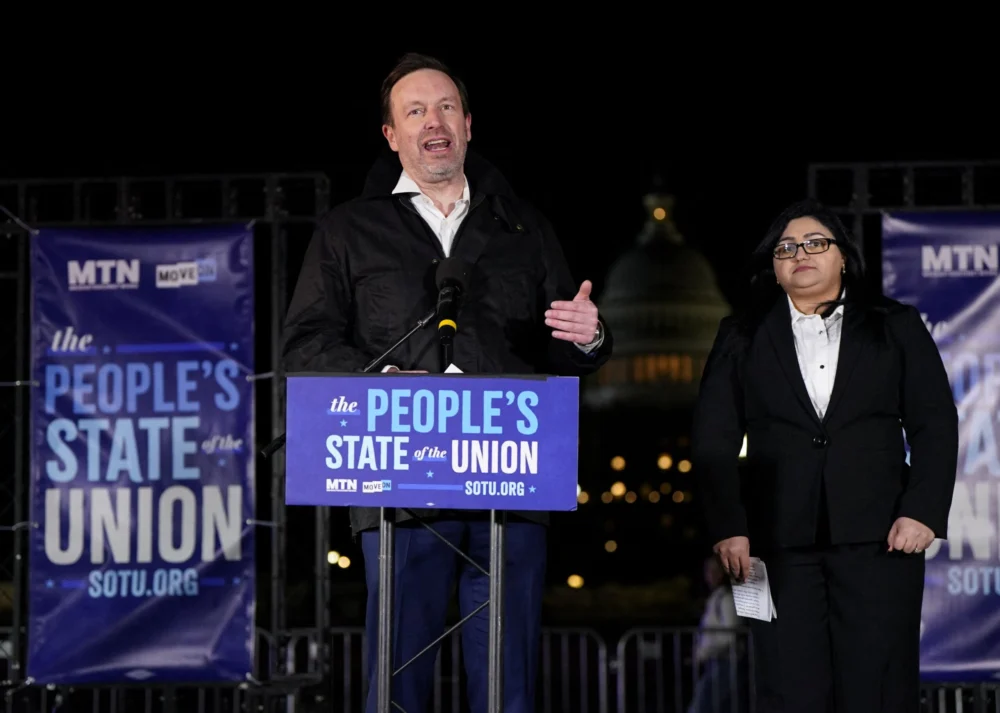
The immediate and vocal condemnation came from Sen. Chris Murphy, D-Conn., who, on February 24, 2026, just days before the fatal attack, had spoken alongside Afghan refugee Fereshteh Ganjavi at a "People’s State of the Union" event in Washington. Following news of Khamenei’s death and reports of individuals profiting from related prediction market wagers, Senator Murphy took to X (formerly Twitter) to express his outrage. "It’s insane this is legal," Murphy posted, reacting to another user’s highlight of market participants who had earned substantial sums. He continued, "People around Trump are profiting off war and death. I’m introducing legislation ASAP to ban this." The senator’s strong words signaled an immediate and aggressive legislative push to address what he views as a glaring regulatory loophole that allows individuals to monetize tragedy and geopolitical instability. CNBC has reached out to Senator Murphy’s office for further details regarding the specifics of his proposed legislation, which is expected to target the federal regulation of these markets.
The Catalyst: Khamenei’s Assassination and Market Reactions
Ayatollah Ali Khamenei, Iran’s supreme leader since 1989, was killed in a bombardment that has sent shockwaves across the Middle East and beyond. While the precise perpetrators and full geopolitical ramifications of the attack are still unfolding, its immediate impact on prediction markets was undeniable. Markets that had been established to bet on Khamenei’s health, his removal from power, or the timing of his death saw intense activity. Reports quickly surfaced of users cashing in on these markets, with one prominent example being a user identified as "Magamyman" on Polymarket, an offshore prediction market not yet operational within the U.S., who reportedly made $553,000. This stark financial gain, directly tied to a highly sensitive and violent international event, served as a potent symbol for critics arguing that these platforms cross a line from harmless speculation into morally reprehensible territory. The perceived link between the political elite (implied by Murphy’s "People around Trump" comment) and potential financial gain from such events further fueled the controversy, raising questions about insider trading and undue influence.
Legislative Backlash and Calls for Oversight
Senator Murphy’s legislative initiative is not an isolated voice; it reflects a growing chorus of concern among federal lawmakers. Rep. Mike Levin, D-Calif., echoed Murphy’s sentiments on X, stating unequivocally that "[p]rediction markets cannot be a vehicle for profiting off advance knowledge of military action." Levin added a demand for "answers, transparency, and oversight," underscoring the broader desire for greater accountability within the industry. These statements highlight a fundamental ethical dilemma: whether financial instruments should be allowed to operate in a manner that incentivizes or rewards speculation on human suffering or acts of war. The very existence of such markets, particularly when they involve high-stakes geopolitical events, raises profound questions about national security and market integrity. Lawmakers are grappling with the challenge of distinguishing legitimate information aggregation from potentially dangerous forms of gambling that could be exploited by those with privileged information or even used to influence events.
Industry’s Defense and Regulatory Distinctions
In the face of this intense criticism, regulated prediction market platforms have been quick to defend their practices and draw crucial distinctions between themselves and their unregulated counterparts. Kalshi, a U.S.-regulated exchange operating under the oversight of the Commodity Futures Trading Commission (CFTC), issued a statement to CNBC clarifying its position. The company asserted that it "doesn’t allow markets directly tied to death" and emphasized that it had issued refunds on the market concerning Khamenei’s fate, citing regulations barring wagers on death. "We included every precaution on this market to make sure people could not trade on the outcome of death," Kalshi stated, adding, "Our rules were clear from the beginning, we never changed them, and we settled based on the rules. We reimbursed all fees and net losses because we thought the UX could have been clearer for users."
Tarek Mansour, CEO of Kalshi, directly addressed Senator Murphy’s concerns in a separate X post, reiterating, "regulated prediction markets are not allowed to do war markets." He then pointedly distinguished the market cited by critics, stating, "The market you’re posting is unregulated and offshore." This distinction is critical for the industry, as it attempts to compartmentalize the actions of unregulated platforms from those operating within established legal frameworks. Kalshi’s stance underscores the complex regulatory landscape, where U.S.-based, CFTC-regulated entities adhere to specific rules, while a multitude of offshore or crypto-based platforms operate with far fewer constraints, creating a perceived ‘wild west’ environment that fuels much of the current controversy. The disclosure by CNBC that it has a commercial relationship with Kalshi, including customer acquisition and a minority investment, adds another layer of context to the reporting on the company’s defense.
The Blurring Lines: Gambling Is Not Investing
Further complicating the landscape is the launch of a new trade group led by Mick Mulvaney, former acting Chief of Staff to President Donald Trump. Named "Gambling Is Not Investing," the group’s mission is to push for tighter guardrails on prediction markets, specifically targeting the blurring lines between these platforms and traditional sports betting. Mulvaney’s group highlights a long-standing tension between state and federal regulatory frameworks. Many states have, in recent years, legalized sports betting to tap into massive tax revenues, using these funds to balance budgets and support vital public services. These states now argue that federally regulated prediction markets, which often offer betting lines on sporting events, are encroaching on their carefully established and regulated sportsbooks.
Mulvaney articulated this concern, stating, "Gambling products – regardless of what you call them – must follow established state and tribal laws." He stressed that "Rebranding sports wagering as ‘trading’ or ‘investing’ or ‘predicting’ misleads consumers, undermines responsible gaming protections, and weakens the state and tribal systems built to protect the public and fund vital community services." This argument frames prediction markets as a direct threat to existing consumer protection mechanisms and state revenue streams, advocating for a clearer demarcation and potentially increased state-level oversight or outright prohibition of certain market types. The trade group’s emergence at this critical juncture signifies a coordinated effort to influence public perception and policy regarding the future of speculative markets.
Broader Implications and the Future of Prediction Markets
The controversy surrounding Khamenei’s death and the ensuing legislative push carries significant implications for the nascent prediction market industry, its regulatory future, and the broader ethical considerations of financial speculation.
1. Regulatory Overhaul and Classification:
The most immediate impact is the heightened probability of legislative action. Senator Murphy’s stated intention to introduce a ban, coupled with Representative Levin’s call for oversight, suggests a bipartisan appetite for reevaluating the legal status of these markets. The CFTC, which currently regulates some prediction markets as derivatives, may face pressure to tighten its rules or reclassify certain types of wagers. The core debate will revolve around whether these markets are legitimate tools for information aggregation and forecasting, or simply sophisticated forms of gambling that require stricter consumer protection, or even outright prohibition, particularly for sensitive geopolitical or personal outcome events. This could lead to a two-tiered system, where some markets are permitted under strict guidelines, while others, deemed too risky or ethically fraught, are banned.
2. Ethical and Moral Quandaries:
The "profiting off war and death" narrative is a powerful one, resonating deeply with public sentiment. The ethical dilemma of monetizing tragic events, human suffering, or military actions will be central to any legislative debate. This incident forces a re-examination of the moral compass of financial markets. While some argue that prediction markets simply reflect collective wisdom and offer insights into future probabilities, critics contend that they risk incentivizing or at least trivializing grave human consequences. The case of "Magamyman" illustrates how such profits, however abstract in their origin, can appear callous in the context of real-world violence.
3. National Security Concerns:
The potential for individuals with insider knowledge of military or political actions to profit from prediction markets raises significant national security concerns. If market activity could signal impending events, or if privileged information could be leveraged for personal gain, it presents a serious risk of intelligence leaks or even market manipulation. Lawmakers will likely explore mechanisms to prevent such exploitation, potentially requiring enhanced disclosure, stricter identity verification, and more robust surveillance of market activity. The debate might even touch upon whether the existence of such markets could inadvertently create incentives for malicious actors.
4. State vs. Federal Jurisdictional Clash:
The "Gambling Is Not Investing" group highlights an ongoing jurisdictional battle. States, having invested heavily in regulating and taxing sports betting, view federally regulated prediction markets as a threat to their autonomy and revenue. This conflict could lead to calls for Congress to clarify regulatory authority, potentially ceding more control to states for certain types of wagers or establishing a clearer federal framework that respects state boundaries. The issue of tax revenue, a powerful motivator for states, will undoubtedly play a significant role in this inter-jurisdictional tug-of-war.
5. Impact on Innovation and Data Aggregation:
Proponents of prediction markets often argue that they serve as valuable tools for aggregating dispersed information, providing more accurate forecasts than traditional polling or expert analysis. A blanket ban or overly restrictive regulation could stifle innovation in this space and potentially eliminate a source of valuable data for researchers, policymakers, and businesses. The challenge for regulators will be to balance the legitimate potential benefits of prediction markets with the need to mitigate their inherent risks and ethical pitfalls. The industry will need to demonstrate its value proposition beyond mere gambling to survive and thrive under heightened scrutiny.
6. Future of Unregulated Offshore Markets:
The distinction drawn by Kalshi’s CEO between regulated and unregulated markets points to a persistent problem. Even if U.S. regulators tighten rules for domestic platforms, offshore and decentralized prediction markets, often operating on blockchain technology, will likely continue to exist. This raises questions about enforcement and the ability of national legislation to fully address a globally distributed phenomenon. The incident with Polymarket’s "Magamyman" underscores the difficulty in controlling these unregulated avenues, potentially driving more activity to less transparent platforms if U.S. restrictions become too severe.
In conclusion, the assassination of Ayatollah Ali Khamenei has inadvertently become a pivotal moment for the prediction market industry. What was once a niche financial instrument is now at the center of a heated debate involving ethical concerns, national security implications, and complex jurisdictional issues. As Senator Murphy prepares his legislation and other lawmakers demand answers, the industry faces an uncertain future, poised between potential innovation and the very real threat of comprehensive bans or stringent new regulations that could fundamentally reshape its existence. The outcome will set a precedent for how speculative markets are governed in an increasingly interconnected and volatile world.
About the Author