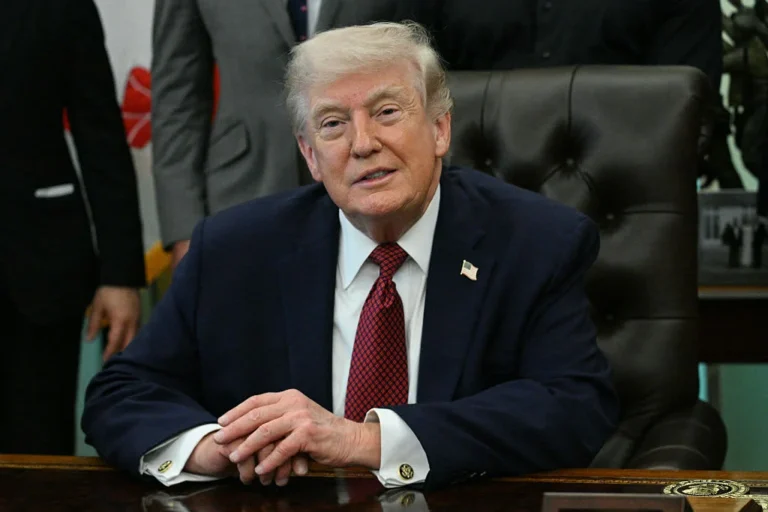
More than 48 hours into the escalating conflict in Iran, the United States’ military objectives remain strikingly fluid, generating significant confusion among allies, adversaries, and domestic political figures alike. President Donald Trump has stated that combat will persist until its "objectives" are met, yet the precise nature of these objectives and the fundamental justification for the war have undergone a series of rapid transformations, leaving observers questioning the administration’s strategic clarity and the ultimate endgame. This lack of a consistent narrative from the White House and its senior officials underscores a deeper ambiguity regarding whether the United States is pursuing a limited military operation or a full-scale campaign for regime change in Tehran.
A History of Tensions and the Path to Conflict
The current military engagement did not erupt in a vacuum but is the culmination of decades of fraught relations between the United States and Iran. Tensions have consistently simmered, punctuated by periods of intense confrontation and fragile attempts at diplomacy. Key flashpoints in recent history include the 1979 Iranian Revolution, the hostage crisis, Iran’s nuclear program, its support for regional proxy groups, and the imposition of crippling international sanctions. The 2015 Joint Comprehensive Plan of Action (JCPOA), a multilateral agreement designed to curb Iran’s nuclear ambitions, offered a brief respite but was unilaterally withdrawn by the Trump administration in 2018, leading to a reinstatement of "maximum pressure" sanctions and a sharp escalation of rhetoric.
In the months leading up to the March 2026 conflict, the situation deteriorated rapidly. Widespread protests against the Iranian government erupted across the country in January 2026, fueled by economic hardship and political repression. President Trump, seizing on the unrest, publicly promised Iranian dissidents that "help is on its way," signaling a potential shift in U.S. policy towards more direct intervention. This declaration was swiftly followed by a significant U.S. military buildup in the vicinity of Iran, including naval deployments and troop reinforcements, which served as a clear precursor to the eventual invasion. The stated justifications for this heightened posture varied, ranging from protecting U.S. interests in the region to deterring potential Iranian aggression.
Chronology of Conflicting Declarations
The initial days of the conflict have been marked by a cascade of often contradictory statements from the Trump administration, making it challenging to discern a unified strategic vision.
Saturday, March 1, 2026: The Invasion Begins
The military operation commenced on Saturday, March 1, 2026. President Trump addressed the nation via a video message, asserting that the primary objective was to "defend the American people by eliminating imminent threats from the Iranian regime, a vicious group of very hard, terrible people." In this initial address, Trump outlined a broad set of ambitious goals: razing Iran’s missile silos, preventing the country from ever obtaining a nuclear weapon, destroying its extensive terrorist proxy network, and sinking its navy. Critically, he also issued an explicit call for regime change, urging the Iranian people to overthrow the leadership that had governed the country since 1979. This direct appeal for a change in government raised eyebrows even among some of the President’s traditional allies, as it signaled an expansive and potentially open-ended commitment.
However, shortly after Trump’s Truth Social video, unnamed U.S. officials provided a different narrative during media briefings. They characterized the operation not as a broad offensive for regime change, but as a preemptive strike designed to stave off an imminent Iranian offensive. This framing suggested a more limited, defensive action aimed at neutralizing an immediate threat, rather than fundamentally altering Iran’s political landscape. The confirmation of the killing of Iranian leader Ayatollah Ali Khamenei also emerged around this time, adding another layer of complexity to the operation’s perceived goals.
Sunday, March 2, 2026: "Ahead of Schedule" Amidst Shifting Sands
On Sunday, President Trump engaged in a series of interviews with various media outlets, including CNBC and The Atlantic, further muddying the waters. He told The Atlantic that Iran had "waited too long" in negotiations over its nuclear program and could have secured a deal. To CNBC, he claimed the U.S. attacks were "ahead of schedule," a statement made without specifying what schedule he was referring to. Later, in an interview with the Daily Mail, he suggested the war could "grind on for more than four weeks," a stark contrast to the earlier "ahead of schedule" remark and raising concerns about the potential for a prolonged engagement.
Later that Sunday, Trump delivered a second video address, reiterating that combat would continue "until all of our objectives are achieved, and we have very strong objectives." He framed the conflict as essential for ensuring security "for our children and their children," while once again advocating for regime change. In a somber note, he also warned the American public that more U.S. casualties were likely, a grim acknowledgment of the inherent risks of the ongoing military action.
Monday, March 3, 2026: Congressional Scrutiny and Cabinet Discrepancies
By Monday, as the death toll for U.S. service members climbed to six, the growing inconsistencies in the administration’s messaging sparked widespread concern and criticism on Capitol Hill. President Trump once again reiterated his priorities, which now included destroying Iran’s missile capabilities, annihilating its navy, preventing the country from acquiring a nuclear weapon, and dismantling Iran’s ability to fund terrorist proxies. While these objectives aligned somewhat with his initial statements, the repeated re-articulation highlighted a lack of fixed, overarching war aims.
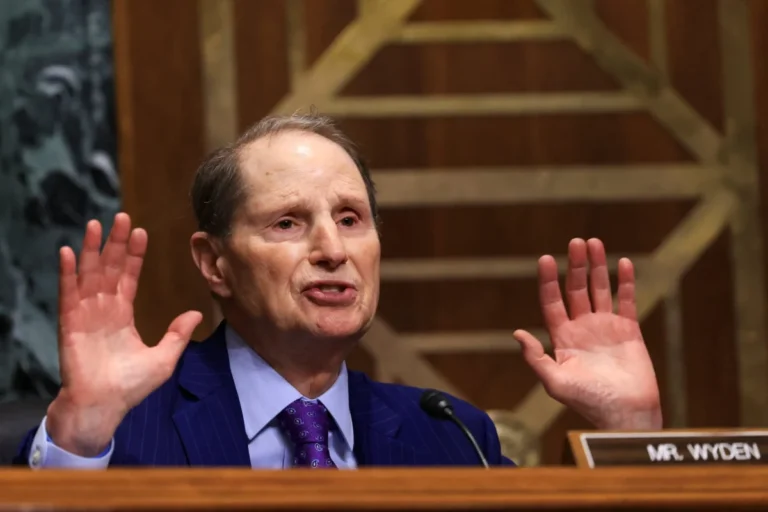
Democrats, largely unified in their opposition to the war, voiced strong objections. Senator Mark Warner (D-Va.), the ranking Democrat on the Senate Intelligence Committee, emerged from a meeting with Secretary of State Marco Rubio visibly frustrated. He told reporters, "We have seen the goals for this operation change now, I believe, four or five times." Warner detailed the perceived shifts: "It was about the Iranian nuclear capacity, a few days later it was about taking out the ballistic missiles, it was then – in the president’s own words – about regime change… and now we hear it’s about sinking the Iranian fleet." He concluded, "I’m not sure which of those goals, if met, means that we’re at an endgame." Senator Richard Blumenthal (D-Conn.) offered an even blunter assessment, stating simply, "The president’s been all over the place."
Adding to the confusion were the differing statements from President Trump’s top aides, some of whom are potential contenders for the presidency in 2028. Defense Secretary Pete Hegseth, addressing reporters, explicitly stated that the war was "not a so-called regime change war," arguing instead that the effort was focused on preventing Iran from building a "conventional shield" for its nuclear program. This directly contradicted the President’s repeated calls for regime change.
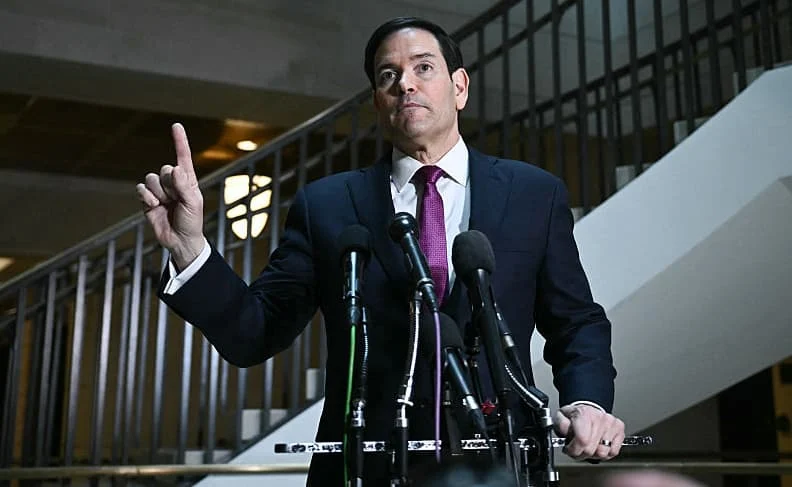
Secretary of State Marco Rubio offered yet another characterization. He maintained that the mission was, in part, a preemptive strike, but suggested a specific trigger: an anticipated attack from Iran following an action by U.S. ally Israel. Rubio explained, "We knew that there was going to be an Israeli action, we knew that would precipitate an attack against American forces and we knew that if we didn’t preemptively go after them before they launched those attacks, we would suffer higher casualties." He emphasized, "We were not going to sit there and absorb a blow before we responded." Rubio also doubled down on the "purpose of this" being to "destroy that missile capability," echoing Trump’s earlier assertion that Iran was building missiles to shield its quest for a nuclear weapon.
Vice President JD Vance, who has cultivated a public image of skepticism towards prolonged Middle Eastern conflicts, attempted to reassure the public that the war would not drag on. He insisted that President Trump "is not going to rest until he accomplishes that all-important objective of ensuring that Iran can’t have a nuclear weapon."
Tuesday, March 4, 2026: Presidential Pushback
The divergence in messaging continued into Tuesday. During a meeting with German Chancellor Friedrich Merz, President Trump directly disputed Rubio’s implication that the U.S. action was precipitated by an imminent Israeli move. When asked about Israel, Trump stated, "No, I might’ve forced their hand," suggesting U.S. actions were independently initiated and perhaps even influenced Israel’s calculus, rather than being a reaction to it.
Analysis of the Shifting Sands: Implications and Concerns
The kaleidoscopic nature of the stated U.S. objectives carries profound implications, both domestically and internationally. The central question remains whether the administration is pursuing a limited military objective – such as dismantling specific capabilities or deterring immediate threats – or the far more ambitious and potentially costly goal of full-blown regime change.
This lack of a unified message suggests several possibilities: internal disagreements within the administration about the war’s scope and purpose, a deliberate strategy of ambiguity to keep adversaries guessing, or simply a reactive adaptation of war aims as the conflict unfolds. Regardless of the reason, the consequence is a profound sense of strategic drift.
Domestic Political Fallout: The confusion has severely exacerbated political divisions within the United States. Democrats are incensed, viewing the shifting justifications as a dangerous precedent that undermines constitutional war powers and potentially sets the stage for an open-ended conflict without clear congressional authorization. The rising casualty count, now at six U.S. service members, intensifies calls for accountability and a clear exit strategy. Even some Republicans, typically supportive of military action, have begun to raise questions about the administration’s motives and the extent of U.S. entanglement. The debate over war authorization – a perennial issue in modern U.S. foreign policy – is likely to intensify dramatically.
International Perceptions: Globally, the muddled messaging poses significant challenges. Allies are likely seeking urgent clarity, concerned about potential regional destabilization and the credibility of U.S. foreign policy commitments. A lack of clear objectives can erode international trust and make it difficult to rally multilateral support. Adversaries, conversely, may seek to exploit the ambiguity, interpreting it as weakness or a lack of resolve, potentially prolonging the conflict or escalating their own actions.
Strategic Risks and the Endgame: The most critical concern revolves around the "endgame." As Senator Warner articulated, if the goals are constantly shifting, it becomes impossible to define victory or determine when the mission is accomplished. A war without clear objectives risks becoming an open-ended commitment, mirroring past protracted conflicts in the Middle East. This strategic ambiguity makes it extraordinarily difficult to plan for post-conflict stabilization, reconstruction, or political transition.
Expert Perspectives on Dual Objectives
Analysts suggest that the U.S. could theoretically be pursuing multiple objectives simultaneously, or that different actors (the U.S. and Israel, for example) might be pursuing distinct, though overlapping, goals. Mark Cancian, a retired Marine Corps colonel and senior advisor with the Center for Strategic and International Studies (CSIS), weighed in on this complexity. "When you just look at things being struck, I would say yes, they’re going after both," Cancian noted, referring to both regime change and the functional disarmament of Iran’s nuclear and missile programs – a long-term goal of U.S. administrations.
However, Cancian highlighted a critical distinction: "But also, there’s a question about who’s going after what… so it could be that we’re just going after different goals, [Israel is] going for regime change and we’re going for nuclear programs, missile programs, terror." This scenario, where allies have divergent ultimate objectives, could profoundly complicate the war’s conclusion.
"Day to day during the campaign, it might not make a big difference," Cancian explained, "but where it may make a big difference is when you end." He envisioned a challenging scenario: "I could imagine a situation where the Iranian government accepts [the U.S.] conditions, that’s what happened in Venezuela. But I could also imagine a situation where the Israeli’s just kept bombing." This highlights a potential divergence in exit strategies, where the U.S. might be ready to de-escalate or negotiate once its stated conditions are met, while Israel, potentially pursuing a more absolute goal of regime change, might continue military action.
"At some point, they’re going to have to make a decision, right now they don’t have to face that question but at some point they will need to face it… it would be particularly a pressing issue if the Iranian government offers peace," Cancian concluded. This expert analysis underscores the precariousness of the current situation, where a lack of alignment on strategic goals could lead to a prolonged and even more destructive conflict, with unclear outcomes and potentially severe humanitarian consequences.
Broader Impact and the Road Ahead
Beyond the immediate military objectives, the conflict carries significant broader implications. Regionally, it risks further destabilizing an already volatile Middle East, potentially drawing in other state and non-state actors. Economically, global oil markets, already sensitive to geopolitical events, could experience severe disruptions, impacting prices and global trade. The humanitarian cost, measured in civilian casualties and displacement, could be immense.
For the United States, the conflict raises fundamental questions about its role in the world, the limits of military power, and the wisdom of unilateral action. A prolonged engagement in Iran, especially one without clear, achievable objectives, risks draining resources, diverting attention from other critical global challenges, and further entangling the U.S. in a complex regional quagmire. The coming days and weeks will be crucial in determining whether the Trump administration can articulate a coherent strategy, align its messaging, and ultimately define a path towards a sustainable resolution for a conflict whose aims appear to be continuously evolving.
CNBC’s Justin Papp contributed to this report.
About the Author