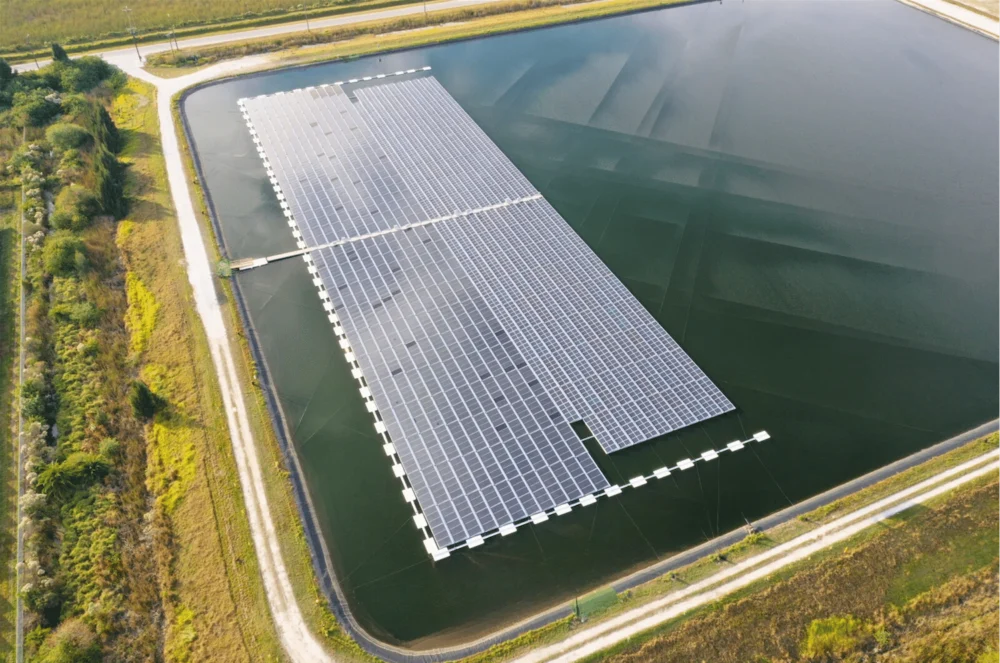
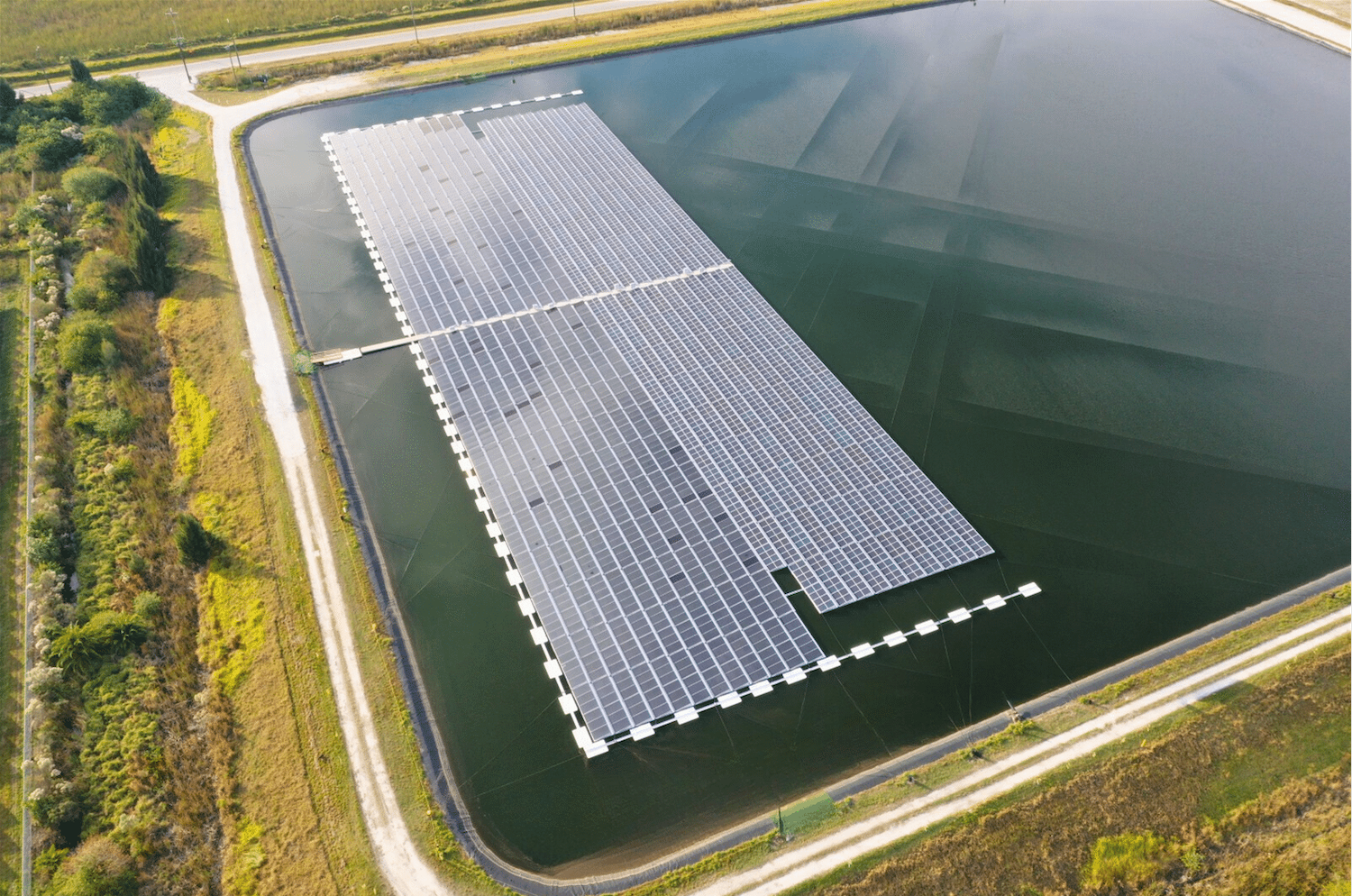
The transition toward a decarbonized power grid in the United States is increasingly moving beyond traditional land-based infrastructure and onto the nation’s vast network of reservoirs, industrial ponds, and irrigation canals. Floating solar, often referred to in the industry as "floatovoltaics," represents a burgeoning subset of the renewable energy sector where solar arrays are mounted on buoyant structures and moored on bodies of water. This approach offers a strategic solution to one of the most persistent hurdles in renewable energy development: the competition for land. As utility-scale solar projects often require thousands of acres, frequently pitting energy needs against agriculture or conservation, floating solar utilizes underused aquatic surfaces to generate clean power. However, as the technology matures, developers and researchers are discovering that the intersection of energy production and aquatic ecology requires a nuanced, site-specific approach to ensure that the benefits of renewable energy do not come at the cost of local biodiversity.
The Strategic Evolution of Floatovoltaics in the United States
The history of floating solar in the United States is a relatively recent one, marked by a shift from small-scale experimental projects to large-scale industrial applications. The technology first gained a foothold in 2009, when a winery in California’s Napa Valley installed a floating array on an irrigation pond. This project, supported by flotation structures from AccuDock, served as a proof-of-concept for the industry. At the time, the primary motivation was to preserve valuable vineyard land while reducing water evaporation in a drought-prone region.
By 2020, the landscape had shifted significantly. Companies like AccuSolar, a spinoff of the flotation expert AccuDock, began to recognize the global potential for these systems. Jason Harrison, CEO and founder of AccuSolar, noted that the industry’s evolution was driven by a realization that the structures used for floating docks could be optimized for the rigors of solar energy production. The company has since expanded its reach, moving from simple pond installations to complex projects at mining facilities and manufacturing plants. For example, a 2.4-megawatt project at a Florida mining site and a 1.8-megawatt contract in Oklahoma demonstrate the growing appetite for "land-neutral" energy solutions in heavy industry.
The timeline of floating solar development in the U.S. reflects a broader trend toward maximizing the utility of man-made environments. Initially confined to private ponds, the industry is now eyeing federal reservoirs and municipal water treatment facilities as the next frontier for expansion.
Assessing the Technical Potential: Data-Driven Insights
The scale of the opportunity for floating solar in the U.S. is immense, according to data provided by the National Renewable Energy Laboratory (NREL) and the Department of Energy. An initial NREL study identified approximately 24,000 human-made reservoirs across the country as suitable candidates for floating solar installations. The researchers estimated that if even a fraction of these surfaces were utilized, they could meet roughly 10 percent of the nation’s annual electricity demand. To achieve the same output on land, developers would need to clear or occupy more than 5 million acres of land—an area roughly the size of New Jersey.
More recent analysis has narrowed the focus to federally owned or regulated reservoirs. This subset alone possesses a technical potential of 1,475 terawatts of electricity annually. In practical terms, this is enough energy to power approximately 100 million American homes. While the "technical potential" represents an upper limit that does not account for all economic or regulatory hurdles, it highlights the significant role that floating solar could play in meeting the Biden administration’s goals for a carbon-free power sector by 2035.
Furthermore, floating solar offers a unique efficiency advantage. Solar panels are known to lose efficiency as they heat up; the natural cooling effect provided by the underlying water helps maintain lower operating temperatures for the panels, often resulting in a performance boost of 5 to 10 percent compared to land-based systems in similar climates.
Navigating the Complexity of Aquatic Ecology
Despite the clear energy and land-use benefits, the environmental impact of covering large portions of water with solar panels remains a subject of intense scientific scrutiny. Unlike land-based arrays, which primarily interact with soil and terrestrial vegetation, floating arrays alter the interface between the atmosphere and the water.
Researchers at Oregon State University (OSU) recently conducted a comprehensive study of 11 reservoirs across six states to determine how floating solar affects water quality. The findings, led by researcher Evan Bredeweg, suggest that there is no "one-size-fits-all" outcome for these projects. Floating panels can provide a beneficial cooling effect for aquatic life and significantly reduce evaporation—a critical factor for water security in the American West. By shading the water, the panels can also inhibit the growth of harmful algae blooms, which thrive in warm, stagnant water.
However, the OSU study also cautioned that "ecology is messy." Reducing the amount of sunlight that reaches the water column can disrupt the photosynthesis of submerged aquatic vegetation and alter dissolved oxygen levels, potentially impacting fish populations. The degree of impact depends heavily on the percentage of the water surface covered and the specific depth and flow characteristics of the reservoir.
Bird conservation is another critical area of concern. A study from Cornell University focused on 16,000 potential sites along the Atlantic Flyway, a major bird migration route. Steven Grodsky, an assistant professor at Cornell, pointed out that while larger sites with high energy potential often have less frequent interactions with sensitive bird species, smaller bodies of water may pose a higher risk. The study suggests that "ecologically informed siting" can allow for robust energy production without endangering water birds, provided that developers conduct thorough avian impact assessments during the planning phase.
Technological Innovations and Industrial Applications
As the industry moves toward more challenging environments, technological innovation is keeping pace. One of the most significant advancements is the adaptation of solar trackers for water-based use. On land, trackers allow panels to follow the sun’s path throughout the day, maximizing energy capture. On water, this requires sophisticated mooring and rotation systems that can withstand wind, waves, and fluctuating water levels. U.S.-based firms like Noria are currently pilot-testing systems such as the AquaPhi, which aims to bring the high-efficiency yields of tracking technology to the floating solar market.
AccuSolar is also exploring the use of floating arrays in unconventional areas, such as stormwater retention sites and flood zones. In these applications, the arrays are designed to rest on dry ground during normal conditions and float only when the area fills with water during heavy rain events. This "all-terrain" approach opens up vast amounts of land that were previously considered unsuitable for any type of development due to flood risk.
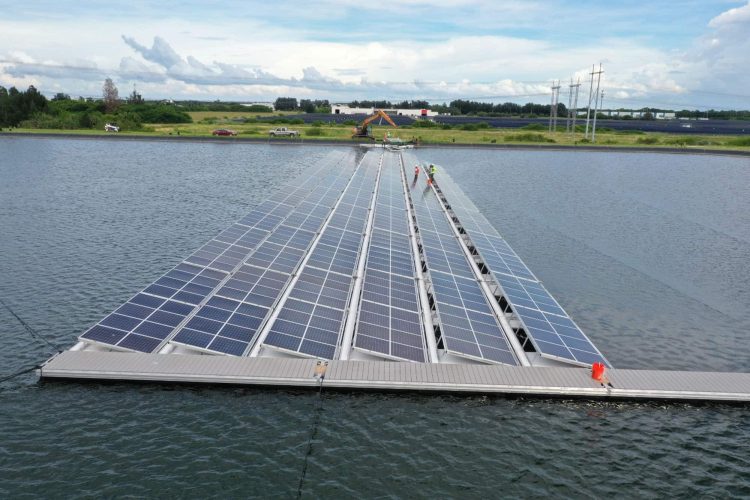
Industrial sectors are also finding value in the dual-use of their facilities. Mining operations, which often have large tailings ponds, and manufacturing plants with cooling ponds are increasingly looking to floating solar to offset their high energy costs. These sites are particularly attractive because they are often already located near industrial power infrastructure, reducing the cost of grid interconnection.
Broader Implications and Future Outlook
The rise of floating solar represents a maturation of the renewable energy industry, where the focus is shifting from simple capacity expansion to strategic, multi-functional land use. By co-locating energy production with water management, the U.S. can address two of the most pressing challenges of the 21st century: climate change and water scarcity.
The success of the industry will likely depend on a combination of regulatory support and continued scientific research. As more projects come online, the data gathered from these "living laboratories" will help refine the best practices for site selection and environmental mitigation. State and federal agencies are expected to play a larger role in streamlining the permitting process for floating solar on public waters, provided that developers can prove the ecological safety of their designs.
Furthermore, the economic implications are significant. By utilizing existing water infrastructure, property owners—from wineries to municipal water districts—can generate new revenue streams or reduce operational costs. For the broader economy, the growth of the floating solar supply chain, from flotation manufacturing to specialized marine engineering, offers new opportunities for job creation in the green energy sector.
In summary, floating solar is poised to become a vital component of the U.S. energy mix. While the technology faces unique ecological hurdles, the potential to generate massive amounts of clean energy without consuming valuable land makes it an indispensable tool in the national effort to transition away from fossil fuels. Through rigorous site selection, technological innovation, and a commitment to ecological integrity, the floating solar industry is charting a course toward a more sustainable and efficient energy future.
About the Author