The 7th U.S. Circuit Court of Appeals has affirmed the importance of employer-established call-out policies, even in the context of the Family and Medical Leave Act (FMLA), in a recent ruling that could have significant implications for how employees manage and report FMLA-qualifying absences. The case, Chitwood v. Ascension Health Alliance, centered on an employee who allegedly failed to adhere to her employer’s mandated procedures for notifying supervisors and a third-party leave administrator about her absences, ultimately leading to her termination. The appellate court’s decision reinforces that while FMLA provides critical job protection, it does not exempt employees from following reasonable employer policies regarding absence notification.
The core of the dispute involved Ascension Health Alliance’s FMLA call-out policy, which required employees to notify a designated third-party leave administrator on the same day as their absence and inform their direct supervisors as soon as practicable. The employee in question, Ms. Chitwood, had a history of utilizing both intermittent and continuous FMLA leave, indicating a familiarity with the Act’s provisions and her employer’s procedures. However, the court found that her notification practices on the days leading up to and including her termination were insufficient to meet these requirements.
The factual timeline presented to the court indicated that Ms. Chitwood left a voicemail for her employer on the day of her termination. Crucially, this voicemail did not explicitly state a need for FMLA leave. Instead, she requested a retroactive designation of leave the following day. The 7th Circuit highlighted that Ms. Chitwood was unable to provide a compelling reason why she could not have reported her absences on the actual days they occurred, especially given her prior experience with FMLA procedures. This failure to provide timely and adequate notice, according to the court, was the primary factor in the dismissal of her claims.

Analyzing the FMLA Claims: Interference and Retaliation
Ms. Chitwood pursued two main legal avenues: an interference claim and a retaliation claim under the FMLA.
Interference Claim: An FMLA interference claim arises when an employer "interferes with, restrains, or denies" an employee’s exercise of FMLA rights. To succeed, an employee generally must demonstrate that they were entitled to FMLA leave and that the employer’s actions prevented them from exercising this right. In this instance, the 7th Circuit concluded that Ms. Chitwood was not denied any leave to which she was entitled. Her termination stemmed from her alleged failure to follow the employer’s established notification protocols, not from a denial of FMLA-protected leave itself. The court reasoned that since she did not properly notify the employer of her need for leave in accordance with policy, the employer’s actions were not an interference with her FMLA rights.
Retaliation Claim: An FMLA retaliation claim requires an employee to show that they engaged in protected activity (like taking FMLA leave), suffered an adverse employment action, and that there was a causal link between the protected activity and the adverse action. While Ms. Chitwood had a documented history of using FMLA leave, the court found no evidence that her termination was a result of this past usage. Instead, the court emphasized that the record clearly indicated her failure to return to work as directed was the precipitating factor for her termination, not her prior utilization of FMLA leave. This distinction is critical: employers can terminate employees for legitimate, non-discriminatory reasons, even if those employees have previously taken FMLA leave.
Employer’s Right to Enforce Policies
The U.S. Department of Labor (DOL) provides guidance on FMLA compliance, and it explicitly states that employers are permitted to enforce their established call-out policies for FMLA leave. This includes requirements for timely notification. However, the DOL guidance also acknowledges that "unusual circumstances" might prevent an employee from calling out immediately. In such situations, the employee is expected to report the absence as soon as it is reasonably possible.

The regulations, as interpreted by the DOL, allow for FMLA leave requests to be delayed or denied, and for employees to face disciplinary action, if they fail to provide timely notice. This underscores the balance the FMLA strikes: it provides significant protections but does not absolve employees of their responsibilities within the workplace.
Precedent and the Significance of the Ruling
The Chitwood case adds weight to a line of judicial decisions that emphasize the enforceability of employer policies in FMLA contexts. For employers, this ruling serves as a strong affirmation that they can and should maintain clear, consistently applied policies regarding absence notification. This is not only crucial for operational efficiency and workforce management but also for mitigating legal risks. By having a well-defined policy and enforcing it uniformly, employers can defend against claims of FMLA interference or retaliation when an employee’s actions fall outside these established procedures.
For employees, the decision highlights the critical importance of understanding and adhering to employer policies, especially when dealing with protected leave. While FMLA offers a safety net, it is not a license to disregard standard workplace procedures. Proactive and clear communication, in line with company policy, is paramount.
Broader Implications for the Workplace
The implications of the 7th Circuit’s decision extend beyond the immediate parties involved. It reinforces the principle that employees on FMLA leave are still subject to the general rules and expectations of their employment. This includes:

- Clarity in Policy Communication: Employers are encouraged to ensure their FMLA call-out policies are clearly communicated to all employees, perhaps during onboarding, through employee handbooks, and during any FMLA-related training. Ambiguity can lead to disputes.
- Consistency in Enforcement: The ruling implicitly supports the need for consistent enforcement of these policies. Singling out employees for disciplinary action related to notification failures when others are treated differently could lead to discrimination claims.
- Documentation: Robust documentation of both the employee’s notification attempts (or lack thereof) and the employer’s responses is vital. This includes records of voicemails, emails, supervisor conversations, and disciplinary actions.
- Employee Awareness: Employees need to be aware that taking FMLA leave does not grant them immunity from standard workplace rules. Understanding the specific notification requirements for their employer is a responsibility that accompanies the right to take leave.
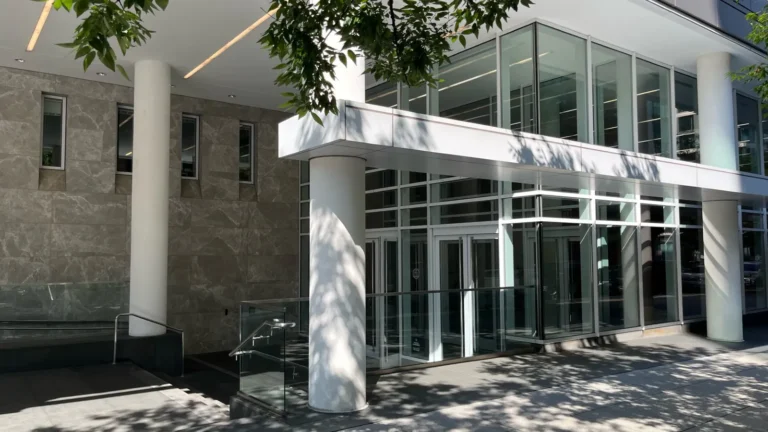
The image accompanying the original article, depicting the Everett McKinley Dirksen U.S. Courthouse in Chicago, serves as a visual reminder of the judicial system that adjudicates these critical employment law matters. The 7th Circuit’s decision, handed down from this important venue, signals a clear expectation from the judiciary regarding the interplay between employer policies and FMLA protections.
The Evolving Landscape of FMLA Compliance
The FMLA, enacted in 1993, has been a cornerstone of American labor law, providing millions of workers with the ability to take unpaid, job-protected leave for specific family and medical reasons. However, its application and interpretation are continually shaped by court decisions and regulatory guidance. Cases like Chitwood v. Ascension Health Alliance demonstrate that while the spirit of the FMLA is to protect employees, its practical application requires diligence from both employers and employees.
Data from the U.S. Department of Labor indicates that FMLA is utilized by millions of workers annually. For instance, in 2021, an estimated 23.5 million workers took FMLA leave. The complexity of administering and complying with FMLA can be substantial for employers, often involving detailed record-keeping and adherence to strict notice and certification requirements. Third-party administrators, like the one used by Ascension, have become common tools for managing the administrative burden.
The ruling in Chitwood is likely to be a point of reference for future cases involving FMLA notification disputes. It underscores that the FMLA is not a shield against all forms of disciplinary action, particularly when an employee fails to meet the procedural requirements designed to ensure orderly operations and proper management of leave. Employers who maintain clear, reasonable, and consistently enforced call-out policies are better positioned to navigate the complexities of FMLA compliance and defend against claims when employees do not adhere to these essential procedures. The decision reinforces the notion that responsible use of FMLA rights includes a commitment to fulfilling the obligations set forth by the employer.
About the Author