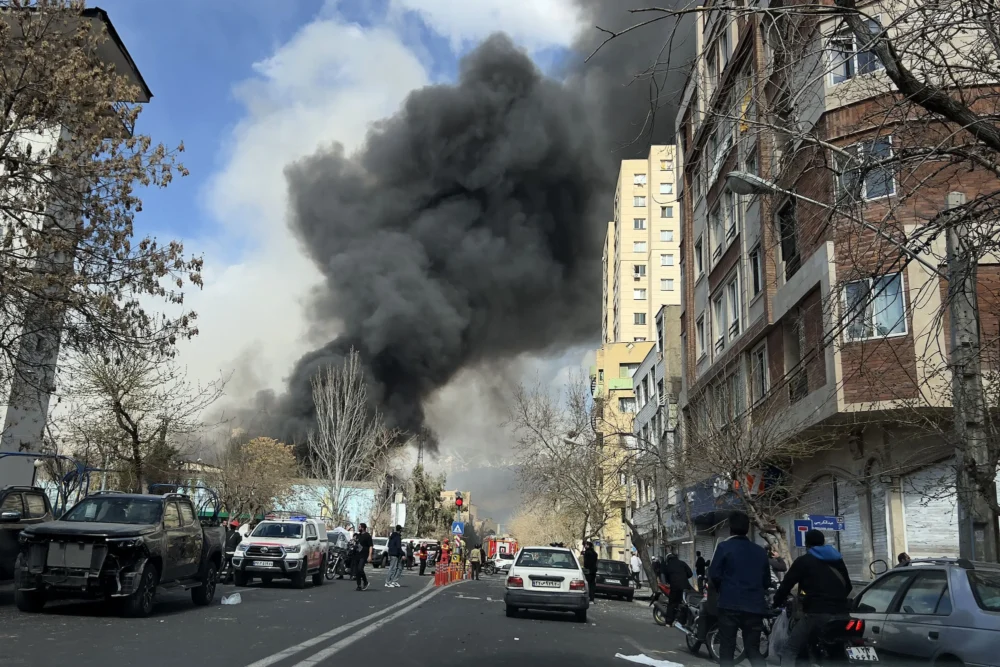
The geopolitical landscape of the Middle East underwent a seismic shift over the weekend as United States President Donald Trump initiated a series of intensive military operations against Iran, marking the beginning of a significant new conflict in the region. According to casualty reports compiled by international observers and news agencies, an estimated 787 individuals in Iran have been killed by a combination of U.S. and Israeli military strikes over the past five days. Among the most harrowing reports is the destruction of an all-girls primary school, resulting in the deaths of 165 children and staff members. The United Nations has issued a preliminary statement suggesting the strike on the educational facility likely constitutes a violation of international humanitarian law, prompting calls for an immediate independent investigation into the targeting protocols utilized during the operation.
While the humanitarian toll remains the most immediate concern for the international community, the economic repercussions of the conflict have rapidly manifested in global markets. The sudden escalation has sent shockwaves through the energy sector, driving up the cost of living for consumers worldwide. Market analysts note that while rising oil prices were an expected byproduct of hostilities, the secondary effects on natural gas and domestic electricity costs in the United States are being exacerbated by the administration’s controversial "energy dominance" policies, which prioritize aging coal infrastructure over cheaper, renewable alternatives.
Chronology of the Conflict and Military Escalation
The transition from diplomatic tension to open warfare occurred with startling speed. On Friday evening, the White House authorized a series of "precision strikes" targeting Iranian military infrastructure and command centers. By Saturday, the scope of the operation expanded as Israeli Defense Forces (IDF) joined the campaign, focusing on suspected nuclear research sites and long-range missile batteries.
On Sunday, the conflict reached a critical inflection point when Iranian officials issued a formal warning regarding the Strait of Hormuz, a narrow waterway that serves as the world’s most important oil chokepoint. Ebrahim Jabbari, a senior advisor to the Islamic Revolutionary Guard Corps (IRGC), declared that Iran would "set ablaze any ship attempting to cross" the strait, effectively threatening to halt 20 percent of the global oil supply.

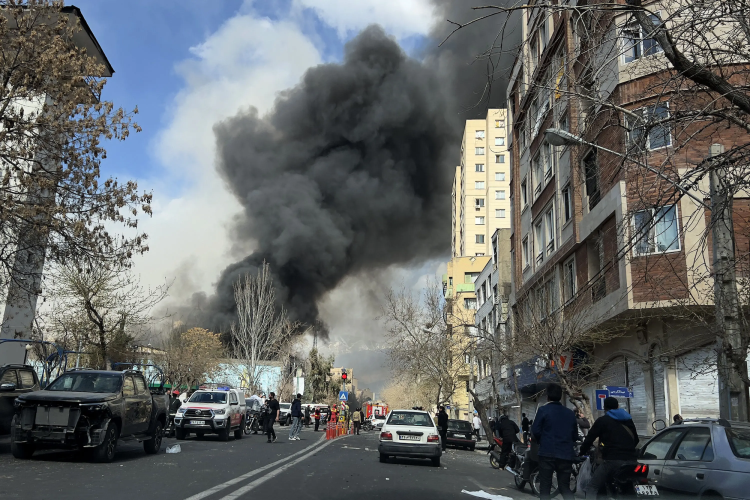
By Monday, the Pentagon held a high-level press briefing. Chairman of the Joint Chiefs of Staff Gen. Dan Caine addressed reporters in Arlington, Virginia, confirming that the U.S. Navy’s USS Gerald R. Ford carrier strike group had moved into a strike position. Gen. Caine defended the military’s actions as necessary for regional stability, though he faced pointed questions regarding the civilian casualties reported in Tehran and other major urban centers. As of Tuesday, smoke continued to rise from residential neighborhoods in the Iranian capital, with local media outlets like Avash Media broadcasting images of widespread destruction in non-military zones.
Global Energy Markets and the Strait of Hormuz Crisis
The immediate reaction from global energy markets has been one of extreme volatility. Oil prices, which had remained relatively stable in the weeks leading up to the strikes, surged nearly 9 percent by the close of Monday’s trading session compared to the previous Friday. Analysts warn that if the Strait of Hormuz remains contested or effectively closed to commercial traffic, crude prices could reach record highs, translating into significant "pain at the pump" for motorists globally.
The natural gas market has been even more severely impacted. In the United States, natural gas prices spiked by 5 percent, but the situation in Europe is far more dire. European gas prices jumped 45 percent following an announcement from Qatar that it would halt all shipments of liquefied natural gas (LNG) through the Strait of Hormuz due to the unacceptable security risks posed by the Iranian navy.
The strategic importance of the Strait of Hormuz cannot be overstated. Geographically positioned between Iran and Saudi Arabia, the waterway is the only exit for massive volumes of petroleum and gas from the Persian Gulf. Any prolonged disruption to this corridor threatens to destabilize the economies of major importers, particularly in Asia and Europe, while simultaneously driving up the cost of manufacturing and home heating in the West.
Domestic Electricity Costs and the "Coal Factor"
The conflict’s impact on the U.S. economy is being felt most acutely in the utility sector. Approximately 43 percent of the nation’s electricity is generated by natural gas-fired power plants. As the price of gas climbs due to global instability, the cost of generating power follows suit. This upward pressure on rates comes at a time when U.S. households and businesses are already struggling with a 12 percent increase in average electricity prices recorded over the previous year.
Compounding these market-driven increases is the Trump administration’s aggressive push to revitalize the domestic coal industry. Under the direction of Energy Secretary Chris Wright, the Department of Energy (DOE) has issued a series of "emergency" orders designed to keep coal-fired power plants operational, even those that had been slated for retirement by their owners.
The administration argues that these mandates are necessary for "grid reliability," but energy economists and environmental advocates argue they are an expensive form of corporate welfare. A 2025 analysis by the firm Grid Strategies found that federal mandates to retain fossil-burning plants could cost ratepayers more than $3 billion per year. These costs stem from the fact that many of these aging plants are no longer economically competitive with modern wind, solar, and battery storage technologies.
Legal Challenges and State-Level Resistance
The administration’s energy policies have met with significant legal resistance from state officials. In Michigan, Attorney General Dana Nessel has emerged as a leading critic of the DOE’s emergency orders. A primary point of contention is the J.H. Campbell power plant in West Olive, Michigan. The plant’s owner, Consumers Energy, had planned to shutter the 1960s-era facility by May of last year, a move projected to save ratepayers $650 million through 2040 by transitioning to a mix of gas, wind, and solar.
However, Secretary Wright’s 90-day emergency orders have forced the plant to remain active. The first of these orders alone resulted in $135 million in additional costs—costs that Consumers Energy expects to pass on to ratepayers across 11 states. Attorney General Nessel has requested a formal hearing with the DOE, asserting that the government has failed to demonstrate a legitimate energy emergency to justify the plant’s continued operation.
Similarly, Colorado Attorney General Phil Weiser has challenged a federal order keeping the Craig Unit 1 coal plant open. "There is no evidence of an energy emergency that would require keeping Craig Unit 1 open," Weiser stated, noting that the "illegal order" would result in millions of dollars in unnecessary costs for Colorado residents. These legal battles highlight a growing rift between federal energy policy and state-level efforts to transition to more cost-effective, sustainable power sources.
The Economic Case for Renewable Energy Transition
The current conflict has inadvertently strengthened the argument for a rapid transition to renewable energy. Proponents of wind and solar power point out that, unlike fossil fuels, renewable resources are not subject to the price volatility of global commodity markets or the geopolitical risks associated with Middle Eastern shipping lanes.
The technological landscape of 2026 is vastly different from previous eras of Middle Eastern conflict. Today, wind and solar are widely recognized as the fastest and most economical methods for adding new capacity to the electrical grid. Data from the U.S. Energy Information Administration (EIA) supports this shift, anticipating that new wind and solar farms will account for 65 percent of utility-scale capacity additions planned for 2026. When combined with energy storage, which is expected to contribute another 28 percent, renewable technologies represent 93 percent of the nation’s planned energy growth.
Despite the administration’s focus on coal, the market continues to move toward decarbonization. Industry experts argue that if the U.S. truly faced a national energy emergency, the most effective response would be to accelerate the deployment of domestic renewables, which offer shorter construction timelines and lower long-term operational costs compared to maintaining obsolete coal infrastructure or building new fossil fuel plants.
Broader Implications and International Reaction
As the war enters its second week, the international community is bracing for long-term instability. Diplomatic relations between the U.S. and its traditional allies in Europe have been strained by the unilateral nature of the strikes and the resulting energy price spikes that threaten European economic recovery.
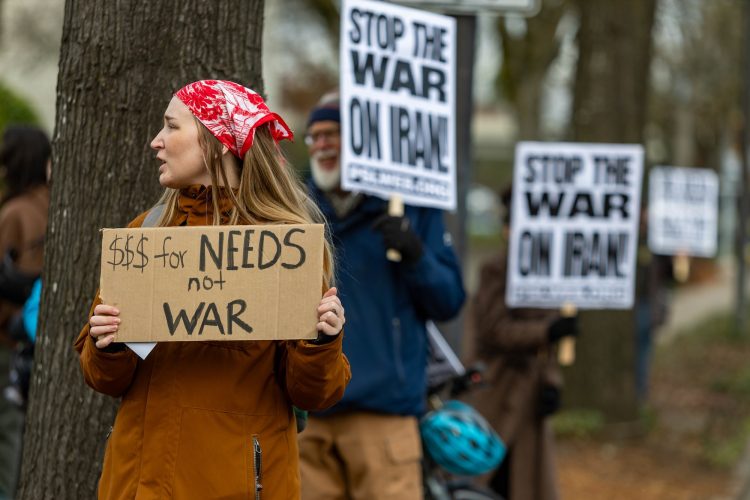
In the United States, public sentiment is increasingly divided. While some segments of the population support the administration’s "energy dominance" and military posture, others have taken to the streets. Protests have been reported in cities ranging from Eugene, Oregon, to Washington, D.C., with demonstrators citing both the humanitarian cost of the war and the rising domestic cost of living as primary grievances.

The conflict also raises significant questions about the future of international maritime law and the security of global trade. If Iran continues to threaten the Strait of Hormuz, the U.S. and its allies may be forced into a prolonged naval engagement to keep the shipping lanes open, a prospect that would further drain federal coffers and keep energy prices elevated for the foreseeable future.
In conclusion, the U.S.-led military action in Iran has triggered a complex web of humanitarian, economic, and political consequences. As casualties mount and energy markets fluctuate, the debate over domestic energy policy has taken on a new urgency. The tension between the administration’s support for coal and the market’s pivot toward renewables remains a central conflict in the American economy—one that is now being played out against the backdrop of a major international war. The coming weeks will be critical in determining whether the conflict escalates further or if diplomatic and economic pressures can force a de-escalation before the global economy suffers permanent damage.
About the Author