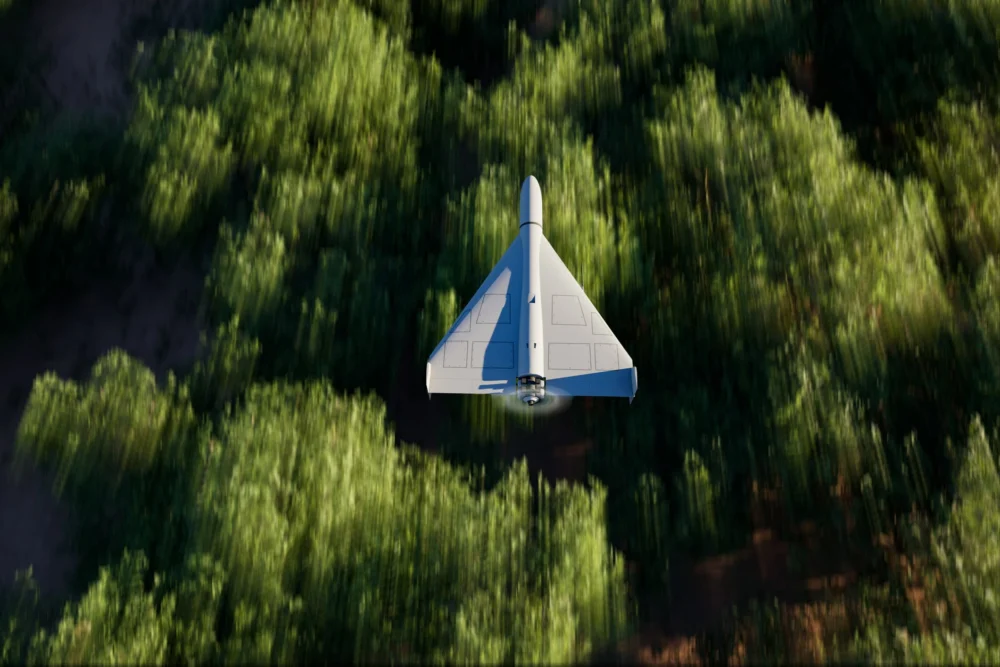
In the tense aftermath of recent Israeli and U.S. strikes targeting Iranian assets and interests, American allies across the Persian Gulf region are grappling with an increasingly familiar and unsettling phenomenon: the persistent, foreboding hum of the Shahed-136 ‘kamikaze’ drone. This sound, long dreaded by Ukrainian soldiers on Europe’s eastern front, has now become central to Iran’s retaliatory strategy, marking a significant escalation in regional hostilities and fundamentally altering the calculus of air defense.
Originating from Iran, the Shahed series of unmanned aerial vehicles (UAVs) has rapidly ascended to prominence in modern warfare. Its operational debut on a global scale was largely marked by Tehran’s strategic partner, Russia, which has extensively utilized the technology in its protracted invasion of Ukraine since 2022. Now, these drones – particularly the more advanced, long-ranged Shahed-136 – are being deployed in unprecedented numbers by Iran, with thousands reportedly unleashed so far, underscoring a deliberate shift towards asymmetric warfare.
The Genesis of Conflict: Escalation in the Middle East
The current surge in drone attacks by Iran and its proxies follows a period of escalating tensions and direct military exchanges. The "Iran war" referenced by the UAE Ministry of Defence pertains to the intensified phase of hostilities that saw a series of tit-for-tat actions, including alleged Israeli strikes on Iranian military figures and facilities in Syria and Iran itself, often with implicit or explicit U.S. support. These actions were reportedly aimed at degrading Iran’s nuclear program, curbing its regional influence, and deterring its support for various proxy groups. Iran’s response, leveraging its extensive arsenal of ballistic missiles and, crucially, its cost-effective Shahed drones, represents a calculated effort to project power, inflict damage, and impose significant costs on its adversaries without provoking a full-scale conventional war.
On February 11, 2026, a Shahed-136 drone was prominently displayed at a rally in western Tehran, a symbolic gesture highlighting its role as a cornerstone of Iran’s defense and offensive capabilities. This public display occurred amidst growing regional instability, signaling Iran’s commitment to its drone program as a strategic asset.
The "Poor Man’s Cruise Missile": Simplicity and Strategic Impact
At first glance, the Shahed-136 appears unremarkable when compared to the sophisticated, multi-million dollar weapon systems typically found in the arsenals of advanced militaries. Analysts often refer to it as "the poor man’s cruise missile," a moniker that, while acknowledging its relative simplicity, understates its profound strategic impact. Unlike high-speed, stealth-capable cruise missiles, the Shahed-136 flies at slower speeds and lower altitudes, making it less complex to manufacture and operate.
Despite its perceived simplicity, the Shahed-136 has proven remarkably effective. While American allies in the Gulf, bolstered by U.S.-provided defense systems such as the Patriot missile, have managed to intercept the vast majority of incoming drones, a significant number have still reached their intended targets. The United Arab Emirates Ministry of Defence reported on Tuesday a sobering statistic: out of 941 Iranian drones detected since the start of the current conflict, 65 fell within its sovereign territory. These successful strikes resulted in damage to critical infrastructure, including ports, airports, hotels, and vital data centers, underscoring the drone’s capacity for disruption and economic impact.
Patrycja Bazylczyk, an analyst with the Missile Defense Project at the Center for Strategic and International Studies (CSIS) in Washington D.C., succinctly captures the essence of the Shahed’s effectiveness: "The Shahed-136, among other unmanned aerial systems, has allowed states like Russia and Iran a cheap way to impose disproportionate costs." She elaborates that these drones "force adversaries to waste expensive interceptors on low-cost drones, project power, and create a steady psychological burden on civilian populations." This strategic calculus forms the core of the drone’s threat profile.
The Economics of Attrition: A Cost Imbalance Dilemma
The key to the Shahed’s strategic efficacy lies in its production economics and the severe cost imbalance it creates for defenders. These drones are relatively inexpensive to produce and can be manufactured at scale, particularly when compared to the cutting-edge air defense systems designed to counter them.
U.S. government reports describe the Shahed-136 as a one-way attack unmanned aerial vehicle (UAV) produced by Iranian entities closely tied to the Islamic Revolutionary Guard Corps (IRGC). Behnam Ben Taleblu, senior director of the Iran program at the Foundation for Defense of Democracies, notes that these drones fly low and slow, carry a relatively modest payload of explosives (typically 30 kg to 50 kg), and are generally limited to fixed targets. Primary technical data from the U.S. Army’s ODIN database and Iranian military disclosures describe the Shahed-136 as approximately 3.5 meters long with a 2.5-meter wingspan, capable of a range up to 1,200 miles for advanced versions.
Public estimates place the cost of a single Shahed drone between $20,000 and $50,000. In stark contrast, ballistic and cruise missiles, which offer similar strike capabilities but at much higher speeds and with larger payloads, can cost millions of dollars each. This makes the Shahed and its equivalents an ideal tool for states like Iran, which face international sanctions and limitations on acquiring advanced conventional weaponry. For Tehran, this cost advantage is paramount, allowing it to "strike and harass adversaries ‘on the cheap’," as Taleblu observes.
The defensive side of this equation presents a daunting challenge. Air defense systems, such as the Patriot missiles deployed by Gulf states and Israel, come with an astronomical price tag. According to U.S. Department of Defense budget documents, a single interceptor missile for these systems can cost anywhere between $3 million and $12 million. This staggering discrepancy means that engaging a $20,000 drone with a multi-million dollar interceptor missile represents an unsustainable expenditure in a prolonged conflict.

This cost discrepancy raises a critical issue for Iran’s adversaries: air defense systems possess a finite number of interceptor missiles. Each drone successfully intercepted, while preventing damage, simultaneously depletes a highly valuable defensive asset. Analysts suggest that in a war of attrition, Iran could strategically employ these drones to overwhelm and exhaust enemy air defenses, thereby creating openings for more damaging and sophisticated attacks from its arsenal of ballistic and cruise missiles. "The logic is to expend drones early while preserving ballistic missiles for the long haul," explains CSIS’s Bazylczyk.
Sustaining the Swarm: Production, Sanctions, and Supply Chains
Iran’s ability to sustain its mass-drone strategy hinges on its stockpiles, its capacity to protect and restore its supply chains, and the effectiveness of international efforts to disrupt the flow of components or production sites. The U.S. has actively sought to impede Iran’s production of the Shahed-136, imposing new sanctions targeting suspected component suppliers across Turkey and the UAE. These sanctions aim to choke off the supply of critical parts, many of which are commercially available dual-use technologies, making enforcement a complex challenge.
However, Russia’s experience in Ukraine demonstrates that such systems can be manufactured at scale during wartime, even amidst stringent targeted sanctions. This suggests that Iran, with its established industrial base and experience in circumventing sanctions, may possess a similar resilience. U.S. officials claim Iran had launched over 2,000 drones in the current conflict as of Wednesday. Military experts reportedly told The National newspaper that Iran is understood to have substantial stockpiles and may be capable of producing hundreds more each week, highlighting the scale of the challenge.
The implications for Gulf states are profound. "Gulf countries are at risk of depleting their interceptors unless they are more prudent about when it fires those interceptors," warns Joze Pelayo, a Middle East security analyst with the think tank Atlantic Council. While immediate depletion may not be imminent, the threat becomes acute if attacks are launched simultaneously on multiple fronts by Iranian allies such as Hezbollah in Lebanon and the Houthis in Yemen, potentially depleting stockpiles within days.
A New Staple of the Modern Battlefield: Lessons from Ukraine
The Shahed-136, first unveiled around 2021, gained global notoriety after Russia began deploying Iranian-supplied versions during its full-scale invasion of Ukraine in 2022. The Kremlin has since received thousands of these drones and has initiated domestic production based on Iranian designs, underscoring their reproducible and scalable nature.
The Ukrainian conflict has provided invaluable battlefield experience, not just for Russia and Iran, but also for the wider international community studying modern warfare. Analysts suggest that Iran has incorporated lessons learned from Russia’s extensive operational use of these drones, leading to modifications such as anti-jamming antennas, enhanced electronic warfare-resistant navigation systems, and new warhead designs. These advancements have made the drones more robust against countermeasures and capable of inflicting greater damage, particularly when deployed in large, coordinated swarms.
The effectiveness of the Shahed-136 has been so pronounced that even the U.S. has taken note, reportedly reverse-engineering the drone and deploying its own version in combat. In its recent strikes against Iranian targets, U.S. Central Command confirmed that it had used such low-cost, one-way attack drones modeled after the Shahed for the first time, signaling a recognition of this weapon class’s utility and adaptability.
Evolving Countermeasures: Adapting to the Drone Age
As drones become an undeniable fixture of the modern battlefield, methods for countering them are rapidly evolving. Ukraine, facing a relentless barrage of Shahed attacks, has pioneered several innovative and more sustainable deterrents. These include the use of fighter jet cannon fire to down drones, a significantly cheaper alternative to missile interceptors. Ukraine has also recently developed cheaper, mass-produced interceptors, which Kyiv claims can effectively neutralize Shahed drones at a fraction of the cost of traditional air defense missiles.
Recognizing the unsustainable cost curve, Gulf states are also expected to adopt more prudent and sustainable approaches. The Pentagon and at least one Gulf government are reportedly in talks to acquire the cheaper Ukrainian-made interceptors. Qatar’s Ministry of Defense has indicated it is utilizing its air force jets to intercept Iranian attacks, including Shahed drones, in conjunction with its ground-based air defenses.
Beyond kinetic interceptors, electronic warfare (EW) targeting the Shahed’s GPS navigation systems presents a promising avenue. Directed-energy systems, such as Israel’s "Iron Beam," which use lasers to destroy incoming threats, are also significantly cheaper to operate per engagement than traditional missiles, offering a potentially revolutionary solution to the cost imbalance problem. However, developing and deploying such advanced, high-volume anti-drone capabilities will likely take years, leaving Gulf states vulnerable in the interim, as Atlantic Council’s Pelayo points out.
The proliferation and strategic deployment of the Shahed-136 represent a pivotal moment in contemporary military doctrine. These drones symbolize a shift towards accessible, asymmetric warfare capabilities that can impose disproportionate costs on technologically superior adversaries. For U.S. allies in the Persian Gulf, the hum of the Shahed is not merely a sound of distant conflict; it is a stark reminder of a rapidly evolving threat landscape, demanding innovative defense strategies and a reevaluation of traditional military spending priorities in an age where the "poor man’s cruise missile" can inflict rich man’s damage.
About the Author