
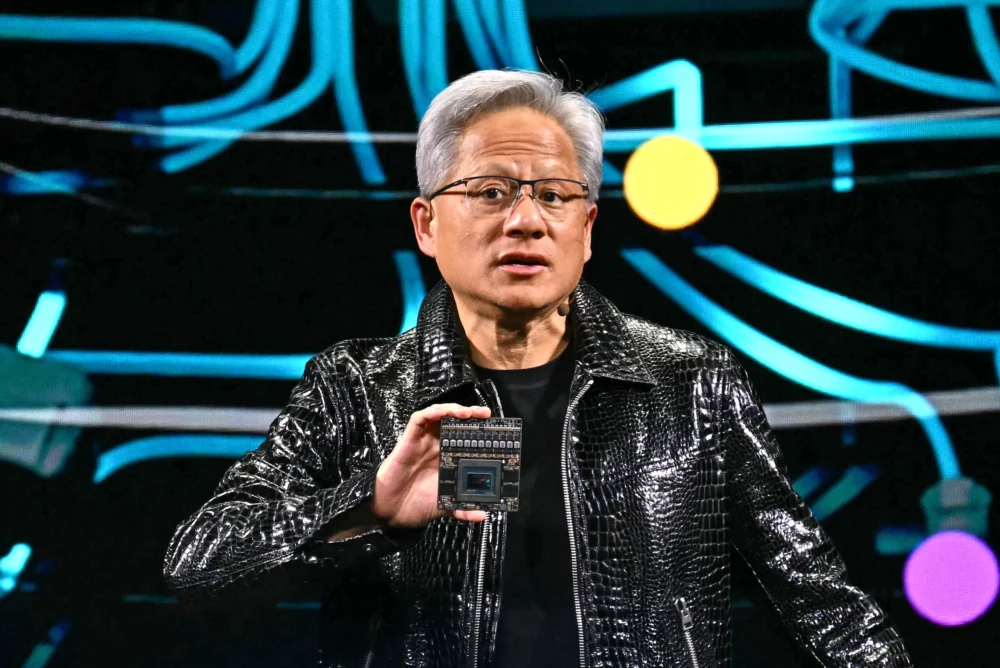
Nvidia CEO Jensen Huang has indicated that the company’s recent investments in artificial intelligence giants OpenAI and Anthropic are likely to be its last, citing the anticipated public debuts of these companies later this year as a closing window for such strategic equity stakes. The remarks, delivered at the Morgan Stanley Technology, Media, and Telecom conference in downtown San Francisco on Wednesday, suggest a shift in Nvidia’s approach to its burgeoning ecosystem of AI partners. While late-stage investments are common as companies approach their Initial Public Offerings (IPOs), Nvidia’s position as a primary chip supplier to both OpenAI and Anthropic may render further equity infusions less critical for financial upside.
The semiconductor behemoth, currently dominating the market with its high-performance GPUs essential for training and running advanced AI models, is already experiencing substantial revenue growth directly tied to the success of these AI labs. This inherent commercial relationship appears to reduce the strategic imperative for Nvidia to deepen its financial commitment through additional equity purchases, especially as the companies prepare to transition to public markets.
Nvidia has offered limited additional commentary on the CEO’s pronouncements. When approached for further details, a company spokesperson directed inquiries to a transcript from Nvidia’s fourth-quarter earnings call. During that call, Huang articulated a broader investment philosophy, stating that "all of Nvidia’s investments are focused very squarely, strategically on expanding and deepening our ecosystem reach." The initial investments in OpenAI and Anthropic can be viewed as having already achieved this objective, solidifying Nvidia’s central role in the foundational infrastructure of the AI revolution.
Evolving Investment Dynamics and Strategic Realignment
Several underlying factors may be contributing to Nvidia’s apparent decision to step back from further direct investment in OpenAI and Anthropic. One significant consideration is the inherently circular nature of some of these financial arrangements. When Nvidia initially announced a potential commitment of up to $100 billion in OpenAI in September, the arrangement was characterized by some observers as a "wash." This perspective highlighted the dual nature of the deal: Nvidia investing heavily in OpenAI’s stock while OpenAI simultaneously committed to purchasing a substantial volume of Nvidia’s chips. Such symbiotic relationships, while beneficial for both parties, can also raise questions about the true market valuation and the potential for inflated financial commitments.
Concerns about a potential investment bubble forming around these circular AI deals may have influenced the scaling back of commitments. The finalized investment by Nvidia in OpenAI’s recent $110 billion funding round, for instance, reportedly stood at $30 billion, a figure considerably lower than the initial $100 billion pledge. This adjustment suggests a recalibration of the initial terms, potentially driven by market dynamics or a reassessment of the strategic benefits of such large-scale, reciprocal agreements. Jensen Huang has publicly dismissed theories suggesting interpersonal discord between Nvidia and OpenAI as "nonsense," reinforcing the notion that strategic and financial considerations are driving the company’s evolving investment strategy.
Navigating Complex Geopolitical and Ethical Landscapes
The relationship between Nvidia and Anthropic has also been marked by significant external pressures and public disagreements, adding another layer of complexity to Nvidia’s investment calculus. Just two months after Nvidia announced a $10 billion investment in Anthropic in November, Anthropic CEO Dario Amodei made a notable statement at the World Economic Forum in Davos. Without directly naming Nvidia, Amodei drew a stark analogy, comparing the practice of U.S. chip companies selling advanced AI processors to certain overseas customers to "selling nuclear weapons to North Korea." This strong condemnation highlighted potential ethical concerns surrounding the export of powerful AI technology, a critical area for Nvidia given its global customer base.
These ethical considerations have taken on greater urgency with recent U.S. government actions. Days before Huang’s remarks, the Trump administration designated Anthropic as a supply chain risk, effectively barring federal agencies and military contractors from utilizing its technology. This decision stemmed from Anthropic’s refusal to allow its AI models to be employed for autonomous weapons systems or mass domestic surveillance.
The geopolitical and ethical ramifications of these decisions quickly became apparent. Within hours of the U.S. government’s announcement, OpenAI revealed its own agreement with the Pentagon. This development was met with sharp criticism from Anthropic, which described OpenAI’s public messaging surrounding the military deal as "mendacious." The public reaction appeared to echo this sentiment. In the wake of these back-to-back announcements, Anthropic’s AI chatbot, Claude, experienced a dramatic surge in popularity, ascending to the number two position in Apple’s U.S. App Store rankings for free applications, surpassing OpenAI’s ChatGPT. This rapid ascent, moving Claude from outside the top 100 to a leading position within weeks, underscores a significant shift in public perception and user engagement, potentially influenced by the perceived ethical stances of the respective AI companies.
Implications for Nvidia and the AI Ecosystem
Nvidia’s current position is one of holding significant stakes in two prominent AI companies that are now navigating vastly different strategic and ethical trajectories. This divergence could potentially influence their respective customer bases and partnerships, creating ripple effects throughout the broader AI ecosystem. While it is impossible to ascertain whether Jensen Huang foresaw the extent of these complexities when Nvidia initially committed to its investments, his stated rationale for future investment restraint—the closing of the IPO window—appears to simplify a situation that has rapidly become intricate.
The reality of late-stage private investing suggests that the IPO deadline is not the sole determinant of investment opportunities. Instead, Huang’s announcement points more strongly towards an strategic exit from a rapidly evolving and increasingly complicated landscape. Nvidia’s core business remains exceptionally strong, fueled by the insatiable demand for its AI hardware. However, the company’s role as a strategic investor and ecosystem builder is clearly undergoing a period of reassessment, driven by market dynamics, evolving ethical considerations, and the complex geopolitical realities of the global AI race.
The company’s long-term strategy, as articulated by Huang, remains focused on strengthening its ecosystem. However, the methods through which it pursues this goal may be shifting away from direct equity stakes in foundational AI models towards other forms of partnership and support that are less exposed to the volatile financial and ethical landscapes these companies are navigating. The implications of this strategic recalibration will likely unfold as OpenAI and Anthropic progress towards their public market debuts and continue to define their roles in the rapidly advancing field of artificial intelligence.
The timing of Jensen Huang’s remarks at the Morgan Stanley conference, a high-profile event attracting significant investor and industry attention, underscores the importance of these strategic decisions. As the AI industry matures, the interplay between hardware providers, AI model developers, and the broader societal and governmental implications of their technologies will continue to shape investment patterns and corporate strategies. Nvidia’s decision to potentially step back from further direct investment in these two key players signifies a recognition of these complex dynamics and a potential shift towards a more focused and less entangled approach to ecosystem development.
The market’s reaction to these statements will be closely watched, as Nvidia’s strategic moves often serve as bellwethers for the broader technology sector. While the company’s core business of supplying AI chips is expected to remain robust, its approach to strategic partnerships and investments will be a key indicator of its long-term vision and its ability to navigate the evolving challenges and opportunities within the artificial intelligence domain. The coming months, as OpenAI and Anthropic potentially embark on their IPO journeys, will provide crucial insights into the effectiveness of Nvidia’s stated strategy and the future direction of its engagement with the leading entities shaping the AI landscape.
About the Author





