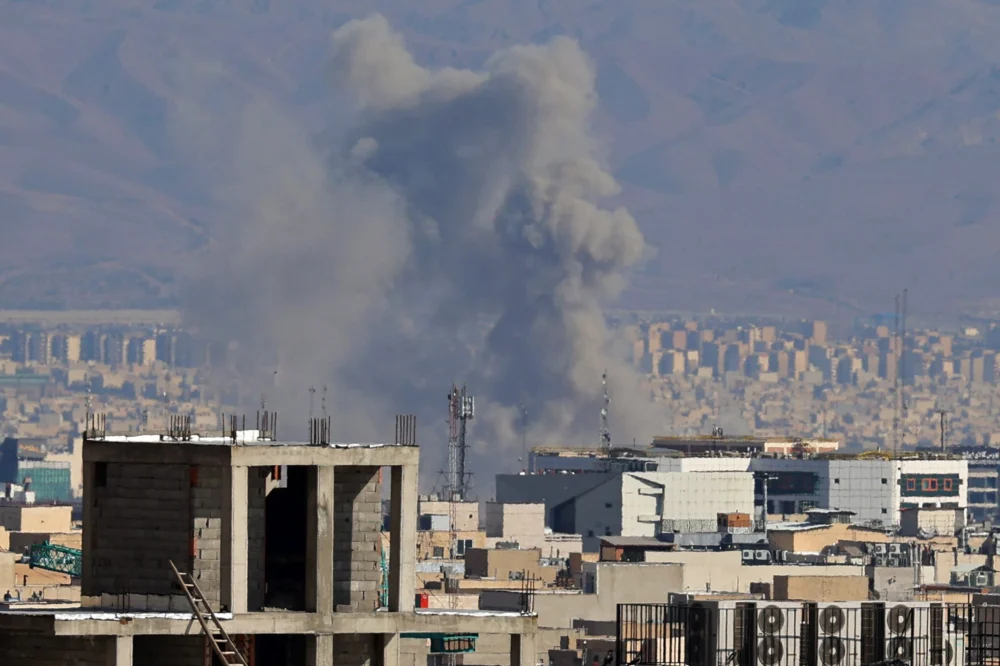
Global investors, continuously seeking robust returns and crucial diversification beyond the highly concentrated U.S. equity market, have channeled substantial capital into emerging markets in recent years. This strategic shift gained momentum as the quest for significant stock gains increasingly migrated overseas, away from the dominant S&P 500. However, the recent escalation of military conflict between the United States and Iran has drastically reshaped the discussion surrounding market concentration, starkly highlighting the inherent risks within emerging markets when gains are heavily reliant on a select few stocks, many of which are intricately linked to the burgeoning artificial intelligence (AI) boom.
The Geopolitical Catalyst: Escalating Middle East Tensions and Global Market Repercussions
The outbreak of military hostilities between the U.S. and Iran has sent immediate and profound shockwaves across global financial markets, particularly impacting energy prices and regions heavily dependent on imported energy. This conflict, rooted in long-standing geopolitical rivalries and strategic interests in the Middle East, quickly escalated, prompting fears of wider regional destabilization and disruptions to vital global trade routes, most notably the Strait of Hormuz, a critical chokepoint for a significant portion of the world’s oil supply.
Within days of the conflict’s onset, crude oil prices experienced an unprecedented surge. On Friday, Brent crude futures soared past the $90 per barrel mark, while U.S. West Texas Intermediate (WTI) crude futures rapidly approached that threshold. The weekly gains were staggering, with WTI advancing more than 30% and Brent nearly 26%. This sudden and sharp increase in energy costs immediately triggered concerns about inflationary pressures, supply chain disruptions, and the potential for a slowdown in global economic growth, particularly in energy-intensive industries and economies. The direct and indirect implications for economies reliant on energy imports, such as many in Asia, were stark and immediate, leading to a swift re-evaluation of investment strategies globally.
Emerging Markets Under Scrutiny: The Asian Concentration Conundrum
While the iShares MSCI Emerging Markets ETF (EEM) has demonstrated strong performance over the past few years, including an impressive 29% gain in 2025 and maintaining a modest gain into 2026, its underlying holdings reveal a significant geographical and sectoral tilt. The ETF remains overwhelmingly concentrated in Asia, with substantial exposure to economic powerhouses such as China, South Korea, India, and Taiwan. Collectively, these four nations represent over three-quarters of the index’s total weight. Furthermore, a considerable portion of the top-performing stocks within the index are deeply embedded in the technology sector, featuring prominent players like Taiwan Semiconductor Manufacturing Company (TSMC) and Samsung Electronics, both pivotal to the global AI and semiconductor industry.
Malcolm Dorson, a senior emerging markets portfolio manager and senior vice president leading the active investment team at ETF company Global X, articulated this concern clearly during a recent appearance on CNBC’s "ETF Edge." "If you look at the index within emerging markets, it’s still roughly 80% Asia," Dorson noted, emphasizing the resulting "concentration risk." This significant regional bias is further compounded by a substantial sectoral weighting, with the overall EM index allocating more than 30% to the technology sector. This high concentration, while rewarding during periods of robust tech growth, exposes investors to magnified risks when the sector faces headwinds, or when geopolitical events threaten the stability of the regions where these tech giants operate.
South Korea’s Volatility: A Microcosm of EM Risks
The vulnerabilities inherent in this concentrated emerging market structure were vividly illustrated by the extreme volatility experienced by South Korean stocks in the week following the conflict’s escalation. The market posted its worst single-day decline ever on Wednesday, as concerns mounted over energy supplies to Asia. This was particularly alarming for South Korea’s memory chip sector, a cornerstone of the global AI boom, which relies heavily on energy-intensive manufacturing processes. The prospect of disrupted energy flows, or even significantly higher energy costs, threatened to undermine the profitability and operational stability of these critical industries.
The immediate aftermath saw a dramatic rebound, with the South Korean index recording its best day since 2008 on Thursday, reflecting a mix of bargain hunting and perhaps a momentary easing of immediate panic. However, despite this recovery, the iShares MSCI South Korea ETF (EWY) remained down close to 13% for the week, underscoring the severe impact of the initial shock and the lingering uncertainty. The magnitude of this volatility was amplified by the exceptional performance of South Korean tech stocks in the preceding period. Retail investors, in particular, had seen substantial gains, with SK Hynix, a top holding in broad emerging market indexes, surging an astonishing 274% last year, and Samsung Electronics climbing 125%. Such rapid appreciation often precedes sharper corrections, and the geopolitical trigger served to accelerate this process, leading to significant paper losses for many who had ridden the wave of the AI boom.
The Energy Squeeze and Global Economic Fallout
The rapid escalation of oil prices directly translated into an energy squeeze for Asian nations, which are predominantly net energy importers. This pressure was concretely demonstrated by China’s reported decision to instruct its domestic oil refining companies to suspend all exports of diesel and gasoline. This move signaled a proactive effort by Beijing to retain energy stockpiles for its own domestic consumption, preempting potential future supply disruptions or even higher prices. Energy market experts swiftly warned that more Asian nations might follow suit with similar measures, further tightening global fuel markets and exacerbating price pressures.
Beyond the immediate energy crisis, the U.S.-Iran conflict carries broader implications for global supply chains and economic stability. Disruptions in the Middle East invariably affect shipping routes, insurance costs, and commodity prices, which in turn feed into inflation and production costs worldwide. For instance, the cost of transporting goods via the Suez Canal could rise due to increased security risks or diversions, impacting trade flows between Asia and Europe. The ripple effects extend to consumer prices, business confidence, and central bank policy decisions, creating a complex web of interconnected challenges for the global economy.
Analyst Perspectives and Strategic Shifts: The "Barbell Approach"

Despite the immediate volatility and heightened risks, ETF investing strategists generally agree that it is not the time for investors to abandon emerging markets altogether. Instead, the consensus leans towards a more nuanced and strategic approach to portfolio construction within the asset class. Long-term macroeconomic factors, such as demographic trends, growing middle classes, and ongoing economic reforms in various emerging economies, may sustain outperformance over the longer term. However, the current environment necessitates a re-evaluation of how that exposure is managed.
Malcolm Dorson advocates for a "barbell approach" to investment strategy. This involves deliberately balancing exposure between different types of emerging markets rather than relying predominantly on a single region or a narrow set of sectors. His recommendation is clear: investors aiming to maintain international exposure, particularly within emerging markets, should actively consider Latin America as a vital counterbalance to the current heavy allocation in Asian markets. "I think you need to have both," Dorson asserted, underscoring the importance of diversified regional exposure to mitigate concentration risks.
This strategy aims to capitalize on divergent economic drivers and risk profiles. While Asian emerging markets are largely driven by manufacturing, technology exports, and global trade, Latin American economies often present a different set of catalysts, which can provide crucial ballast during periods of global instability, especially those involving energy markets.
Latin America: A Counterbalance to Asian Concentration
Latin America presents a compelling case for investors seeking to de-risk their emerging market portfolios and tap into alternative growth drivers. Countries like Argentina, Brazil, and Colombia are intrinsically linked to global energy and commodities markets, making them potential beneficiaries during periods of rising commodity prices.
1. Commodity Linkage and Energy Tailwinds:
Unlike many Asian economies that are net importers of energy, several Latin American nations are significant producers and exporters of oil, gas, and other vital raw materials. For these economies, rising oil prices, which act as a headwind for energy-importing nations, can serve as a substantial economic tailwind. Higher commodity prices boost export revenues, improve trade balances, strengthen national currencies, and enhance fiscal positions, allowing governments more flexibility for public spending and debt management. Dorson estimates that "25 to 33% of the story should be that attractiveness of getting exposure to commodities."
Beyond oil, Latin America is rich in a diverse array of commodities, including copper (Chile, Peru), iron ore (Brazil), soybeans (Brazil, Argentina), and lithium (Chile, Argentina, Bolivia). As global demand for raw materials persists, driven by urbanization, infrastructure development, and the energy transition, these nations are strategically positioned to benefit. This natural resource endowment provides a distinct economic buffer and a different correlation profile compared to technology-centric Asian markets.
2. Political and Economic Reforms:
The region is also witnessing significant political and economic reform efforts that could further bolster its investment appeal. Many Latin American nations are embarking on trajectories aimed at improving fiscal discipline, enhancing institutional frameworks, reducing bureaucracy, and attracting foreign direct investment. "All eyes are on political change that could drive fiscal reform," Dorson observed, highlighting the potential for these structural adjustments to create more stable and predictable operating environments for businesses.
Such reforms, if successfully implemented, can lead to increased investor confidence, lower borrowing costs, and sustainable economic growth. Specifically, improved fiscal health and regulatory clarity can significantly benefit the financial services sector across the region. A more stable macroeconomic environment allows banks to lend more confidently, insurance companies to expand, and capital markets to deepen, creating a virtuous cycle of economic development. Investors are increasingly looking for evidence of these reforms translating into tangible improvements in corporate governance and profitability.
3. Attractive Valuations:
Perhaps one of the most immediate and compelling arguments for Latin American equities lies in their attractive valuations relative to developed markets, and even compared to some segments of Asian emerging markets. Equities in several Latin American markets currently trade at significant discounts to U.S. stocks, with many price-to-earnings (P/E) ratios roughly half those observed in the S&P 500. For context, Vanguard’s S&P 500 ETF (VOO) currently trades at a P/E ratio of 28, while its broader emerging markets ETF (VWO), which includes Latin America, trades at a P/E ratio of 18. The discount for Latin American pure-play ETFs is often even more pronounced.
This valuation gap suggests that Latin American stocks may offer greater upside potential, assuming a confluence of positive factors such as successful reforms, stable commodity prices, and improving investor sentiment. Historically, political instability, macroeconomic volatility, and perceived higher risks have contributed to these discounts. However, as regional economies mature and governance improves, these discounts may narrow, offering substantial capital appreciation opportunities for discerning investors.
Broader Implications and Investor Outlook
The current geopolitical climate underscores the critical importance of diversified investment strategies, especially within the volatile realm of emerging markets. The "barbell approach" suggested by experts like Malcolm Dorson offers a practical framework for mitigating risks associated with overconcentration in any single region or sector. By allocating capital to Latin America, investors can gain exposure to economies with different economic cycles, commodity-driven growth, and potentially undervalued assets, thereby smoothing out the overall risk-return profile of their emerging market holdings.
While Latin America presents compelling opportunities, it is crucial to acknowledge that it also carries its own set of risks, including political uncertainty, currency fluctuations, and inherent volatility in commodity prices. A professional journalistic approach necessitates balancing the opportunities with a realistic assessment of these challenges. However, for investors seeking a strategic counterbalance to the technology-heavy, Asia-centric emerging market indices, Latin America’s unique blend of commodity wealth, reform momentum, and attractive valuations positions it as a region that warrants close attention in the evolving global investment landscape. The current geopolitical turbulence, while challenging, may ultimately serve as a catalyst for a long-overdue rebalancing of emerging market portfolios, shining a spotlight on Latin America as a vital component of future international investment strategies.
About the Author