A critical escalation in the already volatile Middle East unfolded on Saturday, March 7, 2026, as Iran claimed to have launched a significant drone attack on a U.S. air base in the United Arab Emirates. This assertion by Tehran came mere hours after Iranian President Masoud Pezeshkian issued a conciliatory apology to his Gulf neighbors, pledging an end to offensive strikes while simultaneously vowing defiance against U.S. pressure. The paradoxical events have plunged the region into deeper uncertainty, exacerbating fears of a wider conflict and sending shockwaves through global energy markets.
The Islamic Revolutionary Guard Corps’ (IRGC) navy drone unit was reportedly behind the attack on the Al Dhafra Air Base, situated south of the UAE capital, Abu Dhabi, according to Iran’s semi-official Tasnim News agency. The report, which quickly circulated through state-controlled media, did not provide specific details on the scale or success of the alleged strike, but it marked a brazen challenge to regional stability and a direct confrontation with U.S. military presence.
The UAE’s Ministry of Foreign Affairs did not immediately confirm the Iranian claim following requests for comment. However, its Ministry of Defence released a statement via X, acknowledging a substantial aerial incursion. The ministry reported detecting 121 unmanned aerial vehicles (UAVs) on Saturday, indicating a coordinated and large-scale drone swarm. Of these, Emirati air defense systems successfully intercepted 119, a testament to the nation’s advanced defensive capabilities. Crucially, the statement confirmed that "two fell within the territory of the UAE," suggesting that while the vast majority were neutralized, a small number breached the air defenses, though it did not specify the impact location or any resulting damage. This partial confirmation from the UAE lends credence to Iran’s claims of an attack, even if its effectiveness remains disputed. Al Dhafra Air Base is a pivotal U.S. military installation in the region, housing U.S. Air Force, Navy, and Marine Corps personnel and assets, including fighter jets, reconnaissance aircraft, and refueling tankers, making it a high-value target in any conflict involving Iran.
A Week of Retaliation and Pezeshkian’s Diplomatic Tightrope
The alleged strike on Al Dhafra occurred against a backdrop of intense military pressure on Tehran. For a full week preceding Saturday’s events, the United States and Israel had maintained a relentless joint aerial campaign, codenamed "Operation Epic Fury," targeting Iran’s military infrastructure. The stated objectives of this unprecedented offensive were twofold: to dismantle Iran’s nuclear and ballistic missile capabilities and to exert pressure for a fundamental change in the country’s leadership and strategic direction.
Amidst this escalating conflict, President Pezeshkian delivered a complex and seemingly contradictory message earlier on Saturday. In a statement disseminated via Iran’s national news agency’s Telegram social media channel, he extended an olive branch to neighboring Gulf states. "I apologize to the neighboring countries," Pezeshkian stated, adding, "We do not intend to invade other countries. Let us set aside all the disagreements, concerns, and resentments we have toward each other. Today, let us defend our own soil to bring Iran out of this crisis with dignity." This rare public apology, coming after a week of retaliatory strikes that saw Iranian projectiles reportedly intercepted by various Gulf nations, appeared to be an attempt to de-escalate regional tensions and isolate the U.S. and Israel.
However, Pezeshkian’s conciliatory tone was immediately juxtaposed with a defiant declaration aimed squarely at Washington. He asserted that the U.S. could "take their dreams to the grave; we will not surrender unconditionally." This dual message highlighted the intricate domestic and international pressures facing the Iranian leadership. While seeking to mend fences with regional powers potentially weary of the conflict, Pezeshkian simultaneously aimed to project an image of unwavering resolve and national pride to his domestic audience, ensuring that any de-escalation was not perceived as weakness or capitulation. The timing of the Al Dhafra attack, coming so soon after this carefully crafted statement, suggested either a severe disconnect between political rhetoric and military action, or a deliberate strategy to demonstrate both a willingness for dialogue and a capacity for retaliation.
"Operation Epic Fury": The US and Israeli Offensive Deepens
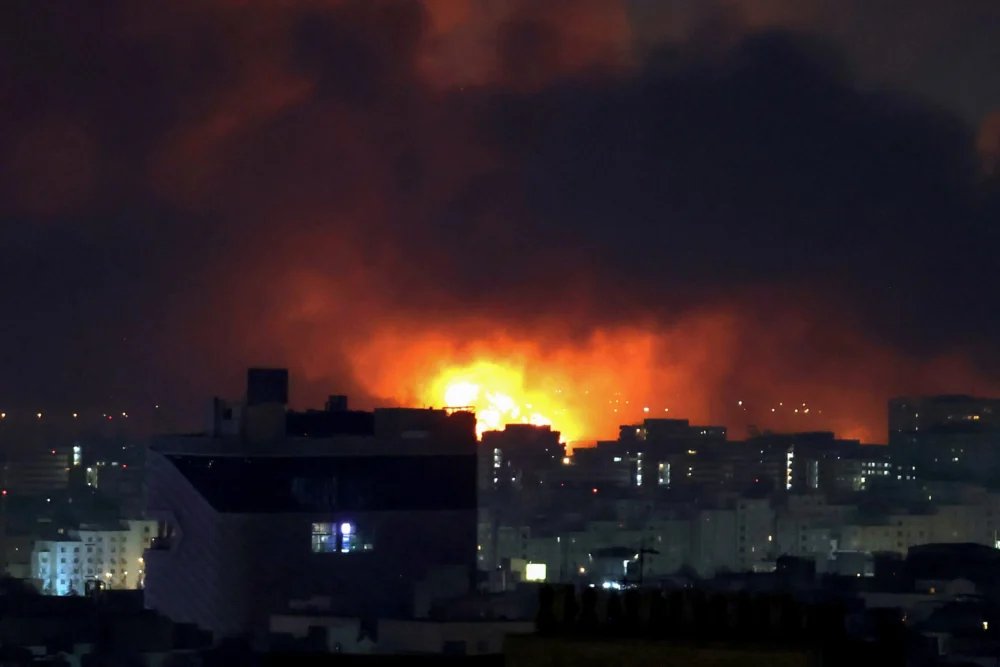
The U.S.-Israeli joint campaign, "Operation Epic Fury," has marked a significant shift in regional dynamics. U.S. Central Command (CENTCOM) announced via X that American forces alone had struck over 3,000 targets in the first week of the operation, signaling an overwhelming aerial assault designed to cripple Iran’s military apparatus. This sustained bombardment underscores the determination of Washington and Jerusalem to achieve their stated objectives.
Israel’s military, for its part, confirmed its deep involvement, announcing that "another wave of attacks in Tehran has been completed" on Saturday. The Israel Defense Forces (IDF) detailed the scale of their operations in Farsi posts on X, stating that Air Force fighter jets launched approximately 230 munitions toward several military sites within Iran’s capital. These strikes, executed by more than 80 Israeli fighter jets, targeted critical components of Iran’s defense infrastructure. Among the specific targets identified were the Central Military University of the Islamic Revolutionary Guard Corps, a significant educational and training institution for Iran’s elite military force, as well as a missile storage site and an underground facility dedicated to the storage and production of ballistic missiles. The IDF justified these actions by stating, "These strikes degrade the Iranian regime’s ability to fire at Israeli civilians," a reference to Iran’s extensive arsenal of ballistic missiles and UAVs, which Israel perceives as a direct threat to its national security.
The intensity of "Operation Epic Fury" reflects years of simmering tensions over Iran’s nuclear program and its regional activities. The collapse of the Joint Comprehensive Plan of Action (JCPOA), commonly known as the Iran nuclear deal, in 2018, followed by a series of escalatory actions, including sanctions, proxy conflicts, and covert operations, laid the groundwork for the current open conflict. The U.S. and Israel have consistently accused Iran of pursuing nuclear weapons capabilities and developing long-range missiles that could threaten both regional and international targets, allegations Tehran consistently denies, maintaining its nuclear program is for peaceful purposes.
Trump’s Unyielding Stance and Demand for "Unconditional Surrender"
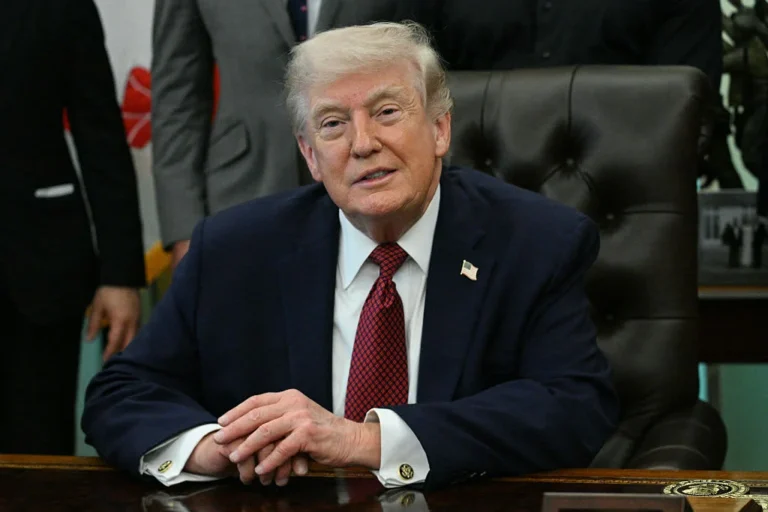
Adding another layer of complexity to the already fraught situation was the assertive stance taken by President Donald Trump. Reacting to Pezeshkian’s apology, Trump posted on his Truth Social account, declaring that "Iran, which is being beat to HELL, has apologized and surrendered to its Middle East neighbors, and promised that it will not shoot at them anymore." This statement, while acknowledging the apology, framed it as an act of submission forced by the "relentless U.S. and Israeli attack."
Trump’s rhetoric went further, reiterating his demand for Iran’s "unconditional surrender," a position he had publicly articulated the day prior, raising fears of a prolonged and devastating conflict. He concluded his post with a stark warning: "Today Iran will be hit very hard!" Such uncompromising language from the U.S. President signals a zero-tolerance policy towards Iranian defiance and suggests little room for diplomatic maneuvering outside of complete capitulation. This approach harkens back to historical instances of U.S. foreign policy that prioritized overwhelming military pressure to achieve objectives, potentially sidelining opportunities for negotiated settlements. The insistence on "unconditional surrender" leaves Iran with few palatable options, potentially pushing the regime to further acts of defiance rather than acquiescence, thereby prolonging hostilities.
Regional Repercussions and Defensive Postures
The conflict’s ripple effects are profoundly felt across the broader Gulf region, where several nations have found themselves caught in the crossfire, activating their air defenses against Iranian projectiles. Saudi Arabia, a key U.S. ally and regional rival of Iran, reported the "interception and destruction of a drone east of Riyadh city," according to its Ministry of Defense on X. This incident highlights the widespread nature of Iranian drone and missile activity, compelling even distant capitals to remain on high alert.
The sheer scale of the threat prompted unprecedented public safety measures. Dubai, the UAE’s largest and most populous city and a major global hub, issued a rare public alert urging residents to seek immediate shelter in secure buildings and stay away from windows, doors, and open areas. Such directives underscore the grave concern among regional governments regarding the potential for collateral damage and civilian casualties as the conflict intensifies. While Kuwait, Bahrain, and Oman were not specifically mentioned in the original report regarding new interceptions, it is highly probable that these nations, given their geographical proximity and historical tensions with Iran, have also heightened their defensive postures and activated their air defense systems as a precautionary measure, maintaining a vigilant watch over their airspace.
Perhaps one of the most immediate and severe impacts of the escalating war has been the effective paralysis of the Strait of Hormuz. This narrow waterway, a critical choke point at the mouth of the Persian Gulf, is the world’s most important oil transit chokepoint, with approximately one-fifth of global petroleum consumption passing through it daily. Reports indicate that traffic in the Strait has come to a near standstill, a direct consequence of heightened security risks, naval maneuvers, and the threat of disruption. This disruption has profound implications for global energy supplies, threatening to create widespread shortages and drive up prices worldwide. The economic stability of nations far removed from the Middle East hinges on the free flow of commerce through this vital maritime artery.
Global Economic Fallout: The Energy Market Shockwave
The military conflict in the Middle East has unleashed an unprecedented shockwave across global energy markets. The disruption to oil supplies, primarily due to the precarious situation in the Strait of Hormuz, has triggered the biggest weekly gain in futures trading history for U.S. crude oil. West Texas Intermediate (WTI) futures surged an astonishing 35.63% for the week, the largest weekly increase since the futures contract began trading in 1983, closing at $90.90 per barrel.
Similarly, the international benchmark, Brent crude, rallied significantly, jumping approximately 28% for its biggest weekly gain since April 2020, settling at $92.69 per barrel. These dramatic price hikes reflect deep market anxiety over supply shortages, with traders factoring in the potential for prolonged disruptions. The sudden spike in oil prices poses a severe threat to the global economy, risking widespread inflationary pressures, increased costs for transportation and manufacturing, and potentially triggering a global economic slowdown or even recession. Governments worldwide will grapple with balancing strategic petroleum reserve releases against the need for energy security, while consumers will face higher prices at the pump and for goods reliant on oil. The current situation draws parallels to historical oil shocks of the 1970s and early 1990s, though the immediate scale of the price increase is unique in modern trading history, underscoring the severity of the geopolitical risk.
Outlook and Potential Future Scenarios
The current trajectory of the conflict suggests a perilous path forward. The duality of Iran’s stance – an apology to neighbors coupled with a direct attack on a U.S. base – indicates a complex strategy aimed at both de-escalation with some regional actors and continued defiance against Washington and Jerusalem. President Trump’s unwavering demand for "unconditional surrender" leaves little room for a diplomatic off-ramp, potentially entrenching both sides in a protracted and destructive conflict.
The immediate future hinges on several critical factors: the extent of damage from the Al Dhafra attack and any subsequent U.S. retaliation, the effectiveness of ongoing U.S.-Israeli strikes in degrading Iran’s capabilities, and the willingness of international actors, such as the United Nations and major global powers, to intervene diplomatically. Without a concerted effort to de-escalate, the Middle East faces the prospect of widespread instability, humanitarian crises, and sustained economic disruption with global ramifications. The events of March 7, 2026, mark a significant and dangerous turning point, demanding urgent and decisive action from the international community to prevent an even wider conflagration.
Emma Graham contributed to this story.
About the Author