Luma, the innovative AI video-generation startup, has officially launched Luma Agents, a groundbreaking platform engineered to revolutionize end-to-end creative work spanning text, image, video, and audio. This ambitious new offering is powered by the company’s proprietary Unified Intelligence family of models, featuring an advanced architectural design trained on a singular, comprehensive multimodal reasoning system. The introduction of Luma Agents signals a significant leap forward in AI’s capacity to autonomously manage complex creative projects, promising to reshape workflows across diverse industries.
The launch of Luma Agents marks a pivotal moment in the evolution of artificial intelligence, moving beyond individual generative tools to integrated, autonomous systems capable of executing entire creative pipelines. Luma positions these agents as a transformative solution for a wide array of professional entities, including advertising agencies, marketing teams, design studios, and large enterprises. The core proposition lies in the agents’ ability to not only plan and generate various media types—textual content, visual imagery, video sequences, and auditory elements—but also to orchestrate and coordinate seamlessly with other leading AI models. This interoperability extends to Luma’s own advanced Ray 3.14 model, Google’s sophisticated Veo 3 and Nano Banana Pro, ByteDance’s innovative Seedream, and industry-leading voice models from ElevenLabs, creating a powerful ecosystem for creative production.
The Dawn of Agentic Creativity: A Paradigm Shift
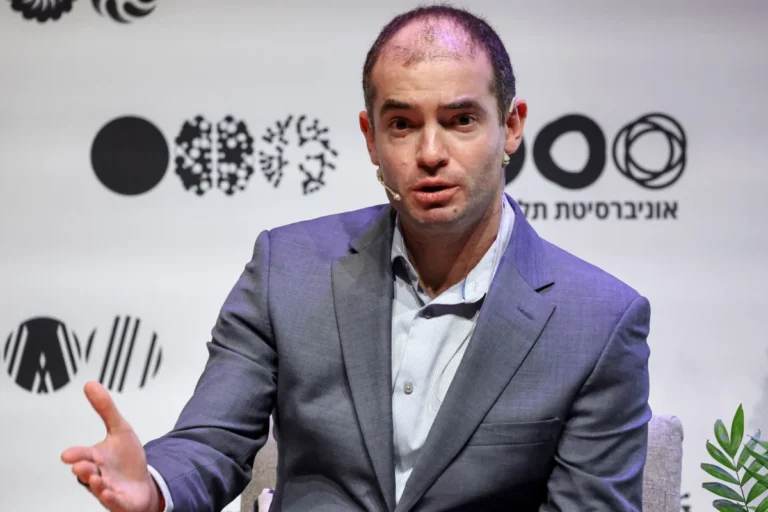
At the heart of Luma Agents’ capabilities is the concept of "agentic AI," a paradigm shift from conventional generative models. Unlike previous iterations where users had to painstakingly prompt and re-prompt individual AI tools for each creative iteration, Luma Agents are designed to maintain persistent context across assets, collaborators, and creative iterations. This enables them to evaluate and refine their own outputs, improving results through an iterative self-critique mechanism. Amit Jain, CEO and co-founder of Luma, highlighted this crucial capability, drawing parallels to the effectiveness seen in advanced coding agents. "You need that ability to evaluate your work, fix it, and do that loop until the solution is good and accurate," Jain explained, underscoring the importance of this self-correction loop in achieving high-quality, relevant creative outcomes.
This inherent ability to "check its work" and refine outputs autonomously significantly differentiates Luma Agents. Traditional AI creative workflows often present users with a multitude of specialized models, each requiring specific prompting expertise. Jain described this as "Here are 100 models. Learn how to prompt them," a process that often lacks the acceleration benefits expected from AI. Luma Agents aim to streamline this by generating large sets of variations based on an initial brief and allowing users to steer the creative direction through natural conversation, rather than a laborious back-and-forth prompting cycle for every minor adjustment. This approach not only enhances efficiency but also empowers creative professionals to focus on strategic direction and conceptualization, offloading the iterative execution to the AI.
Luma’s Unified Intelligence: The Engine Behind the Agents
The technological bedrock of Luma Agents is the Uni-1 model, the inaugural offering within Luma’s ambitious Unified Intelligence family of AI models. Uni-1 represents a monumental achievement in multimodal AI, having been rigorously trained on a comprehensive dataset encompassing audio, video, image, language, and crucially, spatial reasoning. This holistic training allows Uni-1 to develop a profound understanding of how different sensory inputs interrelate and contribute to a coherent creative output. Amit Jain elaborated on Uni-1’s unique cognitive ability, stating that the model can "think in language and imagine and render in pixels or images… we call it ‘intelligence in pixels.’" This foundational capability, which allows the AI to translate abstract linguistic concepts into concrete visual representations, is slated to expand further with subsequent model releases, incorporating more advanced audio and video output capabilities.
Jain’s vision for Unified Intelligence is rooted in the very essence of human creativity. He likens the system’s operation to that of a human architect designing a building: "As they draw the lines, they are creating an internal mental representation of the structure, light, spatial dynamics, and lived experience." This profound understanding, which extends beyond mere generation to encompass an appreciation of context, aesthetics, and function, is the guiding principle behind Luma’s multimodal models. By building models that understand as well as generate, Luma aims to create a system capable of true end-to-end creative work, where the AI can grasp the nuances of a brief and autonomously produce outputs that resonate with the intended message and audience. This deep integration of understanding across various modalities positions Luma at the forefront of AI innovation, promising a future where AI acts as a truly intelligent creative partner.
Transforming Creative Workflows: Real-World Applications and Early Success
Luma Agents are not merely theoretical constructs; they are already demonstrating tangible benefits in real-world applications with existing customers. The platform is currently being rolled out to global advertising powerhouses such as Publicis Groupe and Serviceplan, signifying a strong vote of confidence from industry leaders. Major brands like Adidas and Mazda are also leveraging Luma Agents, alongside innovative entities such as the Saudi AI company Humain, to streamline and enhance their creative processes. These early adoptions underscore the immediate practical value and scalability of Luma’s agentic platform across diverse sectors and geographical locations.

The efficiency gains and cost savings offered by Luma Agents are particularly compelling. In a striking demonstration, Amit Jain illustrated how a concise 200-word brief paired with an image of a product—specifically, a tube of lipstick—enabled the system to autonomously generate a wide array of creative ideas for an ad campaign. These ideas encompassed various potential locations, model types, and color schemes, showcasing the AI’s ability to extrapolate from minimal input and produce diverse, high-quality creative concepts. Even more impressively, Jain recounted a scenario where Luma Agents transformed a brand’s $15 million, year-long global ad campaign into multiple localized advertisements tailored for different countries. This monumental task was completed in an astonishing 40 hours for less than $20,000, and crucially, all outputs successfully passed the brand’s stringent internal quality controls and accuracy checks. This exemplifies the potential for Luma Agents to drastically reduce both the time and financial investment typically required for large-scale, complex creative projects, while simultaneously maintaining or even elevating quality standards. Such capabilities are poised to redefine benchmarks for creative production in the advertising and marketing industries.
The Broader AI Landscape and Luma’s Position
The launch of Luma Agents comes amidst an intensely competitive and rapidly evolving generative AI landscape. Companies like OpenAI, Google, Midjourney, Stability AI, and others are continuously pushing the boundaries of what AI can create, from text and images to sophisticated video content. However, many of these offerings, while powerful, often function as discrete tools requiring significant human orchestration and "prompt engineering" to achieve desired outcomes. Luma Agents differentiate themselves by transcending this fragmented approach, offering an agentic, multimodal, and end-to-end solution. This strategic positioning allows Luma to address a critical pain point for enterprises: the complexity and inefficiency of integrating multiple specialized AI tools into a cohesive creative workflow.
Luma’s Unified Intelligence, with its multimodal reasoning system, represents a significant step towards more autonomous and context-aware AI. While other companies are developing multimodal models, Luma’s emphasis on agentic capabilities—the ability to plan, execute, evaluate, and refine tasks independently—sets it apart. The industry trend is clearly moving towards AI systems that can handle more complex, multi-stage tasks with less human intervention, mirroring the shift from basic command-line interfaces to sophisticated operating systems. Luma’s foray into agentic AI is a testament to this trajectory, aiming to unlock new levels of productivity and creative potential by offering a single, intelligent platform that understands the entire creative process, from initial brief to final output. This integrated approach not only simplifies the workflow but also promises a more consistent and higher-quality output across diverse media types.
Implications for the Creative Economy
The advent of Luma Agents carries profound implications for the creative economy, particularly for sectors heavily reliant on content production such as advertising, marketing, and design. The demonstrated ability to localize a major ad campaign in a fraction of the time and cost speaks volumes about the potential for unprecedented efficiency and scalability. This could lead to a democratization of high-quality creative output, allowing smaller businesses to access sophisticated campaigns previously only available to large corporations with substantial budgets. For established agencies and studios, Luma Agents could enable them to take on more projects, experiment with a wider range of creative concepts, and deliver results faster than ever before.
The roles of human creatives are also poised for transformation. Rather than replacing human ingenuity, Luma Agents are likely to augment it, shifting the focus from tedious execution and iterative adjustments to higher-level strategic thinking, conceptual development, and creative direction. Human professionals will become orchestrators and curators, guiding the AI, refining its outputs, and ensuring the final product aligns with brand identity and strategic objectives. This evolution could free up creative talent to concentrate on innovation, emotional storytelling, and the unique human touch that AI, despite its advancements, still cannot fully replicate. While concerns about job displacement are natural with any major technological shift, the emphasis here is on augmentation and the creation of new roles focused on AI management and oversight, ultimately fostering a more dynamic and productive creative ecosystem.
Strategic Rollout and Future Prospects
Luma’s rollout strategy for Luma Agents is deliberate and measured. While the agentic platform is now publicly accessible via API, the company plans to implement a gradual access program. This phased approach is designed to ensure that all users maintain reliable access and experience minimal workflow disruptions, a critical consideration for enterprise-level clients integrating new AI technologies into their core operations. This cautious deployment reflects Luma’s commitment to stability and user satisfaction, recognizing the complexities involved in scaling such an advanced platform.
Looking ahead, Luma’s long-term vision for Unified Intelligence is ambitious. The current Uni-1 model is just the beginning, with future iterations promising even more sophisticated capabilities, particularly in the realm of direct audio and video generation. As the models continue to evolve, they are expected to deepen their understanding of creative intent and expand their ability to produce highly nuanced and compelling multimodal content. Luma Agents represent a significant milestone in the journey towards truly intelligent, autonomous creative AI. By offering a system that not only generates but also understands, plans, and refines, Luma is setting a new standard for how businesses will approach creative production in the coming years, ushering in an era where AI becomes an indispensable partner in the creative process. The forthcoming TechCrunch event in San Francisco in October 2026 will undoubtedly provide further insights into Luma’s advancements and the broader trajectory of AI innovation.
About the Author