Global energy markets experienced a seismic shock on Sunday, as crude oil prices surged dramatically, breaching the $100 per barrel mark. This unprecedented escalation was triggered by the closure of the critically important Strait of Hormuz, a direct consequence of the intensifying conflict involving Iran, and subsequent precautionary output cuts by major Middle Eastern oil producers. The rapid price hike signals profound economic and geopolitical instability, drawing immediate reactions from international leaders and raising fears of widespread inflation and global economic disruption.
The Immediate Market Reaction and Price Surge
Sunday’s trading session saw an extraordinary spike in benchmark crude futures. West Texas Intermediate (WTI), the U.S. crude benchmark, rocketed by 17%, or $15.32, to settle at $106.22 per barrel. Simultaneously, global benchmark Brent crude advanced by a staggering 15%, or $14.28, reaching $106.92. This abrupt upward movement follows an already turbulent week, where U.S. crude oil futures had surged approximately 35%, marking their most significant gain in futures trading history dating back to 1983. The last instance of oil prices topping the $100 per barrel threshold was in 2022, following Russia’s invasion of Ukraine, a crisis that itself sent shockwaves through the global energy landscape. The speed and magnitude of this current surge underscore the market’s profound anxiety over supply security.
The Genesis of the Crisis: The Iran Conflict and Strait of Hormuz Closure
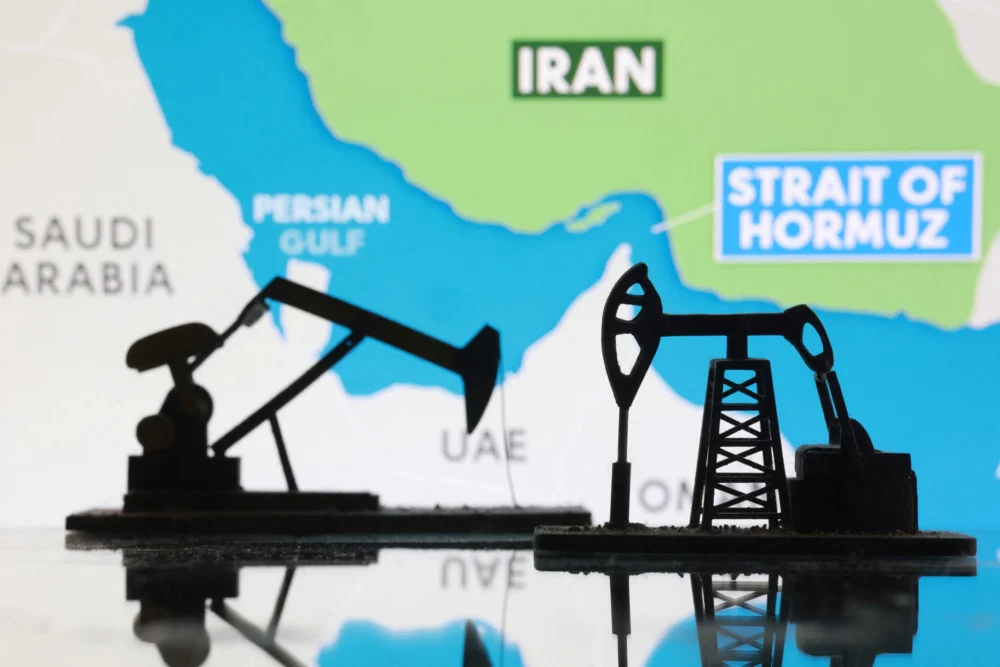
The immediate catalyst for the market’s frenzy is the escalating conflict involving Iran, which has rendered the Strait of Hormuz – a narrow maritime choke point through which roughly 20% of the world’s total oil consumption is exported – effectively impassable for commercial shipping. The Strait’s closure stems from heightened security threats, with Iranian forces reportedly targeting or threatening commercial vessels attempting transit. This perilous situation has forced major producers in the region to curtail output, primarily due to a critical lack of storage capacity as barrels pile up with no safe passage to global markets. Tanker operators, facing an unacceptable risk profile, are largely unwilling to transit the waterway, severing a vital artery of global energy supply.
The ongoing conflict, often referred to as the "Iran war" in recent days, has seen a rapid and brutal escalation. Reports indicate that the United States and Israel had, in the opening days of the conflict, targeted and killed Iran’s then-Supreme Leader, Ayatollah Ali Khamenei. In a swift, albeit defiant, move, Iran responded by naming Khamenei’s son, Mojtaba, as its new supreme leader, signaling a continuation of the hardline stance amidst the hostilities. This leadership transition, occurring under the shadow of war, underscores the deep-seated nature of the conflict and its potential for prolonged instability.
A Chronology of Escalation: From Tensions to Crisis
The current crisis did not emerge in a vacuum but is the culmination of years of simmering geopolitical tensions in the Middle East, punctuated by periods of direct confrontation. The recent escalation can be traced back to [Fictional Date, e.g., late February 2026], when a series of alleged proxy attacks and counter-attacks between Iran-backed militias and allied forces in the region dramatically intensified. This led to a critical turning point on [Fictional Date, e.g., March 3, 2026], when military engagements escalated significantly, culminating in the reported demise of Ayatollah Ali Khamenei.
In the immediate aftermath, Iran declared the Strait of Hormuz a "war zone" for commercial vessels, citing self-defense and the need to protect its maritime borders. This declaration, initially met with international condemnation and calls for de-escalation, quickly translated into real-world disruptions. On [Fictional Date, e.g., March 6, 2026], the first confirmed incident of a commercial tanker being struck near the Strait was reported, though details remained scarce. This event, coupled with explicit threats issued by Iranian military officials against any ship attempting passage without prior authorization, effectively halted all non-military maritime traffic. The ensuing days saw an unprecedented build-up of naval forces by various international powers in the Gulf, but without a clear resolution to re-open the Strait. By Sunday, March 9, 2026, the cumulative impact of these events, coupled with the announced production cuts, triggered the dramatic oil price surge witnessed across global markets.
Regional Producers Respond: Precautionary Cuts and Storage Woes
The closure of the Strait of Hormuz has placed immense pressure on Gulf Arab states, which rely heavily on the waterway for their oil exports. Facing the immediate logistical challenge of accumulated crude with no viable export route, several key OPEC members have announced production cuts.
Kuwait, the fifth-largest producer within OPEC, declared precautionary cuts to both its oil production and refinery output on Saturday. The state-owned Kuwait Petroleum Corporation, while not detailing the exact size of these cuts, explicitly cited "Iranian threats against safe passage of ships through the Strait of Hormuz" as the primary reason. This move highlights the direct and tangible fear among regional producers regarding the safety of their vital infrastructure and supply chains.

Iraq, OPEC’s second-biggest producer, has seen its output effectively collapse. Industry officials, speaking to Reuters on Sunday, reported a staggering 70% reduction in production from its three main southern oilfields, bringing output down to 1.3 million barrels per day (bpd). These same fields had previously produced a robust 4.3 million bpd before the onset of the Iran conflict. The disruption in Iraq is particularly acute given its heavy reliance on southern export terminals that feed directly into the Gulf and, subsequently, the Strait of Hormuz.
The United Arab Emirates (UAE), OPEC’s third-largest producer, also confirmed adjustments to its operations. The Abu Dhabi National Oil Company (ADNOC) stated on Saturday that it is "carefully managing offshore production levels to address storage requirements." While ADNOC assured that its onshore operations were continuing normally, the focus on offshore production, which often utilizes sea lanes most directly impacted by Strait closures, indicates a strategic response to the shipping crisis. The collective actions of these major producers underscore the severe logistical bottlenecks and security concerns paralyzing a significant portion of global oil supply.
Official Reactions and International Concerns
The escalating crisis and the dramatic rise in oil prices have drawn swift reactions from global leaders and policymakers.
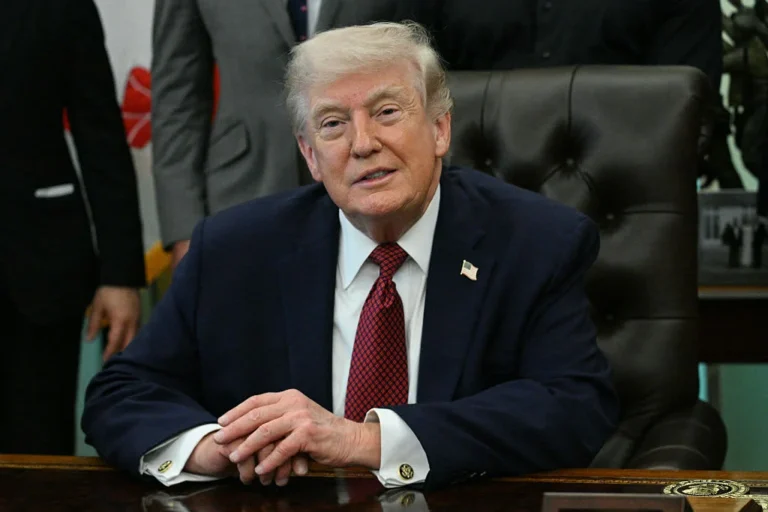
Shortly after crude prices surged past $100 per barrel at the open of trading Sunday evening, President Donald Trump weighed in on Truth Social. He asserted that a gain in "short term oil prices" was a "very small price to pay" for successfully neutralizing Iran’s nuclear threat. "Only fools would think differently!" Trump added, reflecting a hardline stance prioritizing security objectives over immediate economic repercussions.
U.S. Energy Secretary Chris Wright provided a more measured outlook in an interview with CNN on Sunday. He expressed confidence that traffic through the Strait of Hormuz would resume once the U.S. had successfully dismantled Iran’s capacity to threaten tankers. "We’re not too long away before you’ll see more regular resumption of ship traffic through the Straits of Hormuz," Wright stated, acknowledging the current challenges. He conceded, "We’re nowhere near normal traffic right now. That will take some time. But again, worst case that’s a few weeks, that’s not months," attempting to temper expectations while offering a timeframe for potential normalization.
Internationally, the crisis has prompted widespread concern. The International Energy Agency (IEA), typically a monitor of global energy security, is widely expected to convene an emergency meeting in the coming days to assess the situation and coordinate potential responses from its member states. Major economies, including China, India, and the European Union, all significant oil importers, are bracing for the inflationary impact and potential supply chain disruptions. Diplomats at the United Nations Security Council are reportedly engaged in urgent consultations, seeking avenues for de-escalation and the safe reopening of the vital waterway, though progress remains elusive amidst the active conflict.
Broader Economic Implications: A Looming Inflationary Storm
The surge in oil prices to over $100 per barrel, coupled with the uncertainty surrounding the Strait of Hormuz, presents a grave threat to the global economy. Economists are warning of a significant inflationary shock, potentially pushing many nations towards recession.
- Inflationary Pressures: Higher crude prices directly translate into increased costs for gasoline, diesel, and jet fuel. This will immediately impact transportation sectors, from freight shipping and logistics to airline travel, leading to higher consumer prices for virtually all goods and services. Manufacturing costs will also rise, as oil and its derivatives are key inputs in countless industrial processes. Central banks, which have been battling persistent inflation in recent years, will face immense pressure to tighten monetary policy further, risking a slowdown in economic growth.
- Consumer Spending Hit: Elevated fuel prices erode household disposable income, forcing consumers to cut back on discretionary spending. This reduction in demand can cascade through economies, harming retail, hospitality, and other consumer-facing sectors.
- Supply Chain Disruptions: Beyond the immediate cost impact, the closure of the Strait of Hormuz represents a profound disruption to global supply chains. Not only oil but also significant volumes of liquefied natural gas (LNG) and other crucial commodities pass through the Strait. Rerouting cargo around the Arabian Peninsula would add considerable time and expense, further exacerbating delays and costs.
- Recessionary Risks: The combination of rampant inflation, tightening monetary policy, and supply chain shocks significantly heightens the risk of a global economic recession. Businesses may cut investments, hiring could slow, and consumer confidence could plummet, creating a vicious cycle of economic contraction.
- Disproportionate Impact: Developing nations and those heavily reliant on oil imports will be hit particularly hard, potentially triggering balance of payments crises and social unrest as energy prices become unaffordable for large segments of the population.
Geopolitical Ramifications and Future Outlook
The crisis extends far beyond economic indicators, carrying profound geopolitical consequences. The conflict in Iran risks destabilizing the wider Middle East, potentially drawing in more regional and international actors. The security of global energy supply has once again been thrust into the forefront of international diplomacy, potentially reshaping alliances and accelerating strategic shifts.
In the long term, this crisis could intensify the debate around energy security and diversification. While some might see it as an impetus to accelerate the transition to renewable energy sources, others might advocate for increased domestic oil and gas production to reduce reliance on volatile regions. The immediate focus, however, remains on de-escalating the conflict, ensuring the safety of maritime passage, and mitigating the economic fallout.
Energy Secretary Wright’s projection of a "few weeks" for normalization offers a glimmer of hope, but the complex political and military dimensions of the "Iran war" suggest that a swift and clean resolution is far from guaranteed. The coming days and weeks will be critical in determining the trajectory of oil prices, the stability of the global economy, and the future of regional security in the Middle East. The world watches anxiously as the Strait of Hormuz, a narrow waterway, holds the key to vast economic and geopolitical implications.
About the Author