The landscape of human resources is on the cusp of a profound metamorphosis, shifting from its traditional role as a service provider to becoming the central architect of how work itself is conceived and executed. This paradigm shift, underscored by recent industry analyses and executive surveys, is being accelerated by the pervasive integration of artificial intelligence (AI) and a growing recognition within the C-suite of HR technology’s potential to drive enterprise-wide transformation. A comprehensive survey conducted by Mercer highlights that a significant majority of C-suite leaders view HR technology as the linchpin for future organizational evolution.
The C-Suite Mandate for Integrated HR Technology
According to the Mercer survey, a substantial 44% of executives aspire to achieve fully integrated HR technology systems within the next two years. Furthermore, an impressive 36% anticipate that this technological integration will be the primary engine for delivering transformative change across their organizations. This indicates a clear mandate from top leadership for HR to leverage technology not just for operational efficiency, but as a strategic lever for innovation and growth.
However, the path to realizing these ambitious goals is fraught with challenges. The report strongly cautions against the superficial application of AI, emphasizing that simply "bolting on" advanced technologies to outdated, existing processes will prove to be a significant misstep. Mercer’s analysis posits a critical insight: "Rather than instructing AI to follow a process designed for humans – a waste of technology’s capabilities – [HR must] rethink the process itself." This calls for a fundamental re-evaluation of current workflows and methodologies, ensuring that AI is integrated into a reimagined operational framework rather than merely augmenting legacy systems.
Breaking Down Silos: The Imperative for HR-IT Synergy
A key implication of this AI-driven transformation is the obsolescence of traditional organizational silos. The report specifically calls for the dismantling of these barriers, particularly in the relationship between HR and IT departments. Mercer advocates for a unified approach, stating, "Workforce strategy is technology strategy (and vice versa) with HR and IT acting as one seamless system." This integrated model suggests a future where HR and IT collaborate as a single, cohesive unit, jointly designing and implementing strategies that optimize both human capital and technological infrastructure.
This synergy is crucial for enabling organizations to adapt to the accelerating pace of change. The C-suite’s expectation of exponential growth hinges on the ability of HR to be deeply embedded in strategic decision-making processes. When HR functions as a strategic partner rather than an administrative department, it can proactively identify opportunities, mitigate risks, and align workforce initiatives with overarching business objectives.
The Resilience Dividend: Embedded HR and Organizational Strength
The Mercer survey provides compelling data to support the benefits of an embedded HR function. A significant 76% of executives whose organizations have an embedded HR function reported that their business is resilient and capable of withstanding unforeseen challenges. This figure stands in stark contrast to the overall average of 62% for enterprises across the board. Furthermore, 78% of these executives believe their business is well-positioned to compete for top talent, underscoring the direct correlation between strategic HR integration and competitive advantage.
The AI Revolution and the Evolving HR Skillset
The profound workforce transformation driven by AI places HR leaders at a critical juncture. Gartner analysts, in a recent op-ed for HR Dive, emphasized that the future of HR will be defined by those who can effectively blend human expertise with machine intelligence. This necessitates a continuous evolution of HR professionals’ skill sets.
While areas such as employment law, compliance, and AI literacy are recognized as rapidly growing skill sets for HR professionals, according to LinkedIn’s "Skills on the Rise" report, proficiency in change management is equally, if not more, critical. As highlighted by LinkedIn’s Chief People Officer, "Implementing AI, restructuring teams, shifting how work gets done – none of it works without bringing people along." This underscores the human element of technological adoption, where effective communication, employee engagement, and empathetic leadership are paramount to successful implementation.
Harmonizing AI Adoption: A Unified C-Suite and HR Approach
A critical factor for successful AI integration is alignment between HR and the C-suite regarding its application. An AMS report released in January indicated a potential divergence in perspectives between HR and senior leadership on the use of AI tools, particularly in the realm of hiring. Without a coordinated and unified approach, organizations risk falling behind in an increasingly competitive talent market. The CEO of the talent strategy firm cautioned that a fragmented strategy can lead to missed opportunities and a diminished ability to attract and retain the best candidates.

The Genesis of the Transformation: The "Transforming Business through AI" Event
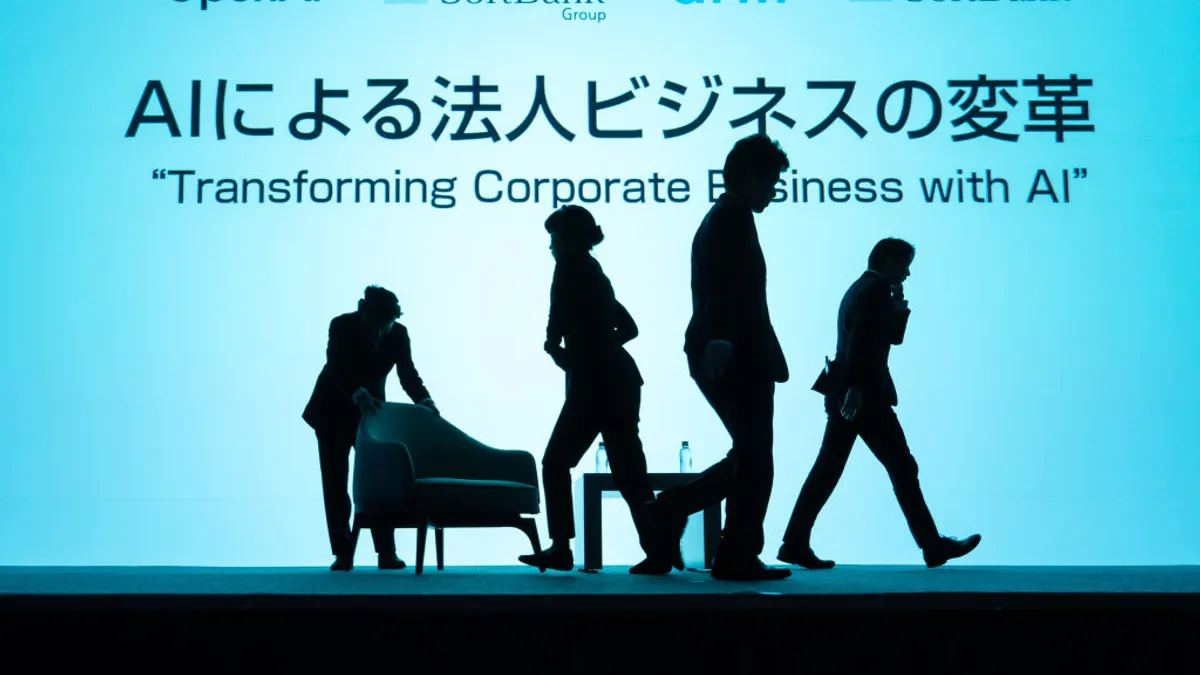
The insights into HR’s evolving role and the impact of AI are further contextualized by events such as the "Transforming Business through AI" session held in Tokyo, Japan, on February 3, 2025. This high-profile event featured discussions with key figures like SoftBank Group CEO Masayoshi Son and OpenAI CEO Sam Altman. While specific details of their discussions are not provided in the original excerpt, the presence of such influential leaders in the AI and technology sectors signals the growing importance of these topics in shaping global business strategies. Such forums serve as crucial platforms for sharing visions, insights, and the practical applications of AI in driving business innovation. The visual representation of this event, showing staff preparing a session, underscores the practical efforts underway to bring these advanced technological discussions to fruition. The imagery itself, with a sign indicating "Transforming Corporate Business with AI" in both English and Japanese, speaks to the global and cross-cultural implications of this technological revolution.
Analyzing the Implications: A New Era for Workforce Strategy
The convergence of advanced AI capabilities, C-suite expectations, and the evolving demands on HR professionals signals a new era for workforce strategy. The traditional HR function, often perceived as reactive and administrative, must now embrace a proactive, strategic, and technologically adept identity.
Key Implications:
- Redefinition of HR’s Strategic Value: HR will no longer be solely measured by its ability to manage administrative tasks but by its capacity to design and implement innovative work models that leverage technology for competitive advantage. This includes areas like talent acquisition, performance management, employee development, and organizational design.
- The Rise of the "Hybrid" HR Professional: The future HR professional will possess a unique blend of human-centric skills (empathy, communication, strategic thinking) and technological acumen (data analysis, AI literacy, understanding of digital platforms). The ability to "blend human expertise with machine intelligence" will be the defining characteristic of successful HR leaders.
- Increased Demand for Data-Driven Decision-Making: With the proliferation of HR technology, there will be an increased reliance on data analytics to inform strategic decisions. HR professionals will need to be adept at interpreting data, identifying trends, and using insights to drive business outcomes.
- The Imperative for Continuous Learning and Adaptation: The rapid pace of technological change necessitates a culture of continuous learning and adaptation within HR departments. Staying abreast of new AI tools, emerging best practices, and evolving workforce trends will be crucial for maintaining relevance and effectiveness.
- Potential for Enhanced Employee Experience: When implemented strategically, AI and advanced HR technologies have the potential to significantly enhance the employee experience. This can range from personalized learning and development opportunities to more efficient and accessible HR services, ultimately contributing to higher employee engagement and retention.
- The Need for Ethical AI Deployment: As AI becomes more deeply integrated into HR processes, particularly in areas like hiring and performance evaluation, ethical considerations will become paramount. Organizations will need to ensure that AI systems are fair, unbiased, and transparent, mitigating the risk of discrimination and maintaining employee trust.
The transition described by Mercer is not merely an incremental upgrade to existing HR practices; it represents a fundamental reimagining of the function’s role and impact within the modern enterprise. As organizations navigate the complexities of the digital age, the ability of HR to act as the architect of work, rather than just a facilitator of it, will be a critical determinant of their long-term success and ability to thrive in an increasingly dynamic global marketplace.
About the Author