U.S. Treasury yields experienced a significant ascent on Monday, directly mirroring an dramatic surge in global oil prices that catapulted past the critical $100 a barrel threshold, intensifying inflation fears among a jittery investor community. This sharp market reaction follows a severe disruption in Middle Eastern oil supply, primarily triggered by the effective closure of the Strait of Hormuz amidst an escalating conflict involving Iran, leading major regional producers to drastically cut output.
The benchmark 10-year Treasury note, a bellwether for global interest rates and economic outlook, saw its yield climb by more than 4 basis points, settling at 4.175%. Concurrently, the 30-year Treasury bond, reflecting longer-term inflation expectations and fiscal policy, added over 3 basis points to yield 4.787%. The more sensitive 2-year Treasury note yield, often seen as a proxy for Federal Reserve interest rate policy, rose by 5 basis points to 3.606%. For context, one basis point is equivalent to 0.01%, and it is a fundamental principle of bond markets that yields and prices move in inverse directions; thus, rising yields signify falling bond prices as investors demand higher returns to compensate for perceived risks, particularly inflation. These movements underscore a profound shift in market sentiment, signaling heightened concerns over persistent inflationary pressures and the potential for aggressive monetary policy responses.
The Geopolitical Catalyst: Strait of Hormuz Closure and Iran War
The immediate and primary driver for Monday’s market volatility was the sudden and substantial spike in crude oil prices. West Texas Intermediate (WTI), the U.S. benchmark, initially soared by more than 25% in early trading, breaching the $110 per barrel mark before pulling back slightly to trade around $102 per barrel. Simultaneously, Brent crude, the international benchmark, settled around $104 per barrel. This dramatic surge was a direct consequence of an unprecedented geopolitical event: the effective closure of the Strait of Hormuz.
The Strait of Hormuz, a narrow waterway between the Persian Gulf and the Gulf of Oman, is globally recognized as the world’s most critical oil transit chokepoint. Approximately one-fifth of the world’s total oil consumption and about one-third of all seaborne crude oil passes through this strategic passage daily. Its closure, reportedly amid an escalating conflict referred to as the "Iran war," represents an immediate and severe disruption to global energy supply chains. This situation has been compounded by subsequent production cuts from key Middle Eastern oil producers, including Kuwait, Iran itself, and the United Arab Emirates, all of whom rely heavily on the Strait for oil exports. The cumulative effect of these actions has dramatically tightened global oil supply, creating an immediate deficit that has sent prices skyrocketing. The implications extend far beyond crude oil, potentially affecting the transit of liquefied natural gas (LNG) and other vital commodities through this critical maritime artery.
Inflationary Pressures and Economic Fallout
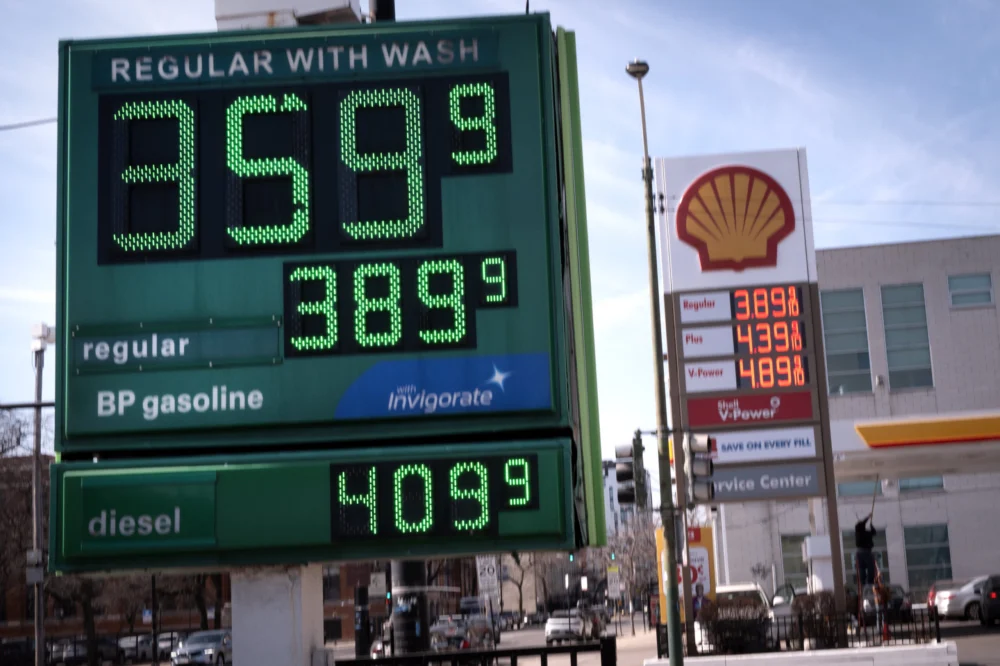
The rapid increase in oil prices has immediately reignited fears of a significant inflation spike. Energy costs are a foundational component of virtually every sector of the global economy. Higher crude oil prices translate directly into elevated gasoline prices at the pump for consumers, as evidenced by signs displaying prices for gasoline at stations on March 2, 2026, in Chicago, Illinois. However, the impact extends far beyond individual fuel tanks. Transportation costs for goods and services will inevitably rise, impacting supply chains from manufacturing to retail. Industries heavily reliant on petroleum derivatives, such as plastics, chemicals, and fertilizers, will face increased input costs, which are then typically passed on to consumers.
This phenomenon, often termed "cost-push inflation," occurs when the overall price levels are forced up by increases in the cost of wages and raw materials, particularly critical commodities like oil. Such inflationary pressures can erode purchasing power, dampen consumer confidence, and potentially slow economic growth, raising the specter of "stagflation" – a period of high inflation combined with stagnant economic growth and high unemployment. Businesses may face difficult decisions regarding pricing strategies, production levels, and labor costs, further contributing to economic uncertainty. The knock-on effects could ripple through global markets, impacting everything from food prices to manufacturing output, and placing significant strain on economies still navigating the complexities of post-pandemic recovery and existing supply chain vulnerabilities.
Central Bank Scrutiny and Upcoming Economic Data
In this volatile environment, all eyes are firmly fixed on central banks, particularly the U.S. Federal Reserve. The Fed operates with a dual mandate: to achieve maximum employment and maintain price stability. The sudden resurgence of significant inflationary pressures due to an external shock like soaring oil prices complicates their policy calculus considerably. While Federal Reserve officials are currently in their pre-meeting blackout period ahead of the crucial March interest rate decision, their past statements and commitments to bringing inflation back to their 2% target loom large.
Investors are keenly awaiting a busy week of economic data releases that will provide further insights into the state of the U.S. economy and the trajectory of inflation. On Wednesday, the market will receive the highly anticipated February inflation data, most notably the Consumer Price Index (CPI). This report will detail the change in prices paid by urban consumers for a basket of consumer goods and services, offering a comprehensive snapshot of inflationary trends before the full impact of the recent oil surge. Following this, Friday will bring two additional critical data points: the Personal Consumption Expenditures (PCE) index, which is the Federal Reserve’s preferred measure of inflation, and the JOLTs (Job Openings and Labor Turnover Survey) job opening figures for January. The PCE index provides a broader view of consumer spending and inflation, while JOLTs offers insight into labor market tightness, a key factor influencing wage growth and thus inflationary pressures. Strong inflation readings, especially if core inflation (excluding volatile food and energy prices) remains elevated, would significantly bolster expectations for continued aggressive monetary tightening by the Fed, potentially including larger interest rate hikes or an accelerated pace of quantitative tightening. Conversely, any signs of economic cooling might temper such expectations, though the immediate concern remains inflation.
International Response: The G7’s Urgent Call
The gravity of the situation has prompted an urgent international response. The G7 finance ministers are scheduled to hold a crucial call at 8:30 a.m. EST to discuss the unfolding crisis. The G7, comprising Canada, France, Germany, Italy, Japan, the United Kingdom, and the United States, represents some of the world’s largest advanced economies. Their coordinated efforts are vital in addressing global economic shocks. The agenda for this call will undoubtedly focus on the implications of the Strait of Hormuz closure, the oil price surge, and the broader economic stability.
Potential discussions could revolve around strategies to mitigate the impact of the oil supply disruption, including the potential release of strategic petroleum reserves (SPR) by member nations, similar to coordinated actions taken in past crises. They might also explore diplomatic avenues to de-escalate the "Iran war" and ensure the safe passage of maritime traffic through the Strait. Furthermore, the G7 finance ministers could discuss coordinated fiscal responses to cushion their respective economies from the inflationary shock, or explore joint statements aimed at calming market anxieties and signaling a unified front against economic destabilization. The outcome of this meeting, and any subsequent policy announcements, will be closely watched by markets for signs of a concerted effort to manage the crisis.
Broader Economic and Financial Implications
Beyond Treasury yields and oil prices, the current geopolitical and economic landscape presents a multifaceted challenge to global financial stability. Equity markets are likely to experience increased volatility, as higher energy costs squeeze corporate profits and rising interest rates make borrowing more expensive, potentially impacting investment and expansion plans. Sectors heavily reliant on consumer discretionary spending may face headwinds as households allocate a larger portion of their budgets to essential energy costs.
The appreciation of the U.S. dollar, often seen as a safe-haven asset during times of global uncertainty, could further complicate matters for emerging market economies. A stronger dollar makes dollar-denominated debt more expensive to service and increases the cost of importing commodities priced in dollars, such as oil, exacerbating inflationary pressures in these regions. Global supply chains, already fragile from previous disruptions, face renewed threats of bottlenecks and increased costs, potentially leading to shortages and further price increases across a wide array of goods. The interconnectedness of the global economy means that a crisis originating in the Middle East, impacting a critical commodity like oil, can quickly cascade into widespread economic distress, affecting trade, investment, and growth prospects worldwide.
Analyst Commentary and Forward Outlook
Market analysts and economists are offering cautious assessments of the unfolding situation. Many highlight the dual threat of supply-driven inflation and the potential for aggressive central bank responses to trigger an economic slowdown. "This is a classic supply shock, but one with severe geopolitical underpinnings that make it particularly difficult to resolve quickly," noted Dr. Evelyn Reed, Chief Global Strategist at Zenith Capital. "The Fed’s hawkish stance will be tested, as they face the unenviable task of taming inflation that is largely external to domestic demand, without tipping the economy into recession."
Others emphasize the need for diplomatic solutions to the "Iran war" and the reopening of the Strait of Hormuz. "Until the Strait is fully secured and oil flows resume unimpeded, the energy market will remain in a state of extreme tension," commented Omar Al-Hamad, an energy market specialist. "Strategic releases can help in the short term, but only a restoration of fundamental supply can stabilize prices sustainably." The coming days and weeks will be crucial as markets digest the latest economic data, anticipate the Federal Reserve’s next moves, and await any tangible outcomes from the G7 discussions. The prevailing sentiment is one of heightened uncertainty, with investors bracing for continued volatility as the global economy navigates this complex confluence of geopolitical conflict, energy shocks, and inflationary pressures. The immediate future for both consumers and businesses appears fraught with challenges, requiring careful monitoring and adaptable strategies.
About the Author