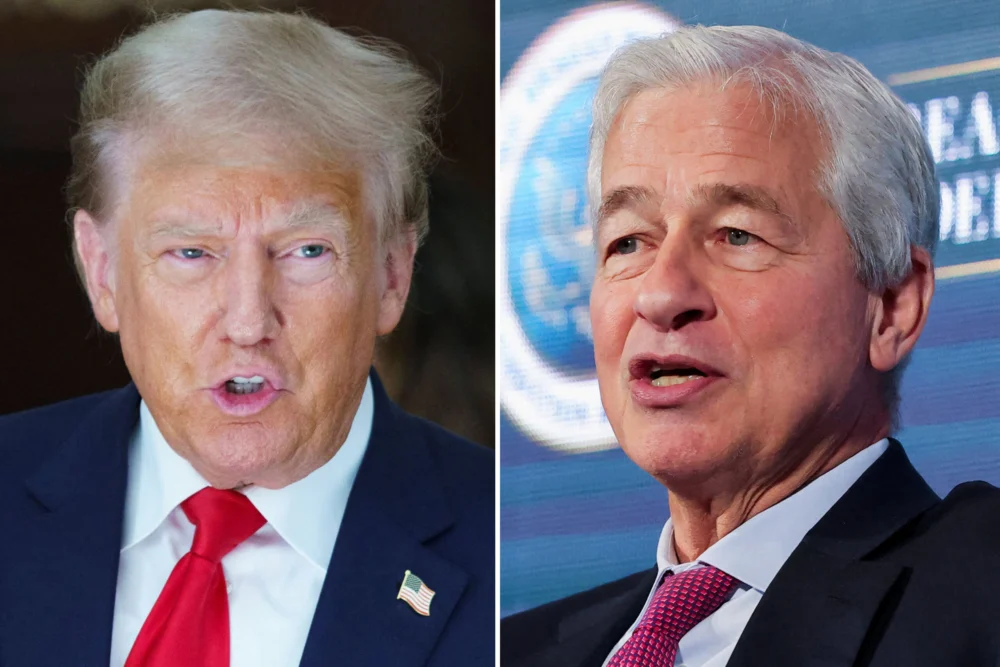
JPMorgan Chase CEO Jamie Dimon has publicly acknowledged the emotional validity of former President Donald Trump’s anger over the closure of his bank accounts, even as he steadfastly maintains that Trump’s $5 billion lawsuit against the financial giant is "without merit." Speaking on the sidelines of a JPMorgan conference in Miami, Dimon shed light on the complex regulatory pressures that compel banks to "debank" individuals or entities deemed to pose reputational or regulatory risks, a practice at the heart of Trump’s legal challenge. This contentious legal battle underscores a growing tension between financial institutions’ compliance obligations and accusations of political discrimination, placing one of the world’s most influential bankers in a delicate position amidst a highly charged political landscape.
The Genesis of a High-Stakes Lawsuit
The legal saga began in January 2024 when former President Donald Trump initiated a lawsuit against JPMorgan Chase and its CEO, Jamie Dimon, seeking a staggering $5 billion in damages. The core of Trump’s accusation centers on the claim that JPMorgan, along with other financial institutions, closed his personal and business accounts for political reasons. This action, Trump and his conservative allies contend, constitutes a form of political discrimination, unfairly targeting individuals based on their ideological leanings or public profile. The lawsuit is not an isolated incident but rather a significant component of a broader campaign by the former president, who is currently campaigning for re-election, to challenge institutions he alleges have unfairly targeted him. This campaign includes legal actions against Capital One for similar debanking claims, various media outlets for alleged defamation, and even the Internal Revenue Service concerning the leak of his tax information.
JPMorgan Chase, the largest bank by market capitalization globally, confirmed in recent court filings in February 2024 that it did indeed close dozens of accounts associated with Trump and his entities. These closures reportedly occurred in the weeks following the January 6, 2021, attack on the U.S. Capitol, a period marked by intense scrutiny of individuals and organizations perceived to be involved in or associated with the events of that day. The timing of these actions is crucial, as it directly links the bank’s decision-making to a moment of significant national political upheaval, fueling Trump’s narrative of politically motivated targeting.
Unpacking the Debanking Phenomenon and Regulatory Pressures
At the heart of this dispute lies the controversial practice of "debanking," where financial institutions terminate services for customers. While Trump alleges political motives, Dimon offers a different explanation rooted in the intricate web of financial regulations. "The case has no merit," Dimon stated, "But I agree with them. They have the right to be angry. I’d be angry, too. Like, why is a bank allowed to do that?" He quickly provided the industry’s rationale: banks are often "forced" to debank individuals or entities to comply with a myriad of regulatory requirements.
The primary driver, according to Dimon, is the imperative to mitigate "legal, regulatory risk." Banks operate under stringent frameworks designed to prevent illicit financial activities, including anti-money laundering (AML), combating the financing of terrorism (CFT), and "Know Your Customer" (KYC) regulations. These frameworks, primarily enforced by agencies such as the Financial Crimes Enforcement Network (FinCEN), the Office of the Comptroller of the Currency (OCC), and the Federal Reserve, impose significant obligations on financial institutions. Failure to comply can result in colossal fines, severe reputational damage, and even criminal charges against executives.
While no single law explicitly mandates that banks must terminate customer accounts due to "reputational risk," the regulatory environment implicitly creates such a necessity. Regulators expect banks to have robust risk management systems in place. If a customer, regardless of their political standing, is perceived to pose a heightened risk of legal entanglement, regulatory penalties, or public backlash that could undermine public trust in the bank, institutions often choose to sever ties. "It’s been much easier for a bank to say, ‘I’m not taking the risk, let them go bank elsewhere,’" Dimon elaborated, highlighting the practical calculus banks employ to protect their licenses and balance sheets. This often means that even if a customer has not committed a provable crime, the perception of risk can be enough.
A Timeline of Confrontation
The conflict between Donald Trump and financial institutions, particularly JPMorgan Chase, has unfolded over several years, culminating in the current legal battle:
- January 6, 2021: The U.S. Capitol is attacked following a rally led by then-President Trump. This event triggers widespread public and political condemnation, prompting many corporations and institutions to re-evaluate their associations and policies.
- Weeks Following January 6, 2021: In the immediate aftermath of the Capitol attack, JPMorgan Chase initiates and completes the closure of dozens of accounts associated with Donald Trump and his various business entities. While the bank’s internal decision-making process is not fully public, the timing strongly suggests a connection to the heightened scrutiny and perceived reputational risk following the events of January 6th.
- Early 2023 (Inferred): As Donald Trump ramps up his 2024 presidential campaign, he intensifies his public criticism of institutions he claims have targeted him politically. This period sees the commencement of his broader "debanking" campaign.
- January 2024: Donald Trump formally files a lawsuit against JPMorgan Chase and CEO Jamie Dimon, seeking $5 billion in damages. The lawsuit alleges that the bank’s decision to close his accounts was politically motivated and discriminatory.
- February 2024: JPMorgan Chase formally concedes in court filings that it did indeed close accounts linked to Trump following the January 6th Capitol attack. This admission confirms a key factual element of Trump’s complaint but does not validate his claims of political discrimination.
- March 2024 (Current): Jamie Dimon makes public statements at a conference in Miami, acknowledging Trump’s anger as understandable but firmly asserting the lack of merit in the lawsuit, emphasizing the regulatory pressures faced by banks.
Statements, Reactions, and Broader Implications
Jamie Dimon’s nuanced comments — validating Trump’s anger while dismissing the lawsuit’s merit — reveal the tightrope walk required of leaders in the financial sector when dealing with high-profile political figures. From Trump’s perspective, and that of his conservative base, the closures are seen as an egregious example of "cancel culture" extending into the financial sphere, where access to essential services is denied based on political beliefs. This narrative resonates strongly with concerns about the weaponization of corporate power and the erosion of free speech.
For Dimon, one of the most outspoken and influential figures in finance, the lawsuit presents a unique dilemma. He must vociferously defend his institution against a multi-billion dollar claim and protect its integrity, yet avoid further inflaming a former president who retains significant political power and a demonstrable ability to influence markets and public sentiment with a single social media post. Dimon’s public remarks suggest a desire to de-escalate the personal animosity while firmly defending the bank’s actions as compliant with industry standards and regulatory obligations.
The implications of this lawsuit extend far beyond the immediate parties involved:
Legal Precedents and Challenges
The lawsuit could set important precedents regarding the legal grounds for "debanking." Courts will have to grapple with the definition and scope of "reputational risk" as a legitimate reason for account termination. Trump’s legal team will likely seek to prove that the bank’s actions were driven by partisan animus rather than objective risk assessment. Conversely, JPMorgan will argue that its decisions were made in good faith, adhering to regulatory guidance and internal risk protocols designed to protect the institution from legal and financial harm. The outcome could influence how banks manage politically sensitive accounts in the future and could lead to demands for clearer legislative guidance on debanking practices.
Political Ramifications
This case is inherently political, intertwining with broader debates about corporate power, free speech, and alleged discrimination against conservatives. If Trump were to prevail, it could embolden his supporters and intensify calls for legislative measures to curb what they perceive as politically motivated actions by financial institutions. Conversely, a victory for JPMorgan could reinforce the notion that banks have a right to manage their risk profiles, even if it means terminating services for controversial figures. The lawsuit could also become a significant talking point in the upcoming presidential election cycle, with Trump using it to further galvanize his base against perceived institutional biases.
The Future of Banking Compliance and Deregulation
The financial industry has historically benefited from deregulation efforts under Republican administrations, including some spearheaded by Trump appointees during his presidency. These efforts often aim to reduce the regulatory burden on banks, potentially leading to increased profitability and less stringent capital requirements. This lawsuit, however, highlights a fundamental tension: while banks desire less regulation, they also rely on existing regulatory frameworks to justify difficult decisions like debanking. Dimon’s concluding remark, "Hopefully the law will change, and hopefully it’ll get sorted out," suggests a desire for greater clarity or perhaps a re-evaluation of the current regulatory landscape that places banks in such precarious positions. This could spark a broader conversation about how to balance financial stability and risk management with concerns about access to essential banking services for all individuals, regardless of their political affiliation or public profile.
Economic and Societal Impact
The increasing prevalence of debanking, whether due to legitimate risk or perceived political bias, raises concerns about financial inclusion. If individuals or organizations find themselves unable to access basic banking services, it can severely impede their ability to conduct business, manage personal finances, and participate fully in the economy. This case brings to the forefront the societal implications of a financial system where institutions wield significant power over who can and cannot access its services, prompting questions about fairness, transparency, and accountability in the banking sector.
In conclusion, the lawsuit brought by Donald Trump against JPMorgan Chase and Jamie Dimon is more than just a legal dispute; it is a microcosm of broader societal, political, and regulatory challenges facing modern finance. Dimon’s candid remarks underscore the difficult tightrope banks walk between fulfilling their stringent regulatory obligations and navigating an increasingly polarized political environment. The resolution of this high-profile case will undoubtedly have lasting ramifications for both the financial industry and the ongoing national conversation about corporate power, individual rights, and the delicate balance of risk in an interconnected world.
About the Author