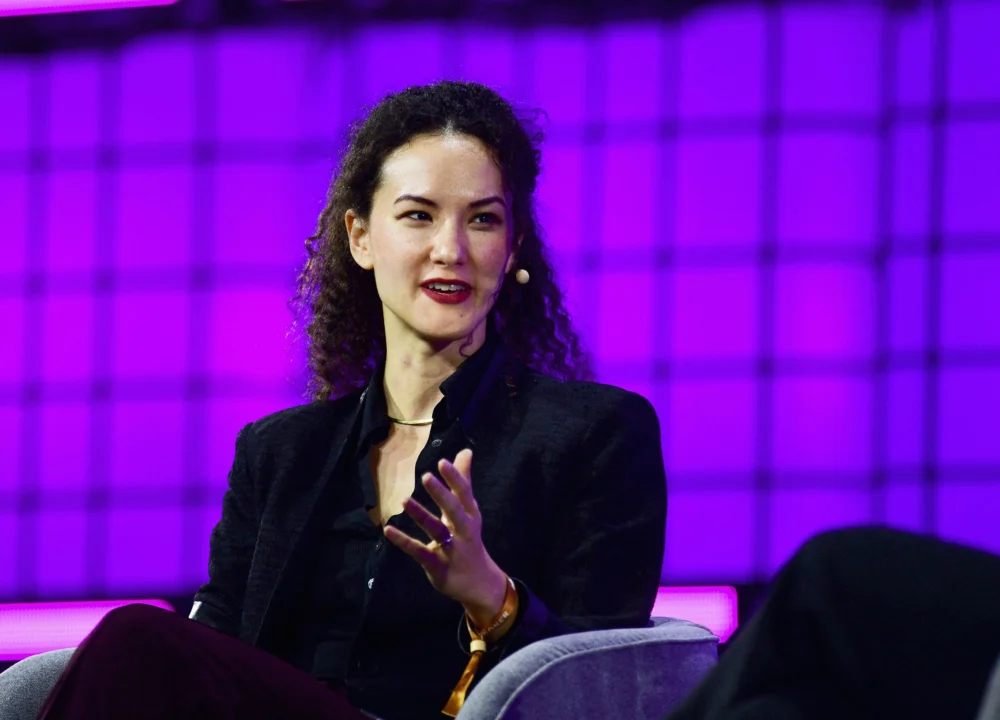
In a significant shift for the decentralized social media landscape, Jay Graber has announced her decision to step down as the Chief Executive Officer of Bluesky, the platform she has led since its inception as an independent entity. The transition, confirmed exclusively to WIRED, marks a pivotal moment for the company as it seeks to move from its foundational development phase into a period of aggressive scaling and operational execution. Toni Schneider, a prominent venture capitalist and former executive at Automattic, has been appointed as the interim CEO while the board of directors conducts a search for a permanent successor.
Graber, who has been the face of Bluesky throughout its rapid rise as a viable alternative to X (formerly Twitter), will not be leaving the company. Instead, she is transitioning into a newly created role as Chief Innovation Officer. This move is designed to allow Graber to return to her technical roots, focusing on the platform’s underlying technology stack and the development of the Authenticated Transfer (AT) Protocol, rather than the day-to-day administrative and business operations of a growing corporation.
“As Bluesky matures, the company needs a seasoned operator focused on scaling and execution, while I return to what I do best: building new things,” Graber stated in a public announcement regarding the personnel change. Her shift reflects a common trajectory in Silicon Valley, where founding visionaries often hand over the reins to professional managers once a startup reaches a certain level of complexity and market presence.
The Evolution of Bluesky: From Research to Rival
The history of Bluesky is inextricably linked to the shifting tides of the social media industry over the past half-decade. The project began in 2019 as a small, Twitter-funded research initiative championed by then-CEO Jack Dorsey. The original goal was to develop an open and decentralized standard for social media that would allow different platforms to interoperate, much like email or the web itself.
Jay Graber, a software engineer with a background in decentralized systems and cryptocurrency, was tapped to lead the effort. Under her guidance, the project transitioned from a theoretical research group into a functional social network. In 2021, Bluesky was spun out as an independent Public Benefit Corporation (PBC), a move intended to ensure that its mission of creating an open social web would remain protected from the shifting corporate interests of its original parent company.
Graber’s tenure was defined by the challenge of building a social network from scratch while simultaneously developing the protocol it would run on. For much of 2023 and early 2024, Bluesky operated on an invite-only basis, creating a sense of digital scarcity that fueled its initial popularity. As Elon Musk’s acquisition of Twitter led to significant policy changes and a rightward ideological shift on that platform, Bluesky positioned itself as a "progressive" haven, attracting millions of users looking for a more moderated and community-focused environment.
The transition from a "quirky Twitter offshoot" to a "full-fledged alternative to X" was not without its hurdles. The platform faced intense scrutiny over its moderation policies, technical stability during periods of high traffic, and the inherent difficulty of explaining decentralized concepts to a mainstream audience. Despite these "growing pains," Graber successfully navigated the platform through its public launch and several rounds of user surges.
Toni Schneider: A Seasoned Operator for the Next Phase
The appointment of Toni Schneider as interim CEO signals a clear intent by the Bluesky board to prioritize operational stability and business growth. Schneider is a partner at True Ventures and brings a wealth of experience in managing open-source-based businesses. Most notably, he served as the CEO of Automattic, the parent company of WordPress.com, from 2006 to 2014.
During his time at Automattic, Schneider oversaw the transformation of WordPress from a blogging tool into the dominant content management system for the entire internet, proving that a robust business could be built around open-source software. His experience is particularly relevant to Bluesky, which aims to monetize its services without compromising the open and decentralized nature of the AT Protocol.
Schneider’s connection to Bluesky deepened in 2024. While serving a brief stint as interim CEO of Automattic during Matt Mullenweg’s sabbatical, Schneider met Graber and began advising the Bluesky leadership team. In his own statement regarding his new role, Schneider emphasized the need for Bluesky to evolve into a foundational infrastructure for the next generation of the internet.
“I intend to help Bluesky become not just the best open social app, but the foundation for a whole new generation of user-owned networks,” Schneider said. He noted that his primary focus will be on "scaling," ensuring that the platform’s infrastructure and organizational structure can support its next phase of growth. Schneider will continue his work at True Ventures while managing his interim responsibilities at Bluesky.
Analyzing the Growth Metrics and Market Position
The leadership change comes at a time when Bluesky’s growth is accelerating, though it remains a smaller player compared to industry giants. According to the company’s 2025 Transparency Report, the platform’s user base grew from 25 million to over 40 million within a single year. This growth was largely driven by users migrating away from X during periods of political or social volatility.
However, the competitive landscape is formidable. Meta’s Threads, which launched in mid-2023, has rapidly scaled to approximately 400 million active users. Threads benefits from its integration with the Instagram ecosystem, giving it a massive built-in user base that Bluesky cannot easily match. Furthermore, X, despite its controversies, remains a central hub for real-time news and political discourse for hundreds of millions of users globally.
For Bluesky to move beyond its current "niche" status, it must solve the challenge of mass-market adoption. While its decentralized nature is a selling point for tech enthusiasts and advocates of digital sovereignty, the average user is often more concerned with the quality of the content feed and the ease of finding friends. Schneider’s task will be to bridge this gap, turning the technical advantages of the AT Protocol into tangible user benefits.
The Role of the Board and the Search for a Permanent CEO
The search for a permanent CEO is already underway, led by Bluesky’s board of directors. The board currently consists of a diverse group of industry veterans:
- Jay Graber: The outgoing CEO, who will provide continuity and technical insight.
- Jeremie Miller: The inventor of Jabber/XMPP, bringing deep expertise in decentralized communication protocols.
- Kinjal Shah: A partner at Blockchain Capital, focusing on the intersection of crypto and social media.
- Mike Masnick: The founder of TechDirt and a prominent advocate for "protocols, not platforms."
Notably absent from the board is Jack Dorsey, who stepped down in 2024. Dorsey has recently expressed public dissatisfaction with Bluesky’s direction, suggesting that the platform has become too focused on "ideology" and has strayed from his original vision of a purely neutral, censorship-resistant protocol. This tension highlights the difficult balancing act Bluesky faces: maintaining a welcoming environment for its current user base while adhering to the principles of a decentralized, open system.
Mike Masnick, commenting on the appointment of Schneider, noted that Schneider’s track record at Automattic "proves you can build a real business around open software." This sentiment reflects the board’s confidence that Bluesky can achieve commercial viability without sacrificing its core values.
Broader Implications for the Social Media Ecosystem
The transition at Bluesky is a microcosm of a larger debate happening within the technology industry regarding the future of the digital commons. For over a decade, social media has been dominated by centralized "walled gardens" like Facebook and Twitter. These platforms control the data, the algorithms, and the moderation rules, often leading to concerns about censorship, privacy, and market monopolization.
Bluesky’s AT Protocol is part of a burgeoning movement toward "Fediverse" or decentralized social networking, which also includes platforms like Mastodon (using the ActivityPub protocol). These systems aim to return power to the users, allowing them to move their accounts and followers between different providers and choose their own moderation filters.
The success or failure of Bluesky’s leadership transition will be a key indicator of whether decentralized social media can truly scale to hundreds of millions of users. If Schneider can successfully implement a business model that supports the network’s growth while Graber continues to innovate on the protocol level, Bluesky could serve as a blueprint for a more resilient and user-centric internet.
As Graber moves into her role as Chief Innovation Officer, her focus will likely return to the "hard tech" problems: improving the speed of the protocol, developing better tools for algorithmic choice, and ensuring that the network remains robust against technical failures. Meanwhile, the upcoming permanent CEO will need to be a strategist capable of navigating the complex world of digital advertising, subscription models, and global regulatory environments.
The next few months will be critical for the platform. As it seeks to stake a claim as a primary digital commons, Bluesky must prove that it is not just a temporary refuge for those fleeing X, but a permanent and superior fixture of the social media landscape. With a "seasoned operator" at the helm and its founding visionary focused on the future of the stack, Bluesky is betting that its most impactful chapters are yet to be written.
About the Author