GFiber, Google’s pioneering fiber internet division, is set to combine with Astound Broadband, forming an independent high-speed internet provider majority-owned by investment firm Stonepeak. Google will retain a minority shareholder position in the newly structured entity, marking a significant strategic shift for a venture that once aimed to revolutionize the American broadband landscape directly. The new company will leverage the existing GFiber executive team, tapping into their expertise in high-speed fiber innovation to manage the expanded, combined network footprint. This transaction, anticipated to conclude in the fourth quarter of the current year, signifies Google’s evolving approach to its capital-intensive "Other Bets" and underscores the growing demand for robust, high-capacity networks, particularly in an era increasingly defined by artificial intelligence services.
The Genesis and Evolution of Google Fiber
Google Fiber embarked on its ambitious journey in 2010, conceptualized as a bold initiative to accelerate the deployment of ultra-fast fiber-optic broadband networks across the United States. At a time when typical U.S. internet speeds lagged behind many developed nations, Google aimed to disrupt the incumbent telecommunications landscape, which was largely dominated by cable and DSL providers offering significantly slower speeds and often imposing data caps. The project’s explicit goal was not merely to compete but to catalyze innovation, demonstrating the feasibility and demand for gigabit-speed internet directly to consumers’ homes.
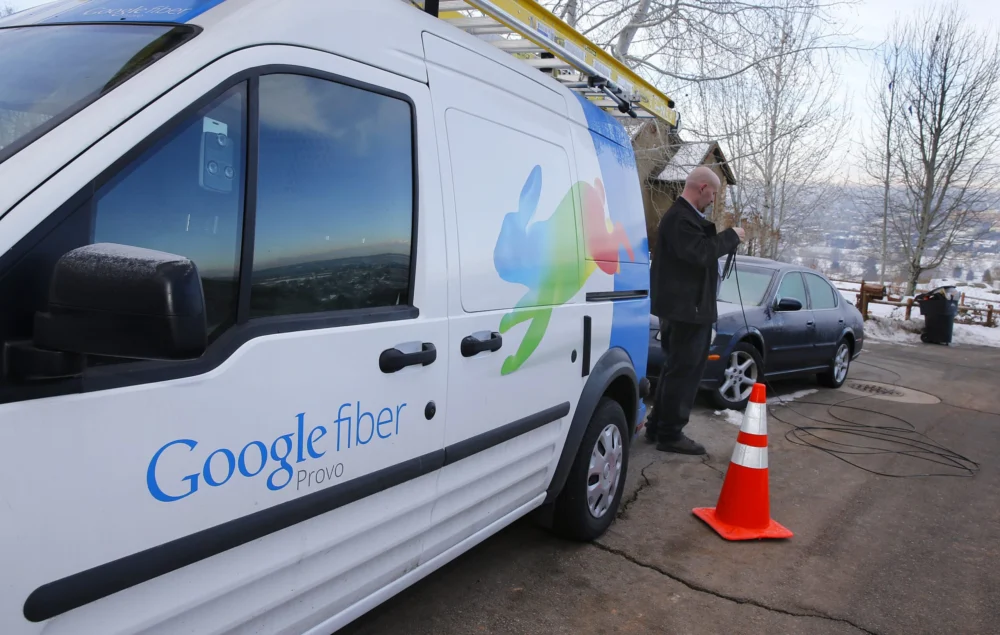
The first major rollout commenced in Kansas City in 2012, an event that sent ripples through the industry. Google Fiber offered symmetrical gigabit speeds—100 times faster than the average broadband connection at the time—at competitive prices, often without the restrictive data caps prevalent among traditional providers. This aggressive entry, often referred to as the "Google Fiber effect," pressured incumbent ISPs like AT&T and Comcast to accelerate their own fiber deployments and upgrade existing infrastructure, significantly improving internet speeds for millions of Americans, even in markets where Google Fiber did not directly operate. Following Kansas City, Google Fiber expanded to other cities, including Austin, Texas, and Provo, Utah, garnering considerable enthusiasm from local governments and consumers eager for faster, more reliable internet.
However, the path to nationwide deployment proved more arduous and capital-intensive than initially anticipated. The complexities of negotiating with municipal governments for rights-of-way, the high costs associated with laying new fiber optic cables across vast urban and suburban areas, and the protracted construction timelines presented significant operational hurdles. Furthermore, incumbent providers, spurred by Google Fiber’s challenge, began upgrading their own networks, closing the speed gap in many markets. By 2016-2017, Google Fiber had begun to scale back its ambitious expansion plans, canceling some planned rollouts and experiencing internal restructuring, including layoffs. The company shifted its focus from a costly and time-intensive nationwide build-out to concentrating on select, strategically viable markets and exploring alternative deployment methods, such as utilizing existing infrastructure or experimenting with wireless technologies. This period marked a pragmatic recalibration of Google’s broadband strategy, acknowledging the immense capital and logistical challenges of becoming a dominant infrastructure provider across the entire nation.
Strategic Pivot: From Direct Ownership to Partnership
The current decision to combine GFiber with Astound Broadband and transition to an independent entity with Google as a minority shareholder represents a logical evolution of this recalibrated strategy. For Alphabet, Google’s parent company, this move allows for the de-risking of a highly capital-intensive venture that has historically operated as part of its "Other Bets" segment. The "Other Bets" portfolio comprises experimental and long-term projects outside Google’s core advertising and cloud businesses, including autonomous driving unit Waymo and drug discovery business Isomorphic Labs. While these ventures hold immense future potential, they often incur substantial operating losses in their early stages. In 2025, the combined "Other Bets" segment generated $1.54 billion in revenue, representing less than 0.5% of Alphabet’s total sales, while recording an operating loss of a staggering $16.8 billion.
By partnering with Stonepeak and Astound, Google can offload a significant portion of the operational and capital expenditure burden associated with direct fiber deployment while retaining a strategic stake in the potential upside of a growing broadband business. This allows Alphabet to focus its internal resources and capital on its core competencies, particularly in artificial intelligence, which is currently driving unprecedented growth and investment across its enterprise. The external capital infusion and operational expertise brought by Stonepeak and Astound will enable the combined entity to accelerate expansion across the country, a goal that GFiber alone found challenging to pursue comprehensively. This model allows Google to continue influencing broadband innovation and market competition without bearing the full financial and operational weight of a direct infrastructure provider.
Dinni Jain, CEO of GFiber, emphasized this new direction in the official press release, stating, "This partnership with Astound and Stonepeak is the next step in our decade-long mission to redefine what customers can expect from their internet provider." His statement underscores a continued commitment to the original mission of pushing broadband boundaries, now empowered by a more diversified ownership and capital structure.
Astound Broadband and Stonepeak: A Formidable Combination
The new partnership brings together GFiber’s brand recognition and technological innovation with Astound Broadband’s established operational scale and Stonepeak’s deep infrastructure investment expertise. Astound Broadband is a significant U.S. cable operator and broadband platform, formed through the consolidation of several regional providers, including RCN, Grande Communications, enTouch, and Wave Broadband. These companies collectively serve millions of customers across various markets, primarily in the Northeast, Texas, and parts of the West Coast. Astound offers a comprehensive suite of internet, TV, and phone services, boasting a robust customer base and an extensive network footprint built over decades. Its acquisition by Stonepeak in 2021 for an estimated $8.1 billion signaled Stonepeak’s strong belief in the long-term value and growth potential of critical digital infrastructure.
Stonepeak, a leading alternative investment firm specializing in infrastructure and real estate assets, brings substantial financial backing and strategic guidance to the new venture. With a portfolio spanning various essential infrastructure sectors—including digital infrastructure, energy transition, power and utilities, transportation and logistics, and water—Stonepeak’s investment philosophy centers on identifying and nurturing assets that provide essential services and exhibit long-term, stable growth characteristics. Their majority ownership in the combined GFiber-Astound entity means significant access to capital for network expansion, technological upgrades, and market penetration. Stonepeak’s expertise in managing large-scale infrastructure projects and optimizing operational efficiencies will be crucial in guiding the new company’s growth trajectory.
The synergy between GFiber and Astound is multifaceted. GFiber brings a reputation for speed, customer service innovation, and a focus on pure fiber-to-the-home (FTTH) technology. Astound contributes an existing customer base, a proven operational model for managing a large-scale broadband business, and a diverse geographic footprint. The combination is poised to create a more formidable competitor in the U.S. broadband market, capable of accelerating fiber deployment and offering advanced services to a broader audience.

The Growing Demand for High-Capacity Networks: Fueling the AI Era
The timing of this spinout and partnership is particularly pertinent given the accelerating demand for high-capacity networks, which are becoming increasingly critical to support a multitude of modern digital services. The shift towards fiber infrastructure has gained unprecedented importance as cloud computing, high-definition streaming, remote work, and online education continue to proliferate. These applications, while demanding, pale in comparison to the bandwidth and latency requirements imposed by the rapidly evolving field of artificial intelligence.
AI services, from large language models to complex data analytics and real-time inference, require immense computational power and, crucially, ultra-low latency, high-bandwidth connections to data centers and edge computing nodes. Training large AI models often involves transferring petabytes of data, necessitating network infrastructure that can handle such loads efficiently and reliably. As U.S. tech giants like Google and Meta are already heavily investing in expanding transcontinental subsea cables to keep pace with growing bandwidth demands globally, domestic fiber infrastructure becomes equally vital for distributing that capacity to businesses and consumers.
The combined GFiber-Astound entity, with Stonepeak’s financial backing, is strategically positioned to capitalize on this surging demand. By accelerating fiber deployment, they can offer the foundational infrastructure necessary for homes and businesses to fully participate in the AI-driven economy. This isn’t just about faster movie downloads; it’s about enabling next-generation applications, supporting smart cities, facilitating remote surgery, and powering the distributed computing needs of AI. The U.S. government’s significant investment in broadband infrastructure through programs like the Broadband Equity, Access, and Deployment (BEAD) program, which allocates over $42 billion to expand high-speed internet access, further underscores the national imperative for robust network infrastructure, creating a favorable environment for companies like the newly formed provider.
Implications for the Broadband Landscape and Consumers
This strategic alliance carries significant implications for the broader U.S. broadband market, consumers, and the competitive landscape. For Google, it represents a mature evolution of a long-term "moonshot" project. By shedding direct operational responsibility, Google can continue its mission of driving innovation and competition in broadband while focusing on its core strengths in AI, search, and cloud. It mitigates the financial drain of a high-capex business from its balance sheet while retaining a stake in its future success.
For the combined GFiber-Astound entity, the partnership promises enhanced financial flexibility and operational scale. The injection of Stonepeak’s capital means the new company will be better equipped to accelerate fiber build-outs in new and existing markets, potentially increasing competition against established giants like Comcast, Charter, and AT&T. This could lead to more choices for consumers, higher speeds, and potentially more competitive pricing in areas where the new entity expands. The ability to leverage Astound’s existing customer relationships and operational expertise with GFiber’s innovative spirit could create a powerful market force.
Industry analysts are likely to view this as a pragmatic and intelligent move for all parties. For Google, it’s a shrewd way to monetize a long-term investment and reduce exposure to a non-core, capital-intensive business while retaining some influence. For Stonepeak, it’s a consolidation play that strengthens its position in the critical digital infrastructure sector, aligning with its long-term investment strategy in essential services. For Astound, it means access to a recognized brand, advanced fiber technology, and expanded capital, enabling more aggressive growth.
However, challenges remain. The U.S. broadband market is intensely competitive, with incumbent providers continuously upgrading their networks (often to fiber themselves) and aggressive pricing strategies. Navigating municipal regulations, securing rights-of-way, and managing complex construction projects across diverse geographic regions will continue to be significant undertakings. The success of the new company will hinge on its ability to seamlessly integrate GFiber’s technology and brand ethos with Astound’s operational scale and customer base, while effectively deploying capital for sustained growth and market penetration.
Analyst Perspectives and Future Outlook
While Google has not immediately responded to requests for additional comment beyond the press release, industry analysts are expected to weigh in on the long-term ramifications of this deal. Many will likely highlight the trend of major tech companies selectively de-investing from non-core, infrastructure-heavy projects, especially as focus shifts intensely to AI. This move could be seen as a blueprint for other "Other Bets" divisions within Alphabet or similar ventures at other tech giants, where external partnerships and shared ownership models become a viable path to financial independence and accelerated growth.
The future outlook for the combined entity appears promising, underpinned by the insatiable demand for high-speed internet and the strategic backing of Stonepeak. The ability to combine GFiber’s innovative, fiber-centric approach with Astound’s broad market presence and Stonepeak’s financial muscle creates a robust platform for growth. The continued evolution of digital services, particularly the exponential demands of artificial intelligence, ensures a persistent and growing need for the very infrastructure this new company aims to provide and expand. The transaction sets the stage for a redefined vision of connectivity, one that is more collaborative, financially agile, and strategically aligned with the foundational needs of the digital economy.
The successful integration and expansion of this new independent provider will be a key indicator of how major tech firms balance ambitious long-term projects with core business priorities in an increasingly dynamic technological and economic landscape. It signifies not an abandonment of Google’s original vision for fiber, but rather a mature and strategic evolution of that vision into a more sustainable and expansive operational model.
About the Author