Global financial markets are poised for a tumultuous week, with Asia-Pacific equities largely anticipating declines on Monday as investors grapple with the escalating conflict between the United States and Iran and the resultant surge in international oil prices. The geopolitical temperature in the Middle East has reached a critical boiling point following recent military actions and stark warnings from the Trump administration, triggering widespread concern over potential supply disruptions from the world’s most vital oil-producing region. This renewed instability is casting a long shadow over an already delicate global economic landscape, pushing energy costs to levels not seen in years and fueling fears of a broad inflationary wave coupled with decelerating growth.
The immediate market reactions across Asia underscored this pervasive anxiety. While Australia’s S&P/ASX 200 registered a decline in early trade, Japan’s Nikkei 225, a barometer for regional sentiment, was also signaling a significant downturn despite having recently celebrated domestic political stability with record highs just weeks prior. The only notable outlier was Hong Kong’s Hang Seng index, which surprisingly indicated a higher open, perhaps reflecting localized factors or a momentary divergence from the broader regional trend. Economists and analysts are now closely scrutinizing every development, with projections from institutions like Goldman Sachs warning of substantial negative impacts on global GDP and a notable acceleration in headline inflation should the conflict intensify or persist.
Escalation in the Middle East: A Chronology of Conflict
The current crisis represents a dramatic intensification of long-standing tensions between Washington and Tehran, roots of which stretch back decades. The flashpoint for the latest surge in hostility centers around Iran’s Kharg Island, a strategically vital hub in the Persian Gulf often dubbed the nation’s "oil lifeline." This island serves as the primary export terminal for Iranian crude, handling the vast majority of the country’s oil shipments. Any disruption to its operations carries profound implications for global energy markets.
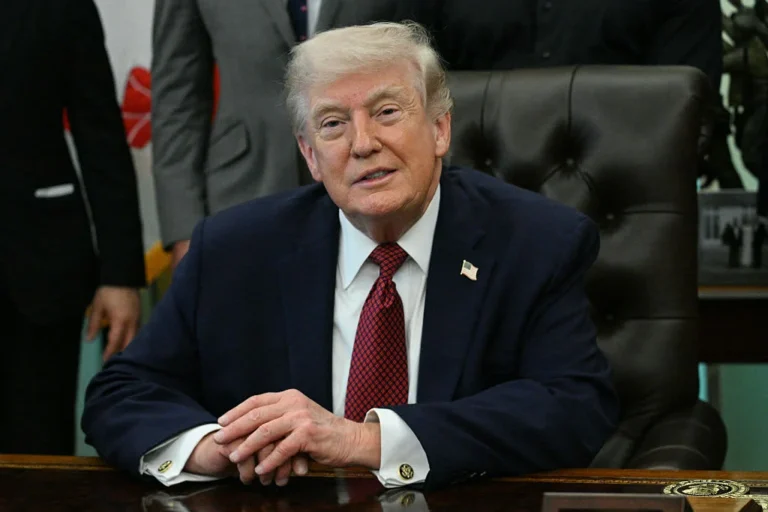
The immediate catalyst for the market’s apprehension came late last week. On Friday, President Donald Trump publicly confirmed that he had ordered military strikes against Iranian military assets located on Kharg Island. While details on the full extent of the damage to these specific military targets remained under assessment, the President’s accompanying rhetoric was unambiguous, warning of the potential for further, more extensive attacks on crude facilities situated on the island. This was not an isolated statement; the warning was reiterated with force on Sunday by Mike Waltz, the U.S. ambassador to the United Nations, signaling a sustained and determined posture from the U.S. administration.
This sequence of events follows a period of heightened friction that has seen numerous incidents in the region, including alleged attacks on oil tankers, drone interceptions, and proxy conflicts in various Middle Eastern theaters. While specific details of these preceding events are subject to ongoing debate and often conflicting claims from both sides, their cumulative effect has been to gradually erode stability and increase the risk of a direct confrontation. The U.S. justification for its actions on Kharg Island has centered on deterrence and protecting regional maritime security, particularly in the context of global energy supply lines. Iran, conversely, has vehemently condemned the strikes as acts of aggression and violations of its sovereignty, vowing a proportionate response and raising concerns about potential retaliatory measures that could further destabilize the region, including threats to the vital Strait of Hormuz.
The Oil Market Roils: Price Surge and Supply Concerns
The direct consequence of this escalating geopolitical risk has been a dramatic surge in crude oil prices. On Monday, U.S. crude prices, represented by West Texas Intermediate (WTI), topped the psychologically significant $100 per barrel mark, rising 2.64% to settle at $101.32 per barrel by 6:15 p.m. ET. The international benchmark, Brent crude, also saw a substantial increase, climbing 2.94% to $106.17 per barrel. These price levels represent a significant premium driven by fears of supply disruption, reflecting what market participants term a "geopolitical risk premium."
The primary concern underpinning this price rally is the potential for an interruption in oil flows from the Persian Gulf. Kharg Island’s strategic importance means that any sustained damage to its infrastructure or a blockade of the shipping lanes around it could remove substantial volumes of Iranian crude from the global market. Furthermore, the Strait of Hormuz, a narrow chokepoint between the Persian Gulf and the open ocean, is a critical artery through which approximately one-fifth of the world’s total oil consumption passes daily. Threats to this strait, whether explicit or implicit from either side, immediately send shockwaves through energy trading floors worldwide. A full closure, however unlikely, would be catastrophic for the global economy.
Historically, the world has witnessed the severe economic fallout from oil price shocks, from the 1970s energy crises to disruptions during the Gulf Wars. While the global energy landscape has diversified somewhat since then, the fundamental reliance on Middle Eastern crude remains. Major oil-importing nations, particularly in Asia and Europe, are acutely vulnerable to such price spikes. Efforts by major oil producers, including OPEC+ nations, to stabilize markets have often proven insufficient in the face of such significant geopolitical turmoil. Discussions are likely underway in major consuming nations regarding the potential release of strategic petroleum reserves (SPR) as a contingency measure, but such actions offer only temporary relief against fundamental supply anxieties.
Asia-Pacific Markets Under Pressure
The ripple effects of the U.S.-Iran confrontation are being acutely felt across Asia-Pacific markets, which are heavily reliant on imported energy. Australia’s S&P/ASX 200, a bellwether for the region’s broader economic health, declined by 0.31% in early trading, reflecting investor caution and a flight to safety.
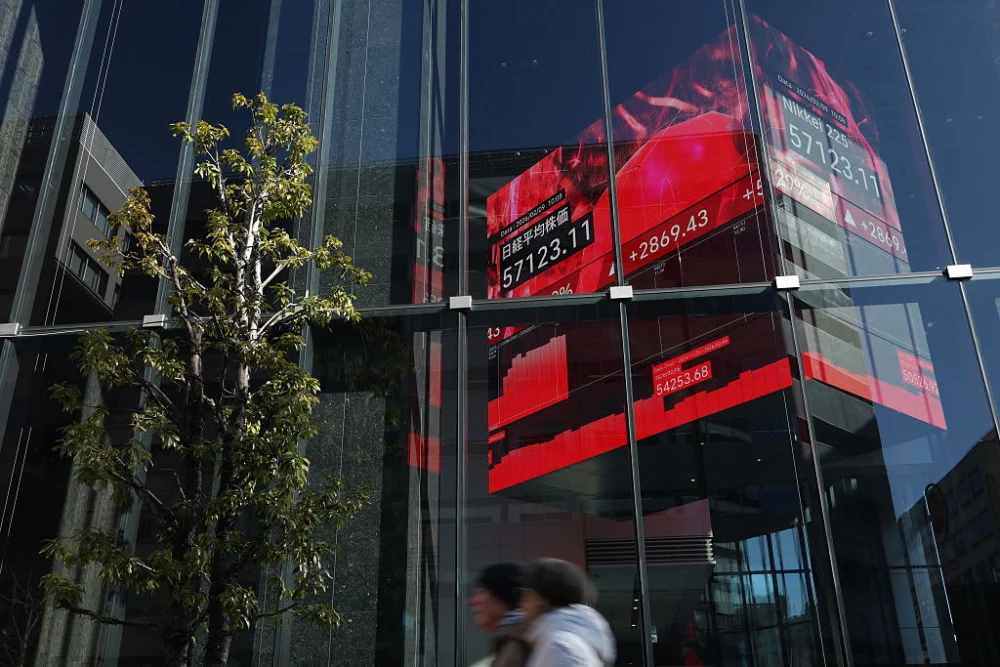
In Japan, the Nikkei 225 was poised for a significant fall. Futures contracts in Chicago indicated a level of 53,305, while Osaka futures were at 52,910, both substantially below the index’s previous closing of 53,819.61. This projected downturn marks a stark contrast to the market’s performance just weeks earlier. On Monday, February 9, 2026, the Nikkei 225 had surged to fresh record highs, driven by domestic optimism following Prime Minister Sanae Takaichi’s Liberal Democratic Party securing a landslide victory. That rally, fueled by expectations of political stability and continued economic stimulus, now appears overshadowed by the external geopolitical storm. The juxtaposition of these events underscores how quickly investor sentiment can shift from domestic strength to global fragility.
Conversely, Hong Kong’s Hang Seng index presented a somewhat anomalous picture, with its futures contract indicating an open at 25,481, marginally higher than its last close of 25,465.6. This might be attributed to specific local market dynamics, a delayed reaction to the news, or sector-specific resilience. However, the broader regional sentiment remained one of apprehension. Many Asian economies, including South Korea, Taiwan, and Singapore (not explicitly mentioned in the original text but highly relevant for enrichment), are heavily dependent on trade and stable energy supplies. Airlines, shipping companies, and manufacturing sectors across the continent are particularly vulnerable to sustained high oil prices, which directly impact operational costs and consumer purchasing power.
Global Economic Repercussions: Inflation and Growth Headwinds
The economic implications of this conflict extend far beyond the energy sector. Goldman Sachs, a leading global financial institution, has already begun to quantify the potential damage. In a research note released on Sunday, the bank estimated that the surge in energy prices alone, directly attributable to the war in Iran, could shave approximately 0.3% off global Gross Domestic Product (GDP) over the next year. Simultaneously, it projects that headline inflation could be pushed higher by roughly 0.5% to 0.6%.
These figures represent a significant headwind for a global economy still navigating post-pandemic recoveries and grappling with existing inflationary pressures. Beyond crude oil, higher natural gas prices are also expected to add further inflationary pressure and growth challenges, particularly impacting energy-intensive regions like Europe and Asia. The risks, according to Goldman Sachs, are heavily skewed toward even larger impacts if the Strait of Hormuz, the critical shipping lane, remains closed or significantly disrupted for an extended period.
The prospect of such "stagflationary" pressures – simultaneously rising inflation and slowing economic growth – presents a formidable dilemma for central banks worldwide. Policymakers who have been cautiously managing interest rates to curb inflation without stifling growth now face a new, unpredictable variable. Consumer spending power is likely to be eroded by higher fuel and utility costs, potentially leading to a slowdown in retail sales and discretionary spending. Businesses, facing increased input costs and uncertain demand, may scale back investment and hiring plans, further dampening economic activity. Should the conflict escalate into a more protracted or widespread regional confrontation, the potential for a broader global recession becomes a very real and concerning possibility.
U.S. Markets: A Cautious Start to the Week
While Asian markets reacted immediately, U.S. stock futures showed a cautious attempt at recovery early Monday, following a dismal close to the previous week. Dow Jones Industrial Average futures added 153 points, or 0.3%, signaling a marginally positive open. Similarly, S&P 500 futures rose 0.3%, and Nasdaq-100 futures gained 0.3%.
This tentative upward movement in futures contrasts sharply with Friday’s performance on Wall Street, where all three major U.S. averages closed down. The S&P 500 shed 0.61%, closing at 6,632.19, putting it 5% below its recent high. The Nasdaq Composite, heavily weighted with technology stocks, declined 0.93% to end at 22,105.36. The Dow Jones Industrial Average, representing blue-chip industrial stocks, shed 119.38 points, or 0.26%, settling at 46,558.47. The market’s Friday decline was attributed to growing geopolitical unease and profit-taking after a period of strong performance.
Investors in the U.S. are weighing the immediate impact of higher energy prices against the potential for certain sectors, particularly energy companies, to benefit from the price surge. However, broader concerns about inflation, consumer confidence, and the potential for a global economic slowdown are likely to dominate sentiment. The Federal Reserve, tasked with maintaining price stability and maximum employment, will face increased scrutiny as the inflationary pressures from energy costs build, potentially complicating its monetary policy decisions.
Statements and Reactions from the International Community
Beyond the market’s immediate response, the escalating U.S.-Iran conflict has drawn significant attention and concern from the international community. While the U.S. administration has firmly defended its actions as necessary for national security and regional stability, the global diplomatic landscape is bracing for impact.
Iranian officials, through state media and direct statements, have vehemently condemned the U.S. strikes as acts of aggression and infringements on their sovereignty. They have issued stern warnings of retaliation, emphasizing their capacity to respond to any further military action. The specifics of such retaliation remain ambiguous, but potential targets could include regional U.S. allies, shipping lanes, or even cyberattacks.
International bodies and major world powers have largely called for de-escalation. The United Nations Secretary-General’s office has reportedly issued statements urging all parties to exercise maximum restraint and pursue diplomatic solutions to prevent a wider regional conflict. European Union leaders, often caught between U.S. and Iranian interests, are expected to intensify diplomatic efforts, possibly dispatching envoys to the region to mediate. Nations like China and Russia, with their own strategic interests in the Middle East and global energy stability, are also likely to advocate for a peaceful resolution, wary of the economic and security ramifications of a prolonged conflict. Energy-importing nations across Asia have voiced concerns over the economic impact, implicitly urging restraint from all parties to protect global trade and energy supply chains.
Outlook and Uncertainty
The immediate outlook for global markets remains highly uncertain, tethered directly to the trajectory of the U.S.-Iran conflict. Key factors to watch in the coming days and weeks include any further military actions by either side, the effectiveness of diplomatic efforts, and the response from major oil producers to ensure supply stability.
Potential scenarios range from a rapid de-escalation through intensified diplomatic channels to a prolonged standoff characterized by sporadic military engagements and economic pressures, or even a full-scale regional conflict, which would have devastating global consequences. The long-term implications for global energy markets could include a sustained geopolitical risk premium on oil prices, a renewed push for energy independence in consuming nations, and accelerated investment in alternative energy sources.
Ultimately, the global economy and financial markets are now navigating a period of heightened volatility, where geopolitical events in a critical region hold the power to dictate economic trajectories for the foreseeable future. The coming days will be crucial in determining whether the current tensions can be diffused or if the world is on the cusp of a more profound and lasting period of instability.
— CNBC’s Sean Conlon and Pia Singh contributed to the report.
About the Author