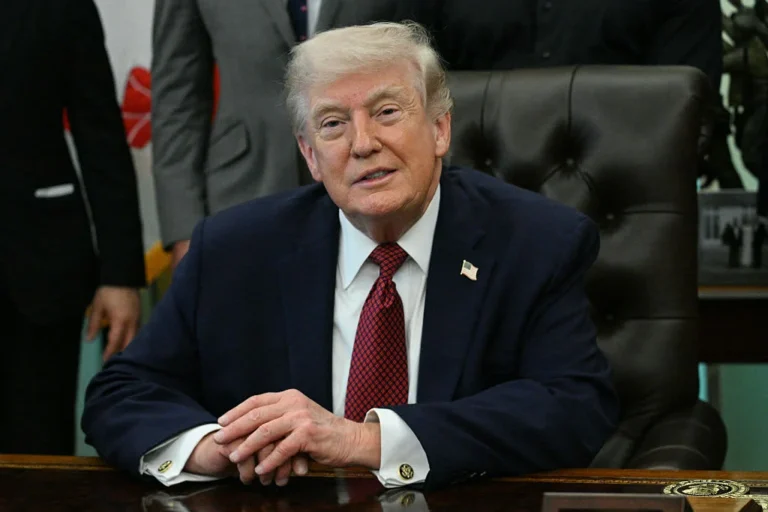
Treasury Secretary Scott Bessent announced on Monday that a highly anticipated summit between U.S. President Donald Trump and Chinese Leader Xi Jinping, scheduled to take place in China, could face delays due to logistical considerations. This clarification followed President Trump’s earlier suggestion on Sunday that the summit’s timing might be contingent on China’s cooperation in reopening the strategically vital Strait of Hormuz. Bessent, speaking from Paris during an interview with CNBC’s Brian Sullivan, firmly stated that any rescheduling would be strictly due to logistical factors rather than a demand for Beijing to intervene in the ongoing crisis in the Middle East.
"If the meetings are delayed, it wouldn’t be delayed because the president demanded that China police the Strait of Hormuz," Bessent emphasized. "If the meeting, for some reason, is rescheduled, it would be rescheduled because of logistics." This statement aimed to walk back President Trump’s previous remarks, which linked the summit’s timing to China’s role in addressing the global shipping crisis stemming from the U.S. assault on Iran. The conflict has largely shuttered the Strait of Hormuz, a critical choke point for global oil shipments, sending international crude prices soaring and injecting significant volatility into global energy markets.
The London Economic Dialogue: A Precursor to High-Stakes Diplomacy
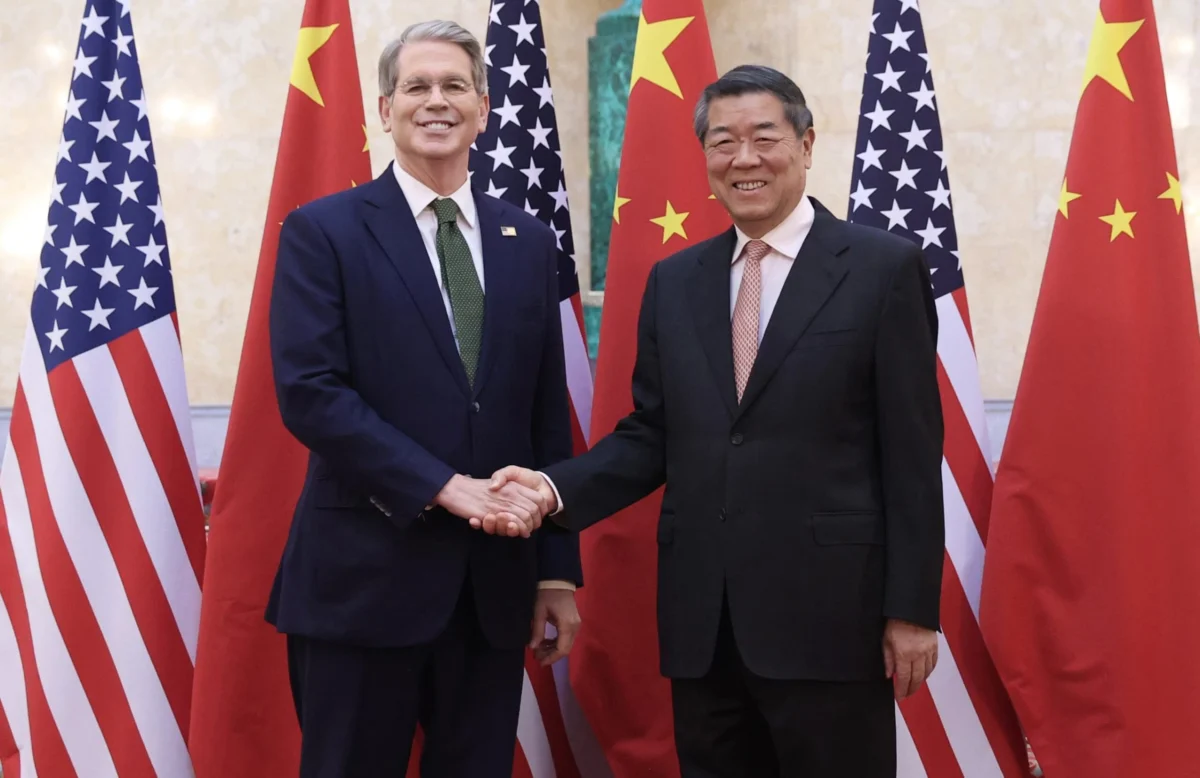
Bessent’s comments came shortly after a significant diplomatic engagement in London, where he met with Chinese Vice Premier He Lifeng on June 9, 2025. This marked the inaugural meeting of the newly established China-U.S. economic and trade consultation mechanism, an initiative designed to foster structured dialogue on complex financial and trade issues between the world’s two largest economies. Vice Premier He Lifeng, also a member of the Political Bureau of the Communist Party of China Central Committee, shook hands with Bessent prior to the commencement of these crucial discussions.
The establishment of this mechanism underscores the recognition by both Washington and Beijing of the necessity for regular, high-level engagement to manage their intricate economic relationship. Topics likely on the agenda in London included trade imbalances, intellectual property rights protection, market access for foreign companies, industrial subsidies, and global economic stability. Analysts suggest that the dialogue aimed to de-escalate potential trade frictions and explore areas of mutual economic interest, particularly against a backdrop of global economic uncertainties and geopolitical tensions. The meeting in London, facilitated by the neutral ground of a third country, provided a vital platform for senior economic officials to build rapport and discuss substantive policy matters away from the direct glare of domestic political pressures in either capital.
Geopolitical Undercurrents: The Iran Conflict and Strait of Hormuz Crisis
The shadow of the escalating conflict in the Middle East loomed large over these diplomatic exchanges. The U.S. assault on Iran, the specifics of which remain under tight security wraps, has had profound global ramifications, most notably the near-total closure of the Strait of Hormuz. This narrow waterway, situated between the Persian Gulf and the Gulf of Oman, is an indispensable conduit for approximately 20% of the world’s total petroleum consumption, or about 21 million barrels per day. Its closure has not only disrupted global energy supplies but has also sent shockwaves through international shipping and insurance markets.
Prior to the current conflict, the Strait of Hormuz has historically been a flashpoint for geopolitical tensions, with past incidents involving naval confrontations and threats to shipping. Its strategic importance cannot be overstated, as it provides the only sea passage from the Persian Gulf to the open ocean for oil-exporting countries like Saudi Arabia, Iran, UAE, Kuwait, and Iraq. The sustained disruption has compelled shipping companies to reroute vessels, incurring significantly higher costs and extended transit times, further exacerbating inflationary pressures on a global scale. Global oil prices, which had been trending around $80-90 per barrel before the conflict, have reportedly surged past $120 per barrel in recent weeks, with some forecasts predicting even higher spikes if the strait remains impassable. This dramatic increase poses a severe threat to global economic recovery and stability.
The Proposed Trump-Xi Summit: A Complex Agenda
The planned summit between President Trump and Leader Xi Jinping in China was envisioned as a pivotal moment for addressing the broader U.S.-China relationship, which has been characterized by periods of intense competition and selective cooperation. Beyond the immediate crisis in the Strait of Hormuz, the agenda for such a high-level meeting would likely encompass a wide array of critical issues. These include ongoing trade negotiations and the implementation of existing agreements, discussions on regional security challenges in the Indo-Pacific, climate change cooperation, and potentially, the roles of both nations in global governance.
A key focus for the U.S. would undoubtedly be to press China on its economic practices, including state subsidies for key industries, market access for American companies, and intellectual property theft. For China, the summit would offer an opportunity to advocate for stable trade relations, counter perceived U.S. containment strategies, and assert its growing influence on the global stage. The mere prospect of a face-to-face meeting between the two leaders carries significant weight, as it often sets the tone for bilateral relations for months, if not years, to come. Any delay, regardless of the stated reason, introduces an element of uncertainty into this already delicate diplomatic calculus.
Beijing’s Measured Response and Diplomatic Signaling
While neither the Chinese Foreign Ministry nor the Ministry of Commerce has issued an immediate, direct response to Treasury Secretary Bessent’s comments regarding the summit delay, Beijing’s general diplomatic posture has consistently emphasized the importance of stable U.S.-China relations. Chinese officials have frequently called for dialogue over confrontation and have stressed the need for mutual respect and win-win cooperation. In response to President Trump’s earlier remarks linking the summit to the Strait of Hormuz, Chinese state media and official commentators would likely reiterate China’s long-standing position on non-interference in the internal affairs of other nations and its commitment to peaceful resolution of disputes.
Beijing has historically advocated for the freedom of navigation in international waters, including the Strait of Hormuz, due to its own heavy reliance on Middle Eastern oil imports. However, China’s approach to such crises has typically involved diplomatic mediation and calls for de-escalation rather than direct military intervention or "policing" a region outside its immediate sphere of influence. Any perceived pressure from the U.S. to take on such a role could be met with resistance, as it might be seen as an attempt to draw China into a complex and dangerous conflict that does not directly serve its core strategic interests.
Analysts Weigh In: Implications of a Postponement
Diplomatic observers and economic analysts are closely scrutinizing the implications of a potential summit delay. Dr. Evelyn Reed, a senior fellow at the Council on Foreign Relations, noted, "While Secretary Bessent’s clarification aims to smooth over the issue, the very public discussion of a delay, coupled with President Trump’s initial reasoning, highlights the extreme fragility of the U.S.-China relationship amidst global crises. Even a logistical delay will be interpreted through the lens of ongoing tensions."
Economists, meanwhile, are focused on the impact on global markets. "The uncertainty surrounding U.S.-China high-level engagement, coupled with the ongoing energy crisis from Hormuz, creates a potent cocktail for market volatility," stated Marcus Thorne, Chief Market Strategist at Global Insight Partners. "Investors crave predictability, and a delayed summit, even for logistical reasons, removes a potential de-escalation point for two critical geopolitical fronts." The ripple effects could extend to supply chains, commodity prices, and investor confidence worldwide.
Looking Ahead: The Path to a Rescheduled Summit
The immediate priority for both the U.S. and China will be to manage expectations and maintain open lines of communication. The U.S. administration will need to carefully coordinate its messaging to avoid further diplomatic missteps, especially as it grapples with the demanding task of managing the war effort in Iran. For China, navigating these developments requires a delicate balance of asserting its national interests while not alienating a key economic partner.
Should the summit indeed be rescheduled, the new date and location will be critical indicators of the state of bilateral relations. A quick rescheduling would signal a mutual commitment to high-level engagement despite challenges, whereas a prolonged delay could suggest deeper underlying issues. The successful execution of the China-U.S. economic and trade consultation mechanism in London, however, offers a glimmer of hope that structured dialogue can continue, providing a vital channel for managing the complexities of the world’s most important bilateral relationship even as other diplomatic initiatives face logistical or geopolitical hurdles. The global community remains keenly observant, understanding that the trajectory of U.S.-China relations, particularly in times of heightened global instability, has profound implications for international peace and prosperity.
About the Author