China’s economy commenced 2026 with a robust performance, exceeding market expectations across key indicators of consumption and industrial production, propelled by vibrant holiday spending and sustained foreign demand. The National Statistics Bureau reported on Monday that retail sales for the first two months of the year climbed 2.8% from a year earlier, surpassing economists’ consensus forecast of 2.5% growth. This uptick, however, represented a noticeable moderation from the 4% rise recorded during the corresponding January-February period in 2025, signaling a complex recovery trajectory.
The surge in consumption was significantly buoyed by the Lunar New Year holiday, which fell in mid-February, according to Yuhan Zhang, principal economist at The Conference Board’s China center. Zhang highlighted substantial gains in sales of discretionary items such as tobacco and alcohol, alongside a pronounced increase in spending on gold and jewelry, reflecting a blend of traditional gift-giving and a flight to safe-haven assets amidst economic uncertainties. The extended festive period witnessed a steady escalation in consumer activity nationwide, ranging from soaring hotel bookings and domestic tourism to robust duty-free shopping, particularly in popular tourist destinations like Hainan. This vigorous holiday spending spree, while economically beneficial, paradoxically tempered anticipations for large-scale, immediate stimulus measures from policymakers, suggesting that the current momentum might be sufficient to avoid drastic interventions in the near term.
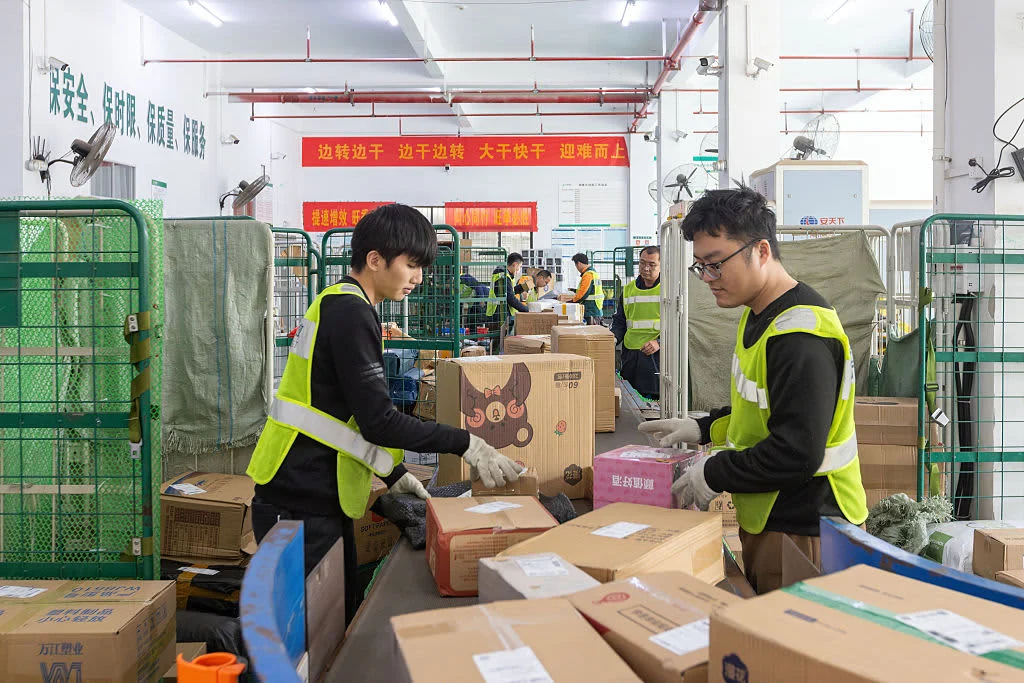
Beyond domestic consumption, the industrial sector emerged as a particular bright spot for the world’s second-largest economy. Industrial output expanded by an impressive 6.3% in the first two months, significantly outpacing the 5% jump estimated by a Reuters poll of economists. This strong manufacturing performance was primarily attributed to resilient external demand, particularly from European and Southeast Asian nations, which continued to absorb a high volume of Chinese exports. China’s export momentum extended powerfully into 2026, with outbound shipments surging nearly 22% in the initial two-month period. This robust export growth occurred despite escalating criticism from key trade partners, notably the United States and the European Union, regarding China’s perceived excess industrial capacity, particularly in sectors such as electric vehicles, solar panels, and steel. These international concerns hint at potential future trade friction, including anti-dumping duties or tariffs, even as current demand keeps factories humming.
Investment Landscape: Property’s Shadow and Infrastructure’s Support
Investment in fixed assets (FAI), a critical component of China’s growth model, also showed signs of resilience, rising 1.8% from a year earlier, a notable improvement compared to estimates that projected a 2.1% drop. However, a deeper dive into the FAI data reveals the persistent shadow of the beleaguered property sector. Investment in real estate development continued its prolonged decline, falling 11.1% in January and February. While still a significant contraction, this marked a moderation from the steeper 17.2% drop observed in 2025, suggesting that some of the most acute pressures might be easing, albeit slowly.
The property crisis, which has been a major drag on China’s economic performance for several years, continues to manifest in weakening home prices. Separate data released concurrently on Monday underscored this trend, indicating that the prolonged decline in China’s home prices across 70 major cities worsened in February. New-home prices plummeted 3.2% from a year earlier, marking the steepest decline in eight months, according to Reuters. This sustained downturn in the housing market impacts consumer wealth, local government finances, and the broader financial system, necessitating continued vigilance from Beijing.
In an effort to stabilize the sector and mitigate contagion risks, Chinese authorities have implemented a series of targeted measures over the past year. These include the establishment of a "whitelist" mechanism to facilitate financing for viable projects, adjustments to mortgage rates, and direct liquidity support to struggling developers. However, the sheer scale of the debt accumulated by major developers like Evergrande and Country Garden, coupled with declining buyer confidence, means a full recovery remains a distant prospect. Local governments, heavily reliant on land sales for revenue, continue to face severe fiscal strains, impacting their ability to fund public services and infrastructure projects.
Excluding the property development segment, fixed asset investment painted a more positive picture, climbing 5.2% year over year. This growth was primarily fueled by robust inflows into infrastructure and manufacturing, reflecting Beijing’s strategic shift towards "new productive forces" and high-quality development. Investments in critical infrastructure projects, including high-speed rail networks, renewable energy facilities, and digital infrastructure, continued apace. Similarly, manufacturing investment saw strong backing, particularly in advanced manufacturing, research and development, and strategic emerging industries, aligning with the government’s long-term industrial upgrade agenda. This selective investment strategy aims to rebalance the economy away from its traditional reliance on property and heavy industry towards innovation-driven growth. It also contrasts sharply with the "historic slump" in overall fixed asset investments observed in 2025, which saw a 3.8% year-over-year decline, largely due to the deepening property downturn and tighter constraints on local government borrowing.
Geopolitical Headwinds and Energy Security Amidst Global Turmoil

Despite the encouraging economic data, government officials acknowledged significant headwinds facing the economy, primarily stemming from escalating geopolitical tensions and deep-rooted structural problems within China’s growth model. These challenges have collectively weighed on corporate profitability and investor sentiment. "We should be aware that the evolving external environment is exerting a great impact on China and the geopolitical risks keep rising," stated the National Statistics Bureau, emphasizing the need for strategic foresight and adaptive policy responses.
Fu Linghui, a spokesperson for the Statistics Bureau, assured reporters on Monday that China’s energy supply capacity remained sufficient to cope with the heightened volatility in global oil prices, indicating Beijing’s close monitoring of its potential impact on domestic inflation. This assurance comes at a critical time, as the escalating crisis in the Middle East, particularly the heightened tensions around the Strait of Hormuz, has sent ripples through global energy markets.
China, as the world’s largest crude oil importer, has proactively spent the past two decades diversifying its energy sources and building substantial strategic reserves. This foresight has significantly insulated Beijing from some of the immediate shocks of a potential Strait of Hormuz closure compared to other major economies. As of January, China held an estimated 1.2 billion barrels of onshore crude stockpiles, a volume sufficient to meet its demand for three to four months. Furthermore, seaborne oil imports through the Hormuz waterway now account for less than half of China’s total oil shipments, according to Rush Doshi, director of China Strategy Initiative at the Council on Foreign Relations. Nomura further estimated that oil flows through Hormuz represent a mere 6.6% of China’s total energy consumption, underscoring the success of its diversification efforts through pipeline projects from Russia and Central Asia, and expanded maritime routes from other regions.
However, the ripple effects of the Middle East crisis extend beyond direct energy supply. The escalating tensions could still pose a significant demand shock to China’s export-reliant economy. Higher global energy costs inevitably feed into inflationary pressures, disrupt intricate global supply chains, and dampen consumer and business spending across its key trading partners in Europe and Asia. Such a scenario could undermine the very external demand that has been a bright spot for China’s industrial output. Zhiwei Zhang, president and chief economist at Pinpoint Asset Management, commented, "The turmoil in the Middle East is set to show its impact on the global economy in the coming months. Chinese policymakers will watch the development closely and respond through fiscal policy if necessary to mitigate adverse effects."
Economic Outlook and Policy Directives
In light of these complex dynamics, Goldman Sachs on Friday trimmed its China real GDP growth forecast for 2026 by 0.1 percentage point, primarily due to anticipated higher energy costs. Notably, this was a smaller reduction compared to the 0.3 to 0.5 percentage point cuts forecast for other regional economies, reflecting China’s relatively stronger insulation from direct energy price shocks. Goldman Sachs also revised its annual consumer inflation outlook for China upwards to 0.9%, from an earlier forecast of 0.6%, and projected factory-gate prices (Producer Price Index) to rebound 0.8% this year as elevated oil prices permeate the supply chain.
The broader economic goals for 2026 were unveiled by the Chinese leadership just last week during the annual "Two Sessions" political meetings. The government set a GDP growth target range of 4.5% to 5%, marking the least ambitious goal since the early 1990s. This moderated target signals a deliberate shift in policy focus from aggressive quantitative expansion towards qualitative growth, emphasizing structural reforms, technological innovation, and sustainable development. The aim is to prioritize quality over speed, addressing long-standing imbalances and enhancing the resilience of the economy.
The urban unemployment rate stood at 5.3% in the first two months of this year, official data showed, a slight uptick from the average rate of 5.2% recorded in 2025. While remaining within a manageable range, this figure underscores the ongoing challenge of job creation, particularly for graduates and migrant workers, necessitating continued government efforts to support employment through vocational training, entrepreneurship initiatives, and targeted industry development.
In summary, China’s economic performance in early 2026 presented a nuanced picture of resilience in key areas of consumption and industrial output, bolstered by strategic diversification and internal demand drivers. However, the persistent structural challenges within the property sector, coupled with an increasingly volatile and uncertain global geopolitical landscape, cast a long shadow. Beijing’s policymakers face the intricate task of balancing growth stability with comprehensive structural reforms, all while navigating external pressures that could significantly impact the nation’s export-reliant economy and its long-term development trajectory. The coming months will be crucial in determining whether the early momentum can be sustained against a backdrop of complex domestic and international headwinds.
CNBC’s Evelyn Cheng contributed to the story.
About the Author