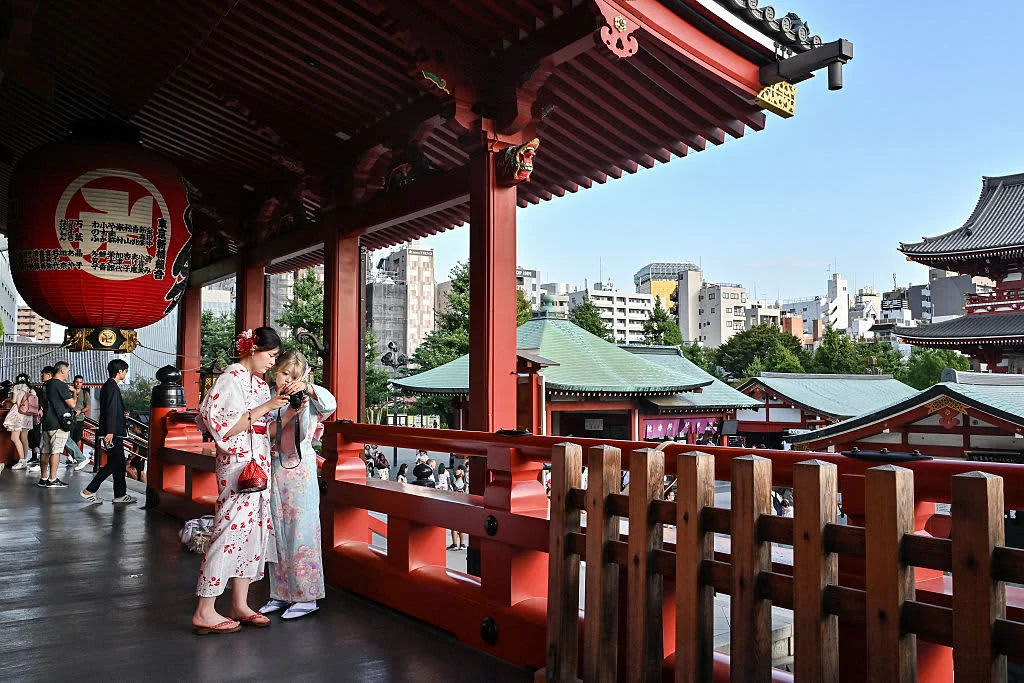
Japan’s vibrant tourism sector is undergoing a profound transformation, experiencing a significant rebalancing of its international visitor demographics following a diplomatic spat with China that commenced in late 2025. While the number of tourists from mainland China has plummeted dramatically, robust arrivals from other Asian nations and Western markets, coupled with the persistent weakness of the Japanese yen, have ensured the industry’s overall resilience, preventing the predicted catastrophe some analysts had feared. This pivot highlights Japan’s established strategy of diversifying its inbound tourism portfolio, a move now proving critical in mitigating geopolitical headwinds.
The discernible shift was first noted by residents like Karin Nordin, a 33-year-old Malaysian living in Tokyo, who observed a marked thinning of crowds in popular hot spring towns such as Kusatsu and Zao, traditionally bustling with Chinese tour groups. Returning from a visit to various parts of Japan in early 2026, Nordin recounted to CNBC that "We have seen less mainland Chinese tourists in Tokyo." Her observations extended to the hospitality sector, where hotel prices in major tourist hubs, which historically spiked during holidays observed by mainland China, appeared to have stabilized, indicating a substantial reduction in demand from this once-dominant market segment. This anecdotal evidence, gathered in the wake of the diplomatic tensions, quickly found substantiation in official tourism statistics, painting a clear picture of a rapidly evolving landscape.
The Catalyst: A Diplomatic Fallout
The root cause of this seismic shift can be traced back to November 2025, when comments made by Japanese Prime Minister Sanae Takaichi ignited a diplomatic spat with Beijing. While the exact phrasing of Takaichi’s statements remained a point of contention, the context, as inferred from various reports and the subsequent Chinese reaction, revolved around sensitive geopolitical issues, likely touching upon Taiwan, the disputed Senkaku/Diaoyu Islands, or Japan’s broader security posture in the Indo-Pacific. Such remarks, particularly when perceived by Beijing as challenging its core interests or sovereignty, have historically triggered strong diplomatic rebuttals and, at times, unofficial economic or cultural boycotts.
China’s reaction was swift and multifaceted, involving official condemnations from its foreign ministry and a discernible shift in state media narratives, which began to subtly discourage travel to Japan. Given the often-strained historical relationship between the two nations, marked by unresolved wartime grievances and ongoing territorial disputes, even seemingly minor diplomatic missteps can rapidly escalate into broader public sentiment shifts. For Chinese citizens, where nationalistic sentiments can be readily mobilized, such official signals often translate into altered consumer behavior, including travel choices. Japan, for its part, maintained that its Prime Minister’s comments were within the bounds of its sovereign right to articulate its foreign policy and security concerns, further solidifying the diplomatic impasse.
A Chronology of Decline and Resilience
The immediate impact of the diplomatic friction became evident in the tourism figures. The Japan National Tourism Organization (JNTO) data provides a clear chronology of this transformation:
- November 2025: The diplomatic spat begins following PM Takaichi’s comments. Initial reports of cancellations or reduced bookings from Chinese travel agencies might have started trickling in.
- December 2025: The first concrete statistical evidence emerged. JNTO reported a significant 43.3% plunge in the number of Chinese tourists year-on-year. Crucially, however, the overall number of tourist arrivals from all countries still managed to climb by 3.7% during the same month, signaling that other markets were already beginning to compensate for the Chinese shortfall.
- January 2026: The decline in Chinese arrivals intensified dramatically, with numbers plummeting by over 60% year-on-year. This represented a substantial withdrawal of what was previously Japan’s largest single source of international visitors. Yet, the overall tourist numbers for January saw only a modest decline of 4.9% year-on-year, a testament to the surging interest from other regions. It was in this month that South Korean tourist arrivals, surging by 21.6%, officially surpassed mainland China to become Japan’s largest source of overseas visitors. Taiwan also showed remarkable growth, with arrivals up 17%, almost doubling the number of visitors from China.
- February 2026: The trends solidified. Analysts from Oxford Economics published a report on February 27, confirming the regional impact of the Chinese downturn and highlighting the strength of alternative markets. Industry experts, including Zilmiyah Kamble of James Cook University and David Mann of Mastercard, offered perspectives on the resilience and future outlook of Japan’s tourism sector, acknowledging the significance of the Chinese decline but framing it within the context of a diversified and robust industry.
This timeline illustrates not a collapse, but a strategic reorientation, demonstrating Japan’s capacity to absorb a major market shock due to its broad appeal and proactive engagement with a multitude of international travelers.
Diversification in Action: New Faces, New Destinations
Prior to November 2025, mainland Chinese tourists constituted one of the largest and most valuable groups visiting Japan, known for their high spending, particularly in retail, luxury goods, and hospitality. Their travel patterns often favored iconic, well-trodden routes encompassing major cities like Tokyo, Kyoto, and Osaka, frequently traveling in large tour groups. The diplomatic spat, however, has significantly altered this landscape, prompting a rapid diversification of Japan’s inbound tourism.
The void left by Chinese visitors is being rapidly filled by tourists from neighboring Asian economies and increasingly, from Western nations. JNTO data points to several key drivers for this shift:
- South Korea and Taiwan: These two markets have emerged as crucial pillars of Japan’s revitalized tourism. Their proximity allows for strong short-haul flight links, making Japan an ideal destination for weekend getaways or shorter holidays. The consistently weak Japanese yen also makes travel significantly more affordable, enhancing purchasing power for South Korean Won and New Taiwan Dollars. Furthermore, shared cultural affinities, perceptions of safety, and a general sense of familiarity contribute to Japan’s strong appeal. For Taiwanese visitors, there might also be an element of political alignment or sympathy, given Japan’s often-supportive stance on cross-strait issues.
- Western Markets (U.S., Europe, Australia): While long-haul travel involves greater costs, the weak yen has made Japan an exceptionally attractive value proposition for visitors from these regions. Their travel motivations often differ from those of traditional East Asian tourists. As Cheryl Ng, a Singapore university student visiting Hiroshima in February, observed, the city’s Peace Memorial Museum was predominantly filled with Western tourists, estimating "Like, two-thirds of the museum were Westerners." This underscores a strong interest in Japan’s historical sites, cultural depth, and unique experiences beyond shopping. Hiroshima, particularly, holds profound historical significance as the site of the world’s first atomic bomb attack on August 6, 1945, a solemn draw for those interested in peace and history.
- Southeast Asian Nations (ASEAN): While not highlighted in the immediate statistical surge, analysts note a growing strategic focus on this region. Countries like Singapore, Thailand, Malaysia, Indonesia, and Vietnam boast burgeoning middle classes with increasing disposable incomes and a growing appetite for international travel. Japan’s cultural appeal, culinary reputation, and unique blend of tradition and modernity resonate strongly with these demographics.
Zilmiyah Kamble, a senior lecturer in hospitality and tourism management at James Cook University (JCU), commented on the situation, stating that while the decline in Chinese tourists "is significant but not catastrophic." Kamble emphasized Japan’s historically diversified tourism portfolio, which has provided a crucial level of resilience. This long-term strategy, rather than an over-reliance on a single market, is now paying dividends.
Regional Repercussions and New Tourist Pathways
The shift in visitor demographics has not impacted all regions of Japan equally. While major international gateways like Tokyo, Osaka, and Kyoto continue to draw a diverse array of visitors, areas that were particularly popular with Chinese group tours have felt the pinch more acutely. Oxford Economics, in its February 27 report, noted that prefectures like Shizuoka, home to the iconic Mount Fuji, and Nara, famous for its ancient temples and free-roaming deer, have been harder hit due to their previous reliance on Chinese tour groups who often included these destinations in their "Golden Route" itineraries.
Conversely, other regions are experiencing an unexpected boon from the new influx of tourists:
- Fukushima: Once primarily associated with the 2011 earthquake and nuclear disaster, Fukushima Prefecture is gaining popularity among visitors from Taiwan. This could be attributed to targeted promotional efforts, a desire for off-the-beaten-path experiences, or perhaps a sense of solidarity and interest in the region’s recovery efforts.
- Ehime: Located on the island of Shikoku, Ehime Prefecture, with its picturesque golf courses and traditional hot springs, is proving particularly appealing to South Korean tourists. This suggests a preference for specific leisure activities and relaxation-focused travel among this demographic, moving beyond the traditional sightseeing circuits.
- Hiroshima: As noted by Singaporean student Cheryl Ng and echoed by Oxford Economics, Hiroshima’s historical sites, particularly the Peace Memorial Museum and Atomic Bomb Dome, attract a significant number of Americans, Australians, and Europeans. This highlights a segment of the market drawn to Japan’s profound historical narrative and its message of peace.
This emerging pattern of regional preference signifies a natural evolution in Japan’s tourism offerings. Instead of concentrating solely on the well-established "Golden Route," visitors are increasingly exploring diverse facets of Japan, from historical remembrance to niche recreational activities, contributing to a more distributed economic benefit across the archipelago.
Economic Resilience and Industry Adaptation
Despite the sharp decline from mainland China, the broader economic picture for Japan’s tourism sector remains robust. David Mann, chief economist for Asia-Pacific at Mastercard, affirmed this positive outlook in an email to CNBC, stating: "The broader picture is still positive." Mann highlighted that overall inbound arrivals to Japan are currently running approximately 34% above pre-pandemic levels, demonstrating a powerful recovery trajectory. Furthermore, tourism revenue is growing even faster than visitor numbers, a phenomenon largely attributed to higher per-visitor spending, significantly boosted by the weak yen. For international travelers, their home currencies now stretch further in Japan, encouraging more extensive spending on accommodations, dining, shopping, and experiences.
The Japanese tourism industry has swiftly adapted to these changing dynamics. Department stores, recognizing the shift away from Chinese high-spenders, are actively expanding their promotional activities in ASEAN economies, tailoring their product selections and marketing strategies to appeal to Southeast Asian consumers. Similarly, retailers are diversifying their stock, increasing their inventory of products popular with Europeans, Americans, and other Asian visitors, moving away from an exclusive focus on items favored by Chinese tourists. This strategic reorientation underscores the industry’s agility and its commitment to capturing demand from emerging and expanding markets.
However, challenges remain. Oxford Economics noted that "given persistent yen weakness, we think the overall tourist numbers are likely to stay robust, although an increase from the current level is unlikely given the shortage of accommodation." This highlights a potential bottleneck for further growth. Rapidly increasing tourist numbers, particularly in popular areas, can strain existing infrastructure and hospitality resources. Solutions may involve accelerating new hotel construction, incentivizing the repurposing of existing buildings for accommodation, and promoting travel to lesser-known regions to distribute the tourist load more evenly.
The Future: A Gradual Return, if Any
The paramount question for many Japanese businesses remains: will Chinese tourists return, and if so, when? The consensus among analysts suggests that a rapid recovery is improbable in the near term. Oxford Economics analysts explicitly stated that tourist numbers from China are "unlikely to recover anytime soon," reinforcing the need for Japanese businesses to solidify their focus on other markets.
Mastercard’s Mann echoed this sentiment, finding it difficult to provide a precise timeline but emphasizing that any potential recovery is likely to be gradual. JCU’s Kamble further elaborated on the complexities, noting that travel decisions are influenced by a confluence of factors beyond mere politics, including consumer confidence, prevailing social media narratives, and broader economic conditions within China. Other critical elements, such as airline connectivity, the disposable income of Chinese households, and the overall stability of diplomatic relations, will also play significant roles in shaping future travel patterns.
Kamble concluded that "Restoring confidence requires time, particularly in a highly connected digital information environment." In an era where information, and misinformation, can spread virally across social media platforms, negative narratives or lingering geopolitical tensions can profoundly impact public perception and willingness to travel. For Japan, this means that even if diplomatic relations stabilize, the psychological impact on potential Chinese visitors could persist for an extended period, necessitating sustained efforts to rebuild trust and re-establish appeal.
Ultimately, the current transformation of Japan’s tourism landscape is a testament to its adaptability and the enduring global appeal of its culture, natural beauty, and unique experiences. While the departure of a historically significant market like China presents immediate challenges, it has also catalyzed a broader diversification that may, in the long run, render Japan’s tourism industry more resilient and globally representative than ever before. The future of Japanese tourism will likely be characterized by a more varied tapestry of visitors, exploring a wider array of destinations, shaping a new era for one of the world’s most captivating travel destinations.
About the Author