The global fashion industry is grappling with a profound sustainability crisis, marked by an astonishing volume of waste and a significant carbon footprint. Approximately one garbage truck full of textiles is discarded every second, contributing to burgeoning landfills and environmental degradation. Compounding this issue, the sector’s carbon pollution surpasses that of international flights and maritime shipping combined, highlighting an urgent need for transformative solutions. In this critical landscape, innovative companies are emerging to tackle these challenges head-on, from pioneering new methods for textile waste recycling to developing novel materials that mitigate reliance on fossil fuels.
One such trailblazer is Rubi, a startup that has successfully raised $7.5 million to advance its groundbreaking technology. Rubi is "basically taking the machinery of biology outside of the cell" to synthesize the fundamental building blocks of lyocell and viscose from captured carbon dioxide, as co-founder and CEO Neeka Mashouf revealed to TechCrunch. This revolutionary approach promises to enable any company utilizing cellulose to create products from atmospheric CO2, marking a significant leap towards a circular economy in material science.
The Fashion Industry’s Environmental Imperative
The statistics paint a stark picture of fashion’s environmental impact. Beyond the staggering volume of textile waste, which often consists of complex blends difficult to recycle, the industry’s supply chains are notoriously carbon-intensive. From the cultivation of raw materials like cotton, which demands vast amounts of water and pesticides, to the energy-intensive processes of manufacturing, dyeing, and finishing synthetic fibers derived from petroleum, every stage contributes to greenhouse gas emissions. The proliferation of "fast fashion" models, characterized by rapid production cycles and disposable garments, has exacerbated these issues, leading to increased consumption and accelerated rates of disposal.
Current recycling efforts, while growing, face substantial hurdles. Mechanical recycling often degrades fiber quality, limiting the number of times a garment can be reprocessed. Chemical recycling, while more promising for maintaining quality, is still in its nascent stages and requires sophisticated sorting infrastructure. Furthermore, the sourcing of virgin materials for popular sustainable alternatives like lyocell and viscose, though derived from natural cellulose, still often relies on trees, including those from plantations and, controversially, even ancient or virgin rainforests, contributing to deforestation and biodiversity loss. The industry’s acknowledgment of its waste problem and carbon output underscores a collective understanding that incremental changes are no longer sufficient; radical innovation is required.
Rubi’s Pioneering Approach: Enzymes as Nature’s Catalysts
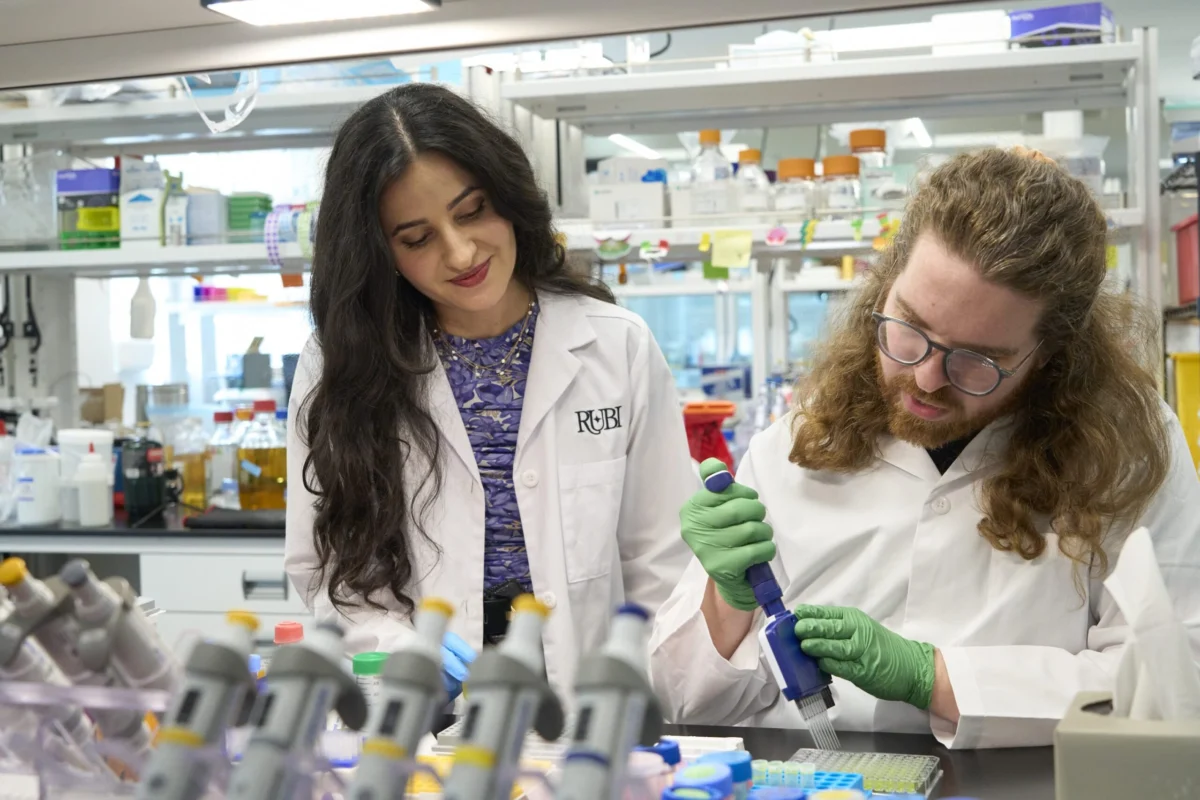
Rubi’s innovation lies in its unique biological method for producing cellulose. Unlike other startups that might employ engineered bacteria within fermenters or chemical catalysts to convert carbon dioxide, Rubi harnesses the power of enzymes. This enzyme-based "cascade" system allows the company to process waste carbon dioxide and rapidly synthesize cellulose. Neeka Mashouf explained that within minutes of adding CO2 to an aqueous solution containing these enzymes, white cellulose begins to appear inside the reactor. This process not only circumvents the need for petroleum-derived inputs but also offers a sustainable alternative to tree-based cellulose, mitigating deforestation and the associated environmental costs.
The inspiration for this enzymatic approach emerged from a collaborative effort between Neeka Mashouf, a scientist with a background in new materials research, and her twin sister, Leila Mashouf, who was studying medicine at Harvard Medical School. Their exhaustive review of existing technologies continually led them back to enzymes as the most efficient and scalable solution. The enzyme industry itself is a massive, well-established sector, already critical for applications ranging from high-fructose corn syrup production to wastewater treatment. This existing infrastructure and mature technology base mean that "the capacity is out there already and can be very low cost," according to Mashouf, offering a significant advantage for scaling Rubi’s operations. Furthermore, Rubi has integrated advanced AI and machine learning methods to enhance the efficacy and stability of its enzymes, optimizing the conversion process and ensuring consistent, high-quality output.
Funding and Strategic Partnerships Pave the Way for Scalability
The recent $7.5 million funding round marks a pivotal moment for Rubi, providing the capital necessary to transition from laboratory-scale proof-of-concept to a demonstration-scale production system. This system is engineered to produce tens of tons of cellulosic material, with CO2 as its primary ingredient. The round was spearheaded by prominent investors AP Ventures and FH One Investments, with significant participation from CMPC Ventures, H&M Group, Talis Capital, and Understorey Ventures. This diverse syndicate of investors, including strategic partners like H&M Group—a major player in the apparel industry—underscores the broad confidence in Rubi’s technology and its potential to disrupt the textile supply chain.
The involvement of CMPC Ventures, the venture capital arm of one of the largest pulp and paper companies in Latin America, further highlights the potential for Rubi’s technology to integrate with and transform traditional cellulose-producing industries. Their investment signals an acknowledgment from established players of the need for more sustainable sourcing methods and potentially new revenue streams derived from carbon capture.
Rubi’s market traction is already evident, with the startup securing more than $60 million in non-binding off-take agreements with several partners. These agreements are crucial indicators of future demand and demonstrate the commercial viability perceived by major brands. The company has also conducted extensive material testing with 15 pilot partners, including industry giants like H&M, Patagonia, and Walmart. These collaborations are invaluable, providing critical feedback on material performance, process integration, and market acceptance. For brands like Patagonia, known for its deep commitment to environmental stewardship, partnering with Rubi aligns perfectly with its mission to reduce its ecological footprint and pioneer sustainable materials. For mass-market retailers like H&M and Walmart, these partnerships represent a strategic move to address growing consumer demand for sustainable products and future-proof their supply chains against environmental regulations and resource scarcity.
Transforming Supply Chains and Regional Production
One of the most compelling implications of Rubi’s technology is its potential to localize and shorten textile and raw material supply chains. As Neeka Mashouf noted, "These textile and raw material supply chains are very long." The current globalized model often involves sourcing raw materials from one continent, processing them in another, and manufacturing garments in yet another, leading to substantial transportation-related emissions and supply chain vulnerabilities.
Rubi’s ability to produce textile-grade cellulose pulp from captured CO2 offers a unique opportunity for regional production, particularly in areas like the U.S., where such capabilities are currently nonexistent. This localization could foster greater supply chain resilience, reduce lead times, and significantly lower the carbon footprint associated with logistics. Moreover, by transforming an abundant waste product (CO2) into a valuable resource, Rubi’s process could create new economic opportunities and strengthen domestic manufacturing capabilities in the textile sector.
The Road Ahead: Challenges and Broader Vision
While Rubi’s technology presents a promising pathway to a more sustainable future, the journey from demonstration scale to widespread industrial adoption involves inherent challenges. Scaling up biological processes efficiently and cost-effectively remains a significant hurdle for many bio-tech companies. Ensuring the continuous, high-volume production of cellulose that meets the stringent quality requirements of the textile industry will be critical. Rubi’s current reactor design, fitting inside shipping container-sized modules, offers modularity, which can aid in distributed production, but moving towards continuous production, as the company plans, will be key for economic competitiveness.
Despite these challenges, Rubi’s ambition extends far beyond the apparel industry. Mashouf envisions the technology as a versatile platform. "This really is a platform," she stated. "We think of it as a platform to make all the important chemicals and materials across the economy in a low-cost way." Cellulose is a ubiquitous polymer used in a vast array of products, from paper and packaging to construction materials, pharmaceuticals, and food additives. If Rubi can successfully scale its CO2-to-cellulose process and prove its economic viability, it could unlock a new paradigm for industrial production, where carbon emissions are not merely mitigated but actively utilized as a feedstock for a wide range of essential materials.
Implications for a Sustainable Future
Rubi’s innovation represents a significant step forward in the broader landscape of carbon capture utilization (CCU) technologies and the drive towards a circular economy. By transforming a greenhouse gas into a valuable, renewable material, the company contributes to several critical environmental objectives:
- Decarbonization: Directly removes CO2 from industrial emissions or the atmosphere, reducing the carbon footprint of material production.
- Resource Conservation: Reduces reliance on virgin natural resources, such as trees, thereby mitigating deforestation, land degradation, and biodiversity loss.
- Waste Reduction: Offers a potential solution for textile waste by providing a sustainable alternative to materials that often end up in landfills or incinerators. While Rubi’s current focus is on creating new cellulose, its approach sets a precedent for sustainable material generation that could complement textile recycling efforts.
- Supply Chain Resilience: Enables localized production, reducing the environmental impact of global shipping and making supply chains less vulnerable to geopolitical disruptions.
The collaboration between science, engineering, and venture capital, as exemplified by Rubi’s journey, is crucial for accelerating the transition to a sustainable global economy. As consumer demand for eco-friendly products continues to grow, and regulatory pressures on industries intensify, companies like Rubi will play an increasingly vital role in redefining how we produce, consume, and interact with the materials that shape our world. The demonstration scale of Rubi’s cellulosic production system, fueled by its recent investment, is not just a technological milestone; it’s a beacon of hope for a future where fashion and industry can thrive in harmony with the planet. The upcoming TechCrunch event in San Francisco in October 2026 could very well be a stage where further advancements and commercial rollouts of such transformative technologies are unveiled, marking continued progress in the global effort to combat climate change and resource depletion.
About the Author