The burgeoning artificial intelligence industry, fueled by an insatiable demand for computational power, faces a critical bottleneck: its monumental and erratic electricity consumption. While new processing techniques continue to push the boundaries of AI capabilities, the infrastructure supporting them struggles to manage the dynamic relationship with the electrical grid, forcing data centers to throttle down GPU usage by as much as 30%. This inefficiency translates directly into billions of dollars in squandered investment and lost potential, a problem that Nvidia CEO Jensen Huang starkly highlighted at his company’s annual GTC conference, stating, "There is so much power squandered in these AI factories. Every unused watt is revenue lost." In response to this escalating crisis, Tel Aviv-based startup Niv-AI has emerged from stealth, announcing $12 million in seed funding to deploy an innovative solution aimed at precisely measuring and efficiently managing GPU power use.
The Escalating Energy Crisis of Artificial Intelligence
Artificial intelligence, particularly the training and inference of large language models (LLMs) and complex deep learning algorithms, has become one of the most power-intensive endeavors of the digital age. Unlike traditional computing workloads, AI tasks on Graphics Processing Units (GPUs) exhibit highly volatile power profiles. These processors, often numbering in the thousands within a single "frontier lab," switch between intensive computation and rapid communication with other GPUs, generating frequent, millisecond-scale power demand surges.
These unpredictable surges present an unprecedented challenge for data center operators. Current power management systems, designed for more stable, predictable loads, are ill-equipped to handle the micro-fluctuations characteristic of AI workloads. To prevent brownouts or blackouts and ensure continuous operation, data centers resort to expensive and inefficient strategies. One common approach is to overprovision power, paying for temporary energy storage solutions like uninterruptible power supplies (UPS) and battery banks designed to cover peak surges. A more drastic, and economically damaging, measure is to intentionally throttle GPU usage, effectively operating at 70% or less of their purchased capacity. This directly undermines the return on investment in incredibly expensive chips and infrastructure, hindering the very innovation they are meant to foster.
Industry analysts estimate that the global data center market, already consuming approximately 1-2% of the world’s electricity, is poised for exponential growth, largely driven by AI. The International Energy Agency (IEA) has projected that electricity consumption by data centers, AI, and cryptocurrencies could double by 2026, reaching over 1,000 TWh annually. Within this, AI is the fastest-growing segment. Each large language model training run can consume electricity equivalent to hundreds of homes for months, translating into thousands of tons of CO2 emissions. The financial implications are equally staggering; a single large AI data center can incur annual electricity costs running into tens of millions of dollars, and even a 10% improvement in efficiency can yield substantial savings and unlock significant additional computational capacity.
Niv-AI’s Solution: Precision Power Intelligence
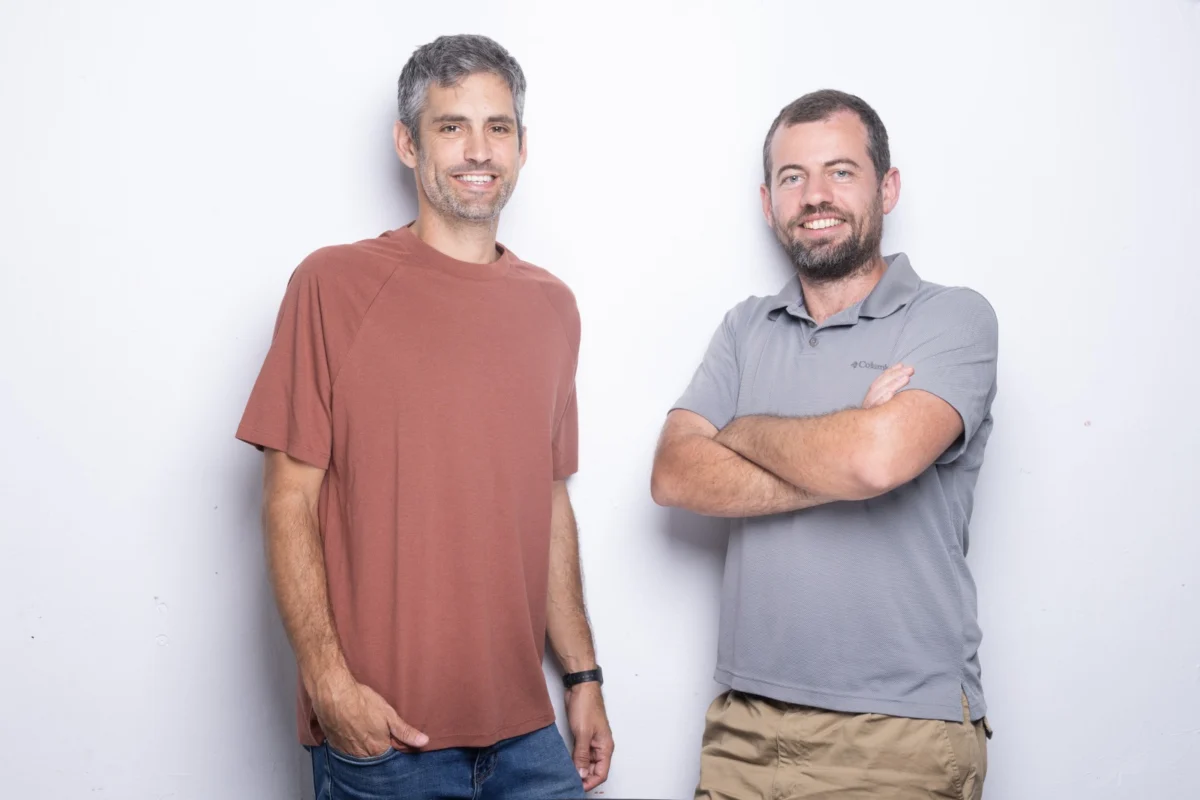
Founded last year by CEO Tomer Timor and CTO Edward Kizis, Niv-AI is positioning itself as the crucial "intelligence layer" missing between data centers and the electrical grid. The company’s innovative approach centers on granular, real-time data collection and AI-driven predictive analytics.
The first phase of Niv-AI’s roadmap involves the deployment of proprietary rack-level sensors. These sensors are designed to detect and measure power usage at the millisecond level directly on GPUs, both within Niv-AI’s own test environments and alongside its design partners. This unprecedented level of granularity aims to overcome the limitations of existing data center infrastructure, which typically monitors power at the rack or even row level, failing to capture the dynamic, micro-fluctuations that cause instability.
By collecting this precise data, Niv-AI seeks to build a comprehensive understanding of the specific power profiles associated with different deep learning tasks. For instance, the power signature of a model undergoing a training epoch might differ significantly from one performing inference or communicating data between nodes. This detailed understanding is critical for developing sophisticated mitigation techniques that allow data centers to unlock more of their existing capacity without risking grid instability or hardware failure.
The ultimate goal, as envisioned by the founders, is to leverage this collected data to train an advanced AI model. This "copilot" for data center engineers would be capable of predicting and synchronizing power loads across the entire data center. Imagine a system that can anticipate a power surge from a cluster of GPUs about to begin a complex calculation and proactively adjust power distribution or intelligently schedule workloads to smooth out demand peaks. Such a system would not only optimize power utilization but also potentially enable demand response programs, where data centers can dynamically adjust their consumption in response to grid signals, becoming a more harmonious partner with utility providers.
Investment and Industry Backing
Niv-AI’s innovative vision has attracted significant attention from the investment community, culminating in a $12 million seed funding round. The round saw participation from prominent venture capital firms including Glilot Capital, Grove Ventures, Arc VC, Encoded VC, Leap Forward, and Aurora Capital Partners. While the company declined to disclose its valuation, the substantial seed funding underscores investor confidence in Niv-AI’s potential to address a critical and costly problem in the rapidly expanding AI infrastructure market.
Lior Handelsman, a partner at Grove Ventures and a member of Niv-AI’s board, emphasized the urgency of the situation, stating, "We just can’t continue building data centers the way we build them now." His comment highlights a growing consensus within the industry that current data center design and operational paradigms are unsustainable in the face of AI’s relentless growth. The capital infusion will enable Niv-AI to accelerate its sensor deployment, refine its AI models, and scale its operations to meet anticipated demand.
Broader Implications for Grid Stability and Sustainability
The implications of Niv-AI’s technology extend far beyond individual data centers. The erratic power demands of AI workloads pose a significant threat to the stability of regional electrical grids. Utility companies, designed to manage relatively predictable demand patterns, view the sudden, massive, and unpredictable power draws from AI data centers with increasing apprehension. As Tomer Timor articulated, "The grid is actually afraid of the data center consuming too much power at a specific time. The problem we’re looking at is a problem with two sides of the rope. One is to try to help the data centers utilize more GPUs, and hopefully make more of the power that they’re already paying for. On the other hand, you can also create much more responsible power profiles in between the data centers and the grid."
By enabling data centers to create "much more responsible power profiles," Niv-AI’s solution could foster a more symbiotic relationship between these energy-intensive facilities and the grid operators. This could lead to:
- Improved Grid Stability: More predictable and smoother demand from data centers would reduce the risk of localized grid instability, preventing potential blackouts or surges that could impact residential and commercial consumers.
- Reduced Need for New Infrastructure: By optimizing existing power consumption, Niv-AI could help mitigate the urgent need for new power generation and transmission infrastructure, which often faces significant land-use and environmental hurdles.
- Enhanced Energy Efficiency: A more efficient use of power directly translates to a reduced carbon footprint for the AI industry, aligning with global sustainability goals. This is particularly crucial as the environmental impact of AI becomes a growing concern for policymakers and the public.
- Economic Benefits for Utilities: Data centers capable of dynamic load management could participate in demand response programs, providing valuable flexibility to grid operators and potentially earning revenue for their responsiveness.
The Road Ahead: Pilots and Global Ambition
Niv-AI expects to have an operational system deployed in a handful of U.S. data centers within the next six to eight months. This initial rollout will serve as a crucial validation phase, allowing the company to fine-tune its technology in real-world environments and demonstrate tangible improvements in GPU utilization and power management. Hyperscalers, who are increasingly struggling with land-use restrictions and supply chain hiccups in their efforts to build new data centers, represent a prime target market for Niv-AI. Unlocking existing capacity through intelligent power management offers a faster, less capital-intensive route to expansion than building entirely new facilities.
The company’s long-term vision positions its product as an essential "intelligence layer" that bridges the operational chasm between data center hardware and the broader electrical grid. This vision aligns with broader trends in smart grid development and the increasing digitalization of energy management. As AI continues its relentless march into every sector of the economy, efficient and sustainable power management will not merely be a cost-saving measure but a fundamental requirement for continued innovation and growth.
The TechCrunch event in San Francisco, scheduled for October 13-15, 2026, where insights from innovators like Niv-AI will likely be discussed, underscores the ongoing global dialogue about the future of technology and its infrastructure. Niv-AI’s emergence signals a critical turning point, offering a beacon of efficiency in an industry grappling with unprecedented energy demands and the imperative to build a more sustainable future for artificial intelligence.
About the Author