When Allison Yang relocated from China to the United States two years ago, she entered a subculture where personal identity was often distilled into a series of alphanumeric codes. At professional gatherings and social mixers in New York City, the former journalist observed fellow immigrants discussing their legal status with the intensity and terminology of high-stakes card players. Terms like H-1B, OPT, L-1, O-1, and NIW—the complex categories of the U.S. visa system—served as the opening gambit in nearly every introduction. For these individuals, "playing" a certain visa category determined the trajectory of their careers, their ability to travel, and their very right to remain in the country.
Recognizing that this intricate "foreign language" of immigration remains largely indecipherable to native-born Americans, Yang, the founder of the game studio Reality Reload, set out to bridge the empathy gap. Her solution is H1B.Life, a mobile simulation game slated for release in the summer of 2024. The project aims to demystify the arduous process of securing a U.S. work visa by placing players in the shoes of an international student attempting to navigate the transition from academia to the American workforce. By gamifying the bureaucratic labyrinth, Yang hopes to illustrate the precariousness of life under an immigration system that many advocates describe as increasingly restrictive and unpredictable.
The Technical Labyrinth: Understanding the H-1B Framework
To understand the stakes of H1B.Life, one must first grasp the technical framework of the H-1B program, which serves as the game’s primary inspiration. Established under the Immigration Act of 1990, the H-1B visa is a non-immigrant classification that allows U.S. employers to temporarily employ foreign workers in specialty occupations. These roles typically require theoretical or technical expertise in fields such as architecture, engineering, mathematics, physical sciences, social sciences, medicine and health, education, business specialties, accounting, law, and the arts.
The program is governed by a strict annual numerical limit, or "cap." Under current federal law, the United States Citizenship and Immigration Services (USCIS) is authorized to issue 65,000 new H-1B visas each fiscal year. An additional 20,000 visas are reserved for beneficiaries who have earned a master’s degree or higher from a U.S. institution of higher education. Because the demand for these visas consistently outstrips the supply, USCIS utilizes a computer-generated lottery system to select which petitions will be processed.
In recent years, the disparity between applicants and available slots has reached critical levels. For the Fiscal Year 2024 cycle, USCIS received approximately 780,884 prospective registrations, a significant increase from the 483,927 received for FY 2023. This surge in applications caused the selection rate to plummet to roughly 24.8%, a stark contrast to the 80% success rates seen in previous decades. It is this environment of dwindling odds and high-stakes uncertainty that H1B.Life seeks to replicate.
Gameplay Mechanics: Strategy Meets Stochasticity
H1B.Life is structured as a visual novel, a genre that prioritizes narrative depth and character development. Players control a protagonist who has recently completed their studies in the U.S. and must secure an H-1B visa to continue their professional journey. The game challenges players to make a series of critical life decisions, each affecting three core metrics: financial stability, social support networks, and personal resourcefulness.

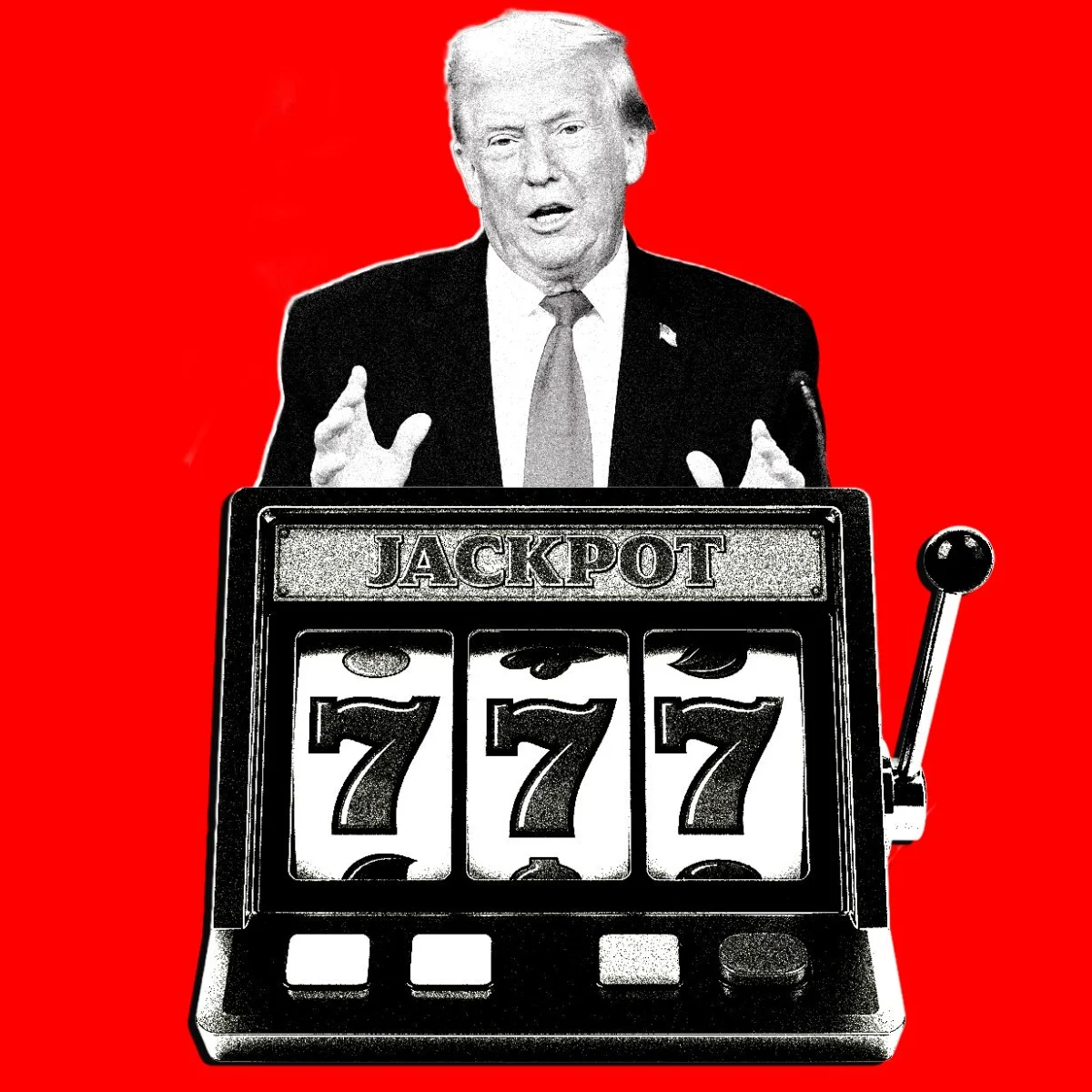
The game diverges from traditional "choose-your-own-adventure" formats by introducing a "slot machine" mechanic. This feature represents the external, uncontrollable factors that often dictate an immigrant’s fate. Periodically, the game’s internal engine generates random "world events"—ranging from shifts in federal immigration policy and financial market crashes to unforeseen global crises. These events can instantly invalidate a player’s carefully planned strategy, forcing them to adapt to a new reality or face deportation.
According to narrative designer Andrea Saravia Pérez, an immigrant from Colombia who joined the Reality Reload team in early 2024, the inclusion of randomness is essential for authenticity. "We wanted to show that even if you do everything right—if you study hard, get a high-paying job, and follow every rule—your future can still be derailed by factors entirely outside of your control," Pérez stated. This design choice reflects the "lottery" nature of the real-world H-1B system, where merit often takes a backseat to statistical probability.
A Chronology of Development and Industry Support
The development of H1B.Life began in earnest as a response to the hardening of U.S. immigration rhetoric over the last several years. The team, comprised of nine developers, is largely composed of individuals who have personally navigated the visa system. Many are from China, though the studio intentionally recruited talent from various global backgrounds to ensure the narrative captures a broad spectrum of the immigrant experience.
In March 2024, Reality Reload presented a prototype of H1B.Life at the annual Game Developers Conference (GDC) in San Francisco. The project received significant attention from industry peers, not for its commercial potential—the developers have stated they do not expect the game to be highly profitable—but for its social utility. The project has been sustained through support from philanthropic organizations and is currently preparing for a Kickstarter campaign to secure the final funding necessary for its summer launch.
The timeline of the game’s development coincides with a broader trend in the independent gaming sector: the rise of "serious games" or "empathy games" that tackle complex political and social issues. By utilizing interactive media, developers like Yang are able to convey the emotional weight of policy decisions in a way that traditional journalism or academic reports often cannot.
The Psychological Toll: From "Couch Anxiety" to "Crispy Buddha"
A significant portion of the game’s narrative is derived from more than two dozen interviews conducted with real-world H-1B applicants. These interviews revealed a recurring theme of psychological distress and a perceived loss of agency. One anonymous journalist on the development team noted that several interviewees described living in a state of "permanent transience."
One poignant anecdote integrated into the game involves an applicant who refused to buy a high-quality couch for years. The fear was that if their visa were denied or revoked, they would have to liquidate their belongings and leave the country on short notice. This "couch anxiety" serves as a metaphor for the inability to build a stable, long-term life while under temporary status.

To balance these heavy themes, the developers included elements of "immigrant folklore." One of the game’s "Buddhas" in the slot machine mechanic is the "Crispy Buddha," a character modeled after a chicken. This is a direct reference to a modern urban legend within the Chinese immigrant community: the belief that eating at Chick-fil-A can improve one’s luck in the visa lottery. This superstition originated from online forum posts where applicants claimed to have received their selection notices while eating fried chicken. Every April, as the lottery results are announced, social media platforms are flooded with Chick-fil-A logos as digital talismans—a phenomenon H1B.Life uses to provide moments of levity amidst the "downward doom spiral" of the application process.
Global Context and Broader Implications
While H1B.Life focuses on the American system, its themes have resonated internationally. Yang reports interest from developers in Germany and Australia who are interested in licensing the game’s framework to simulate the immigration hurdles in their respective countries. This global interest highlights a shift in international politics, as many developed nations grapple with aging populations and labor shortages while simultaneously facing domestic pressure to tighten border controls.
The game arrives at a time when the H-1B program is undergoing significant regulatory changes. In early 2024, the Department of Homeland Security (DHS) announced a final rule to "strengthen the integrity of and reduce potential for fraud" in the H-1B registration process. The new "beneficiary-centric" selection process ensures that each individual has an equal chance of selection, regardless of how many registrations are submitted on their behalf by different employers. While these changes aim to make the system fairer, they do not increase the number of available visas, leaving the fundamental "supply and demand" crisis unaddressed.
Fact-Based Analysis of the Project’s Impact
The significance of H1B.Life lies in its potential to serve as a pedagogical tool. For native-born citizens, the game provides a transparent look at the "hidden" requirements of being a legal immigrant: the constant filing fees, the legal consultations, the travel restrictions, and the immense pressure to remain continuously employed.
From an economic perspective, the H-1B program is often debated through the lens of labor competition. However, H1B.Life shifts the focus to the human capital cost of the system. By illustrating how the lottery system can result in the sudden departure of highly skilled, U.S.-educated professionals, the game poses a quiet critique of current immigration efficiency.
As the game nears its summer release, Reality Reload remains focused on its primary mission: fostering sympathy through play. "As long as players come to have fun and are able to sympathize and understand it a little bit more, I think that we’ve done our job as a team," said Pérez. In an era of polarized discourse, H1B.Life represents an attempt to use the language of gaming to translate the complex, often heartbreaking reality of the immigrant journey into an experience that anyone with a smartphone can explore.
About the Author