The U.S. Attorney’s Office for the Southern District of New York has unsealed an indictment charging three individuals, including a co-founder and current senior executive of leading server manufacturer Super Micro Computer, with orchestrating a sophisticated, multi-billion dollar scheme to illegally divert high-performance, Nvidia-powered artificial intelligence servers to China. This significant legal action, unveiled on Thursday, December 5, 2024, underscores the escalating intensity of U.S. efforts to safeguard its technological superiority and prevent the unauthorized transfer of critical AI hardware to geopolitical rivals. The indictment alleges that the illicit operation involved elaborate circumvention tactics, including the use of shell companies, falsified documentation, and strategic misdirection, resulting in estimated sales of approximately $2.5 billion for the server maker since 2024.
The Allegations: A Coordinated Scheme to Evade Export Controls
At the heart of the indictment are Yih-Shyan "Wally" Liaw, a co-founder and current Senior Vice President of Business Development at Super Micro Computer; Ruei-Tsan "Steven" Chang, a sales manager based in Taiwan; and Ting-Wei "Willy" Sun, identified as a contractor. These individuals are accused of conspiring to violate the Export Control Reform Act, a critical piece of legislation designed to protect U.S. national security and foreign policy interests by regulating the export of sensitive technologies. The U.S. government maintains that the servers in question, equipped with advanced Nvidia graphics processing units (GPUs), are subject to strict export controls that explicitly bar their sale to China without a specific license from the U.S. Commerce Department. No such license was obtained for the alleged transactions.
According to the unsealed documents, the defendants employed a complex network and array of deceptive practices to bypass Super Micro Computer’s internal compliance protocols and U.S. export regulations. The scheme reportedly utilized a Southeast Asian company as a crucial middleman, which allegedly compiled fraudulent paperwork to create the illusion that it would be the legitimate end-user of the servers. To further obscure the true destination, a separate logistics firm was purportedly engaged to repackage the servers, concealing their nature before their ultimate shipment to China.
The indictment paints a picture of a deliberate and persistent effort to subvert oversight. It alleges that the defendants attempted to mislead Super Micro’s own compliance team by presenting "dummy" servers at the Southeast Asian company’s storage facilities, while the actual, high-value AI servers had already been clandestinely forwarded to China. Furthermore, they are accused of pressuring the compliance team into approving shipments, indicating a systemic attempt to undermine internal safeguards. The scale of the alleged diversion is staggering, with the indictment highlighting $510 million in sales to the Southeast Asian intermediary, and subsequently to China, occurring in just a concentrated period between late April 2025 and mid-May 2025 alone.
Super Micro Computer’s Response and Market Impact
Following the unsealing of the indictment, shares of Super Micro Computer experienced a sharp decline, plummeting 12% in extended trading on Thursday. The company, while not named as a defendant in the indictment, quickly issued a statement acknowledging the charges against its associates. Super Micro confirmed Liaw’s role as Senior Vice President of Business Development and Chang’s position as a sales manager in Taiwan, adding that Sun was a contractor. In a decisive move, the company announced it had placed both Liaw and Chang on leave and terminated its relationship with Sun.
In its official statement, Super Micro Computer emphasized its commitment to regulatory compliance: "The conduct by these individuals alleged in the indictment is a contravention of the Company’s policies and compliance controls, including efforts to circumvent applicable export control laws and regulations." The company further asserted, "Supermicro maintains a robust compliance program and is committed to full adherence to all applicable U.S. export and re-export control laws and regulations." This swift action signals the company’s intent to distance itself from the alleged illicit activities and reaffirm its commitment to legal and ethical business practices, particularly in the highly scrutinized realm of advanced technology exports.
Chronology of Events and Related Developments
The timeline surrounding this case, both alleged and confirmed, reveals a complex web of activity and scrutiny:
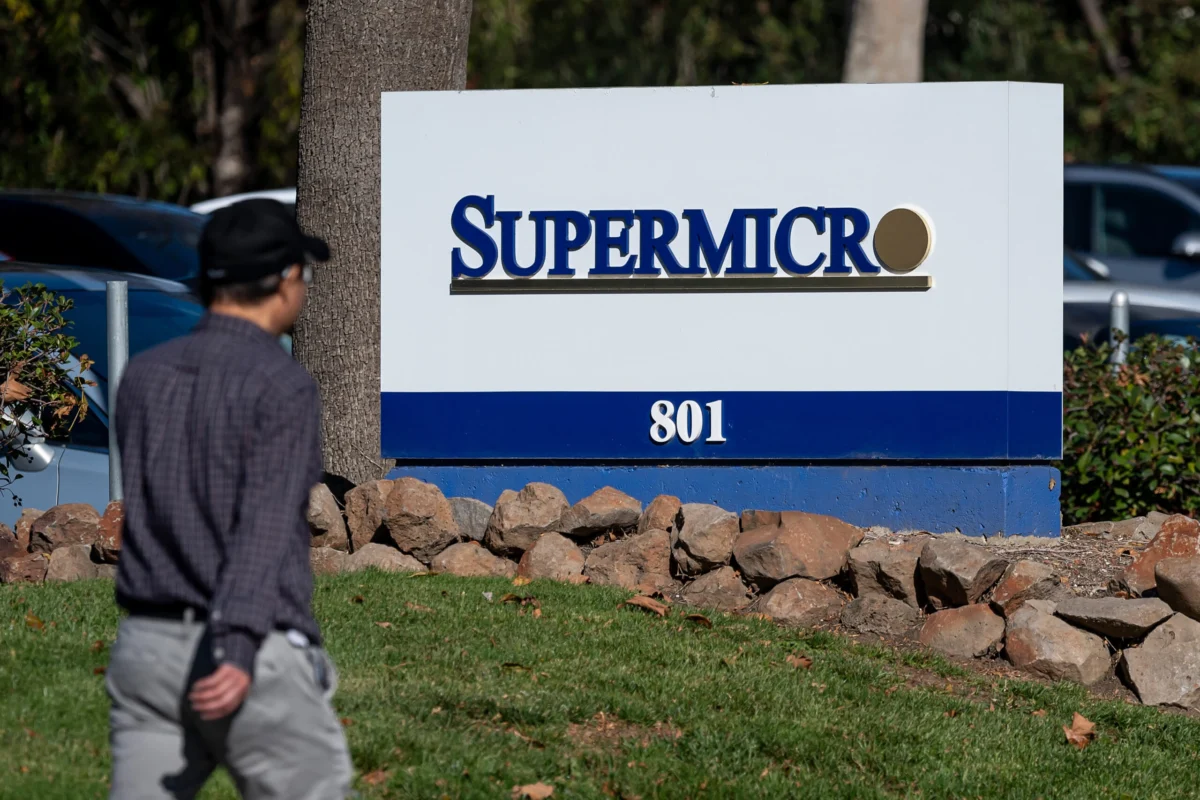
- December 3, 2024: A Bloomberg photograph captures the Super Micro Computer headquarters in San Jose, California, providing a visual timestamp for the company’s operational presence amidst the unfolding investigation.
- "Since 2024": The indictment claims the illegal diversion of servers to China has been ongoing since this period, indicating a sustained effort to circumvent controls.
- October 30, 2024: Super Micro Computer announced that its long-standing auditor, Ernst & Young, had resigned. This resignation occurred after the auditor had reportedly raised concerns months earlier, though the nature of those concerns was not immediately linked to export controls at the time.
- November 18, 2024: Super Micro moved swiftly to secure a new auditor, BDO, to ensure its compliance with Nasdaq listing requirements, a move that saw its shares rebound slightly. The timing of this auditor change, preceding the indictment by weeks, may become a point of interest for investigators examining the company’s internal controls.
- Late April 2025 – Mid-May 2025: A specific window during which $510 million worth of servers allegedly passed through the Southeast Asian middleman en route to China, as detailed in the indictment.
- Last Summer (likely 2025): Nvidia reportedly received licenses to export its H20 chip to China, a less powerful, China-specific variant designed to comply with U.S. export restrictions. Nvidia CEO Jensen Huang reportedly agreed to provide the U.S. with 15% of its sales in China under this arrangement, highlighting the delicate balance chipmakers navigate.
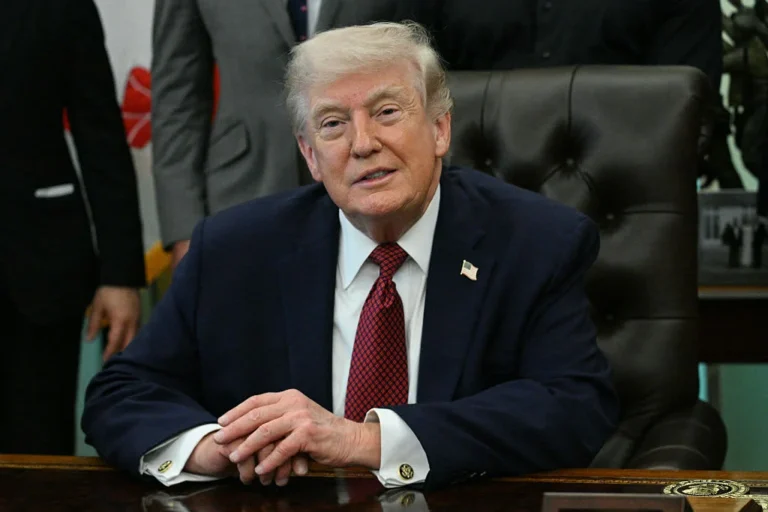
- December (likely 2025 or 2026): Former U.S. President Donald Trump, in a reported conversation with Chinese President Xi Jinping, indicated that the U.S. would permit Nvidia to ship H200 GPUs to China, but "under conditions that allow for continued strong National Security." This statement, if accurately reported, suggests an evolving and potentially complex political landscape surrounding these export controls.
- Earlier this week (preceding the indictment): Nvidia CEO Jensen Huang confirmed that the chipmaker was restarting manufacturing to fulfill H200 purchase orders from China. The H200 is one of Nvidia’s most powerful AI accelerators, and its availability in China, even under specific conditions, underscores the immense demand and the strategic importance of these chips.
- Thursday, December 5, 2024: The U.S. Attorney’s Office for the Southern District of New York unsealed the indictment. Liaw and Sun were arrested on Thursday, while Chang remains a fugitive.
The Broader Context: U.S.-China Tech Rivalry and AI Supremacy
This indictment unfolds against the backdrop of an intensifying technological rivalry between the United States and China, particularly in the critical domain of artificial intelligence. The U.S. government views advanced AI chips, such as those produced by Nvidia, as dual-use technologies with significant implications for both commercial innovation and military applications. The fear is that unrestricted access to these chips could accelerate China’s development of advanced AI capabilities, potentially eroding U.S. national security advantages.
The U.S. has implemented a series of stringent export controls, initially under the Trump administration and significantly expanded by the Biden administration, specifically targeting China’s access to high-end semiconductors and chip-making equipment. These controls aim to hobble China’s efforts to achieve self-sufficiency in advanced semiconductors and to limit its ability to leverage AI for military modernization, surveillance, and other strategic objectives.
Nvidia’s GPUs, particularly its H100 and the newer H200 series, are considered the gold standard for training and deploying generative AI models. Companies worldwide, from American giants like Anthropic and OpenAI to Chinese rivals such as DeepSeek, are in a fierce race to develop more powerful AI systems, a race heavily reliant on the availability of these cutting-edge processors. The insatiable global demand for Nvidia’s chips, coupled with their critical strategic value, creates powerful incentives for illicit trade and circumvention of controls.
The U.S. government has been actively investigating how high-powered chips have managed to reach China without authorization, despite the strict export regulations. This case provides a significant answer, detailing a sophisticated network specifically designed to bypass these controls. "Crimes involving sensitive technology must be met with swift action," stated Jay Clayton, the Trump-appointed U.S. Attorney for the Southern District of New York and former chairman of the Securities and Exchange Commission. "Otherwise the law is meaningless." His statement underscores the government’s resolve to enforce these regulations vigorously.
Implications and Future Outlook
The legal proceedings against Liaw, Chang, and Sun will undoubtedly draw considerable attention. If convicted, the individuals face severe penalties, including lengthy prison sentences and substantial fines, sending a strong deterrent message to others contemplating similar illicit activities. The fact that Liaw is a co-founder and holds significant Super Micro shares (valued at $464 million, according to FactSet) adds another layer of complexity and potential scrutiny to the case.
For Super Micro Computer, while not a named defendant, the allegations against its senior personnel raise serious questions about its corporate governance, internal compliance mechanisms, and oversight capabilities. Even with a "robust compliance program" as stated, the alleged success of the defendants in circumventing these controls for billions of dollars in sales suggests potential vulnerabilities or failures that will likely necessitate a thorough internal review and potentially external audits. The company’s previous auditor change, though not explicitly linked to these allegations, may now be re-examined in a new light.
The case also has broader implications for the effectiveness of U.S. export controls. It demonstrates the ingenuity and determination of those seeking to bypass restrictions, highlighting the ongoing challenge for regulators to stay ahead of sophisticated evasion tactics. It reinforces the need for continuous vigilance, intelligence gathering, and international cooperation to enforce these critical measures.
Moreover, the incident could influence the delicate balance Nvidia is attempting to strike between complying with U.S. national security directives and maintaining access to the lucrative Chinese market. Nvidia has developed specific, less powerful chips for the Chinese market to meet export control requirements, but the alleged diversion of higher-end servers underscores the persistent demand for the most advanced hardware.
Ultimately, this indictment serves as a stark reminder of the high stakes involved in the global competition for technological supremacy. As artificial intelligence continues to reshape industries and geopolitical power dynamics, the battle over access to its foundational hardware will only intensify, making the enforcement of export controls a cornerstone of national security policy. The outcome of this case will not only determine the fate of the accused individuals but also send ripples across the technology sector and the broader landscape of U.S.-China relations.
About the Author