The technological landscape of 2023 has been fundamentally reshaped by the rapid proliferation of artificial intelligence, transitioning from experimental laboratory projects to essential utilities for the modern workforce. This shift, often characterized by industry analysts as the "Generative AI Revolution," has introduced a suite of tools designed to mitigate the burden of repetitive tasks, optimize creative workflows, and enhance data-driven decision-making. As enterprises and individual creators alike seek to navigate an increasingly digital economy, the adoption of AI-driven software has moved from a competitive advantage to a baseline requirement for operational efficiency.
The emergence of these tools follows a significant chronological trajectory in machine learning development. While the foundations were laid with the 2017 introduction of the Transformer architecture by Google researchers, the commercial explosion reached its zenith in late 2022 and early 2023. The subsequent months have seen an unprecedented rate of iteration, with tools specializing in natural language processing, synthetic media generation, and automated software development. This report examines the top ten AI tools currently defining the market, analyzing their functional capabilities, technical foundations, and broader economic implications.
A Chronology of the Generative AI Explosion
To understand the current utility of these tools, one must look at the timeline of their emergence. In mid-2020, the release of GPT-3 by OpenAI demonstrated that large language models (LLMs) could perform a variety of tasks without specific retraining. By 2022, the focus shifted to "multimodal" AI, capable of processing and generating both text and imagery. The launch of ChatGPT in November 2022 served as the catalyst for the current market state, reaching 100 million monthly active users within just two months—the fastest growth for a consumer application in history. This milestone forced a pivot across the tech sector, leading to the integration of AI into established platforms like Microsoft Office, Google Workspace, and Adobe Creative Cloud throughout 2023.
Leading Natural Language and Communication Tools
1. ChatGPT: The Standard in Conversational AI
ChatGPT, developed by OpenAI, remains the most prominent tool in the current AI ecosystem. Built upon the GPT-3.5 and GPT-4 architectures, it functions as a sophisticated large language model capable of generating human-like text across a diverse array of domains. Its utility spans from drafting complex legal documents to debugging software code and providing educational tutoring.
According to a study by the Massachusetts Institute of Technology (MIT), professionals using ChatGPT for writing tasks increased their productivity by 37% and reported a 20% improvement in output quality. However, the tool is not without its challenges. The phenomenon of "hallucination"—where the AI confidently asserts false information—remains a significant hurdle for users in high-stakes environments. Furthermore, ethical concerns regarding data privacy and the potential for biased output have prompted several Fortune 500 companies to implement internal usage policies.
2. Grammarly: The Evolution of Writing Assistance
Grammarly has transitioned from a traditional spell-checker to a comprehensive AI writing partner. By leveraging deep learning and natural language processing, the platform provides real-time suggestions that go beyond syntax. Its 2023 updates introduced generative features that allow users to rewrite entire paragraphs for specific tones, such as "professional," "persuasive," or "concise." For corporate communications, this ensures brand consistency and reduces the time spent on manual editing. Data from Grammarly’s internal research suggests that their AI saves users an average of 1.2 hours per week, a figure that scales significantly across large organizations.
3. Compose AI: Streamlining Digital Correspondence
Compose AI specializes in natural language generation (NLG) with a focus on reducing the friction of daily communication. Functioning primarily as a browser extension, it utilizes structured data to automate the drafting of emails and reports. By learning a user’s specific writing style, the tool provides "autocompletion" for entire sentences, effectively acting as a predictive text engine for professional settings. While highly efficient for routine tasks, industry experts note that the tool requires human oversight to ensure that the nuances of interpersonal communication are maintained.
Visual and Multimedia Innovation
4. DALL-E: The Frontier of Synthetic Imagery
DALL-E, another OpenAI flagship, has revolutionized the field of graphic design and digital art. By interpreting natural language prompts, it generates high-resolution, original images that can be used for commercial marketing, architectural visualization, and conceptual art. The 2023 iterations have improved spatial reasoning and detail accuracy, allowing for the creation of photorealistic assets. This has sparked a broader debate regarding intellectual property; while some designers view it as a powerful brainstorming tool, others raise concerns about the training data’s origins and the potential displacement of entry-level illustrators.
5. Lumen5: Automated Video Production for Marketing
In an era where video content dominates social media engagement, Lumen5 addresses the bottleneck of production costs. The platform uses AI to transform text-based content, such as blog posts or whitepapers, into professional-grade videos. It automatically selects relevant stock footage, syncs audio, and applies transitions based on the narrative structure of the input text. Marketing data indicates that video content generates 1,200% more shares than text and images combined, making tools like Lumen5 essential for brands operating with limited creative budgets.
Software Development and Technical Automation
6. OpenAI Codex: The Foundation of Modern Coding
OpenAI Codex is the engine behind many of the world’s most advanced programming assistants. It is a model trained on billions of lines of public code, capable of translating natural language comments into functional programming logic. Codex supports over a dozen languages, including Python, JavaScript, and C++. Its impact on the tech industry is measurable; GitHub, which utilizes Codex for its "Copilot" feature, reported that developers using AI assistance were able to complete tasks 55% faster than those working manually.
7. Tabnine: Private and Secure Code Completion
While Codex offers broad capabilities, Tabnine has carved out a niche by focusing on privacy and local deployment. It provides AI-driven code completion that can be trained on a company’s private codebase, ensuring that proprietary logic remains secure. This is particularly relevant for sectors like fintech and defense, where data sovereignty is a primary concern. Tabnine’s ability to predict the next few lines of code based on contextual patterns significantly reduces the cognitive load on software engineers, allowing them to focus on high-level architecture rather than repetitive syntax.
Marketing, SEO, and Workflow Optimization
8. Jasper AI: Specialized Content Marketing
Jasper AI (formerly Jarvis) is tailored specifically for the needs of digital marketers and copywriters. Unlike general-purpose LLMs, Jasper includes templates for high-conversion ad copy, SEO-optimized blog headers, and social media captions. It integrates directly into the marketing workflow, allowing teams to scale content production without a linear increase in headcount. Analysts observe that Jasper’s success lies in its "brand voice" feature, which allows companies to upload style guides so the AI-generated text adheres to specific corporate identities.
9. Surfer SEO: Data-Driven Search Optimization
Surfer SEO utilizes AI to analyze top-ranking pages on search engine results pages (SERPs) and provides a blueprint for content creation. Instead of relying on guesswork, the tool uses machine learning to identify optimal keyword density, word count, and heading structures. In the 2023 digital landscape, where Google’s algorithms increasingly prioritize "Experience, Expertise, Authoritativeness, and Trustworthiness" (E-E-A-T), Surfer SEO serves as a bridge between creative writing and technical requirements.
10. Zapier: The Glue of the AI Ecosystem
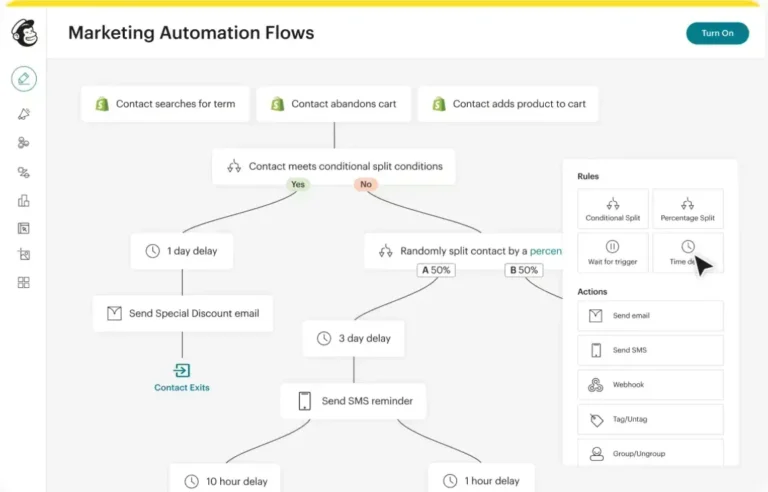
Zapier represents the "no-code" automation movement, allowing users to connect disparate web applications without writing a single line of code. Its recent integration of AI allows for "Natural Language Actions," where users can describe an automated workflow (e.g., "When I get a new lead in Typeform, summarize it with ChatGPT and send it to Slack") and the system builds the "Zap" automatically. This democratization of automation allows small business owners to build complex backend systems that were previously the sole domain of IT departments.
Broader Impact and Ethical Implications
The rapid adoption of these tools has elicited a range of responses from global stakeholders. Regulatory bodies, most notably in the European Union, have moved to draft the "AI Act," which seeks to categorize AI tools based on risk levels. Industry leaders, including those at the helm of OpenAI and Google, have participated in congressional hearings to discuss the need for guardrails against misinformation and job displacement.
From an economic perspective, the "AI-augmented" workforce is expected to contribute trillions of dollars to the global GDP over the next decade. However, the transition period presents challenges. Educational institutions are currently grappling with how to assess student performance in an age of ubiquitous AI writing tools, while the legal sector is seeing a rise in copyright litigation involving AI-generated content.
Future Outlook and Conclusion
As 2023 progresses, the distinction between "AI tools" and "standard software" is beginning to blur. We are entering an era of "Embedded AI," where these capabilities are integrated natively into every digital interface. The top 10 tools identified in this report represent the vanguard of this movement, offering a glimpse into a future where human creativity is perpetually assisted by algorithmic efficiency.
For businesses and individuals, the primary takeaway is the necessity of "AI literacy." The ability to effectively prompt, supervise, and refine AI output is becoming a foundational skill. While these tools significantly "make life easier" by removing the drudgery of routine tasks, they also demand a higher level of critical thinking and ethical oversight from their human users. As the technology continues to evolve, the most successful adopters will be those who view AI not as a replacement for human intellect, but as a powerful extension of it. The current trajectory suggests that by 2024, the tools listed here will have evolved even further, potentially moving from reactive assistants to proactive agents capable of managing complex, multi-stage projects with minimal human intervention.
About the Author