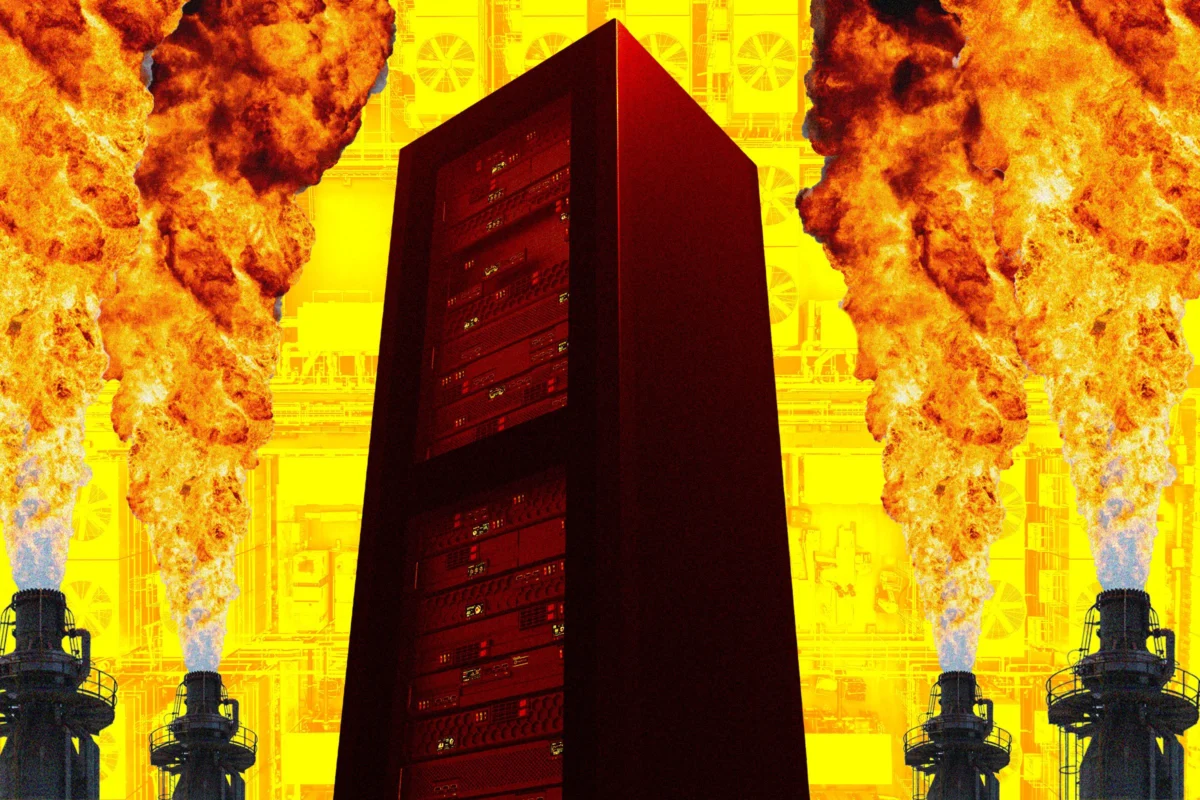
The artificial intelligence powerhouse Anthropic, in its highly anticipated initial public offering (IPO) prospectus filed on Monday, has identified the escalating reliance on private, behind-the-meter natural gas power plants as a primary systemic risk to its long-term operational viability. This disclosure underscores a pivot in the AI industry’s infrastructure strategy, as leading firms move away from traditional grid-connected power toward localized fossil fuel generation to bypass a congested national electrical grid. The filing warns that this massive buildout of natural gas capacity by data center operators could trigger regional price spikes, fuel supply disruptions, and intense competition for resources, potentially hampering the very AI ambitions these facilities were built to support.
A Strategic Shift in Infrastructure Ownership
Since its inception, Anthropic has largely operated by renting computational power from established cloud service providers. Its IPO filing specifically names Amazon, Google, Microsoft, and SpaceX as key partners. However, the company has recently signaled a significant shift in its business model, moving toward direct leasing and development of its own data centers. This transition is intended to reduce dependency on the "Big Tech" triumvirate and provide Anthropic with greater control over its proprietary hardware and energy procurement.
A cornerstone of this new strategy is a $50 billion partnership with Fluidstack, a specialized infrastructure provider. Announced late last year and highlighted in the prospectus, the Fluidstack agreement tasks the firm with data center development and operations services tailored specifically to Anthropic’s needs. The company has already identified several key sites for these developments, including locations in Texas and New York, and is reportedly tied to projects in Louisiana and West Virginia.
In West Virginia, the developer Nscale is working on a project that, according to its own SEC filings, could eventually house one of the largest onsite natural gas power plants in the United States. While this move toward self-sufficiency offers Anthropic more autonomy, it simultaneously exposes the company to the volatile commodities markets that govern natural gas pricing and availability.
The Scaling Crisis: From Grid to Gas
The data center industry is currently facing a bottleneck in the form of the aging U.S. electrical grid. Connecting a massive new facility to the grid can take anywhere from five to ten years in high-demand regions, leading many operators to opt for "behind-the-meter" solutions. These involve building private power plants—predominantly fueled by natural gas—directly on-site to provide immediate and reliable electricity.
Data provided by energy analyst firm Cleanview illustrates the sheer scale of this trend. As of July 2025, behind-the-meter gas projects in development accounted for approximately 20 gigawatts (GW) of capacity. By October 2026, that figure is projected to skyrocket to 110 GW. To put this in perspective, 110 GW is roughly equivalent to the total generating capacity of the state of Texas.
Anthropic’s filing acknowledges that this surge is not happening in a vacuum. "Competition from other natural-gas-fired data centers could leave us exposed to fuel price volatility and supply disruptions that are outside of our control," the company stated. The prospectus further notes that such competition "could drive up the price of natural gas in such areas and may adversely affect our ability to contract for firm fuel supply."
Market Dynamics and the Natural Gas Supply Chain
The surge in demand from the AI sector arrives at a time when the U.S. natural gas market is already under significant pressure. Federal support for natural gas exports and ongoing geopolitical conflicts have turned the United States into a global energy hub, with export demand expected to double over the next decade. U.S. liquefied natural gas (LNG) terminals are increasingly prioritizing international buyers, creating a tug-of-war between domestic industrial consumption and global export markets.
BloombergNEF (BNEF) estimates that grid-connected data centers alone could add 15 billion cubic feet per day of natural gas demand by 2035. This represents a 15 percent increase in total overall U.S. demand. When factoring in the conservative estimates for onsite, behind-the-meter gas capacity currently in the pipeline, another 3 billion cubic feet per day could be added within the next decade.
The geographic dispersion of Anthropic’s planned data centers further complicates the risk profile. By operating in states like Texas and Louisiana, the company enters the "eye of the storm" for natural gas demand. Enrique Gonzalez, BNEF’s head of gas research for the Americas, notes that these regions are also the concentration points for LNG export projects. "It wouldn’t be surprising if you start to see gas start to get more expensive in Louisiana and Texas," Gonzalez observed, noting that multiple developers will be competing for the same limited pipeline capacity and fuel supply.
The Memphis Controversy and Regulatory Headwinds
Anthropic’s infrastructure challenges are already manifesting in legal and regulatory battles. The company currently rents server space from SpaceX’s Colossus data center in Memphis, Tennessee. This facility has become a lightning rod for environmental groups and local residents, facing a lawsuit over its reliance on dozens of gas turbines that critics allege were installed without the necessary air quality permits.
The Colossus situation serves as a cautionary tale for Anthropic as it develops its own sites. The company’s move toward onsite gas generation invites scrutiny from environmental regulators and local communities concerned about air pollution and carbon emissions. While natural gas is often touted as a "bridge fuel," the sheer volume required by the AI boom threatens to overshadow local climate goals and strain municipal resources.
Economic Implications for Consumers
The massive appetite for gas in the data center sector may have "knock-on" effects for the average American household. Historically, when industrial demand for natural gas spikes, the cost is often passed down to residential consumers in the form of higher heating and electricity bills.
While natural gas producers may increase production to meet this new demand, the market remains sensitive to shocks. Gonzalez suggests that unless specific legislation is enacted to protect residential consumers, the price increases driven by the data center boom will likely be reflected in home energy bills. This creates a potential PR and political risk for AI companies, as their energy-intensive operations could be blamed for rising costs of living in the regions where they operate.
The Sustainability Paradox: Why Renewables Are Sidelined
One of the most striking revelations in Anthropic’s IPO filing is the company’s dismissal of renewable energy as a near-term solution for its power needs. Despite the tech industry’s public commitments to "net-zero" goals, the prospectus explicitly states that newer generation sources—including solar, wind, battery storage, nuclear, and geothermal—are currently insufficient for the company’s requirements.
"Newer sources of generation… may not be available in the quantities or on the timelines we require, or may be available only at higher cost," the prospectus notes. This admission highlights the "sustainability paradox" of the AI industry: while these companies promote AI as a tool to solve climate change, the immediate power requirements for training large language models (LLMs) are so immense and constant (requiring "baseload" power) that intermittent renewables like wind and solar cannot yet keep up without massive, and currently expensive, battery storage.
Chronology of the AI Energy Pivot
- 2023: Anthropic announces a $50 billion partnership with Fluidstack to develop custom data centers, signaling a move away from pure cloud-rental models.
- July 2025: Behind-the-meter gas project development reaches 20 GW as the grid connection backlog becomes a primary industry bottleneck.
- Late 2025: Legal challenges mount against facilities like the Colossus data center in Memphis over unpermitted gas turbine usage.
- October 2026: Projected behind-the-meter gas capacity hits 110 GW, driven by AI firms seeking energy independence.
- Monday (IPO Filing): Anthropic officially identifies natural gas price volatility and supply competition as a core business risk in its SEC prospectus.
- 2035 (Forecast): BloombergNEF predicts data centers will account for a 15% increase in total U.S. natural gas demand.
Analysis: The High Cost of Intelligence
Anthropic’s IPO filing marks a moment of transparency for an industry that has often been opaque about its environmental and economic footprint. The transition to onsite natural gas generation is a pragmatic response to a failing electrical grid, but it ties the future of artificial intelligence to the volatility of fossil fuels.
The "firm fuel supply" that Anthropic seeks is becoming a rare commodity. As more AI companies follow suit—including OpenAI and Meta, which are also exploring massive infrastructure expansions—the "gas rush" could lead to a scenario where only the most well-capitalized firms can afford the energy required to compete. For Anthropic, the success of its IPO may depend not just on the sophistication of its algorithms, but on its ability to navigate a complex and increasingly expensive energy landscape.
Ultimately, the filing serves as a stark reminder that the "cloud" is grounded in physical reality: a reality made of steel pipelines, massive turbines, and billions of cubic feet of natural gas. As the company prepares for its public debut, the question remains whether the AI industry can eventually decouple its growth from carbon-intensive energy, or if the "doomsday primer" described in its filing is an inevitable forecast of the energy wars to come.
About the Author