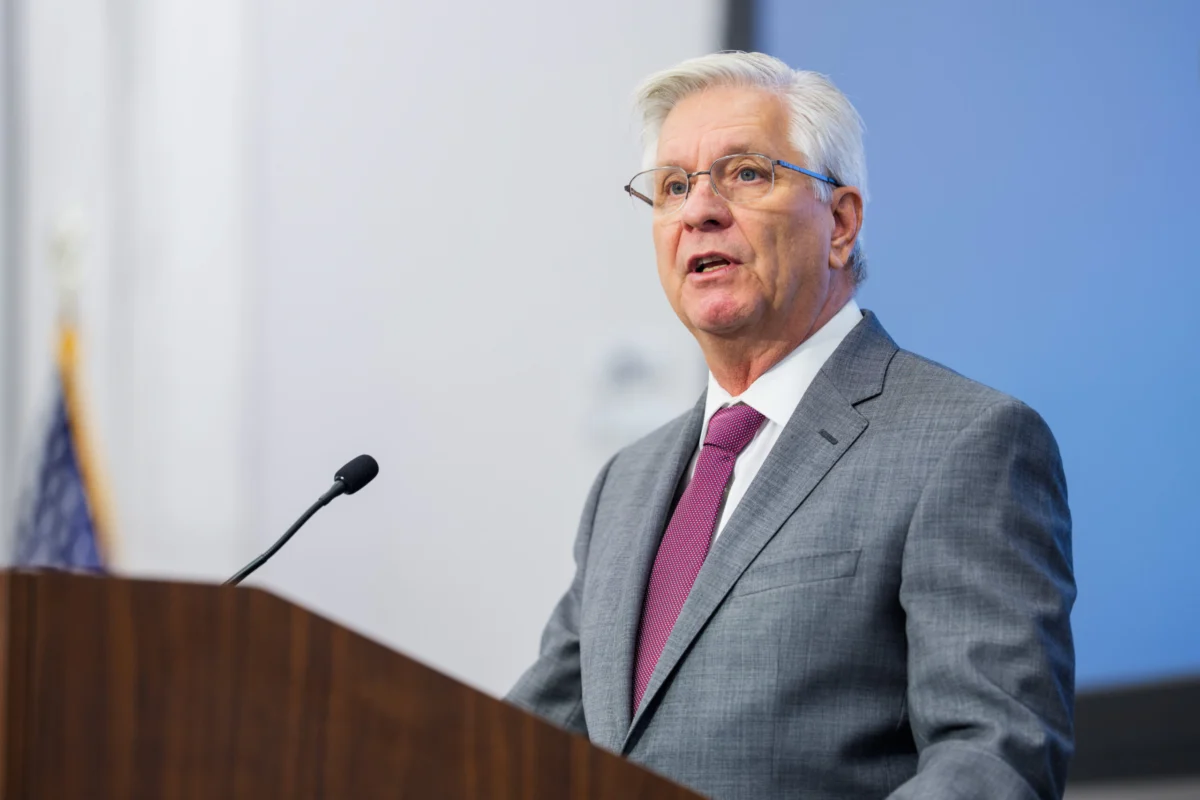
Federal Reserve Governor Christopher Waller, a prominent voice within the U.S. central bank, articulated a notably more cautious stance on the trajectory of interest rate policy on Friday, citing a complex interplay of recent labor market developments and the escalating geopolitical uncertainty stemming from the conflict involving Iran. Despite this newfound prudence, Waller, who had previously been a vocal proponent of rate reductions, indicated that the possibility of interest rate cuts later in the year remains on the table, contingent on economic data aligning with a more favorable outlook. His remarks, delivered during an interview on CNBC’s "Squawk Box," underscore the profound challenges facing policymakers as they navigate a landscape increasingly shaped by both domestic economic shifts and volatile international events.
A Shifting Stance: From Dovish Advocate to Measured Observer
Waller’s commentary represents a significant recalibration of his public position. Only months prior, he was among the more dovish members of the Federal Open Market Committee (FOMC), advocating for proactive rate cuts to avert an overly restrictive monetary policy. This earlier stance was largely predicated on what he perceived as a clearly weakening labor market throughout 2025, characterized by sluggish job growth. However, the confluence of recent economic indicators and geopolitical developments has compelled a more conservative "wait and see" approach.
"It doesn’t mean that I’m going to stay put for the rest of the year," Waller clarified, emphasizing the conditional nature of his current caution. "I just want to wait and see where this goes, and if things go reasonably well and the labor market continues to be weak, I would start advocating again for cutting the policy rate later this year." This statement highlights a pivotal reliance on future economic data, particularly concerning employment trends, and a resolution or stabilization of geopolitical risks.
The Federal Reserve’s Dual Mandate and the Current Economic Conundrum

To fully appreciate Waller’s evolving perspective, it is essential to understand the Federal Reserve’s dual mandate: to promote maximum employment and maintain stable prices. These two objectives often present a delicate balancing act, especially in an economy characterized by mixed signals. For much of 2022 and 2023, the Fed’s primary focus was taming stubbornly high inflation, which had surged to multi-decade highs. This led to an aggressive series of rate hikes, pushing the benchmark federal funds rate from near-zero to its current range of 5.25%-5.50%. This period of rapid tightening was designed to cool demand, thereby alleviating price pressures.
As inflation began to show signs of moderating towards the Fed’s 2% target, attention gradually shifted to the potential impact of these higher rates on the labor market. A weakening job market, if sustained, would signal that monetary policy might be overly restrictive, necessitating cuts. Waller’s previous dovishness stemmed from this concern, particularly given the near-stagnant net job growth observed in 2025.
However, the current situation presents a more complex picture. While some labor market indicators suggest softening, others remain resilient. Moreover, the emergence of external shocks, such as the conflict involving Iran and its ramifications for global energy markets, injects a new layer of uncertainty that can directly undermine efforts to achieve price stability. This intricate scenario forces policymakers like Waller to carefully weigh the risks of premature easing against the dangers of an overly tight policy that could stifle economic growth.
Market Expectations Realigned: A Sharp Divergence from Earlier Hopes
Waller’s cautious remarks come at a time when financial markets have dramatically recalibrated their expectations for interest rate movements. Prior to the escalation of the conflict involving Iran and the subsequent surge in oil prices, traders had largely anticipated two or even three rate cuts by the Federal Reserve over the course of 2026. This sentiment was reflected in Fed Funds Futures contracts, which had priced in a significant probability of such adjustments.
However, the landscape has shifted abruptly. Markets have now almost entirely dismissed the likelihood of any rate reductions through the remainder of 2026 and well into 2027. This drastic pivot underscores the profound impact that geopolitical events and commodity price volatility can have on monetary policy expectations. The indeterminate timeline of the conflict and its potential for broader regional destabilization, coupled with a renewed upward trajectory in oil prices, has forced a rethinking among not only market participants but also Federal Reserve policymakers, including Waller. The prospect of persistent inflationary pressures, fueled by supply-side shocks, now looms larger, making the path to easing far less clear.

Chronology of Policy Shifts and Geopolitical Influences
The journey to Waller’s current cautious stance is marked by a series of key economic and geopolitical developments:
- Early 2022 – Mid-2023: Aggressive Rate Hikes: The Fed initiated a historic series of rate increases, starting in March 2022, to combat inflation that had reached over 9% year-over-year. By July 2023, the federal funds rate stood at 5.25%-5.50%, its highest level in over two decades.
- Late 2023: Disinflationary Progress and Pause: As inflation cooled, the Fed paused its hiking cycle, signaling a data-dependent approach. Discussions began to shift towards when cuts might be appropriate.
- Q4 2025 – Early 2026: Labor Market Concerns Mount: Reports indicated a significant slowdown in job creation throughout 2025, with near-zero net job growth, leading some, including Waller, to advocate for rate cuts to prevent an economic downturn. The unemployment rate, while still historically low, showed signs of creeping up.
- January 2026 FOMC Meeting: The Federal Open Market Committee voted to keep rates steady. Waller notably dissented from this decision, arguing for a rate cut, reflecting his concern over the weakening labor market. This public dissent highlighted a divergence of views within the committee.
- February 2026: Mixed Labor Market Signals: The U.S. economy registered a 92,000 drop in nonfarm payrolls, a significant deceleration. However, other metrics, such as the unemployment rate, remained relatively stable due to a non-expanding labor force. Wage growth also showed signs of moderation but remained above pre-pandemic levels.
- March 2026: Escalation of Geopolitical Tensions: The conflict involving Iran intensified, leading to immediate spikes in global oil prices. This event injected a new layer of inflationary risk and economic uncertainty.
- Mid-March 2026 FOMC Meeting: The FOMC again voted to maintain the current interest rate, with Waller aligning with the majority for a pause, a notable shift from his January dissent. This consensus reflected the heightened caution brought on by recent events.
- March 22, 2026: Waller’s CNBC Interview: His remarks on CNBC solidified the central bank’s evolving perspective, emphasizing a cautious, data-dependent stance heavily influenced by geopolitical factors.
Deep Dive into Economic Data Points and Their Implications
Waller’s analysis is rooted in a careful examination of specific economic indicators:
- The Labor Market Puzzle: His earlier dovish stance was heavily influenced by the perception of a "clearly weakening labor market" in 2025, characterized by nearly no net job growth. However, Waller noted on Friday that while job creation might be anemic, the labor force itself is also not expanding significantly. This means that "net zero" growth can still leave the unemployment rate largely unchanged, creating a nuanced picture. The February 2026 jobs report, showing a 92,000 decline in nonfarm payrolls, is a critical data point. Waller outlined a clear threshold for resuming his advocacy for cuts: "If we get another 90,000 jobs decline in the next jobs report, that’ll be like four negative reports out of five. To me, that’s not zero. So at that point, you need to start thinking about this labor market isn’t good." This indicates a reliance on sustained evidence of labor market deterioration before advocating for easing.
- Inflation Outlook and Geopolitical Risks: Waller expressed a generally sanguine view on inflation, believing it is structurally moving towards the Fed’s 2% target. He attributed recent boosts in inflation to "one-off effects from tariffs." However, the critical caveat lies in the persistence of these effects and the new inflationary impulse from geopolitical events. Soaring oil prices, a direct consequence of the conflict involving Iran, pose a significant risk. For instance, Brent crude futures, which had been trading around $80-85 per barrel, quickly surged past $95 following the escalation, with some analysts forecasting a potential breach of $100. Such sustained energy price increases can feed into broader inflation through higher transportation costs, manufacturing expenses, and ultimately, consumer prices. Waller articulated the dilemma: "If those tariff effects don’t roll off by the second half of the year, and then inflation starts rising then, then you’re in this tricky business of like, do we worry about inflation? Take a chance on recession or not?" This illustrates the complex trade-offs facing the Fed, where external shocks can force a choice between combating inflation and risking economic contraction.
Divergent Views Within the Federal Reserve: The "Dot Plot" and Policy Debate
While Waller’s position has shifted, it’s important to recognize the diversity of opinions within the FOMC. Just hours before Waller’s interview, fellow Fed Governor Michelle Bowman offered a contrasting, more dovish perspective. Bowman, also a nominee of former President Donald Trump, stated in a Fox Business interview that she believes the Fed can implement three interest rate cuts this year. Such a move would push the benchmark federal funds rate below the "neutral level" – the theoretical rate that neither stimulates nor restricts economic growth – which FOMC officials estimate to be around 2.5%-3%.

Bowman’s confidence is underpinned by her expectation of "strong growth" this year, which she attributes to "supply-side policies that this administration is putting into place." This implies a belief that underlying economic fundamentals are robust enough to withstand potential inflationary pressures, allowing for more aggressive easing. However, Bowman’s view represents a minority within the Fed. The updated "dot plot" grid, released earlier in the week, showed that only three out of 19 policymakers anticipate such an aggressive pace of rate cuts this year. The majority of officials project fewer cuts or even no cuts, underscoring the broad consensus for a more cautious approach. This divergence highlights the ongoing debate within the Fed about the appropriate timing and magnitude of future policy adjustments, reflecting different interpretations of economic data and risk assessments.
Broader Implications and the Path Forward
The evolving stance of key Federal Reserve officials like Christopher Waller, coupled with the dramatic shift in market expectations, carries significant implications for the broader economy and financial markets.
- Monetary Policy Uncertainty: The lack of a clear consensus on the rate path introduces considerable uncertainty. Businesses making investment decisions, consumers contemplating major purchases (like homes or cars), and financial institutions managing portfolios all rely on a predictable monetary policy environment. Increased uncertainty can lead to deferred investments and cautious spending, potentially dampening economic activity.
- Market Volatility: The rapid repricing of rate cut probabilities has already fueled volatility in bond markets, with Treasury yields reacting sharply to shifting expectations. Higher-for-longer interest rates can impact equity valuations, particularly for growth stocks, and strengthen the U.S. dollar, affecting global trade dynamics.
- Economic Growth Outlook: While the Fed aims for a "soft landing" – bringing inflation down without triggering a recession – the current environment makes this task increasingly challenging. The dual threat of persistent inflation from geopolitical shocks and a potentially weakening labor market creates a narrow path for policymakers. If the Fed is forced to keep rates higher for longer to combat inflation, it risks slowing economic growth more than intended. Conversely, premature cuts could reignite inflationary pressures.
- Geopolitical Risk Integration: Waller’s explicit mention of the "war with Iran" underscores how deeply geopolitical factors are now intertwined with domestic monetary policy. This means that central banks can no longer operate solely on domestic economic indicators but must increasingly factor in complex international developments, adding a new dimension to policy formulation.
- Inflation’s Lingering Threat: While the general trend of disinflation has been encouraging, the possibility of "one-off" tariff effects persisting and new inflationary impulses from energy prices means that the battle against inflation is far from over. The Fed’s commitment to its 2% target remains paramount, but the path to achieving it sustainably appears more arduous.
In conclusion, Federal Reserve Governor Christopher Waller’s recent comments signify a critical moment in the Fed’s ongoing monetary policy journey. His shift towards heightened caution, driven by a complex interplay of labor market nuances and escalating geopolitical risks, reflects the challenging environment policymakers currently face. While the door for rate cuts later in the year remains open, it is now firmly contingent on a clear and sustained improvement in economic conditions and a stabilization of global tensions. The divergence of views within the FOMC, as highlighted by Governor Bowman’s more dovish stance, further complicates the outlook, ensuring that the path of interest rates will remain a subject of intense scrutiny and debate in the months ahead. The Fed’s dual mandate, under the shadow of global instability, faces its most rigorous test yet.
About the Author