Global financial markets concluded a tumultuous week marked by significant declines, with leading indices registering their fourth consecutive weekly losses. According to prominent financial commentator Jim Cramer, the prevailing market pain, largely driven by escalating geopolitical tensions and a corresponding surge in crude oil prices, is unlikely to abate in the immediate future. The inverse relationship between oil and equities has intensified dramatically since reports emerged approximately three weeks prior of initial attacks by the U.S. and Israel on Iran, setting off a chain reaction across global commodity and equity markets.
Escalating Geopolitical Tensions Fuel Market Volatility
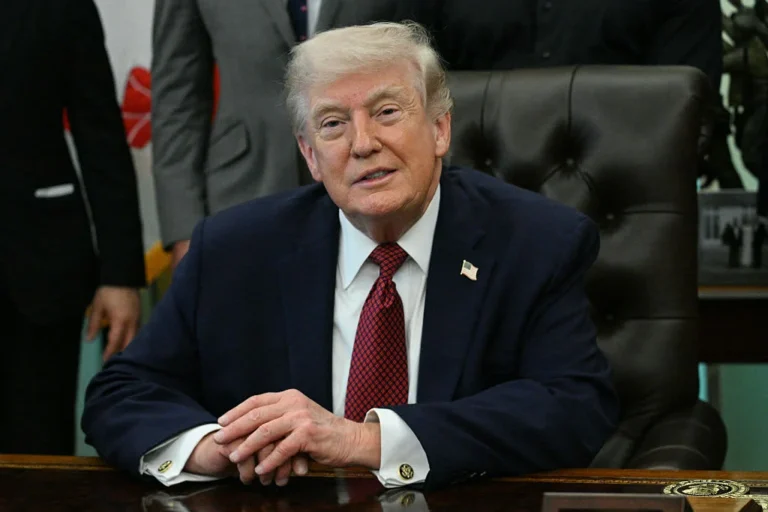
The conflict in the Middle East has rapidly evolved, taking on what Cramer described as an "unrestrained nature." This intensification has been exacerbated by conflicting signals from leadership, specifically citing President Donald Trump’s fluctuating rhetoric, which has swung from discussions about winding down military operations in the region to subsequent reports of deploying thousands of additional Marines. Such mixed messaging from a global superpower leader injects profound uncertainty into an already volatile geopolitical landscape, keeping investors on edge.
The reported attacks on Iran have immediately focused international attention on the Strait of Hormuz, a critical maritime choke point through which approximately one-fifth of the world’s total petroleum liquids and one-third of global liquefied natural gas (LNG) pass. Any disruption or perceived threat to this vital waterway triggers immediate and severe reactions in energy markets, leading to speculative buying and pushing crude oil prices higher. The historical precedent of such geopolitical flashpoints demonstrates that even the threat of supply disruption can have an outsized impact on global energy costs and, by extension, the world economy.
Analysts from various geopolitical think tanks have echoed concerns about the "unrestrained nature" of the conflict. One such analyst, speaking on background, suggested that the ambiguity surrounding the precise nature and objectives of the initial attacks, combined with the subsequent deployment of forces, has created a fertile ground for miscalculation and rapid escalation. The absence of clear diplomatic off-ramps or coordinated international efforts for de-escalation further contributes to the pervasive sense of unease among investors. The international community, including the United Nations and various allied nations, has reportedly intensified diplomatic efforts behind the scenes, urging restraint and seeking clarity on long-term objectives to prevent a broader regional conflagration that would have catastrophic global economic consequences. However, these efforts have yet to yield a significant breakthrough capable of reassuring the markets.
Crude Oil’s Relentless Ascent and its Economic Shadow
The direct consequence of this heightened geopolitical risk has been a dramatic escalation in global oil prices. International oil benchmark Brent crude soared more than 3% on Friday, settling at $112.19 per barrel, marking its highest price since July 2022. For the week, Brent crude recorded an alarming 8.8% gain, underscoring the market’s deep-seated anxiety regarding future supply stability. West Texas Intermediate (WTI) crude, the U.S. benchmark, also saw comparable gains, hovering near the $108 per barrel mark.
This rapid appreciation in crude prices casts a long shadow over the global economy. Historically, significant oil price shocks have preceded or coincided with economic downturns, acting as a regressive tax on consumers and businesses alike. Higher fuel costs directly impact transportation, manufacturing, and agricultural sectors, leading to increased input costs that are often passed on to consumers in the form of higher prices, thereby exacerbating inflationary pressures. For households, elevated gasoline prices reduce discretionary spending power, dampening consumer confidence and retail sales.

Economic projections from institutions like the International Monetary Fund (IMF) and the World Bank, which were already signaling a challenging outlook for global growth in 2026 due to persistent inflation and tighter monetary policies, are now facing potential downward revisions. A sustained period of crude oil prices above the $100 per barrel threshold could severely undermine global recovery efforts, pushing several economies closer to, or into, recessionary territory. Central banks, already grappling with the delicate balance of combating inflation without stifling growth, face an even more complex challenge. Further interest rate hikes to tame energy-driven inflation could risk tipping economies into recession, while inaction could allow inflation to become entrenched, eroding purchasing power and economic stability.
Wall Street’s Bleak Week: A Deep Dive into Index Performance
The inverse relationship between soaring crude prices and sinking equities has been strikingly evident. Friday’s trading session saw the Dow Jones Industrial Average and the Nasdaq Composite briefly dip into correction territory, defined as a decline of at least 10% from their recent highs. While both indices managed to close slightly above that threshold, their performance underscored the pervasive selling pressure. The Dow closed down 1.8%, while the Nasdaq, heavily weighted towards growth and technology stocks, saw a steeper decline of 2.1%. The broader S&P 500 index, often seen as a benchmark for the overall health of the U.S. economy, also sank Friday, concluding the week down 1.5% and now stands approximately 7% off its latest highs.
Crucially, all three major U.S. benchmarks—the Dow, Nasdaq, and S&P 500—logged their fourth consecutive weekly losses, a clear indicator of sustained investor apprehension. This consistent downturn points to a broader market recalibration, where the immediate focus has shifted from growth prospects to risk management and capital preservation. The CBOE Volatility Index (VIX), often referred to as Wall Street’s "fear gauge," surged by over 15% on Friday, reflecting a dramatic increase in implied market volatility and investor anxiety.
Sectoral performance reflected the prevailing headwinds. Energy stocks, paradoxically, were among the few outperformers, benefiting from the surge in oil prices. However, interest-rate sensitive sectors like technology and consumer discretionary, which thrive in stable or growing economic environments, bore the brunt of the selling pressure. The bond market also reacted predictably, with investors seeking the safety of U.S. Treasury bonds, driving yields down slightly, though inflationary concerns kept any significant rally in check. The U.S. dollar, typically a safe-haven asset during times of global uncertainty, strengthened against a basket of major currencies, further complicating the export prospects for U.S. companies.
The Policy Conundrum: Diplomatic Efforts and Military Posturing
The complexity of the current situation is further compounded by the policy conundrum facing global leaders. As Jim Cramer highlighted, the path forward appears to be a stark choice between "tremendous escalation or a diplomatic breakthrough." The latter, he noted, "seems unlikely" given the current climate. President Trump’s reported statements, oscillating between de-escalation and troop deployments, reflect the inherent difficulties in crafting a coherent strategy in such a volatile region.
From a diplomatic standpoint, the U.S. State Department, while not commenting directly on ongoing military operations, would likely be engaged in intensive, albeit private, discussions with regional allies and international partners. The primary objectives would be to contain the conflict, protect critical shipping lanes, and prevent a humanitarian crisis. Simultaneously, the Pentagon would be coordinating troop movements and military readiness, underscoring the seriousness of the situation. Any deployment of thousands of additional Marines, as reported, signals a significant increase in the U.S. military footprint, intended to bolster regional security but also carrying the inherent risk of further entanglement.
The broader implications of such military posturing extend beyond immediate security concerns. They can disrupt existing regional power balances, influence alliance structures, and have long-term consequences for global energy security and trade routes. The lack of clarity on the endgame of the current military actions creates a vacuum that speculative forces in the market are quick to fill, leading to exaggerated price movements and heightened uncertainty.

Navigating the Storm: Investment Strategies Amidst Uncertainty
With little in the way of major corporate earnings reports or significant economic data scheduled for the upcoming week, the market’s focus will remain squarely on geopolitical developments and their impact on crude oil prices. In this challenging environment, Jim Cramer offered a nuanced perspective for investors. While acknowledging the pervasive "war is bad for stocks" sentiment and the global economic impact, he also suggested that a tough market can present an opportune time for selective buying.
Cramer specifically pointed to "lower prices in some industries: the banks, the foods, the drugs, the retailers, and in some cases, large tech companies." His rationale for these sectors often stems from their perceived resilience or defensive characteristics during economic downturns. Banks, while susceptible to broader economic woes, are often seen as fundamentally sound institutions with strong balance sheets, especially after regulatory reforms. Food and drug companies operate in essential sectors, making their demand relatively inelastic even during economic contractions. Retailers, particularly those focused on value or staples, can also demonstrate resilience. Large, well-established technology companies, with strong cash flows and dominant market positions, may weather storms better than smaller, more speculative growth firms.
For investors, this implies a strategic shift towards quality and stability. This could involve focusing on companies with robust balance sheets, consistent earnings, strong competitive advantages, and reasonable valuations. Diversification across various asset classes and geographies remains paramount to mitigate risk. Furthermore, adopting a long-term investment horizon and potentially utilizing strategies like dollar-cost averaging—investing a fixed amount regularly, regardless of market fluctuations—can help smooth out returns during volatile periods and capitalize on lower prices. While the immediate outlook appears grim, seasoned investors understand that market downturns, however painful, often create opportunities for those who can identify and acquire high-quality assets at attractive valuations.
The Road Ahead: Outlook and Potential Scenarios
The immediate future for global markets hinges precariously on the evolving geopolitical situation in the Middle East and the trajectory of crude oil prices. As Cramer succinctly put it, "We have no idea what’s gonna happen here." The complex interplay of military actions, diplomatic maneuvering, and market reactions creates a landscape fraught with unpredictability.
Several scenarios could unfold. A rapid diplomatic breakthrough, while currently appearing unlikely, would provide significant relief to markets, potentially leading to a sharp rebound in equities and a moderation in oil prices. Conversely, a further escalation of the conflict, perhaps involving other regional actors or more severe disruptions to oil supply routes, could trigger a deeper market correction, push oil prices to unprecedented levels, and significantly heighten the risk of a global recession. A prolonged, contained conflict—a "new normal" of elevated tensions—would likely keep markets choppy and volatile, with oil prices remaining at higher levels, perpetuating inflationary pressures and slowing global growth.
The absence of a clear calendar of major corporate earnings or economic data in the immediate week ahead amplifies the importance of geopolitical developments. Every headline from the Middle East, every statement from global leaders, will be meticulously scrutinized by traders and investors, influencing market sentiment and asset allocation decisions. The global economy, already navigating a challenging post-pandemic recovery, is now facing a severe test of its resilience. While the short-term outlook remains challenging and uncertain, the ability of policymakers to navigate this complex geopolitical and economic environment will ultimately determine the long-term trajectory of global financial markets and economic stability. Investors are advised to remain vigilant, exercise caution, and prioritize a well-researched, long-term investment strategy.
About the Author