WASHINGTON – The Federal Reserve on Wednesday opted to hold its benchmark interest rate steady, a decision that underscores the central bank’s delicate balancing act between persistent inflationary pressures, a mixed labor market, and an increasingly volatile global geopolitical landscape marked by a nascent war. The Federal Open Market Committee (FOMC), the Fed’s principal monetary policymaking body, concluded its latest meeting by voting 11-1 to keep the federal funds rate anchored in its current range of 3.5% to 3.75%. This widely anticipated move reflects a cautious approach as policymakers grapple with a complex array of economic and political uncertainties.
The decision to maintain the current rate marks a continuation of the Fed’s strategy to bring inflation back to its symmetrical 2% target without unduly stifling economic growth. However, the path forward remains clouded by recent economic data and external shocks. Inflation readings have proven more stubborn than anticipated in recent months, challenging earlier expectations for a more rapid deceleration. Concurrently, the labor market presents a nuanced picture, showing signs of resilience in some sectors while exhibiting pockets of weakness, leading to divergent interpretations among economists and policymakers alike.
The Economic Landscape: Inflation and Growth Dynamics
The FOMC’s post-meeting statement provided a slightly updated economic outlook for 2026, projecting a faster pace of growth and higher inflation than previously anticipated. Gross Domestic Product (GDP) is now expected to increase at a 2.4% pace this year, an upward revision from December’s projections, and is forecast to maintain a robust 2.3% rate in 2027. This upward adjustment suggests a more resilient economy than some initial forecasts indicated, potentially fueled by robust consumer spending and business investment, even under the weight of elevated interest rates.
However, the revised inflation projections signal a more challenging environment. Officials now anticipate the personal consumption expenditures (PCE) price index, the Fed’s preferred inflation gauge, to reflect a 2.7% inflation rate for both headline and core measures in 2026. This represents a significant upward revision from previous forecasts and keeps inflation well above the Fed’s 2% target. The central bank attributes this persistence partly to the lingering effects of tariffs and, more recently, the escalating geopolitical tensions. Despite these near-term challenges, policymakers remain hopeful, projecting that inflation will gradually recede towards the 2% target in subsequent years as these external pressures abate.
On the employment front, the Fed maintains its forecast for a 4.4% unemployment rate by year’s end. This projection comes despite a string of recent "weak payrolls readings," which some analysts have interpreted as early signs of a cooling labor market. The Fed’s dual mandate requires it to foster both maximum employment and price stability. The current mixed signals in the job market, coupled with persistent inflation, complicate this delicate balancing act. While a 4.4% unemployment rate is historically considered healthy, the underlying trends in job creation and wage growth are under intense scrutiny as the Fed seeks to avoid both an inflationary spiral and an unnecessary recession.
The Geopolitical Shadow: The Iran War’s Unsettling Impact
A significant and increasingly prominent factor influencing the Fed’s calculus is the ongoing war with Iran, which commenced nearly three weeks prior to the FOMC meeting. The conflict has rapidly escalated, introducing a profound layer of uncertainty into the global economic outlook. A primary concern is its potential impact on the Strait of Hormuz, a critical maritime chokepoint through which a substantial portion of the world’s oil supply transits. Any significant disruption in this vital waterway has the potential to trigger severe dislocations in global energy markets, sending crude oil prices soaring and exacerbating inflationary pressures worldwide.
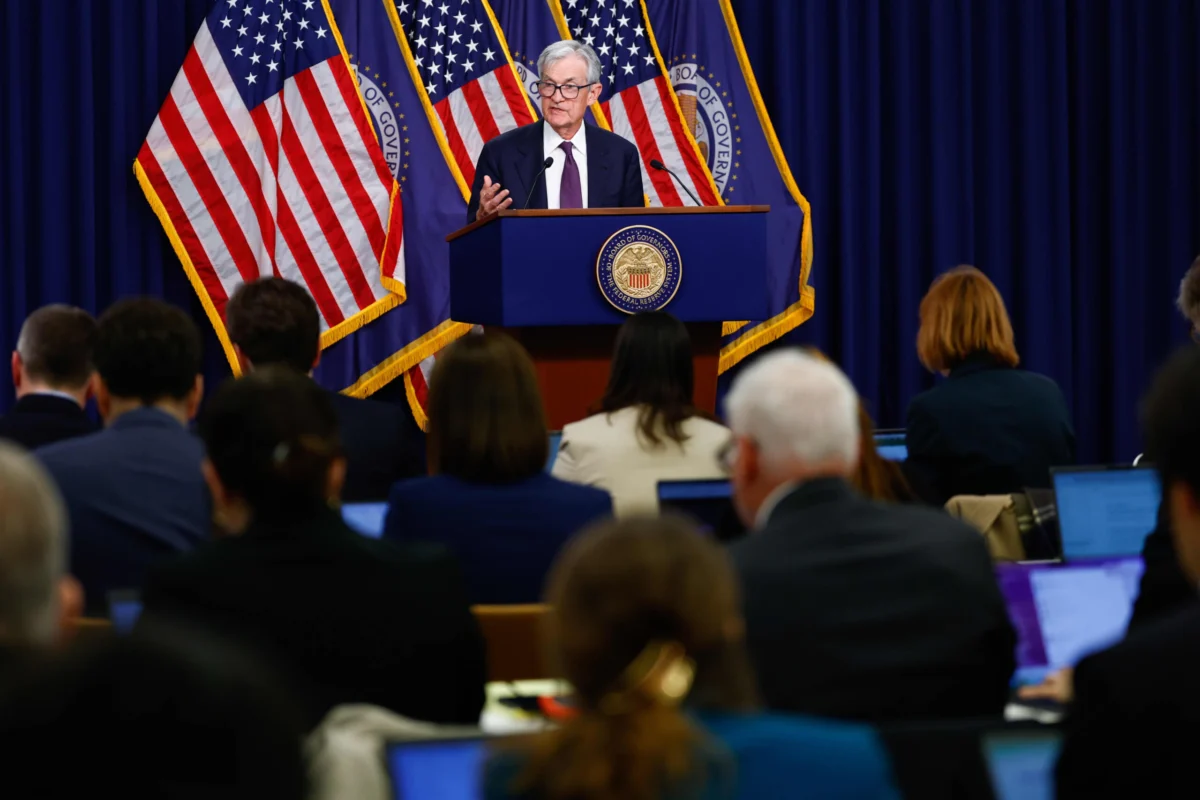
The FOMC’s statement explicitly acknowledged this risk, noting that "The implications of developments in the Middle East for the U.S. economy are uncertain." This cautious phrasing underscores the unpredictable nature of the conflict and its potential ripple effects. During his subsequent news conference, Federal Reserve Chair Jerome Powell elaborated on these concerns, stating it was "too soon to know" the full impact of the war on the U.S. economy. He specifically highlighted that "Near term measures of inflation expectations have risen in recent weeks, likely reflecting the substantial rise in oil prices caused by the supply disruptions in the Middle East."
Indeed, global oil benchmarks like Brent crude and West Texas Intermediate (WTI) have already seen considerable volatility since the conflict began, with prices surging as traders factor in the risk premium associated with potential supply disruptions. Higher oil prices translate directly into increased costs for consumers through gasoline prices and for businesses through elevated transportation and production expenses, threatening to keep headline inflation stubbornly high and further complicating the Fed’s efforts to achieve its 2% target. This geopolitical shock, coming on the heels of already elevated inflation, presents a formidable challenge that could derail the Fed’s carefully planned disinflationary trajectory.
Monetary Policy Mechanics and Forward Guidance
The decision to hold the federal funds rate steady at 3.5%-3.75% was largely expected by market participants. This rate dictates overnight lending costs between banks and serves as a foundational benchmark that influences a broad spectrum of consumer and business borrowing costs, including mortgage rates, credit card APRs, and business loans. By maintaining this rate, the Fed aims to keep financial conditions restrictive enough to cool demand and temper inflation, without pushing the economy into a recession.
Despite the elevated uncertainty and revised inflation projections, officials reiterated their expectation for a few rate cuts ahead. The closely watched "dot plot," a graphical representation of individual FOMC members’ projections for the future path of the federal funds rate, continued to signal one rate reduction in 2026 and another in 2027. However, the precise timing of these cuts remains highly ambiguous. A notable shift from the December update was that seven of the 19 FOMC participants now anticipate rates will remain unchanged throughout 2026, an increase of one member. While projections for future years showed a wide dispersion of forecasts, the median outlook points to an additional cut in 2027, eventually steadying the federal funds rate around 3.1% for the long term. This suggests a growing segment within the FOMC that prioritizes caution and is prepared to tolerate higher rates for longer to ensure inflation is decisively tamed.
Market Reaction and Investor Outlook

Following the Fed’s decision and Chair Powell’s subsequent remarks, stock markets reacted negatively, with major indices falling to session lows. The S&P 500, Dow Jones Industrial Average, and Nasdaq Composite all registered declines as investors digested the implications of persistent inflation and a potentially more hawkish Fed stance than previously hoped. The prospect of higher interest rates for an extended period typically dampens corporate earnings growth expectations, making equities less attractive relative to fixed-income assets.
Before the outbreak of the war in Iran, markets had been pricing in the likelihood of two rate reductions in 2026, with a non-negligible chance of a third. However, the confluence of surging oil prices and a string of firm inflation readings—some of which predated the energy shock—has significantly recalibrated these expectations. Investors are now anticipating at most one rate cut this year, reflecting a sober assessment of the economic realities and the Fed’s commitment to its inflation-fighting mandate. The bond market also reflected this sentiment, with Treasury yields generally moving higher, indicating that investors now expect interest rates to remain elevated for longer.
Dissenting Voices and Internal Debates
The FOMC meeting was not without its internal disagreements, highlighting the complex nature of the current economic environment. Governor Stephen Miran again cast a dissenting vote, advocating for a quarter-percentage point rate cut. Miran’s stance reportedly stems from rising concerns about the jobs climate, suggesting he believes the risks of an overly restrictive monetary policy leading to an economic slowdown outweigh the risks of slightly higher inflation. His consistent dissent underscores the challenges of achieving a consensus view amidst conflicting economic signals.
In a noteworthy shift, Governor Christopher Waller, who had previously joined Miran in favoring a rate cut in January, voted to hold rates steady this time. Waller’s change of heart suggests that even some of the more dovish members of the committee are becoming more concerned about the inflationary implications of recent data and the geopolitical situation. Such shifts in voting patterns provide valuable insight into the evolving internal debate within the FOMC and the collective assessment of economic risks.
Political Headwinds and Threats to Fed Independence
The Fed’s decision comes against a profoundly complicated and highly politicized backdrop, with its independence increasingly under scrutiny. President Donald Trump has continued his vocal criticism of Chair Powell and his colleagues, publicly badgering them to lower rates. Earlier this week, Trump lambasted Powell for not convening a special meeting to ease monetary policy, even in the face of persistently high inflation and the unfolding war. The President’s rationale is typically rooted in a desire for stronger economic growth, which he believes lower rates would facilitate, especially ahead of a presidential election.
Further complicating the dynamic is the looming end of Powell’s term as Fed Chair in May. President Trump has already publicly tapped former Fed Governor Kevin Warsh as his preferred successor. Warsh, known for his generally dovish leanings, has historically indicated a preference for lower interest rates. While he has refrained from issuing recent public statements regarding his current monetary policy views, his past positions suggest a potential shift towards easier monetary policy should he assume the chairmanship. This succession battle injects significant uncertainty into the future direction of U.S. monetary policy.
The situation is further exacerbated by an unprecedented legal battle involving the U.S. Justice Department. U.S. Attorney Jeanine Pirro in Washington has issued a subpoena to Chair Powell, demanding evidence related to the Fed’s multibillion-dollar headquarters renovation project. Powell, however, has vehemently resisted the subpoena, accusing President Trump of using the legal process as a pretext to exert undue pressure on the independent central bank to lower rates. A federal judge recently sided with Powell, tossing out the subpoenas and agreeing with the assessment that the effort was indeed a thinly veiled attempt to twist Powell’s arm on monetary policy.
Despite this legal victory for Powell, U.S. Attorney Pirro has vowed to appeal the judge’s decision, ensuring the legal battle will continue. In a related development, Senator Thom Tillis (R-N.C.), a key member of the Senate Banking Committee, has publicly stated his intention to block Warsh’s nomination in the Senate until the legal matter involving Powell is definitively settled. This political maneuver effectively holds the Fed chairmanship hostage to the ongoing court battle, creating an unprecedented institutional crisis.
Chair Powell addressed these extraordinary circumstances during his news conference, asserting his commitment to the institution. "I have no intention of leaving the board until the investigation is well and truly over, with transparency and finality," Powell declared. This statement suggests that, should the court battle extend beyond May, Powell is prepared to remain in his position as Chair until Warsh’s nomination can proceed through the Senate and be confirmed. While his term on the Board of Governors does not expire until early 2028, Powell stated he is undecided about remaining on the board after the investigation concludes and a new chair is confirmed. "I have not made that decision yet, and I will make that decision based on what I think is best for the institution and for the people we serve," he affirmed. This extraordinary confluence of political pressure, legal challenges, and a looming succession battle poses a significant threat to the perceived and actual independence of the Federal Reserve, an institution traditionally shielded from partisan interference to ensure its ability to make sound economic decisions.
The Road Ahead: Challenges and Uncertainties
The Federal Reserve stands at a critical juncture, navigating a confluence of economic and geopolitical headwinds unlike any seen in recent memory. The decision to hold rates steady reflects a prudent but highly challenging path. The central bank must remain vigilant against the persistent threat of inflation, which could be reignited by escalating energy costs from the Iran war or continued robust demand. Simultaneously, it must monitor the labor market closely for any signs of undue weakness that could precipitate an economic downturn.
The "one cut this year, one cut next year" signaling from the dot plot suggests a gradual and data-dependent approach to monetary easing. However, this path is fraught with risks. A sudden escalation of the geopolitical conflict, further disruptions to global supply chains, or a more severe domestic economic slowdown could force the Fed to reassess its strategy rapidly. The political interference and legal challenges surrounding the Fed’s leadership further complicate its ability to act decisively and maintain market confidence.
Economists and analysts will be closely watching upcoming inflation data, particularly the PCE index, as well as monthly jobs reports for clearer signals on the economy’s trajectory. The Fed’s commitment to its 2% inflation target remains paramount, but the means to achieve it are increasingly obscured by a turbulent global environment and unprecedented domestic political pressures. The path forward for the Federal Reserve will demand not only astute economic policymaking but also steadfast institutional resilience in the face of extraordinary challenges.
About the Author