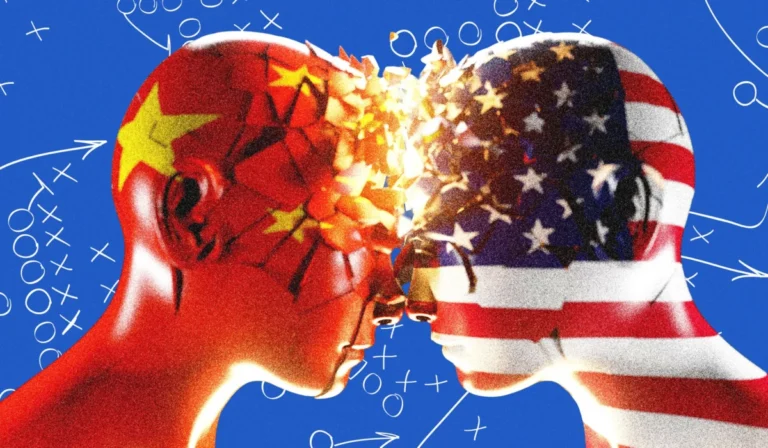
In a high-stakes legal confrontation that highlights the growing friction between Silicon Valley’s ethical frameworks and the strategic requirements of the United States military, Anthropic has forcefully denied allegations that it possesses the technical capability to sabotage its artificial intelligence models once they are deployed within Department of Defense systems. The denial, contained in a court filing submitted on Friday, arrives as the Trump administration intensifies its scrutiny of the AI laboratory, recently designating the firm a "supply-chain risk"—a move that effectively severs Anthropic’s ties with the American defense establishment and several other federal agencies.
The controversy centers on Claude, Anthropic’s flagship large language model (LLM), which has become an integral tool for various military applications, ranging from administrative memo drafting to the generation of complex battle plans. Thiyagu Ramasamy, Anthropic’s head of public sector, addressed the government’s concerns directly in a sworn statement, asserting that the company lacks any mechanism to interfere with the model’s performance once it is in the hands of the military. According to Ramasamy, Anthropic has never possessed the ability to cause Claude to cease functioning, alter its core functionality, or shut off access in a manner that would imperil active military operations.
The legal and administrative battle represents a pivotal moment for the burgeoning AI industry. As the Pentagon seeks to maintain a technological edge over global adversaries, particularly China, it is increasingly relying on commercial AI providers. However, the recent actions by the Department of Defense (DoD) suggest a deep-seated mistrust regarding the level of control private corporations retain over the "black box" algorithms that power modern warfare.
The Technical Architecture of Denial
Central to the dispute is the question of a "kill switch" or "backdoor" access. The Trump administration has argued that Anthropic could potentially disrupt national security by pushing harmful updates or disabling the model if the company disagreed with a specific military use case. This concern is rooted in Anthropic’s public commitment to "Constitutional AI," a method of training models to follow a specific set of ethical principles.
Ramasamy’s filing aims to dismantle this narrative by detailing the technical constraints of the software’s deployment. He noted that Anthropic personnel cannot log into Department of Defense systems to modify or disable models during ongoing operations. The technology, he argued, simply does not function in a way that allows for remote, unilateral manipulation. Furthermore, any updates to the system require a multi-step approval process involving not only the government but also the cloud service provider—in this instance, Amazon Web Services (AWS).
This infrastructure ensures that the model remains "frozen" in its deployed state unless the military explicitly authorizes a change. Ramasamy also clarified that Anthropic is unable to view the prompts or the sensitive data entered into Claude by military personnel, providing a layer of data sovereignty that the company claims should alleviate fears of corporate espionage or unauthorized monitoring.
A Timeline of Deteriorating Relations
The rift between Anthropic and the Pentagon did not emerge in a vacuum but is the result of months of failed negotiations and escalating rhetoric.
Late 2023 – Early 2024: Claude begins seeing wider adoption within the DoD and other federal agencies. Its ability to analyze vast datasets and assist in strategic planning makes it a preferred tool for intelligence analysts and administrative officers.
Early 2024: Tensions rise over the "terms of use" regarding lethal autonomous weapons. Anthropic, founded by former OpenAI executives with a focus on AI safety, maintains strict guidelines against its technology being used for kinetic military operations without human oversight.
March 4, 2024: Anthropic submits a formal contract proposal in an attempt to bridge the gap. Sarah Heck, Anthropic’s head of policy, stated in court filings that the company was willing to explicitly waive any "veto power" over lawful military tactical decisions. The proposal aimed to reassure the Pentagon that Anthropic would not interfere with operational decision-making.
March 2024: Despite the proposal, negotiations break down. Defense Secretary Pete Hegseth officially labels Anthropic a "supply-chain risk." This designation is typically reserved for companies with ties to foreign adversaries, such as Huawei or ZTE, making its application to a San Francisco-based firm particularly jarring to the tech industry.
Mid-March 2024: Anthropic files two lawsuits challenging the constitutionality of the ban. The company argues that the designation was made without due process and is based on a misunderstanding of the technology.
March 24, 2024: A federal district court in San Francisco is scheduled to hear arguments regarding Anthropic’s request for an emergency order to reverse the ban.
The Supply Chain Risk Designation and Its Fallout
The designation of Anthropic as a supply-chain risk has sent shockwaves through Silicon Valley. By labeling the company in this manner, Secretary Hegseth has invoked authorities that allow the DoD to bypass traditional procurement protections. The move effectively bars not only direct contracts with Anthropic but also prevents third-party contractors from utilizing Claude in any project involving the Department of Defense.
The impact was almost immediate. Reports indicate that several federal agencies, following the Pentagon’s lead, have begun migrating away from Claude. Private sector customers who provide services to the government have started canceling deals with Anthropic to avoid being caught in the regulatory crossfire. The company has argued in court that this designation puts its entire business model in peril, creating a "blackball" effect that could extend far beyond the defense sector.
Government attorneys, however, remain steadfast. In recent filings, they argued that the Department of Defense is not required to "tolerate the risk" that critical military systems could be jeopardized at "pivotal moments for national defense." The government’s stance is that even a theoretical risk of a private company influencing a battle plan is too high a price to pay for advanced AI capabilities.
Ethical Red Lines and Military Necessity
At the heart of the breakdown in negotiations was the issue of lethal strikes. Anthropic has been a vocal advocate for "human-in-the-loop" requirements, ensuring that AI does not autonomously decide to take a human life. While the Pentagon also officially adheres to a policy of human oversight in the use of force, the administration appears to view Anthropic’s specific ethical guardrails as an unacceptable limitation on sovereign military action.
Sarah Heck’s filing revealed that Anthropic was prepared to accept language that addressed the government’s concerns while maintaining its stance against unsupervised lethal AI. However, the government seemingly viewed any corporate-imposed restriction as a potential "backdoor" for interference.
This clash highlights a broader debate: Who should set the rules for the "laws of war" when those laws are coded into software? If a private company builds the brain of a drone, does that company have a right—or a duty—to ensure that brain cannot be used for war crimes? The Trump administration’s answer appears to be a definitive "no," asserting that once the software is purchased, the government must have absolute, unencumbered control.
Broader Implications for the AI Industry
The outcome of the March 24 hearing could set a massive precedent for the relationship between the U.S. government and the technology sector. If the court upholds the "supply-chain risk" designation, it could signal a new era of "nationalization" of AI safety standards, where the government dictates the ethical parameters of commercial software used in public service.
Furthermore, this dispute may drive the military to favor "defense-first" AI companies like Palantir or Anduril, which have historically been more aligned with the Pentagon’s operational requirements and less vocal about the ethical constraints popularized by the "frontier" AI labs like Anthropic and OpenAI.
For Anthropic, the stakes are existential. As a "public benefit corporation," it has marketed itself on the premise of being the "safer" and "more ethical" alternative to its competitors. If that very commitment to safety is what leads to its exclusion from the world’s largest purchaser of technology, the company may be forced to choose between its founding principles and its commercial viability.
Analysis of the National Security Landscape
From a strategic perspective, the Pentagon’s move to distance itself from Anthropic suggests a pivot toward "sovereign AI." The Department of Defense has already begun working with third-party cloud providers to ensure that no AI leadership can make "unilateral changes" to existing systems. This indicates a shift toward self-hosted or air-gapped models where the original developer is completely cut out of the lifecycle after the initial sale.
However, this approach carries its own risks. By alienating the most advanced AI labs, the U.S. military may find itself relying on older, less capable models, or being forced to develop its own in-house capabilities at a much slower pace than the private sector. In the global race for AI supremacy, a fractured relationship between the Pentagon and Silicon Valley could provide an opening for adversaries who do not face similar internal ethical or legal dilemmas.
As the legal proceedings move toward the San Francisco courtroom, the tech industry and the defense establishment alike are watching closely. The ruling will likely define the boundaries of corporate responsibility and government authority in the age of artificial intelligence, determining whether "Constitutional AI" can coexist with the absolute demands of national defense.
About the Author